These 10 hardwood flooring ideas run from off-the-shelf traditional white oak at 3 1/4 inches to fully custom stains and herringbone patterns with sample rounds and long lead times.
The deciding factor is what your space already holds: walls and ceilings with visual weight need a quieter floor, while bare rooms can carry reclaimed oak with saw marks or wide heart pine with its original circle-sawn texture.
That 8-inch engineered plank Amy and Kevin used in their 1950s Los Angeles house, played against an existing wood ceiling, is exactly the kind of situational match that makes one idea pull ahead of the rest.
1. Reclaimed Rustic Oak
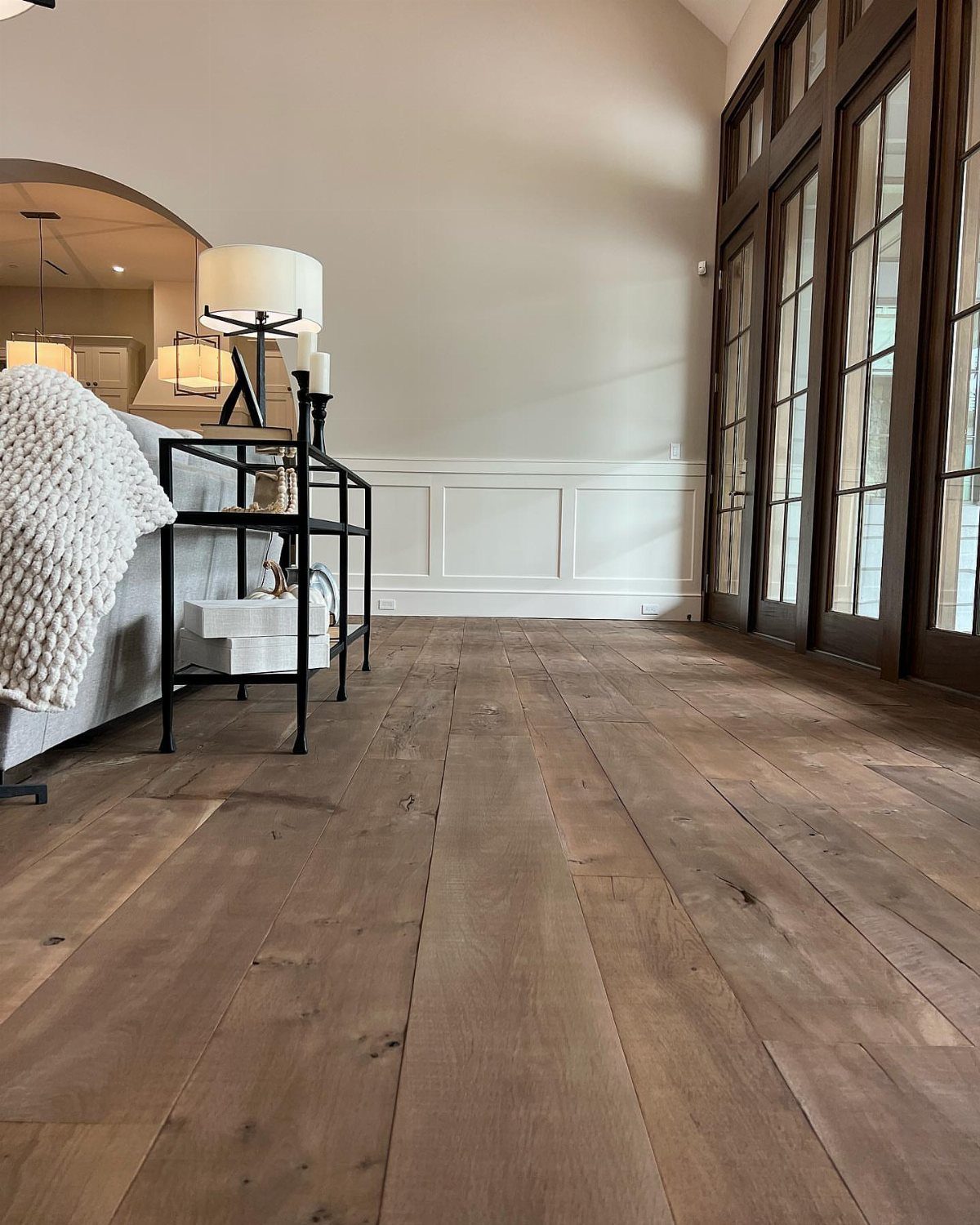
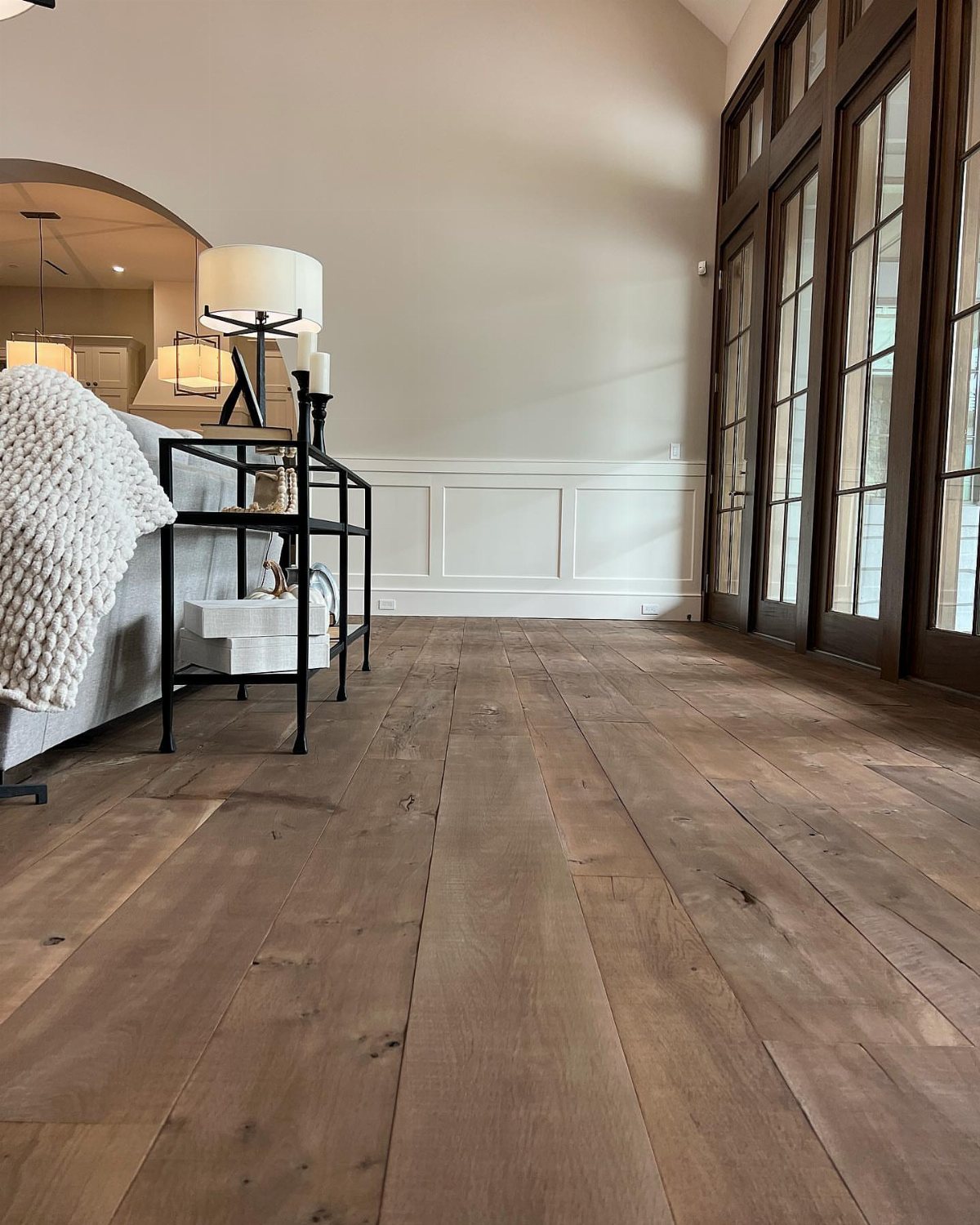
Reclaimed rustic oak mixes red and white oak boards that keep their original antique patina and the saw marks from decades past.
The planks can be milled anywhere from 2 1/4 inches up to wide boards, so the room size should guide that choice: narrow planks suit smaller spaces, wide ones open up larger rooms.
This is the hardwood that survives heavy traffic in both homes and commercial spaces, and the mixed oak gives more color variation than single-species floors.
I’d pick this for a remodel where instant character matters more than a blank slate; the knots and grain variation hide wear better than uniform floors do.

🏠DETAILS: 15.8x78.8 Inch, total 8.65 sq.ft (40cmX2m) Made of durable thin vinyl, thickness: 0.015 In (0.4MM). Peel and stick wood planks vinyl flooring roll, brown shiplap planks color. Waterproof. Removable.

REAL WOOD – Made of 100% dried fir wood imitating vintage reclaimed barnwood appearance for interior finish. The colors will vary from browns to grays depending on the batch.

3.14" x 18" Top Quality Heavy Duty Porcelain, Material is European Commercially rated Porcelain
2. Walnut Hardwood Flooring
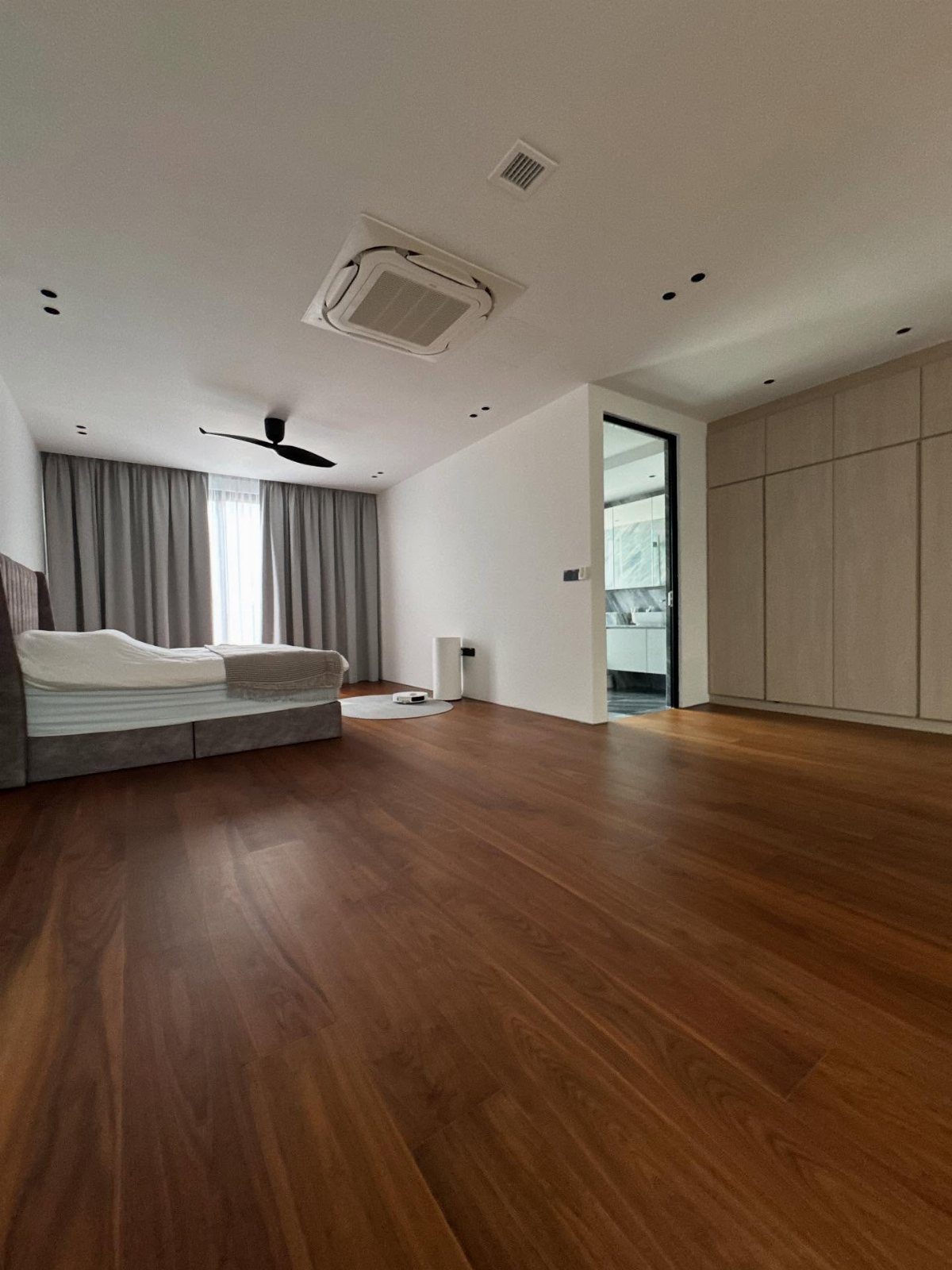
American walnut carries a natural brown tone that needs no stain to look finished, though it takes one if you want to push it darker.
The grading choice matters more here than with most woods: traditional grade keeps knots and figuring for a lived-in, character-rich floor, while premium grade strips most of that out for a formal, uniform surface.
A simple oil finish shows off the grain best; staining walnut always strikes me as covering up what you paid for.
This is the floor for a bedroom or study where you want the wood itself to be the statement, not the furniture on top of it.

DARK WOOD SCRATCH COVER FOR FURNITURE & FLOORS: Dark brown stain concealer camouflages scratches, nicks, scuffs & pet marks on dark hardwood, engineered surfaces & veneers. Dark shade only — test on hidden area to confirm color match.

Ideal for use on all interior wood projects: furniture, cabinets, doors, trim and paneling

RICH EVEN COLOR – Minwax Wood Finish is a deep penetrating, oil-based wood stain that provides beautiful color and enhances the natural wood grain in one coat. It’s perfect for interior staining projects such as wood furniture, cabinets, doors and more.
3. Wide Plank White Oak Wood Flooring
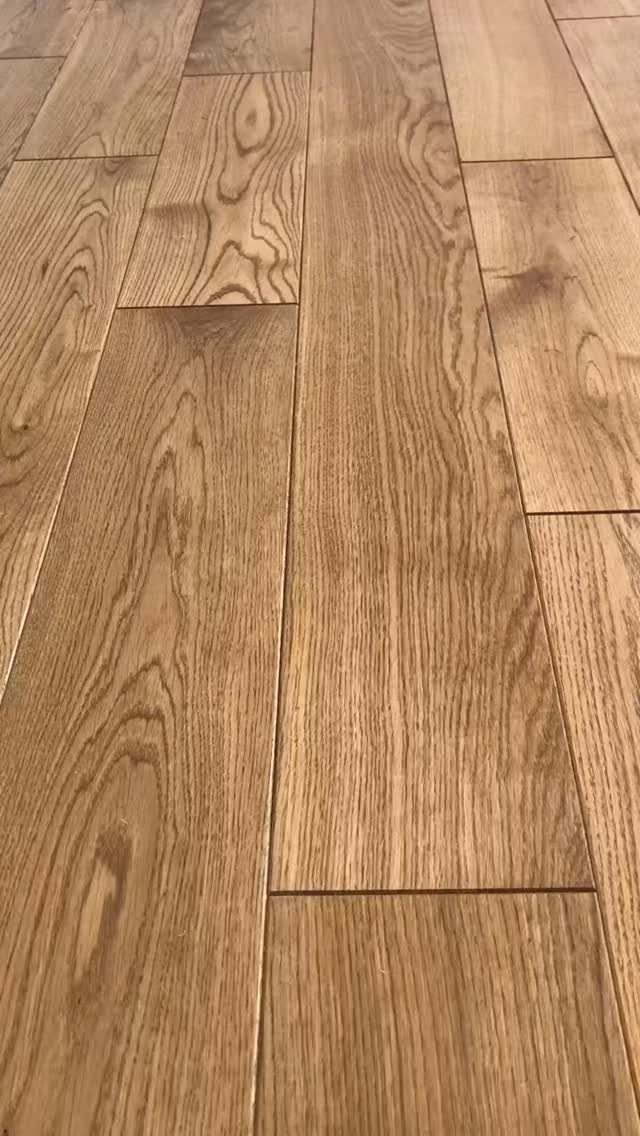
European white oak produces planks that run wider and longer than American oak typically allows, with an open, more figured grain pattern that catches light differently across the day.
European white oak carries more tannin, so the wood takes a reactive treatment that builds deep color without traditional stain sitting on top.
Amy and Kevin chose 8-inch engineered planks in white oak to pull their 1950s Los Angeles house together, and the lighter tone played against an existing wood ceiling.
I’d go this route for any space where the floor needs to carry the room’s warmth but the walls and ceiling already hold enough visual weight.

Genuine French Oak Construction: Crafted from authentic French Oak, offering natural elegance and character.

THIS IS A FLOORING SAMPLE - Cut from an actual full-size Meribel White Oak plank so you can see the true color, grain variation, and wire-brushed texture before purchasing.

One 10" Sample Piece of Hurst Hardwoods European French Oak Prefinished Engineered Hardwood Flooring from The King's Table Collection
4. Traditional White Oak
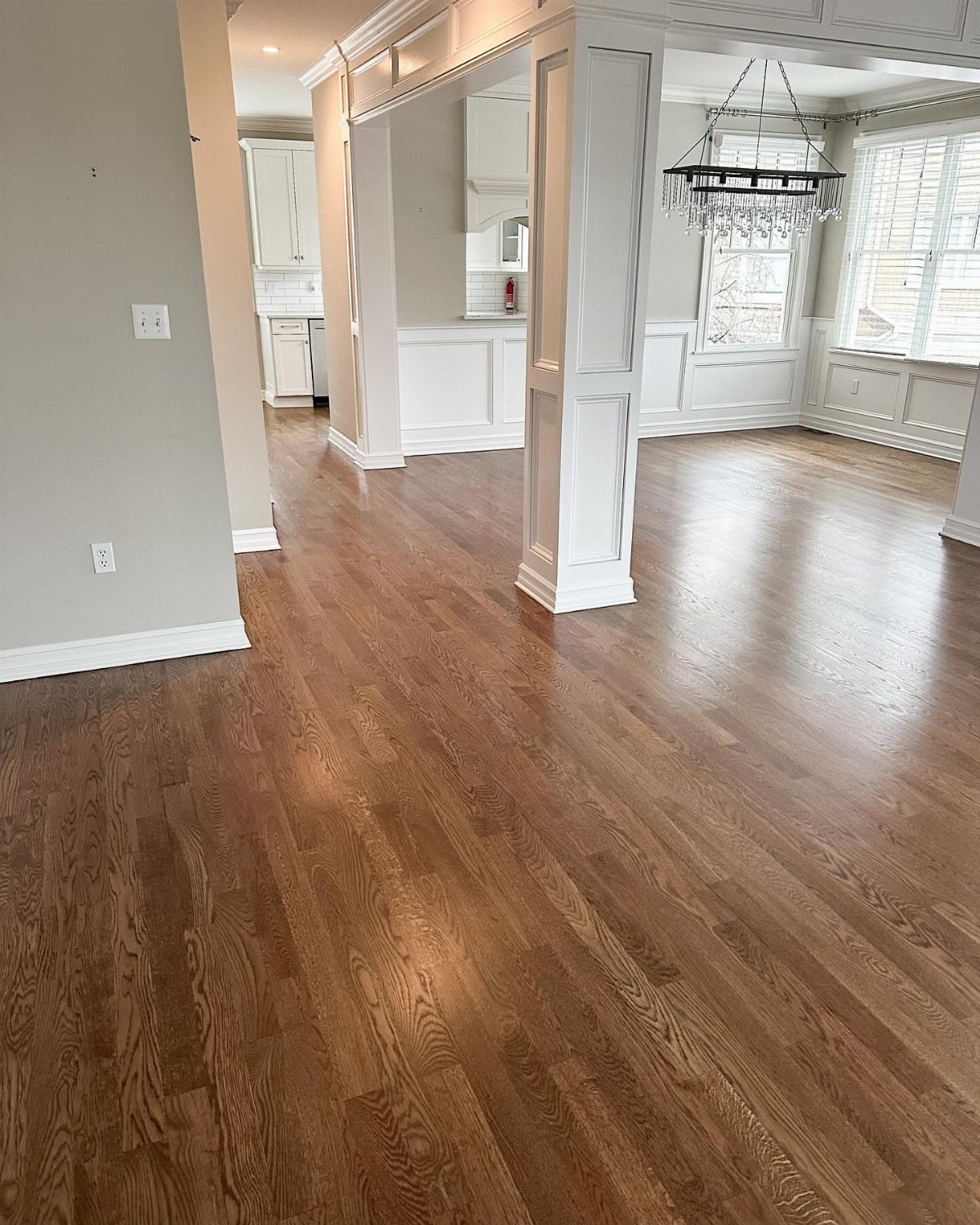
White oak’s stability makes it forgiving in climates where humidity swings would warp lesser floors, and its density holds up under decades of use.
The old golden-yellow finishes gave this wood a dated reputation it never deserved; left natural or taken dark, it reads completely different.
A 3 1/4-inch plank width sits in the middle ground, neither aggressively traditional nor fashionably wide, which helps when you are improving a space you might sell.
This is the safe choice that does not look like a safe choice, and that matters when you are laying flooring through multiple connected rooms that need to feel intentional.

Timeless Elegance: Parquet flooring adds a touch of sophistication and warmth to any room with its intricate patterns and rich wood tones.


Elegant design: Parquet flooring adds a touch of sophistication and warmth to any living space.
5. Wood Floors with Hints of Gray
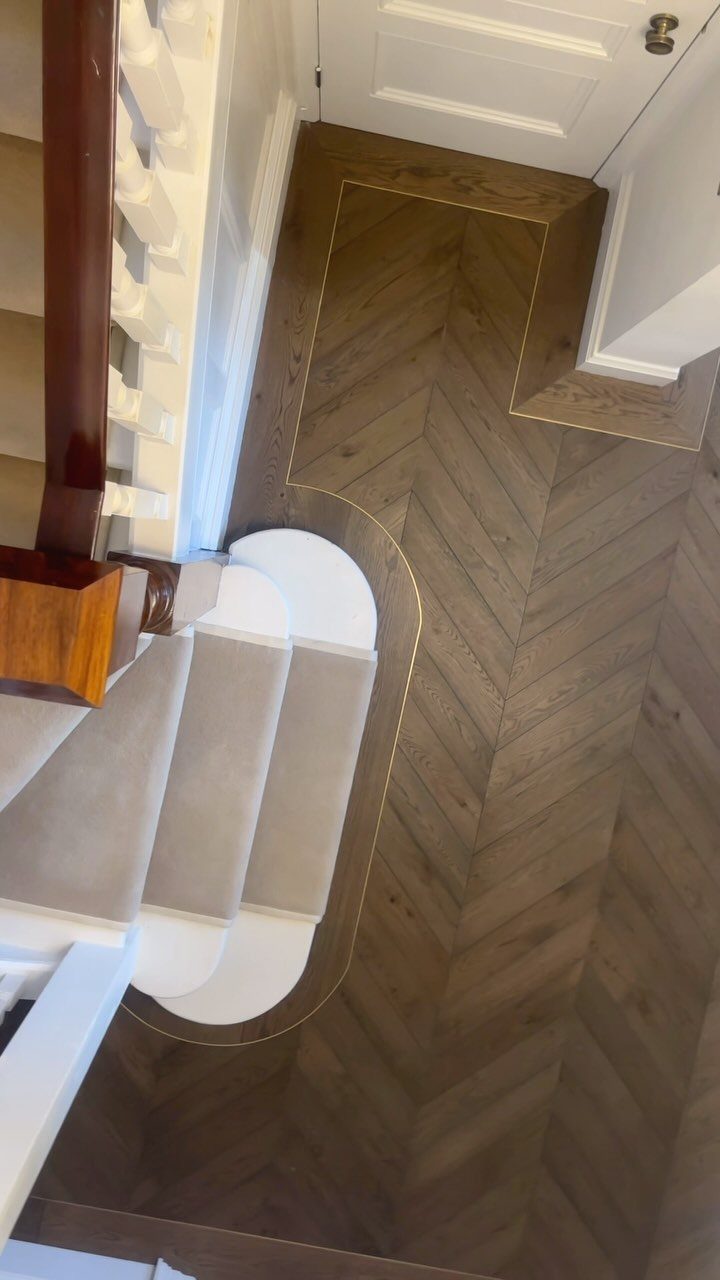
Gray undertones in warm wood give you the decorating flexibility that straight gray floors promise without the coldness they often deliver.
Check your existing grays against a sample in your own light; warm gray and cool gray read as different colors once installed, and the undertone you see in the store may shift at home.

Regular use will keep floors looking beautiful by gently removing dirt and grime, without leaving a soap film behind

Wood Floor Cream Cleaner - Parker & Bailey hardwood floor cleaner is a safe, easy-to-use formula that gently works as a degreaser, and dirt, dust, and build-up remover. Rejuvenate floors to their original beauty and natural look.

【Premium Thickened Vinyl Flooring Roll】Experience our 1.5mm thick vinyl flooring roll with 5 layers for enhanced quality. It's non-slip, non-fading, and provides thermal insulation. Measuring 23.6" x 196", it covers 32 sq ft without snap-lock installation, making it hassle-free and stylish.
6. Light & Natural Stains
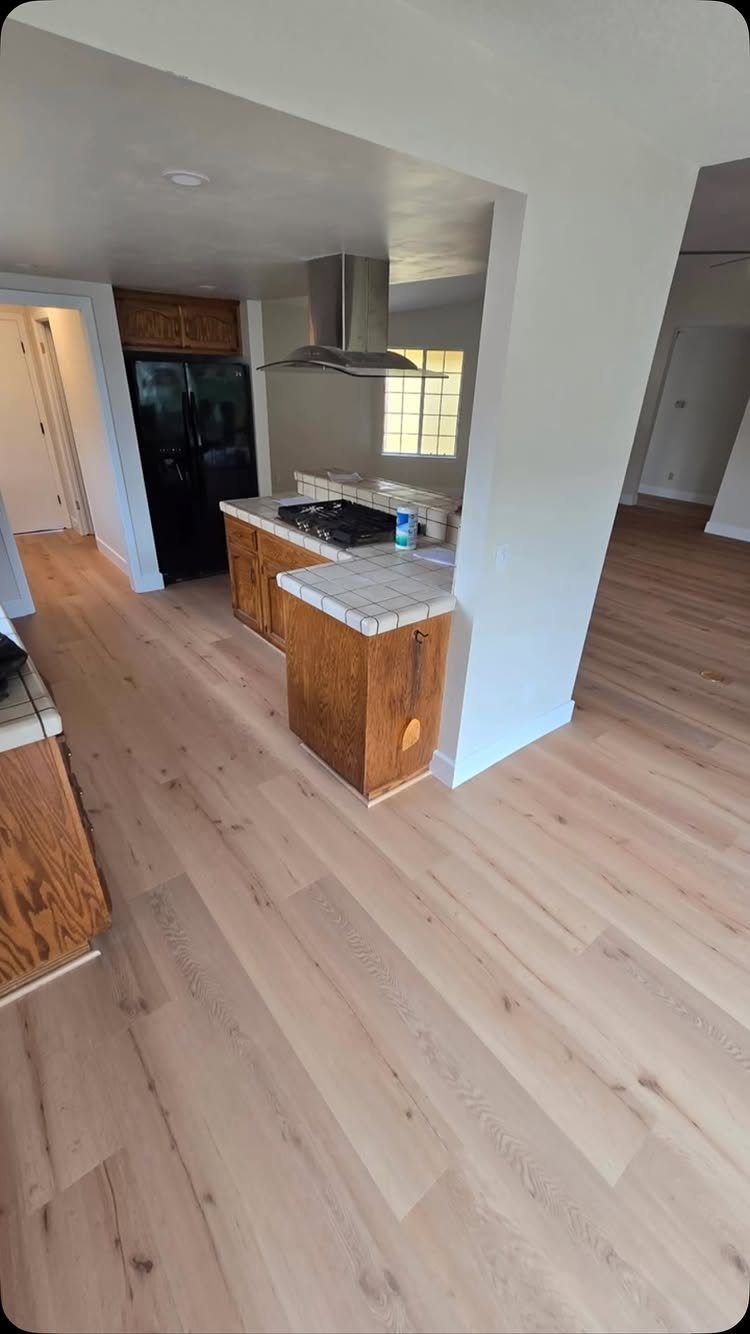
Pale, natural-stained white oak sets a tone that reads as optimism rather than drama, and that lightness bounces available light around rooms that need it.
The 5-inch plank width here hits a sweet spot for kitchens and hallways: wide enough to feel current, not so wide that cupping becomes a worry in humid months.
This finish pairs with oak cabinetry without matching it too closely, and it does not compete with wall color the way a stronger floor tone would.
I’d choose this for any house where the decor changes seasonally or where the floors need to stay quiet so textiles and art can hold the interest.

🪵 Authentic Reclaimed Barnwood: Made in the USA from 100% genuine, naturally weathered barn wood salvaged from American farms and homesteads.

Real Wood Wall Planks: 100% Real Barn Wood Wall Planks With Natural Knots and Dents, the Surface Of Wood Shiplap Planks Is Processed With High Temperature Carbonization, the Real Wood Wall Shiplap Planks Is Non-Toxic, Sterilized and More Safe For Children, Voc Free Process Ensures These Stick on Shiplap Planks For Walls Are Safe To Use In Home
3.14" x 18" Top Quality Heavy Duty Porcelain, Material is European Commercially rated Porcelain
7. Reclaimed Hardwoods with Rustic Saw Marks
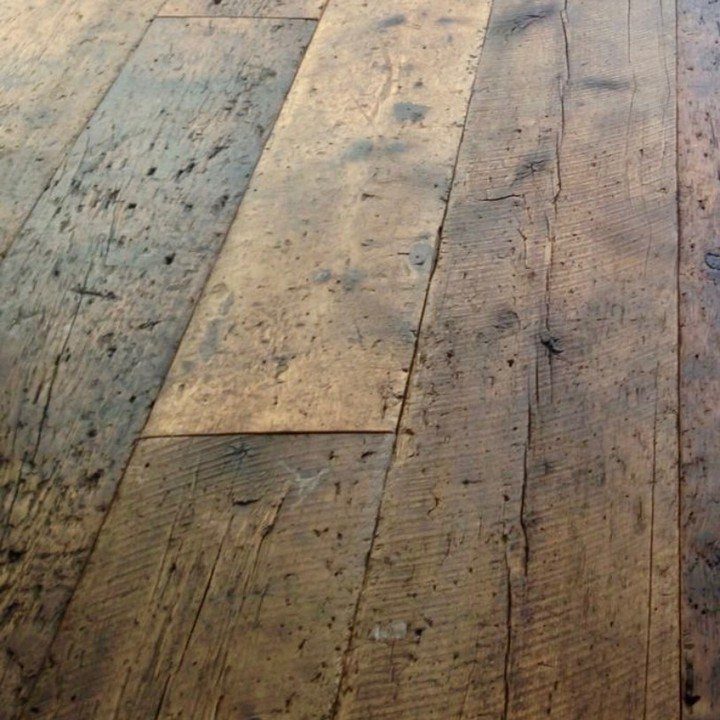
Reclaimed hardwoods with rustic saw marks carry the story of their first life right on the surface.
Circular saw marks, knots, and the natural cracks that formed over decades give each plank its own character, and the mix of species means the floor shifts subtly from brown to tan without ever looking planned.
This is the choice when you want warmth that reads as history rather than new construction. The saw marks catch light differently across the day, so the floor keeps changing instead of sitting flat.
For a heavy rustic look, keep the original texture as-is. A lighter touch means milling the surface slightly while leaving the marks visible.
The wood has already taken decades of wear and kept its structure; that durability is exactly why you choose it.
Best for: spaces where perfect uniformity would feel wrong.
If you thought mismatched wooden floors couldn’t look sophisticated, then it’s time to think again. Follow in blogger Pati Robins’ footsteps and use salvaged wood in different shades to score an eye-catching, patchwork-inspired kitchen floor.

RICH EVEN COLOR – Minwax Wood Finish is a deep penetrating, oil-based wood stain that provides beautiful color and enhances the natural wood grain in one coat. It’s perfect for interior staining projects such as wood furniture, cabinets, doors and more.

PROFESSIONAL WOOD FLOOR RESTORER: Restores wood floors, leaving them with a beautiful glossy finish

TUNG OIL, WALNUT OIL & BEESWAX: Formulated with tung oil, refined walnut oil, and beeswax to penetrate, condition, and protect bare wood while enhancing its natural color and grain.
8. Wide Plank Heart Pine
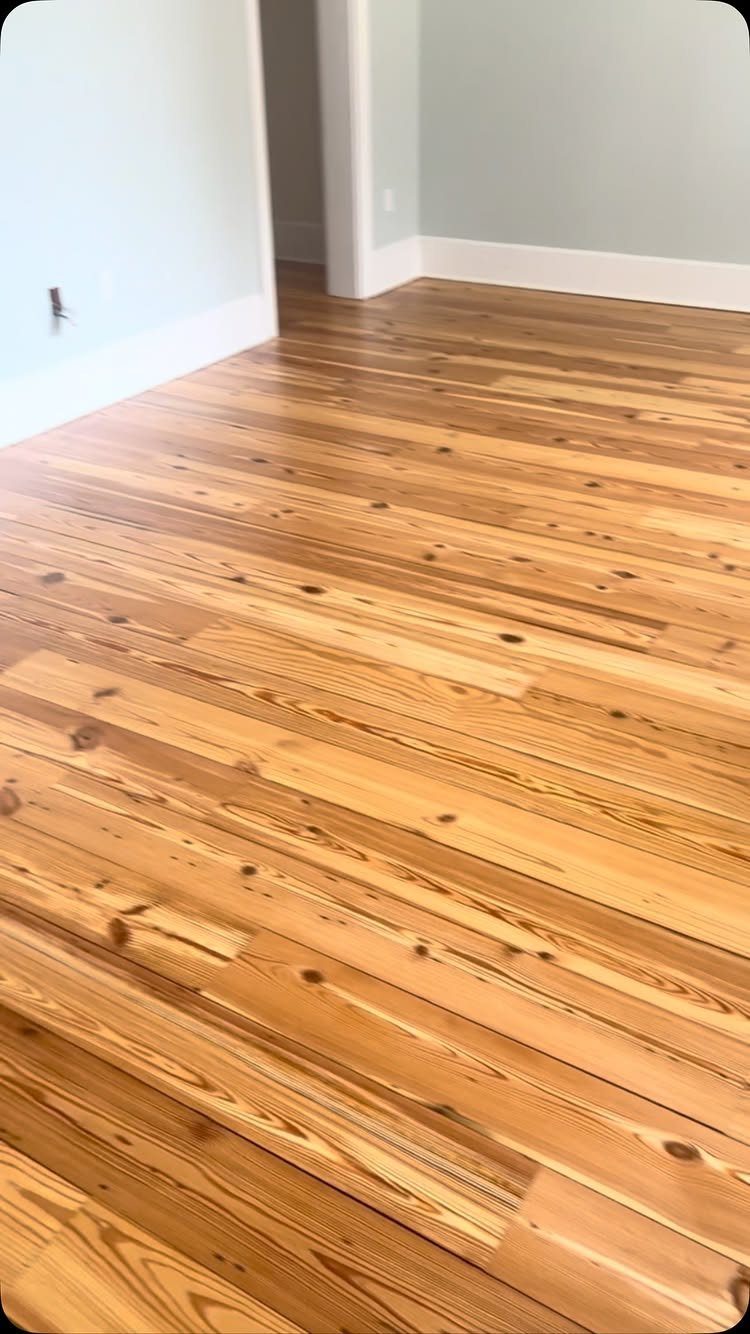
Heart pine starts out with a golden orange tone that brightens a room without going yellow, and wide planks let that color sit quietly instead of chopping it into strips.
The original circle-sawn texture from old joists gives you a decision: keep it heavy for a rustic surface, or mill it lighter if you want the grain to read more than the tool marks.
Long, straight boards are common with this wood because the joists ran that way for structural reasons, so you get fewer seams and a more restful floor.
Width matters more than most people expect. Narrow planks make a floor busy; wide ones let the eye rest.
In a small room, that restfulness pays off.
This wood suits anyone who wants warmth with history behind it. The tone is distinct enough that I would not pair it with competing statement pieces; let the floor carry the room.

Premium European Oak Construction: 7” wide samples from Flooret’s Silvan Resilient Hardwood Collection—crafted from sustainably sourced European white oak for timeless character and strength.

Bright and Natural Oak Finish: Featuring a clean, airy oak wood grain texture, this self-adhesive waterproof vinyl plank flooring brings a sense of spaciousness and Scandinavian-inspired warmth to any room. Perfect for modern, minimalist, Scandinavian, coastal, or farmhouse decor styles in your kitchen, bathroom, bedroom, or living room.
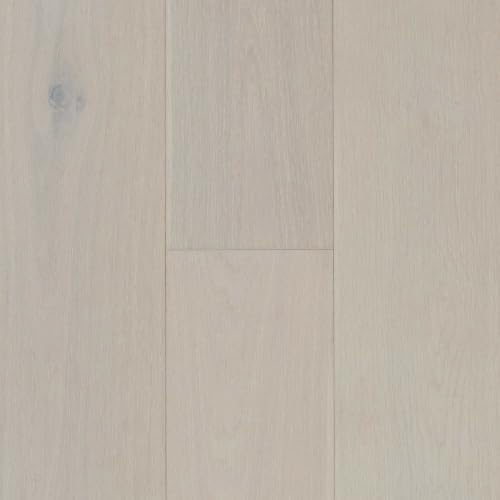
THIS IS A FLOORING SAMPLE - Cut from an actual full-size Aspen White Oak plank so you can see the true color, grain variation, and wire-brushed texture before purchasing.
9. Light-Colored Wood Floors in a Corridor
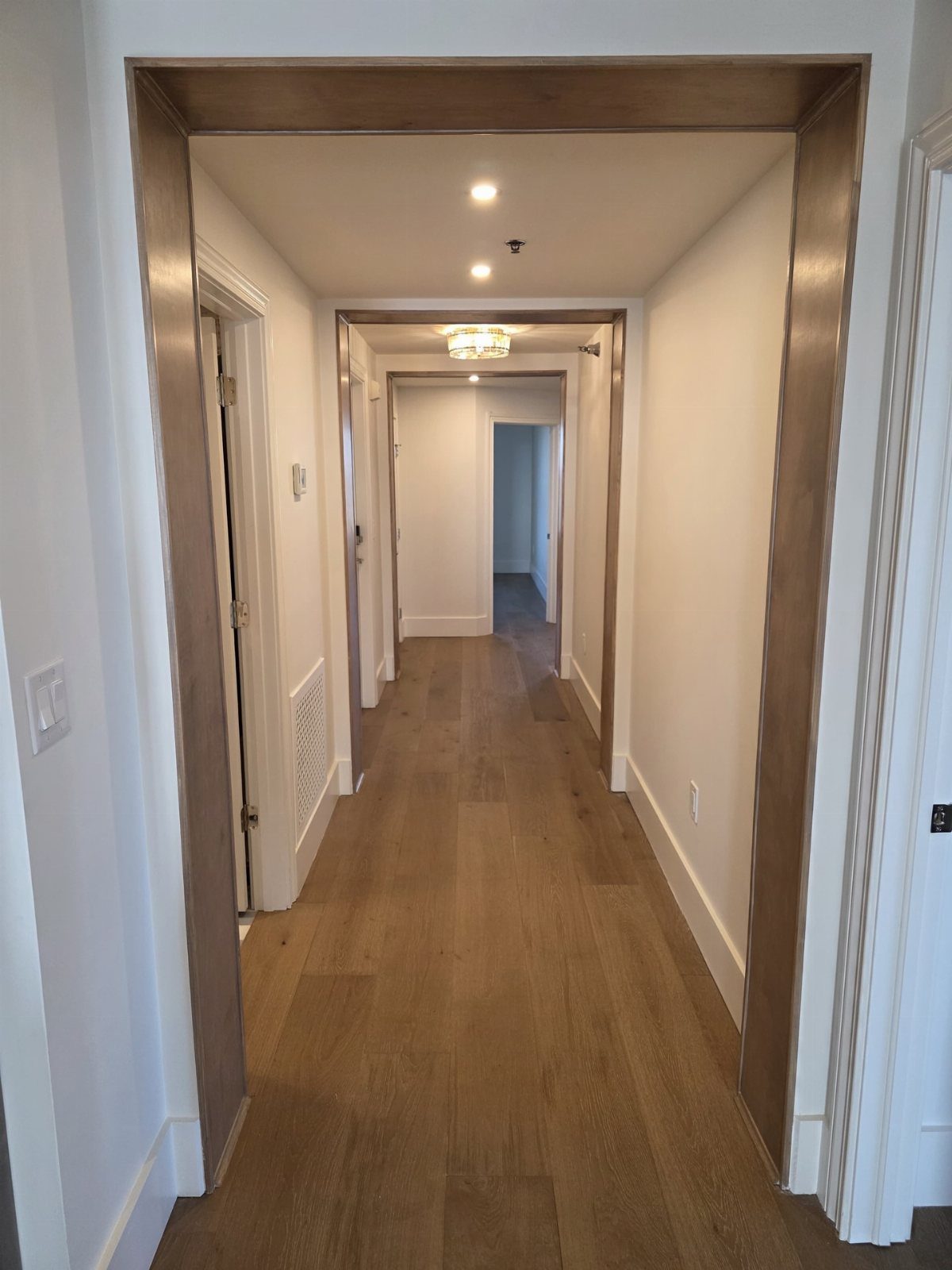
A corridor is a hard space to get right; it has no furniture to distract from proportions that are often awkward.
Light-colored wood floors run lengthwise to pull the eye toward whatever sits at the far end, and the planks themselves become the architecture.
Match the tone to wood and colors visible through doorways or glass, so the hallway does not feel like a separate room you pass through. Recessed lighting overhead keeps the ceiling clean and the focus downward on the floor’s direction.
The effect is elongation without effort. You are not decorating a corridor so much as threading it into the rest of the house.
This works best in narrow or windowless halls where every trick to stretch space matters. Dark floors would swallow the light and stop the eye; light ones hand it forward.

【Dimensions & Coverage】Vinyl flooring tile each tile measures 36"×6", with 32 pieces covering 48 sq ft in total – enough for most small to medium spaces like kitchens, bathrooms, hallways, or utility rooms.

Dimensions: DIN A4 (8.2 x 11.6 inches)
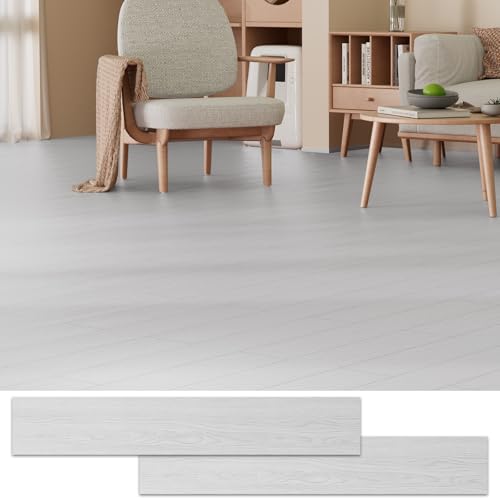
Textured & Versatile: Available in popular wood look with a natural matte finish that replicates the authentic feel of natural materials. The luxury vinyl plank flooring seamlessly complements Nordic, modern minimalist, industrial and other trending decor styles, instantly elevating the overall aesthetic of any space. Ideal for living rooms, bedrooms, kitchens and more.
10. Fully Custom Hardwood Floors
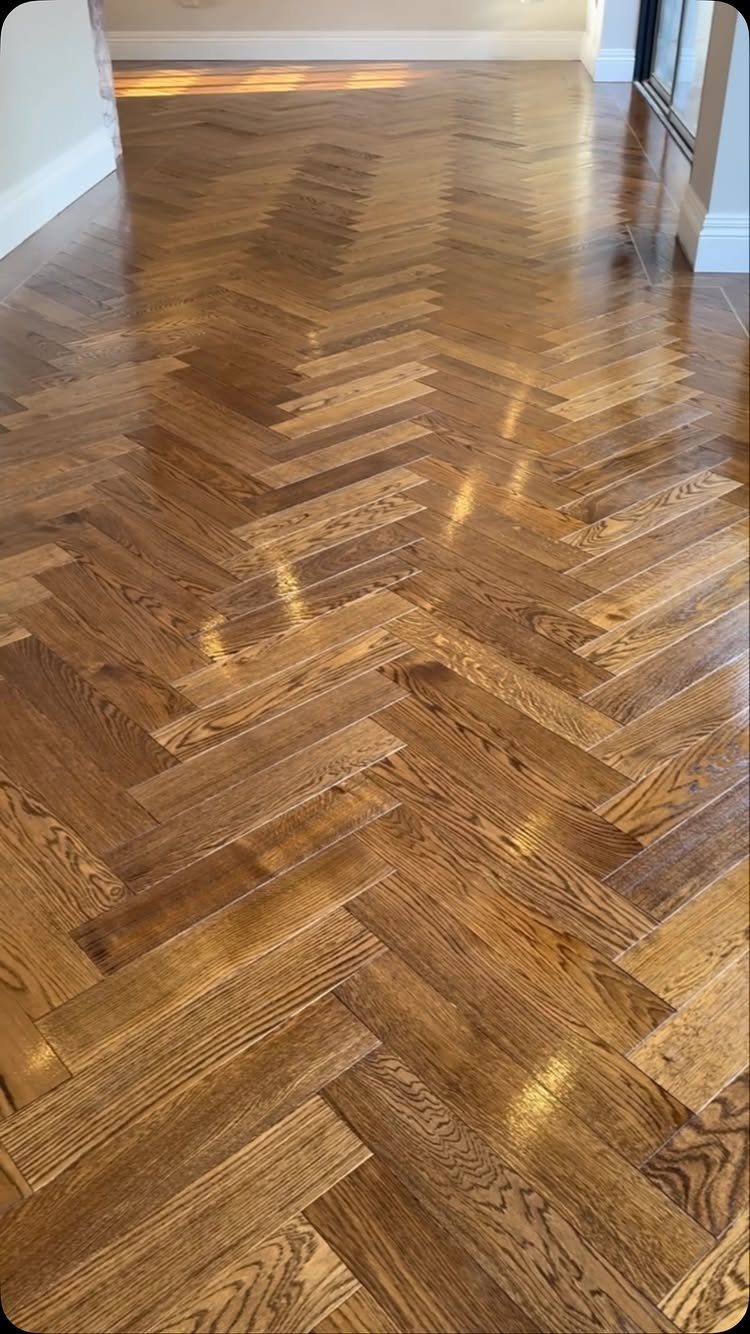
A fully custom floor is the answer when nothing off-the-shelf matches the balance you are trying to hit.
In a modern farmhouse, for example, the line between rustic and contemporary is thin; a stain mixed to your exact specification lets you land on it.
Start with the species. White Oak takes stain predictably and wears well, which is why it shows up in so many custom jobs.
Then work with a mill or flooring shop to develop the color, testing boards against your walls and cabinets in your actual light before committing.
Herringbone or another pattern adds labor but changes the whole character of a plain plank. A glossy finish reflects window light and keeps the geometry sharp; a matte would read softer and more casual.
This is not the fast or cheap route. Budget for sample rounds and a longer lead time.
The floor looks like it grew with the house instead of being picked from a showroom rack.

THIS IS A FLOORING SAMPLE - Cut from an actual full-size herringbone plank so you can see the true grain and pattern before ordering a full box. SPECS - 5 inch wide...
Choosing the Right Hardwood
Species matters first.
Construction splits between solid and engineered. A solid hardwood floor can take 3-5 sandings and refinishings before the boards get too thin.
Width should match your room.
Maintenance and Care
Hardwood floors need regular cleaning and occasional refinishing to keep their looks and their structure.
How often you refinish depends on traffic and wear. A bedroom might go decades; a hallway needs attention sooner.
Being able to sand it back to new changes whether hardwood actually saves money over the years.
Design Considerations
A floor has to live with what is already in the room.
Tight milling keeps boards flat and locked together where feet hit hardest. The floor has to withstand daily life in the exact spot it will be installed, not just look right in a showroom.
Trends in Hardwood Flooring
Dark, dramatic stains have been a major direction in recent years. The look works best against lighter walls and decor, so the room does not go heavy everywhere.
Dark stains, gray washes, and mixing wood tones for contrast have all picked up steam lately.
Frequently Asked Questions
What is the current trend in hardwood floors?
Matte and textured finishes have taken over from high-gloss floors that show every footprint. Wire-brushed and low-sheen surfaces let the grain read naturally without the mirror-like reflection.
Dark stains, gray undertones, and wide planks are also holding steady as popular choices.
What flooring choices do homeowners most regret?
Glossy floors frustrate people because they reveal every smudge and scratch the day after installation. Dark floors in small rooms swallow light and make spaces feel smaller than they are.
Cheap tap-and-lock systems gap and sound hollow within a year or two, and water damage ruins them fast.
What is the prettiest hardwood floor?
That depends on what you want the floor to do in the room. Walnut comes out of the mill with a deep brown tone that looks finished before any stain touches it.
White oak takes color evenly and holds up for decades, so builders keep specifying it for high-end jobs. Reclaimed hardwoods with saw marks and mixed species give you variation that no new floor can replicate.
How much does it cost to install 1000 square feet of hardwood floors?
A 1,000-square-foot install runs roughly $6,000–$12,000 for materials and labor, though your actual bid depends on the wood grade, your subfloor condition, and where you live.
Costs swing widely based on whether you choose solid or engineered construction, the species, the plank width, and whether the job needs custom staining or a specialty pattern like herringbone.
Engineered wide-plank European white oak runs higher than traditional 3 1/4-inch solid white oak, and reclaimed material adds milling labor before installation even starts.