A wooden privacy fence can run from a weekend of bolt-together rails to a full site-built pergola section, with costs scaling to match.
The deciding factor is usually what your ground does: flat lots favor the tight pickets and pointed tops of a stockade, while slopes demand vertical boards that run with gravity instead of trapping debris in stepped bottoms.
Every style below faces wind, water, or weight differently, and the right choice starts with knowing which of those your yard hands you.
1. Stockade Privacy Fence
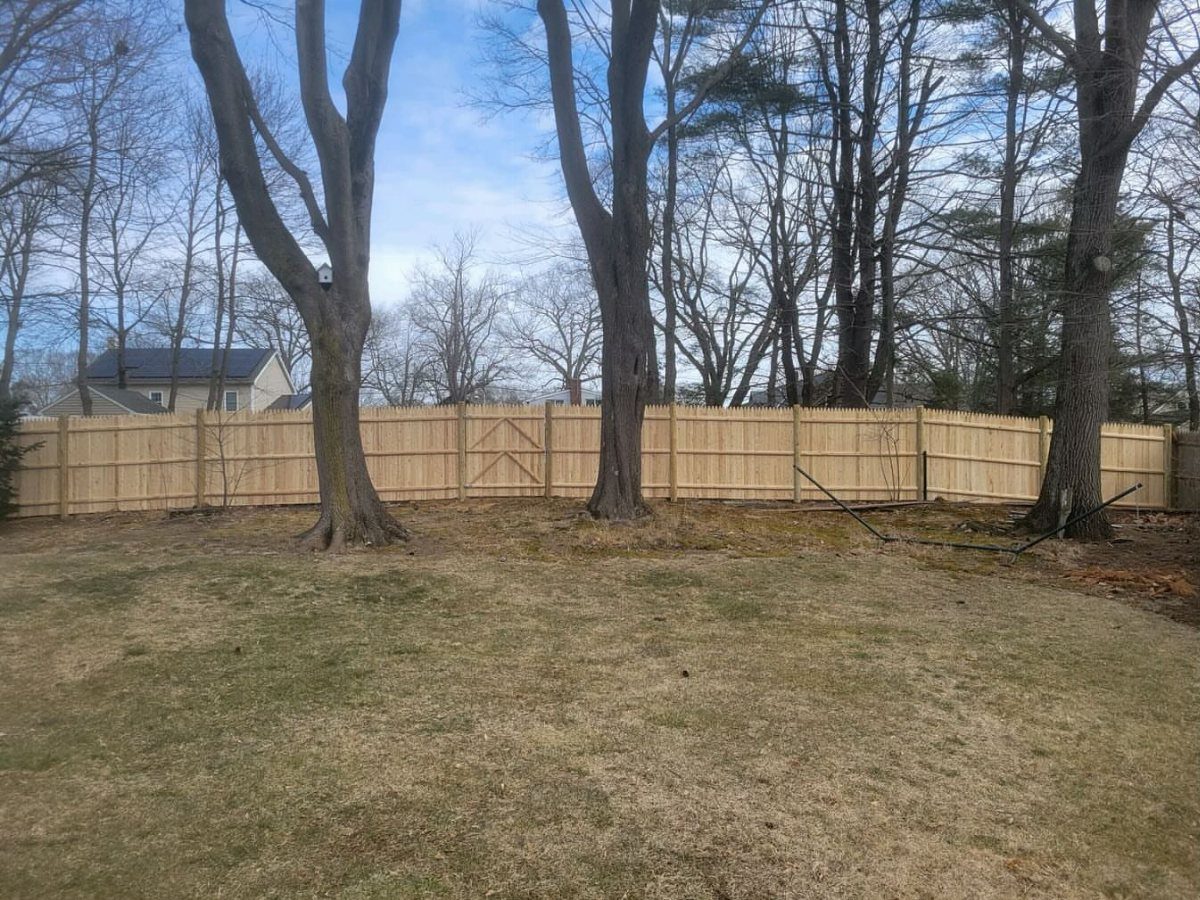
Pointed tops on tight vertical boards make a stockade fence impossible to grab or climb, which matters more than you’d think until a neighbor’s kid scales your boundary.
The 1 x 6 inch pickets and 2 x 3 inch rails lock together into a solid wall that also cuts road noise. Pressure-treated pine works, though cedar holds stain longer.
Set posts in concrete close enough to take the weight; full coverage pulls harder than open styles. This is the fence for flat lots and for people who want security first, looks second.
A slope turns the stepped bottom into a maintenance trap.

Natural Cedar Wood: This wood screen is made with thickened cedar wood and will never fade, differing it from vinyl fence screen panels which can not provide you a natural screen experience.

EASY ORDERING: Everything you need for your fence project is in the box except for the final post. Only ONE additional post, BL19112, is required for the end of your project. A gate is available by searching BL19111.
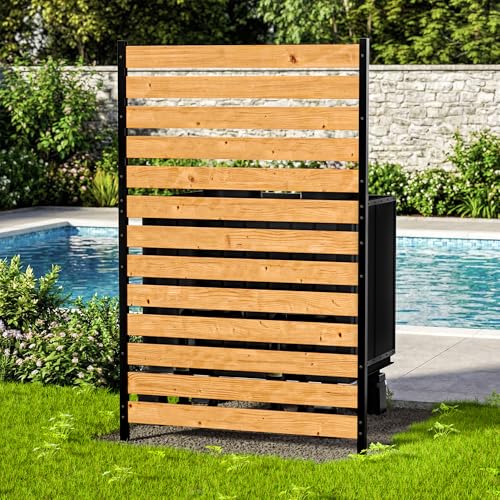
Real Wood & Aluminum Posts Our privacy fence is made with real wood, so no two boards share the same grain, color, finish, or knots—unlike vinyl outdoor privacy fence screen panels. Premium aluminum posts add strength and a refined look.
2. Lattice Top Privacy Fence
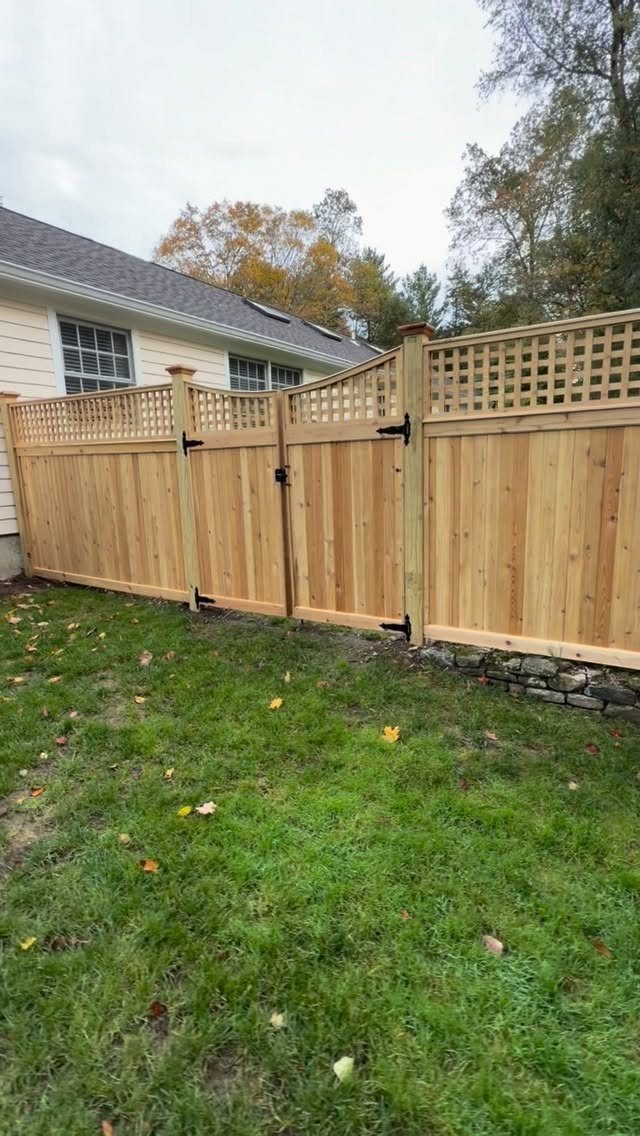
Lattice panels sitting on top of standard privacy boards give you the height without the heaviness.
Light filters through the crisscross, so the yard feels less boxed in, and the gap is enough to train clematis or jasmine up the post if you want a living wall later.
Tongue-and-groove pickets below with 1 x 4 inch rails keep the lower section solid; available heights run 48, 60, or 72 inches, with the taller options meeting pool code in most areas. I’d match the stain exactly rather than contrast it.
The lattice catches wind, so brace the frames to the posts or expect to refasten after the first winter storm.
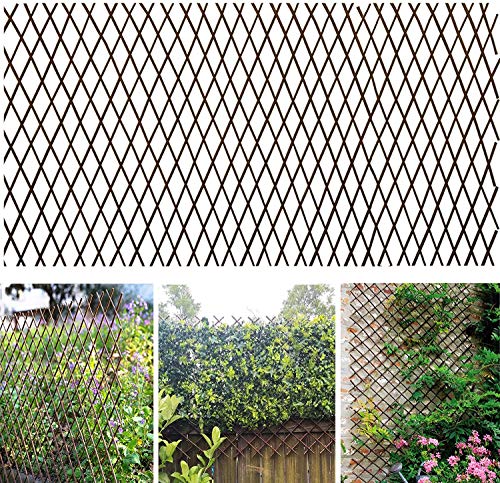
Willow Garden Trellis:This vine trellis are made of 100% real willow,willow sticks is are about 1/4” to 3/8” thick

Perfect Fit & Easy Installation: Our Privacy Screen Fence measures precisely 5' x 50', making it a perfect fit for fences 5 feet or slightly taller. It can be easily installed on chain link fences, existing cyclone wire fences, wooden retaining walls, welded wire fences, and more. For easy and secure installation, we've included grommets placed vertically every 1 foot and horizontally every 2 feet, with 4 grommets at each corner. We also provide 80 zip ties for added convenience.

Multifunctional: For your Apartment Patio Decor, Backyard Deck, Patio, Balcony, Pool, Porch, Fence, Railing, Gardening. Hand-stitched right here in southern California with the utmost precision!
3. Installing Gates and Finishing Your Fence
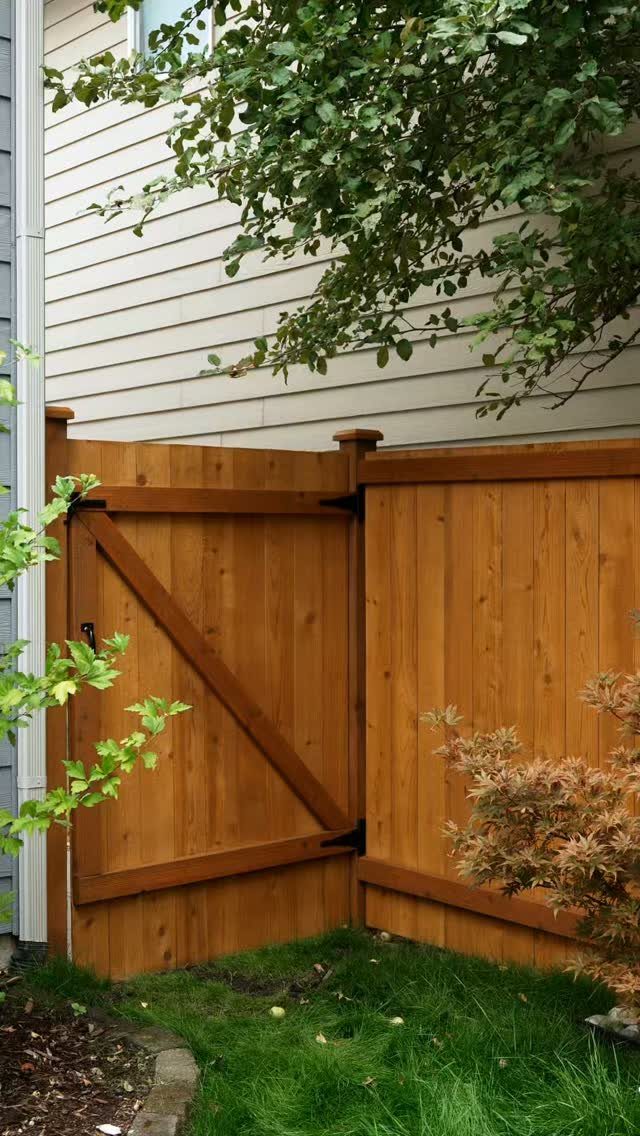
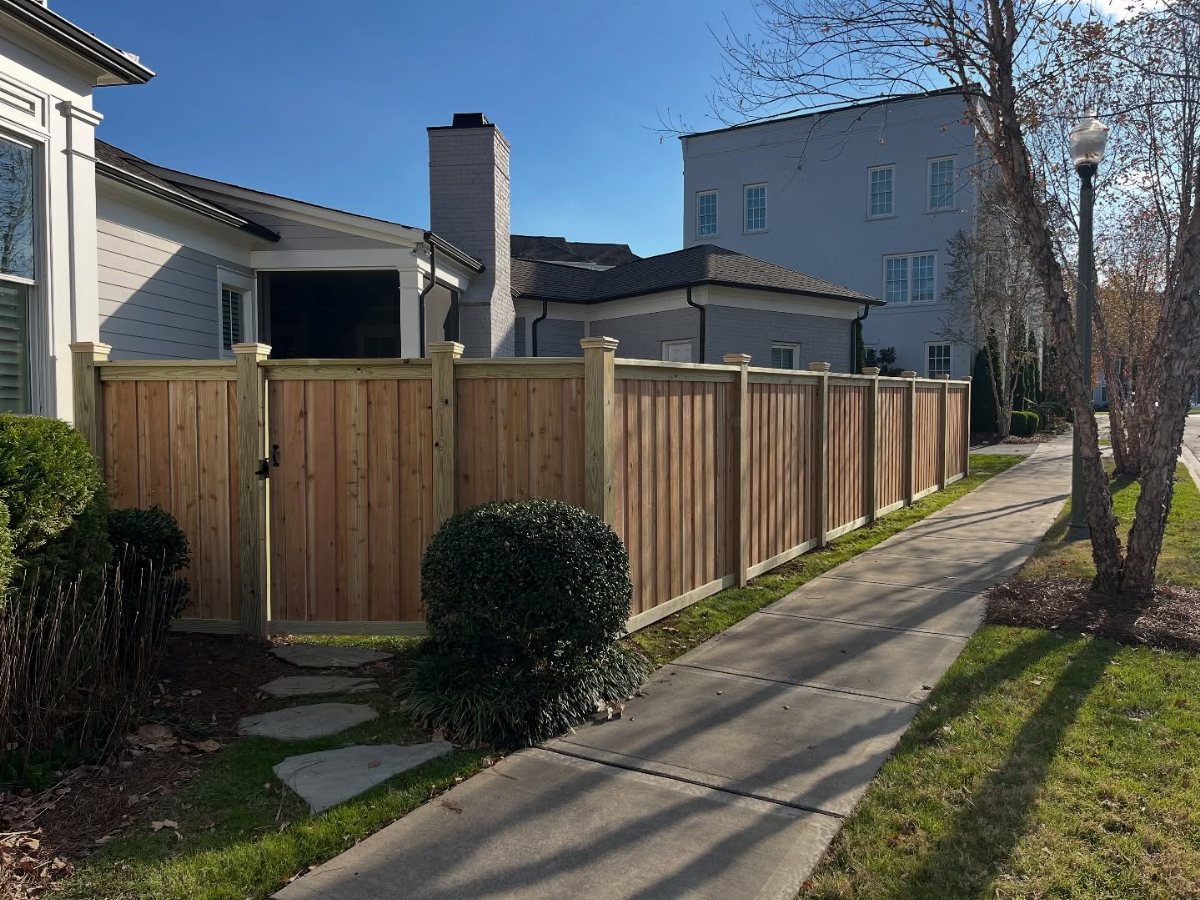
A gate is where amateur fence jobs fall apart. The diagonal cross-brace runs from the bottom hinge side to the top latch side, carrying the weight so the frame doesn’t sag.
Black hardware against warm stain is the combination I’d pick for almost any house style. Hang it with strap hinges long enough to support the width; a gate that wide needs heavy hardware.
Check swing clearance on both sides before you set the post, and sink that post deeper than the others. A gate post works harder than any other part of the fence.

【Natural Reed Fencing Rolls】ZNCMRR natural fencing replaces traditional faux leaf fencing that uses plastic. Made with natural carbonized reed to double the strength and safety of plastic ones, making it a great choice for anyone looking for a less-waste life.
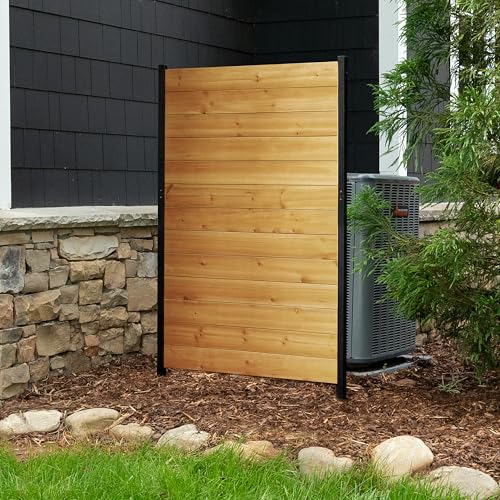
STYLISH NATURAL WOOD: This FSC certified wood screen is made with real wood meaning no two boards have the same grain color, finish, or wood knots differing it from vinyl outdoor privacy fence screen panels.

STYLISH NATURAL WOOD: This FSC certified wood screen is made with real wood meaning no two boards have the same grain color, finish, or wood knots differing it from vinyl outdoor privacy fence screen panels.
4. Vertical Board Privacy Fence
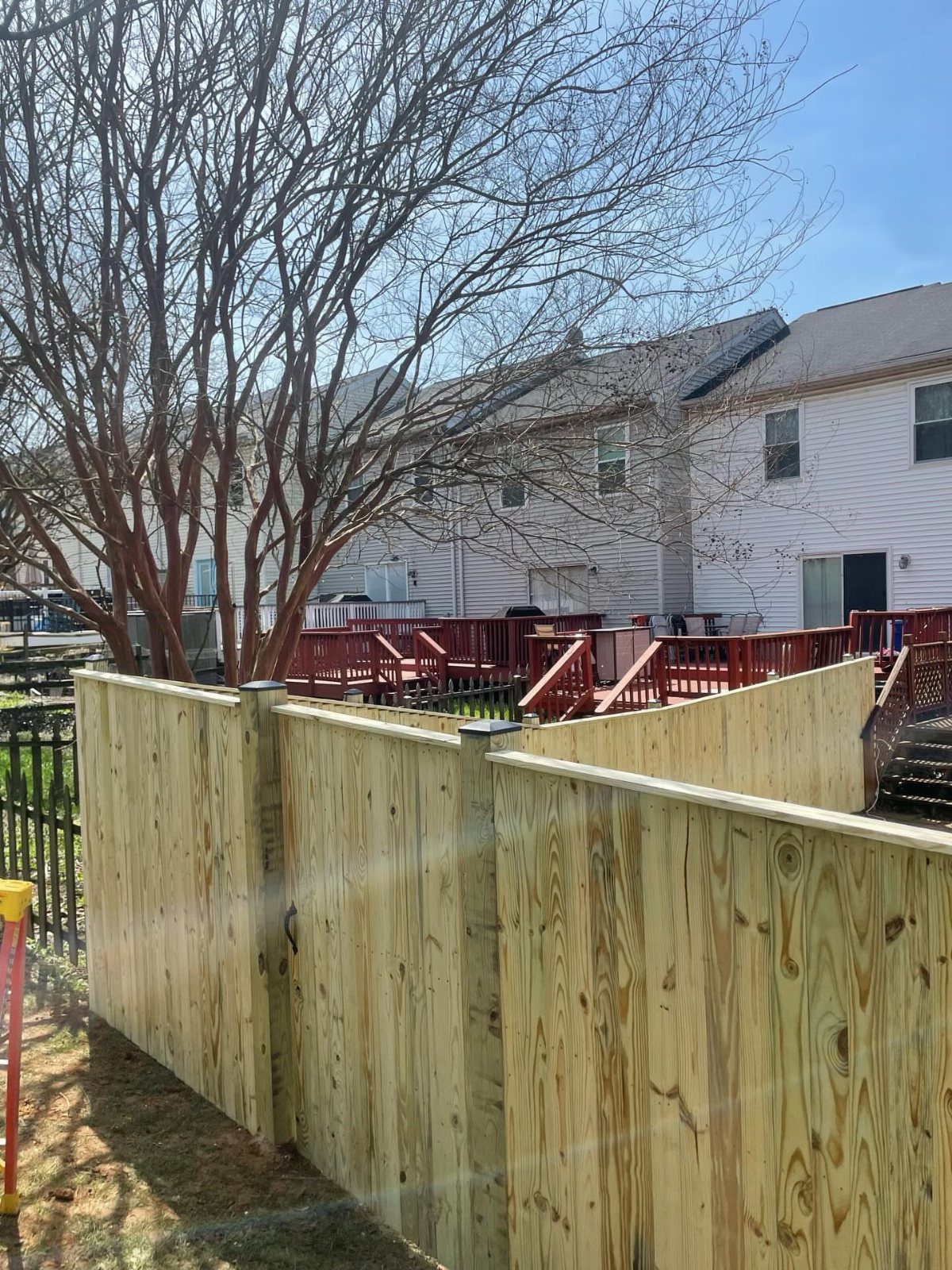
Straight vertical planks are the default for a reason: they work on front yards, backyards, slopes, and flat ground without calling attention to themselves. The boards run with gravity, so water sheds instead of pooling on horizontal surfaces.
Space posts evenly; the rails need consistent support or the line goes wobbly fast. Stain or seal every surface, including the ends where water soaks in fastest.
Post caps or a planter box hung between posts are easy adds if the plainness starts to bother you. This style suits people who want privacy without a statement, and it’s the safest choice if you might sell soon.

STYLISH NATURAL WOOD: This FSC certified wood screen is made with real wood meaning no two boards have the same grain color, finish, or wood knots differing it from vinyl outdoor privacy fence screen panels.

Neighbor Privacy, Not Blackout: Blocks direct line-of-sight while allowing airflow — designed for comfortable backyard privacy, not a solid wall or tarp.

Neighbor Privacy, Not Blackout: Blocks direct line-of-sight while allowing airflow — designed for comfortable backyard privacy, not a solid wall or tarp.
5. Horizontal Slat Privacy Fence
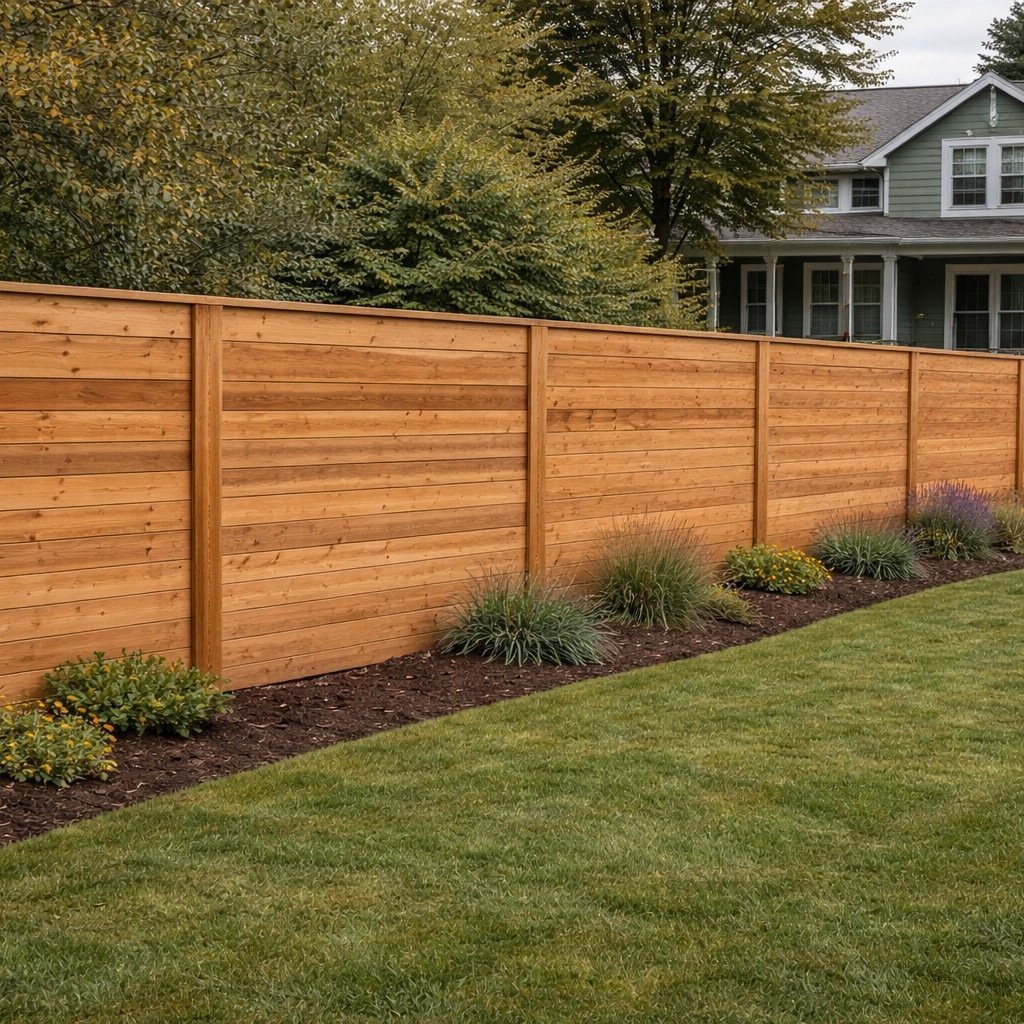
Horizontal slats read modern because the lines draw the eye along the ground plane, stretching a small yard visually. Boards set tight give full privacy, though you could gap them for filtered light and airflow if your climate runs hot.
Leveling matters more than with vertical boards; every slat is a straightedge that shows dips. Plan on more frequent refinishing than vertical styles.
Water lies flat on horizontal surfaces, and sun hits them harder.

Note: Installation of the latch and handle applies to the right door, for the left door you need to remove and install the latch again, the installation steps refer to the product details page

【Quality Materials】Wood gate hardware set made durable steel,black finish,durable and sturdiness, ensures your doors and gates last throughout the years.

【Anti Sag & Repairing】The no sag gate kit can keep new gate no-sag over time or repairing old sagging gate. This gate kit adopts the method of separating the hinge bracket and the cornor bracket, not limit the width of the gate post during installation.
6. Shadowbox Privacy Fence
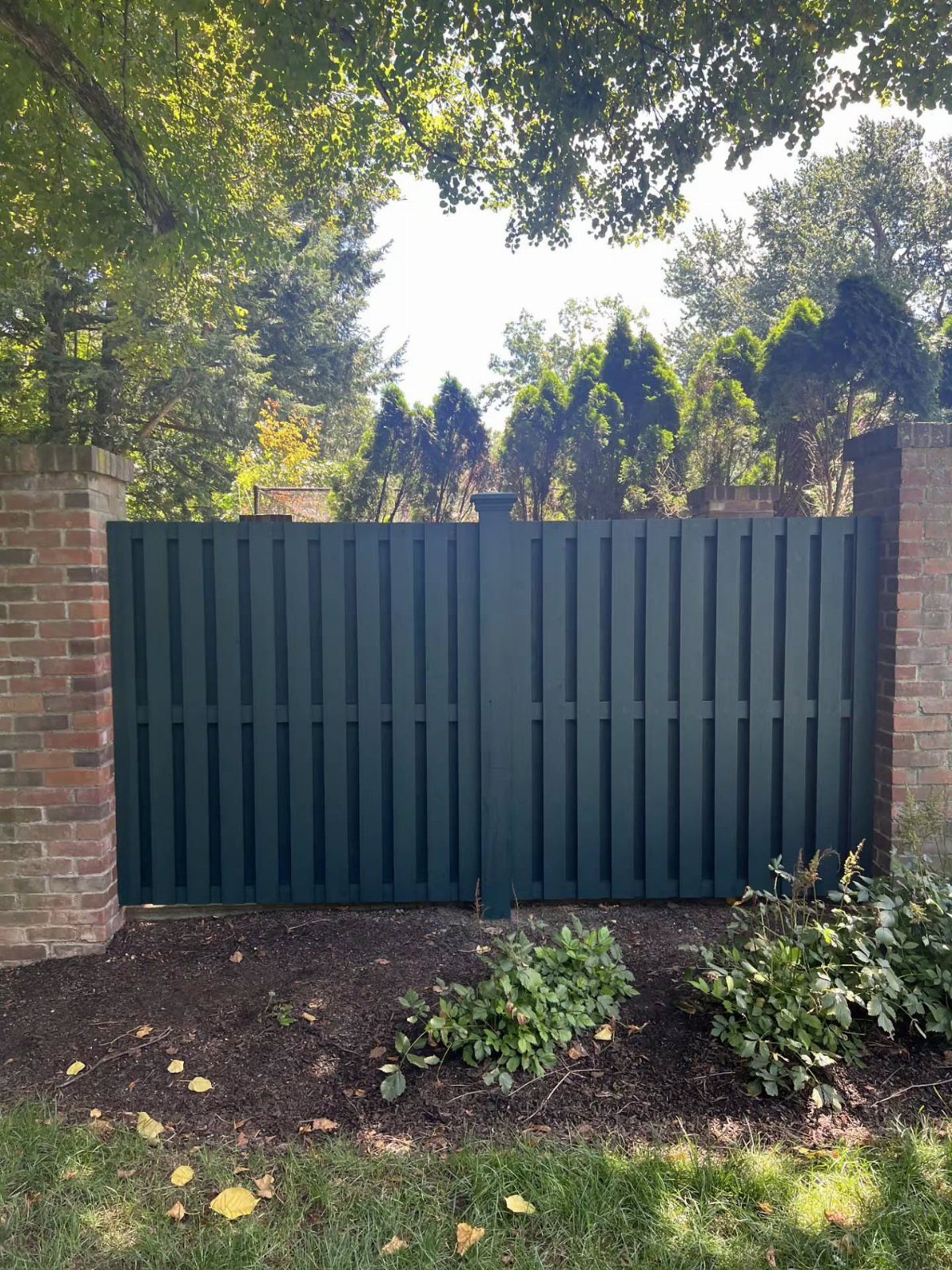
Shadowbox boards alternate from side to side, so the fence looks finished from either direction. That symmetry costs you some privacy; the gaps let light and glimpses through, though not enough to ruin a boundary.
Air moves through the staggered boards, so you get privacy without trapping summer heat against the wood. Wind slips between the boards instead of pushing the whole panel like a sail, which saves your posts in exposed locations.
The staggered depth also throws shadows that shift through the day, more interesting than a flat wall. Staining brings out the grain on both faces.
Precision matters: uneven spacing breaks the rhythm fast. This is the choice for long property lines where both neighbors see the fence, or anywhere the wind howls.

Privacy fence screen– Our artificial ivy privacy fence panels provide an instant solution to create a cozy, secluded space. Whether you need to cover an unsightly chain-link fence or add a green touch to your balcony decor, this versatile privacy screen fence offers 95% visual blocking while transforming any dull area into a lush, natural-looking garden retreat.
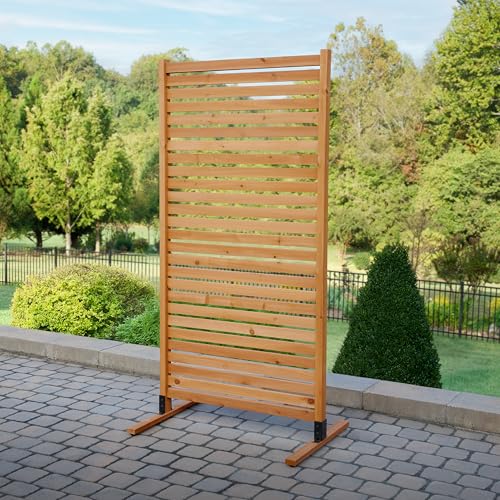
STYLISH NATURAL WOOD: This FSC certified wood screen is made with real wood meaning no two boards have the same grain color, finish, or wood knots differing it from vinyl outdoor privacy fence screen panels.

Details: Artificial ivy wall is 120 inches long and 40 inches wide, with green faux ivy leaves. Made up of 12 small panels (connected).Can cover 33.33 square feet. the faux Ivy Vine are textured and look real. You can reassemble or cut to get the size you want. 50 cable ties are included to assist in installation.
7. Fence with Attached Pergola
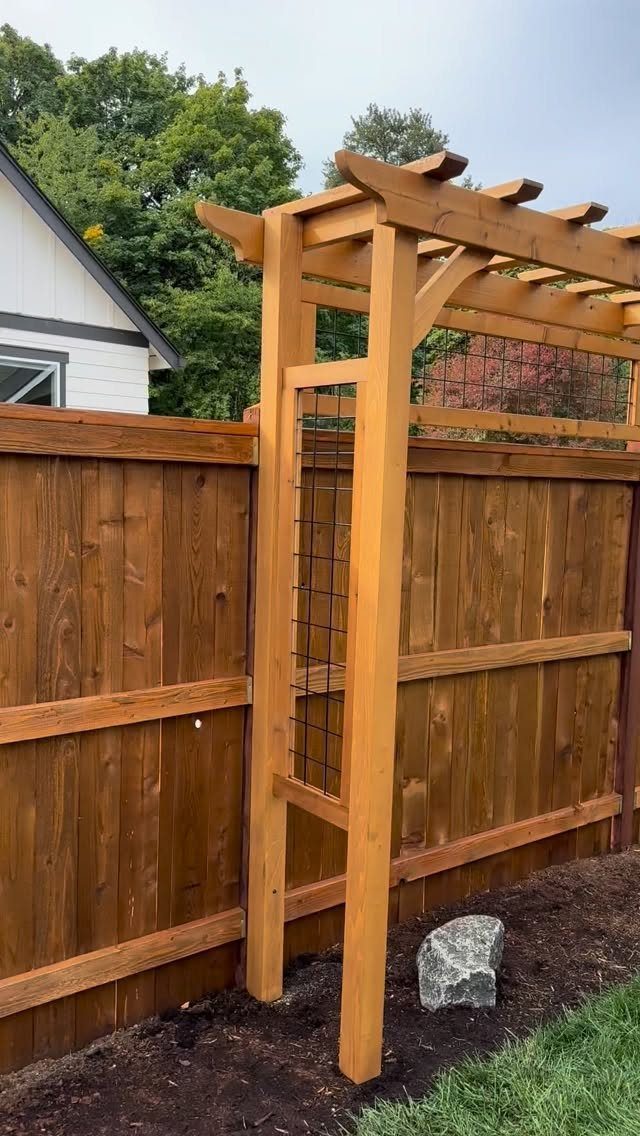
A pergola built into the fence line turns a plain boundary into an outdoor room.
Curved rafters soften the vertical boards without cutting the privacy they give, and wire panels behind them are ready for vines if green coverage comes later.
The pergola section works best at a gate or a corner where people actually pause. I’d put this one where the fence runs longest and dullest, to break the stretch without breaking the budget.

This expandable faux ivy fence privacy screen are made of real woods with realistic look artificial leaves.Free replacement within 3 months if you are not satisfied with our products.

NATURAL WOODEN TRELLIS FOR CLIMBING PLANTS: Crafted from natural wood, this expandable lattice fence provides reliable support for climbing plants, vines, roses, ivy, cucumbers, and other garden plants. Encourage healthy upward growth while enhancing the beauty of your outdoor space

QUALITY : This expandable faux ivy privacy fence screen are made of real willow wicker and with realistic look artificial leaves. Different from other faux ivy fence screen, our Eco friendly willow fence will not hurt your family and your soil. All the willow had been treated to make sure our fence is very durable.
8. Wood Fence with Metal Posts
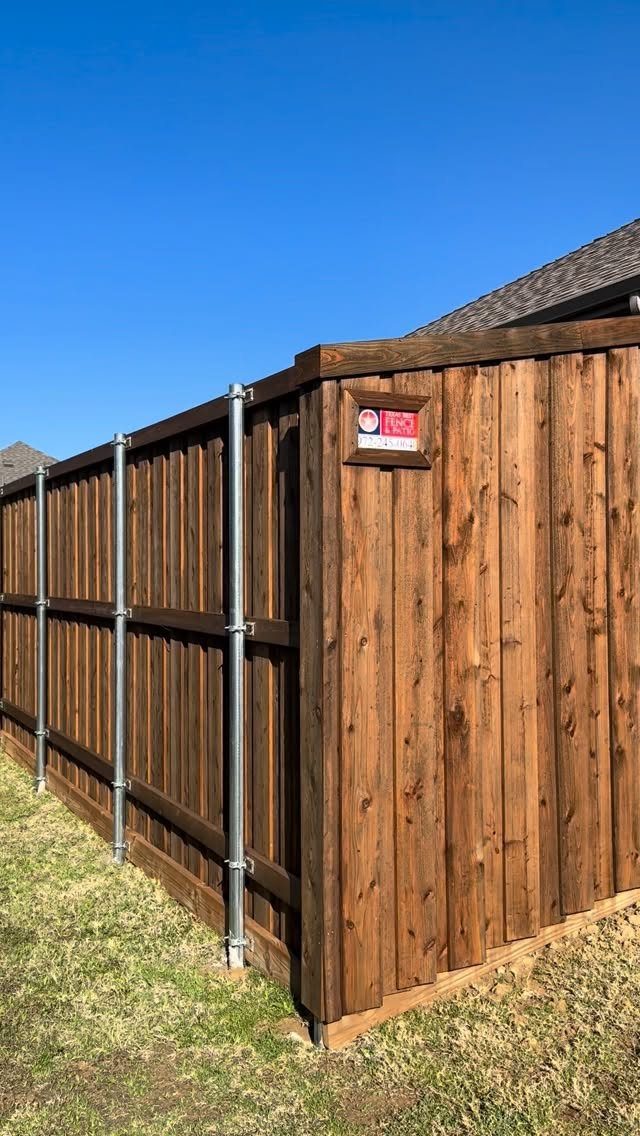
Metal posts do the hidden work so the wood can stay pretty. Galvanized round posts set in concrete outlast pressure-treated 4x4s by years, especially in yards that stay damp or freeze hard.
Silver posts read as industrial against a dark stain, which some homeowners like and others do not.
Metal costs more than wood posts and needs precise layout, since you cannot shim or shave later. For a tall fence or a long run taking wind, the extra rigidity pays back.
For a short boundary in a sheltered yard, wood posts do fine and keep the whole thing warmer to look at.

1 SCREEN PURCHASE: You will receive preassembled materials to construct 1 cedar wood outdoor privacy screen in a charcoal finish with your purchase

Enhance Privacy & Beautify Spaces: This stylish wooden privacy fence is perfect for concealing unsightly outdoor items such as air conditioning units, trash bins, and pool equipment. It also doubles as a garden privacy screen, keeping children and pets safely away.

Realistic Natural Look: Artificial ivy wallscreen measures 120" long and 40" wide, this artificial ivy privacy fence screen is constructed with vein-detailed green faux ivy leaves. Adjustable leaf orientation lets you tweak the look for a fuller, more organic appearance. lifelike foliage builds an elegant green backdrop and elevates visual effect for your patio, garden and living area, bringing you immersive green scenery.
9. Fence Mounted Planter Boxes
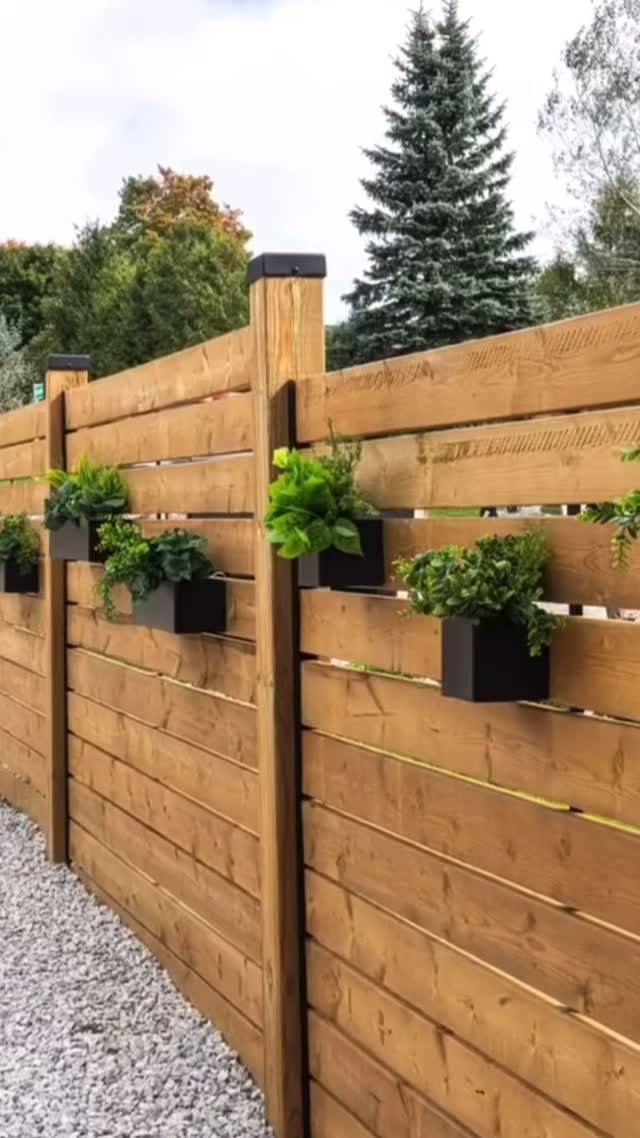
Planter boxes hung on a fence borrow vertical space when ground planting is not an option.
Black rectangles sit at intervals along the horizontal boards, shallow enough that they do not sag the rails but deep enough for herbs or trailing greens.
Weight is the thing to watch: wet soil in a wide box runs heavy fast. I would mount to the posts, not the boards, and keep the boxes shallow.
Annuals and shallow-rooted herbs suit this; tomatoes and deep perennials want the ground. The gravel base below means no splashing mud, which keeps the fence cleaner than ground-level beds would.

REALISTIC WOOD-LOOK WITHOUT THE MAINTENANCE: Beautifully embossed wood-grain boards provide the warm, natural look of real wood in Slate Grey or Walnut Brown — no staining,...
10. Fence Atop Concrete Wall
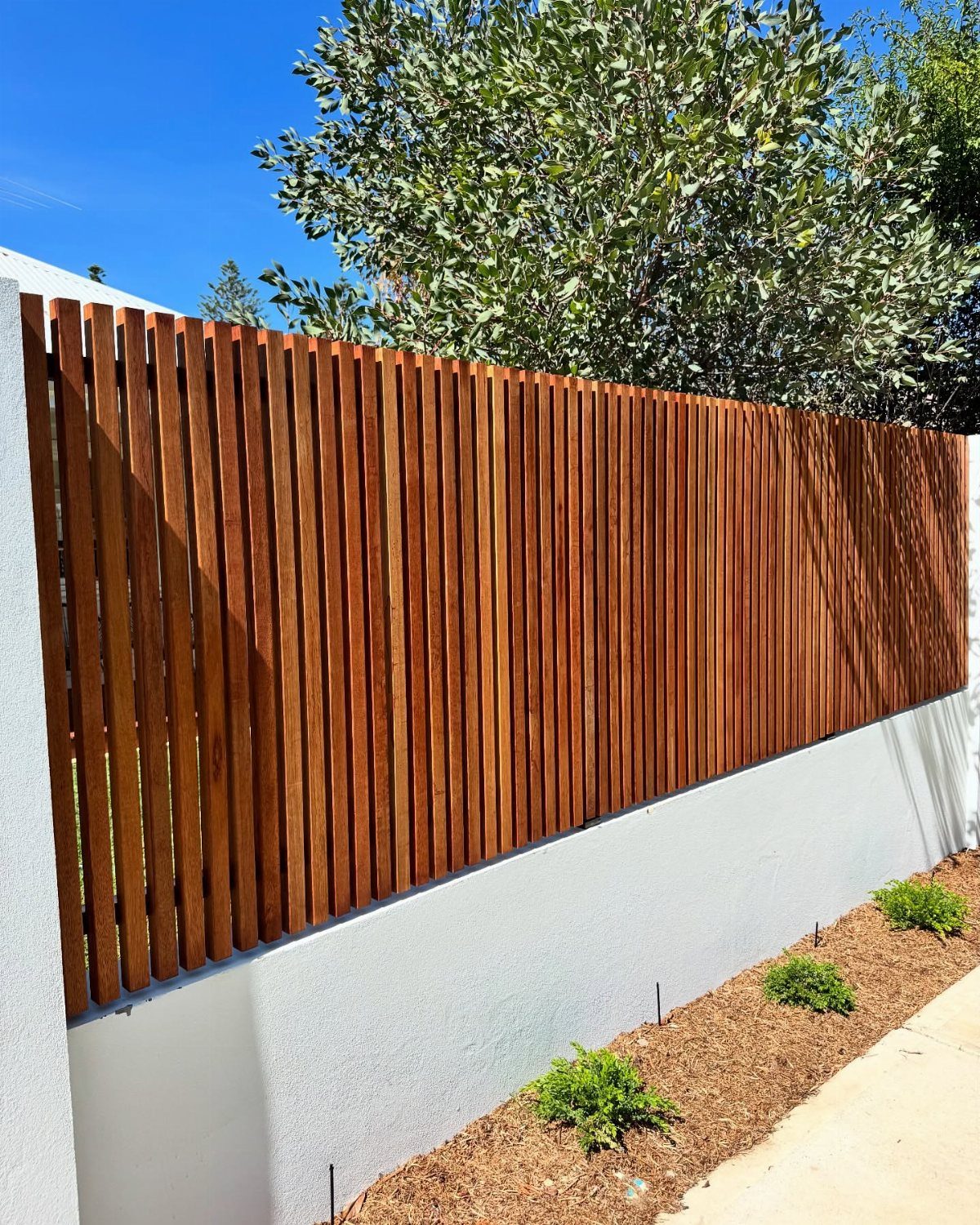
A concrete wall already in place saves digging post holes and pouring footings. The slat fence on top gains its height from the wall’s mass, which also blocks sound and soil movement that wood alone cannot manage.
The joint matters most. The wall must be level and strong enough to take anchors or brackets; a crumbling or thin cap will not hold.
I would check with the local building department, since many places count total height from ground level and a wall plus fence can cross a permit line.
Where it works, though, it reads as intentional architecture rather than a fence trying hard to be tall.

[Durable & Sturdy] This fence gate hardware kit is crafted from premium steel with a black powder-coated finish for corrosion and rust resistance, specifically designed for various outdoor gates; Heavy-duty gate hinges feature an integrated bearing design for structural stability, effectively preventing gate sagging.
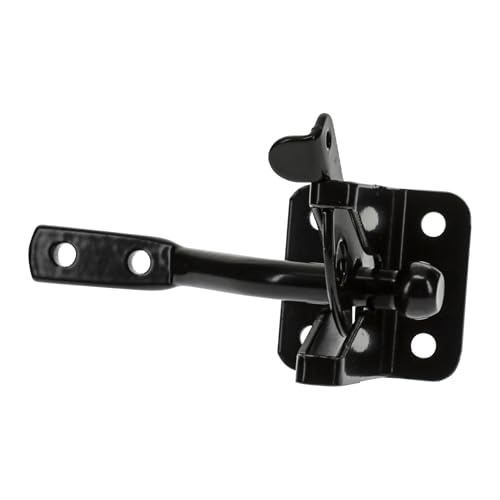
AUTOMATIC GATE LATCH: Self latching gate latch mechanism provides hands-free convenience for outswing gate latches, doors and animal pens with fingertip release that engages automatically upon closing for secure operation.

【Package Include】This wood gate fence hardware kit includes 2 pack self-closing gate latch,4 pack heavy duty gate hinges and all necessary screws,Whatever indoors or outdoors useful items are widely applied in daily life
11. Round Timber Pole Fence
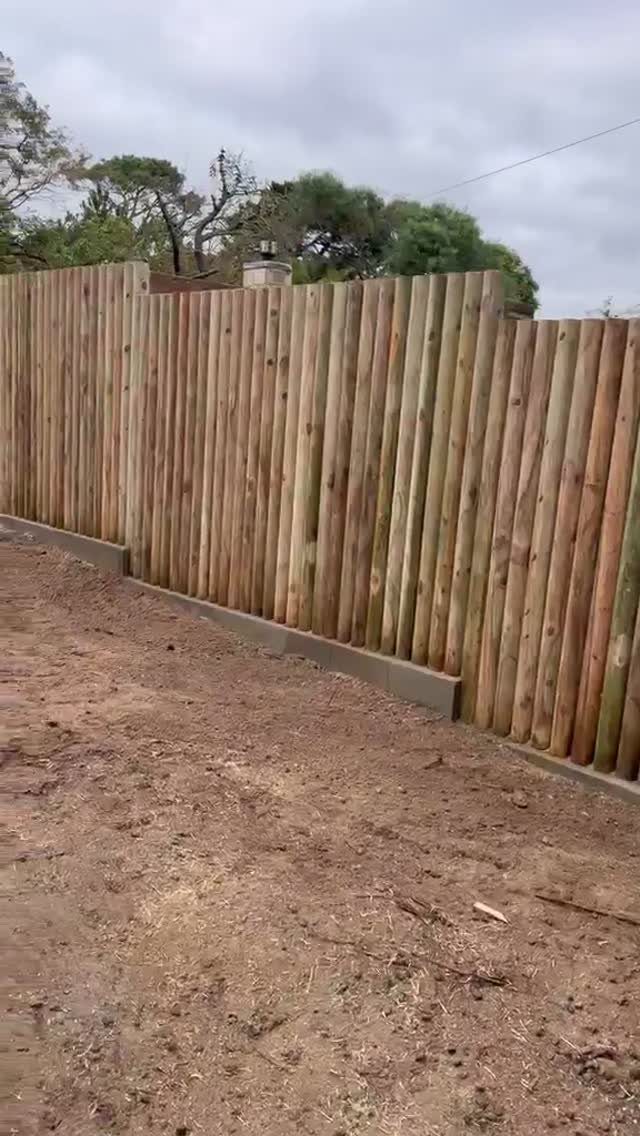
Round poles set tight give a fence the look of a stockade without the machine-cut uniformity. The poles sit in a low concrete curb, which keeps them plumb and stops ground contact from rotting the butts.
The poles need to be straight enough to pack tight, yet the charm comes from slight variation in diameter and bark texture. Peeling or uniform logs read as staging, not structure.
Drying matters: green poles will shrink and loosen their fit. I’d ask the supplier how long they have been stacked and look for checks starting to open, which means the worst movement has happened already.
This style suits wooded lots and informal boundaries; against a clipped lawn and brick house it can look like a theme park.
12. Deck Railing Privacy Screen
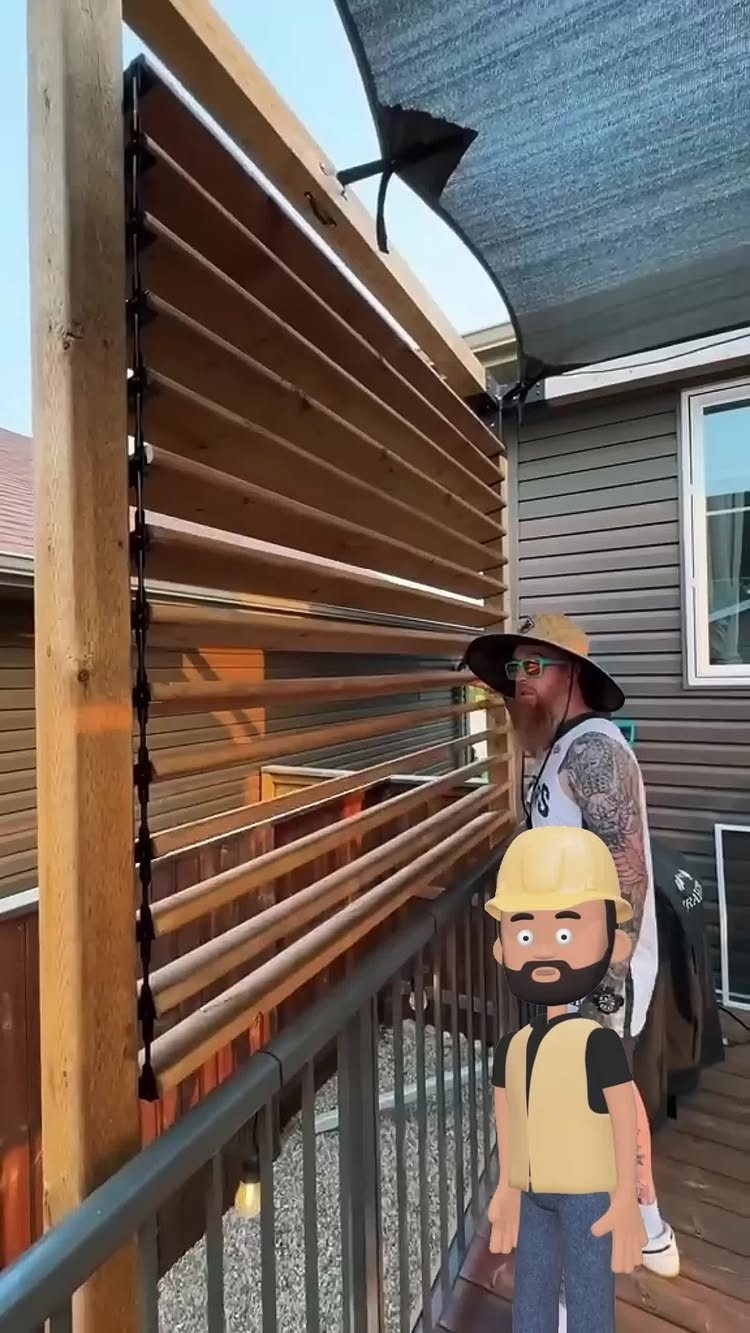
A screen on a deck railing closes the gap between sitting height and neighbor sightlines. Adjustable louvers let the owner dial between breeze and blocking, which matters more on an elevated deck where wind is already stronger.
Mounting to railing posts keeps the load off the deck boards themselves, but the posts must be solid; a railing built to minimum code will flex and eventually loosen any attached weight.
I would check the gap between slats or louvers against local code, since some places treat these as guardrail substitutes and require narrow maximum openings.
For a second-story deck facing close houses, this beats a full fence that would turn the deck into a well.
Security Benefits
A fence buys time. Most thieves look for easy ground, and a locked gate with 6 feet of solid wood in front of them is not it.
That delay is what buys you the time. For children and dogs, the same height works in reverse: a toddler cannot work a latch above eye level, and a dog who clears 4 feet still meets another 2 he did not expect.
I would set the latch high on any gate that faces a street or alley, and keep the bottom rail close enough to the ground that a small dog cannot slip under.
The stockade style from the list handles both problems best; the lattice top leaves footholds for climbers of every species.
Cost of Installation
Fence installation runs between $1,800 and $8,000, with the average landing near $4,300 for a full privacy job. Contractors price by the linear foot, usually $10 to $50, so measuring your line yourself catches the quotes that drift.
I would get 3 estimates before committing, since material markups vary more than labor in most markets. At the low end of that per-foot range sits pressure-treated pine; cedar and redwood climb toward the top.
Doing the dig and set yourself saves roughly half the total, but rental fees for an auger and a few Saturdays of hard ground eat some of that back.
Enhancing Curb Appeal
A fence is the first thing buyers see from the curb, and a straight line with fresh stain reads as care taken everywhere else.
The capped styles mentioned earlier do this most deliberately: that top board sheds water and gives the eye a clean finish line.
I would match the stain to the house trim rather than the siding, since trim color already repeats at windows and doors and ties the fence into the whole facade.
Post caps in copper or black metal are a small add that photographs well for listings.
Understanding Local Regulations
Local rules and HOA guidelines govern height, materials, and placement, and checking them costs nothing compared to moving a finished fence.
I would pull a property survey before any post goes in; neighbors have sued over 6 inches of encroachment, and a verbal agreement does not survive a sale. Some associations ban specific stains or require board-on-board facing the street.
Call the building department early, and get any approval in writing. The hour spent on paperwork saves the month spent on corrections.
Frequently Asked Questions
What is the cheapest privacy fence to build?
A stockade fence with pressure-treated pine is usually the cheapest wooden privacy fence to build.
A basic rail-and-picket build skips the extra framing, the decorative cuts, and the post caps that fancier styles demand, so the lumber bill stays low and the cutting stays simple.
Vertical board fences run close in price and waste less material on a slope.
How much to install 200 feet of privacy fence?
A 200-foot wooden privacy fence typically runs $2,000 to $10,000 installed, with most falling in the middle depending on wood species and height. Pressure-treated pine with wood posts lands near $3,000; cedar or redwood on metal posts can push past $6,000.
Get three quotes; prices spread wide by region and season.
How much is a 100 ft wood fence?
A 100-foot wood privacy fence usually costs $1,000 to $5,000, materials and labor together. Stockade or plain vertical boards in pressure-treated pine start around $1,800; horizontal slat or shadowbox layouts in cedar run closer to $3,000.
Do the math per linear foot and add 10 percent for the boards that crack before you nail them.