These projects run from a Saturday’s worth of Frog tape and two paint colors to a full weekend with a rented miter saw and brad nailer.
What separates one idea from another is whether you can leave holes behind: renters need paint-only options like color blocking, while owners can nail up MDF battens and add actual value.
1. DIY Geometric Accent Wall
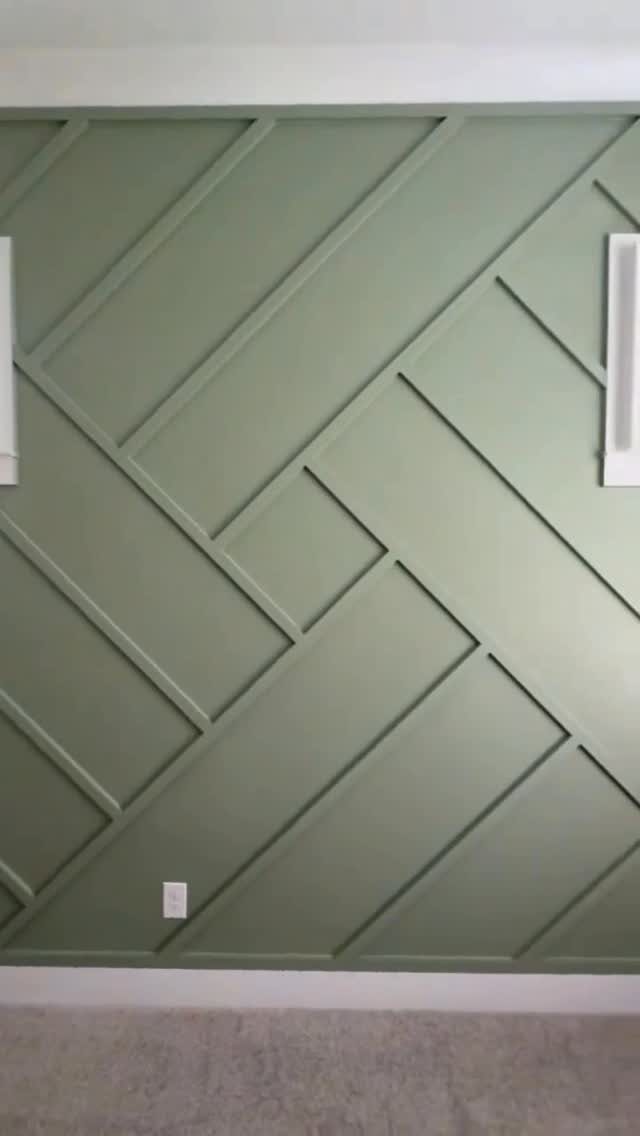
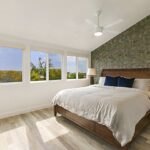
A geometric accent wall built from wood battens turns a flat surface into something that catches light differently at every hour of the day.
Swap the green for your own color and tighten or loosen the pattern spacing to match the room. Pre-primed MDF boards save a sanding step, though real wood trim costs more and takes stain if you want warmth later.
A miter saw and brad nailer are the minimum tools; rent the saw for a weekend if you do not own one.
The pattern itself is drawn straight on the wall with a level and pencil, then pieces are cut to fit.
This suits renters only if they are ready to patch nail holes when they leave; for a permanent home, it adds actual value. Check that your wall has no hidden pipes or wiring where you plan to nail.
If you want to add a punch to any room, add a geometric pattern. This hot trend in home interiors can enliven any space.

Complete Mixed Size Kit: this wood slat wall decor kit includes 37 pre-cut wood slats (each 1.6" wide x 0.4" thick) in 7 lengths: 8 pieces at 5.9", 8 at 7.9", 8 at 9.8", 4 at 11.8", 4 at 13.8", 2 at 17.7", and 3 at 21.7"; Also includes four 5.9 x 5.9 x 0.8-inch accent boards; Note: adhesive and hardware are not included

Visual Style: peel and stick wall panels present a triangle silhouette with european walnut tone and straight cut edges for a sharp geometric look; Felt and PVC wood veneer help the finish stay neat through everyday display

PACKING QUANTITY: Come in box of 12 panels which cover 32 square feet, individual size is 19.7” X 19.7”
2. Geometric Wood Accent Wall
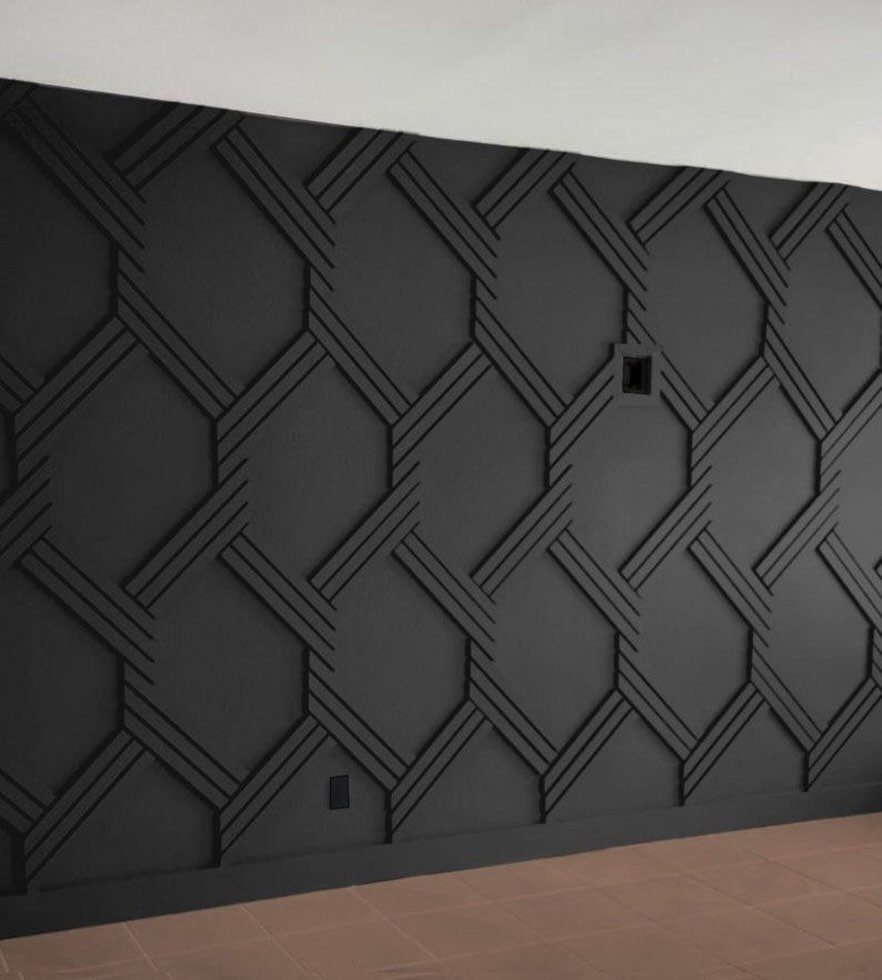
Cut your pieces to length, arrange the pattern on the floor first, then transfer it up piece by piece.
Paint or stain after installation so the edges stay clean; if you want zero grain showing, plan on primer and multiple coats of paint, same as the wall behind it.
Caulk every joint before the final coat, because shadow lines will find your gaps. This takes a couple of hours to nail up, longer to finish; toddlers and nail guns do not share a room well.
A wall that photographs well and still works for everyday living.

Stylish: These wood panels for wall feature professional design and excellent craftsmanship, combining sound absorbing panel with hexagon wall panels to provide modern and stylish wall decoration options for interior walls, adding a touch of elegance to any room.

♬【Easy to Cutting and Install】Easy to cut with a knife, You could create different styles of decorative wall art in your favorite space! The biggest difference with other acoustic panels sound absorbing on the market is that our sound dampening panels come with self-adhesive.Just peel off the protective film and stick it to the walls ,door and ceilings. If you try our sound proof panels, you would know how easy to install

PROFESSIONAL ACOUSTIC PERFORMANCE (NRC 0.95) - Premium sound absorbing panels with 95% noise reduction coefficient, effectively eliminating echoes and reverberation. Ideal for Super Bowl parties, basement home theaters, recording studios, and gaming rooms where clear sound matters most. Widely applicable to living rooms, bedrooms, home offices, conference rooms, and commercial spaces.
3. Geometric Accent Wall Colors
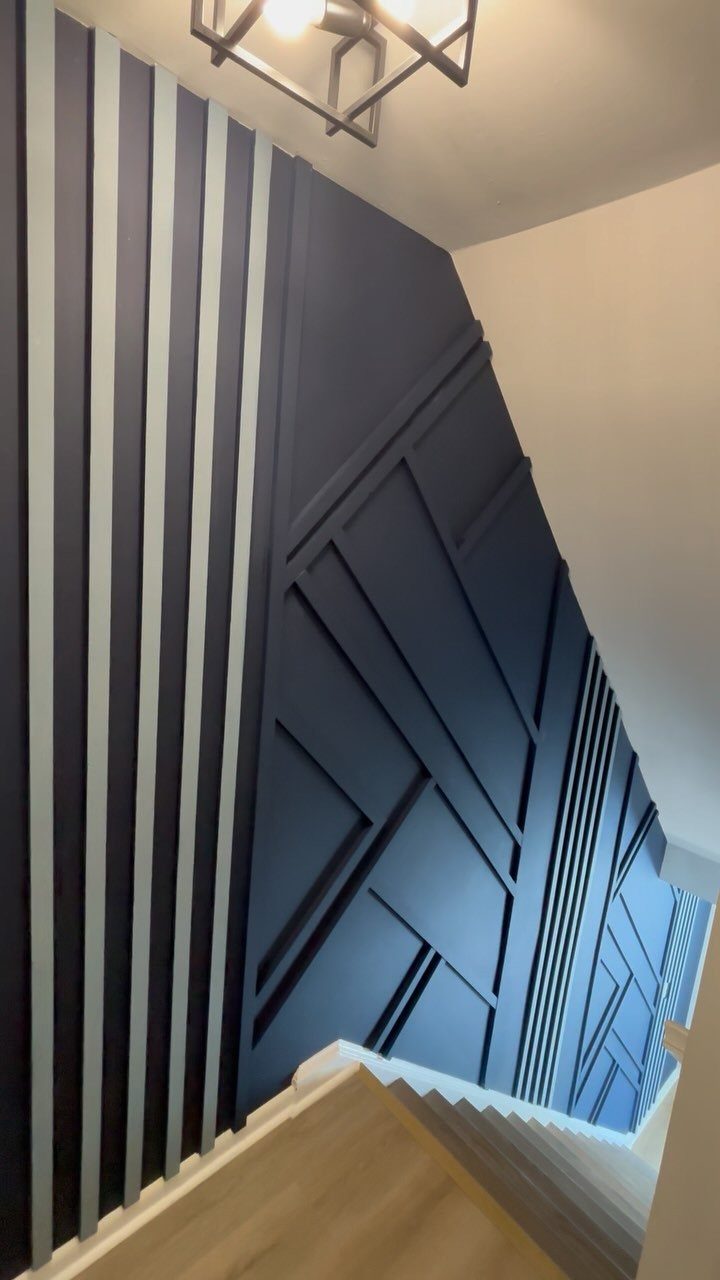
Navy blue on a staircase wall with angular wood trim proves that color choice is what separates a geometric accent wall from a craft project.
The dark base recedes, making the white or light wood steps feel like they are floating forward; reverse that and the whole stairwell would feel boxed in.
Color visualizers help, but the real test is your actual light in morning and evening. North-facing rooms cool every blue toward gray; south light warms it toward purple.
Complementary does not mean matching your sofa; it means the color behaves how you need it to at the hour you actually use the room.
Check the paint at full strength on a poster board, not the strip, and live with it before you commit.

MDF Material for Lasting Use: this board and batten wall panel kit is made from MDF, offering sturdiness and water resistance; The surface is smooth, providing a comfortable touch for interior wall applications

Premade Board and Batten Paintable Wainscoting Kit: Package includes 20 premade molding trim slats, 4 decorative edge strips, and two pairs of gloves for convenient installation

Pre-Cut Arch Wainscoting Panel Board:A complete set of 4 pre cut arched wall decorative strips, each set containing 9 components: one arched component and 8 vertical strips, totaling 36 components; These 9mm thick panels can be easily connected, adding a delicate touch to doors or walls
4. Two-toned Geometric Wall
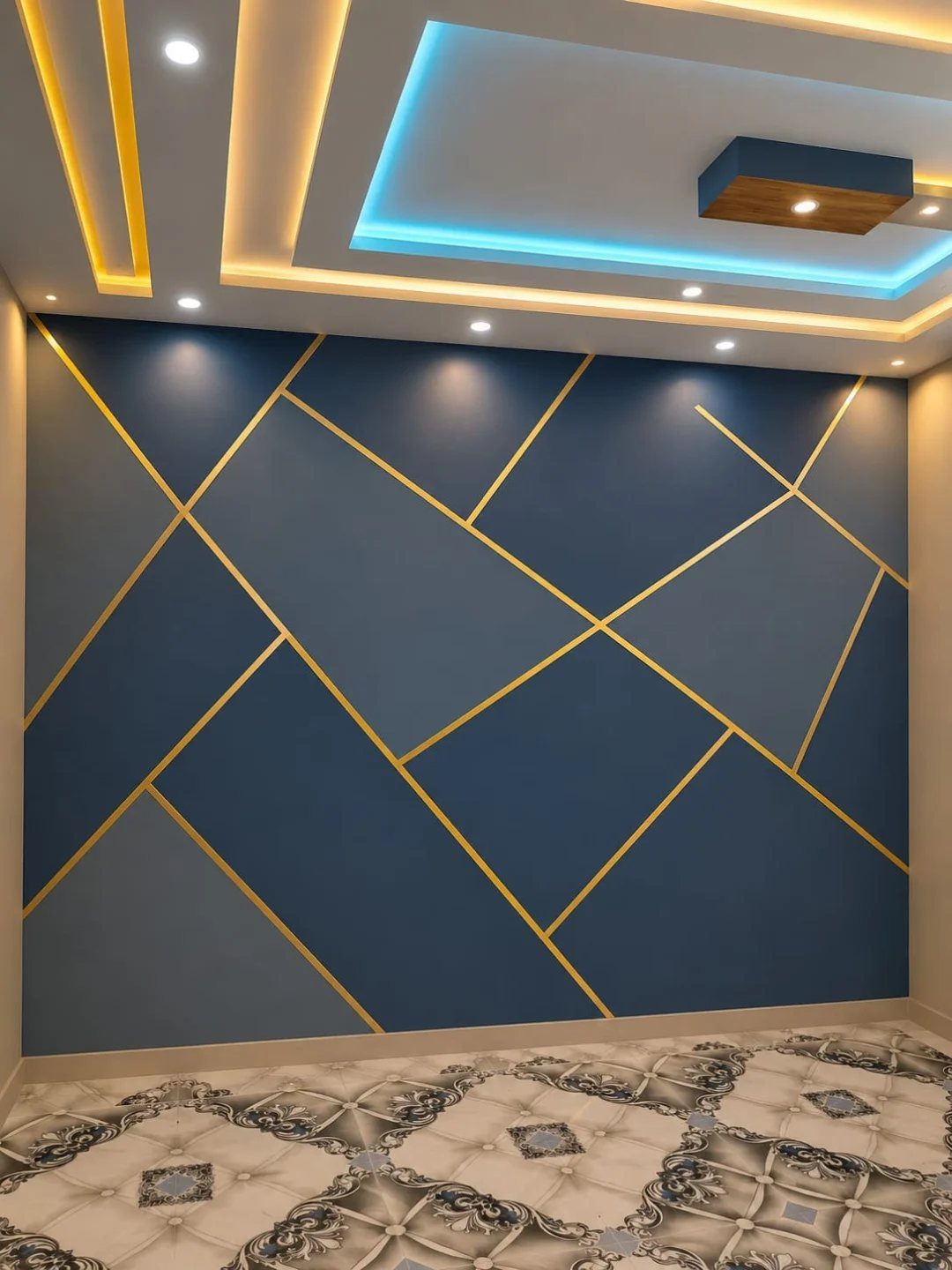
Two blues separated by gold tape give a wall the depth of a shadow box without any actual depth; LED ceiling strips can push that further, though daylight does most of the work.
Frog tape gives the sharpest edges, pressed down with a putty knife so paint cannot bleed. Paint the lighter color first across the whole wall, tape your pattern, then roll the darker shade into its sections.
Peel the tape while the second coat is still tacky, not after it cures. This is the fastest geometric option here; no wood to cut, no nails to set.
What you trade is texture; what you gain is a Saturday finish and a wall that still looks intentional at rental inspection time.

1.This listing features a single-panel abstract wall art piece, showcasing soft organic geometric shapes in deep navy blue against a warm cream background, designed in a modern minimalist style with subtle textured brushstrokes for a sophisticated, calming aesthetic.

Boho Botanical Wall Art: 3-panel set blends navy watercolor leaves + geometric shapes (circles, lines) in cream. Muted palette & hand-drawn details bring calm Boho charm—fits modern/farmhouse styles.

Use for a variety of indoor and outdoor project surfaces including wood, metal, plaster, masonry or unglazed ceramic
5. Raised Molding Geometric Accent Wall
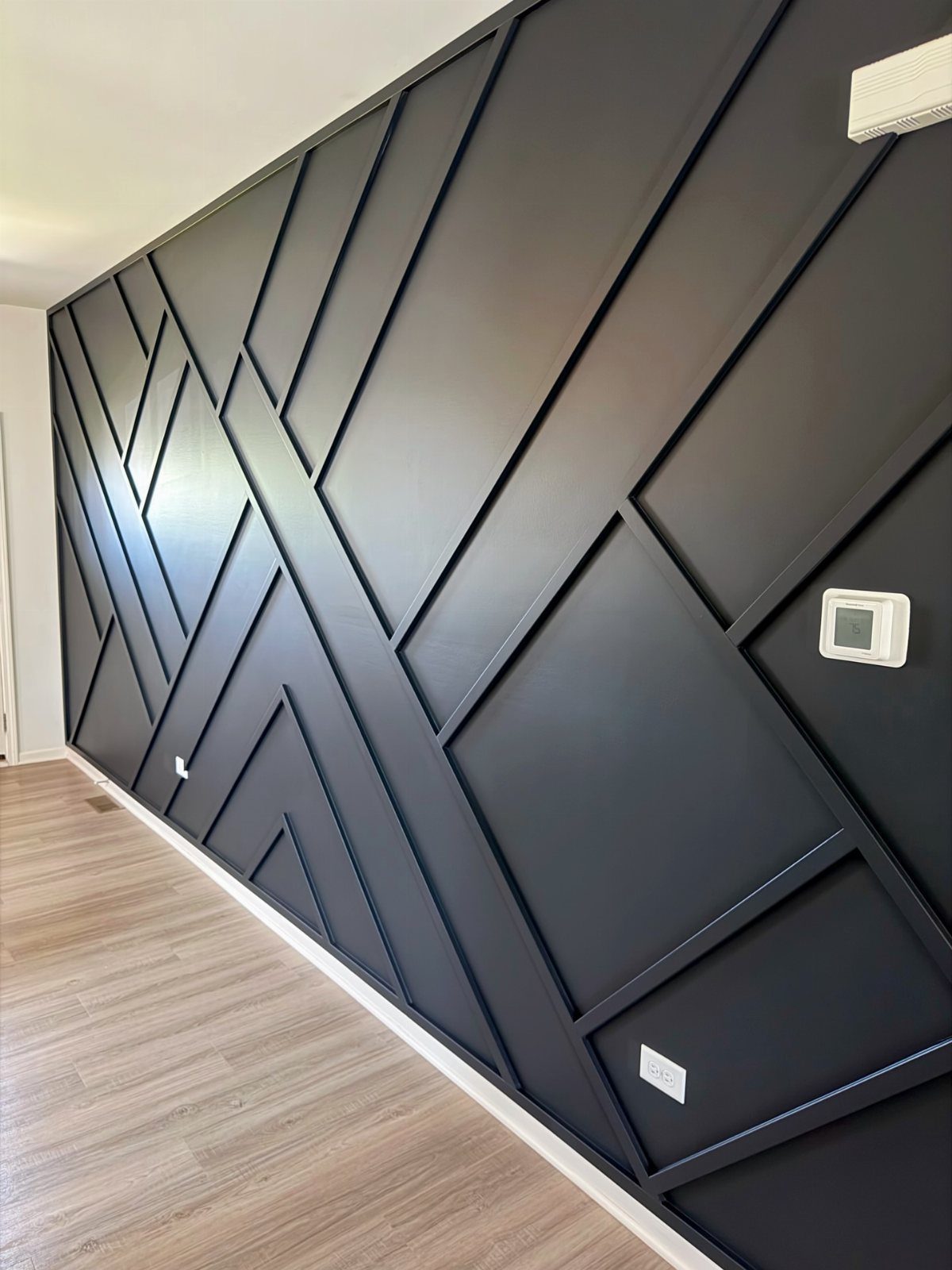
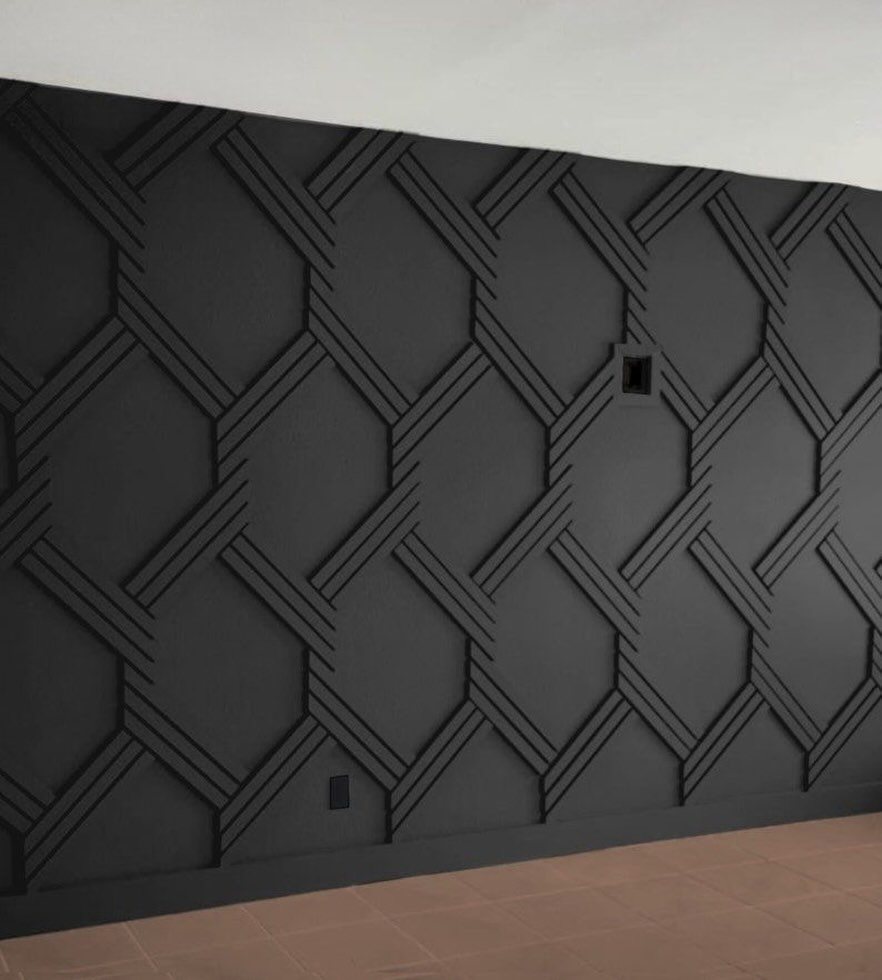
Raised molding strips painted the same charcoal as the wall behind them create shadow lines so subtle they almost disappear, then reappear as you move; a light wood floor keeps the room from feeling like a cave.
MDF boards are the budget path, though they swell if your wall sees moisture.
Crown molding and baseboards that taper at the edges can be bumped out on the accent wall alone by adding a layer of MDF behind them, then setting the original trim on top; the transition reads as continuous instead of a sudden step.
This detail eats an extra day but fixes the one visual flaw that makes DIY trim look homemade. Check your existing trim profile before you buy boards; not all shapes take kindly to being layered.

4 GEOMETRIC PATTERN DESIGNS: Includes four different 12 x 12 inch tile stencils for creating repeating geometric designs on floors, walls, backsplashes, furniture, concrete and DIY home decor projects.

Package includes: 8 pieces of different geometric stencils in large size (12 x 12 inches) creative template for craft, painting and home decor; Larger tiles are suitable for the stenciled floors, and also will look nice on a wall too

REUSABLE STENCIL ONLY – Includes 12 reusable geometric stencils in 6x6 inches, translucent white color, made from flexible durable material for painting on wood, wall, furniture, floor, tile, canvas and fabric; easy to use with paint brushes, sponge applicators or spray paint tools
6. Geometric Painted Color Block Wall
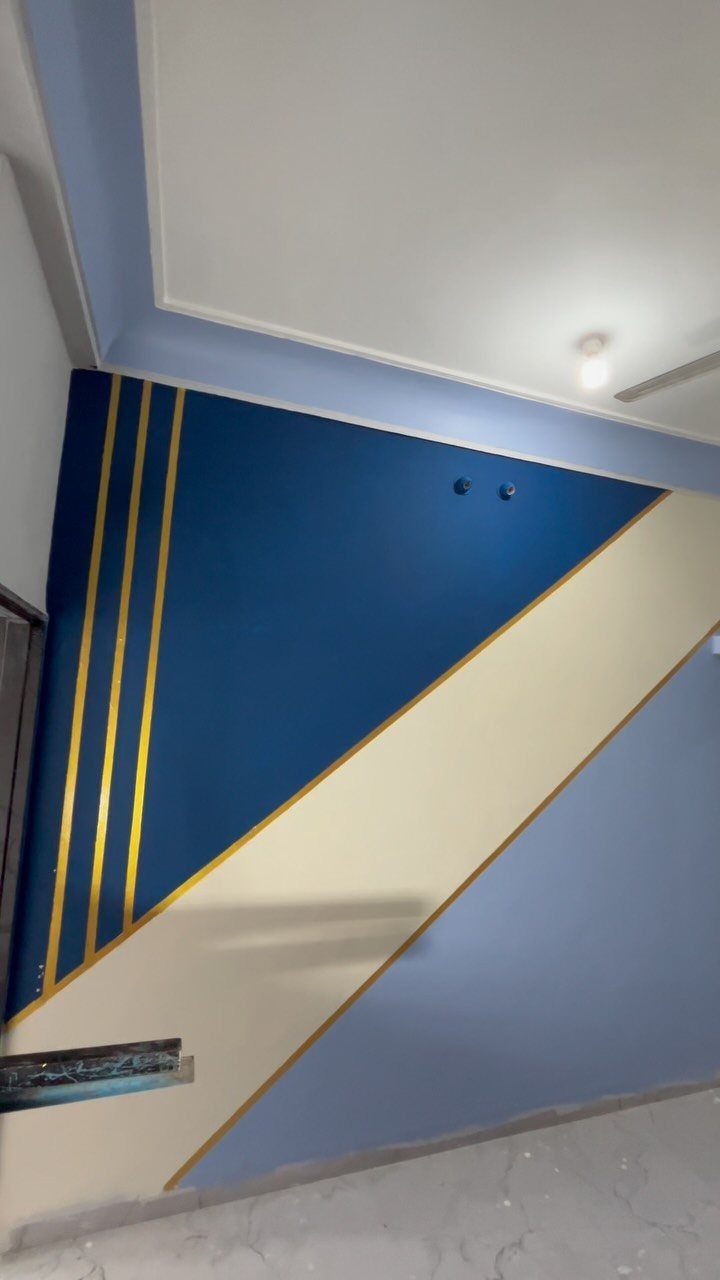
Three colors blocked into large triangles with gold pinstripes at every edge turns a wall into a map of somewhere more interesting than the room it sits in.
Dark blue, cream, and light blue are one starting point; your own palette depends on what else enters that room.
Paint the whole wall your lightest color first, then tape and roll each darker section in order; gold lines go on last with a small brush and a steady hand.
A sprayer would be faster but most renters do not own one, and hand-painting lets you correct as you go.
The real limit is your tolerance for taping; each straight edge is only as good as the hour you spent pressing tape. This suits a room with little other color competition, because the wall becomes the art.
Effortless Peel & Stick Installation--Enjoy hassle-free setup with our self-adhesive PVC slat panels! Just measure, peel off the backing, and press onto any clean, flat surface—no tools or expertise needed. Perfect for DIY beginners and quick home makeovers.

🖼️ [ELEVATE YOUR DECOR WITH TIMELESS ELEGANCE] : Transform your space with captivating modern wall sculptures designed to enhance any room. Crafted with meticulous attention to detail, these pieces effortlessly combine artistry and sophistication, creating a stunning focal point for your home decor.

High-Quality Wall Panels: Our acoustic panel set is crafted with high-density polyester fiber, premium medium-density fiberboard, and a solid wood veneer. This combination provides an elegant look, superior sound damping, and excellent sound deadening, significantly improving room acoustics
7. Textured 3D Triangular Accent Wall
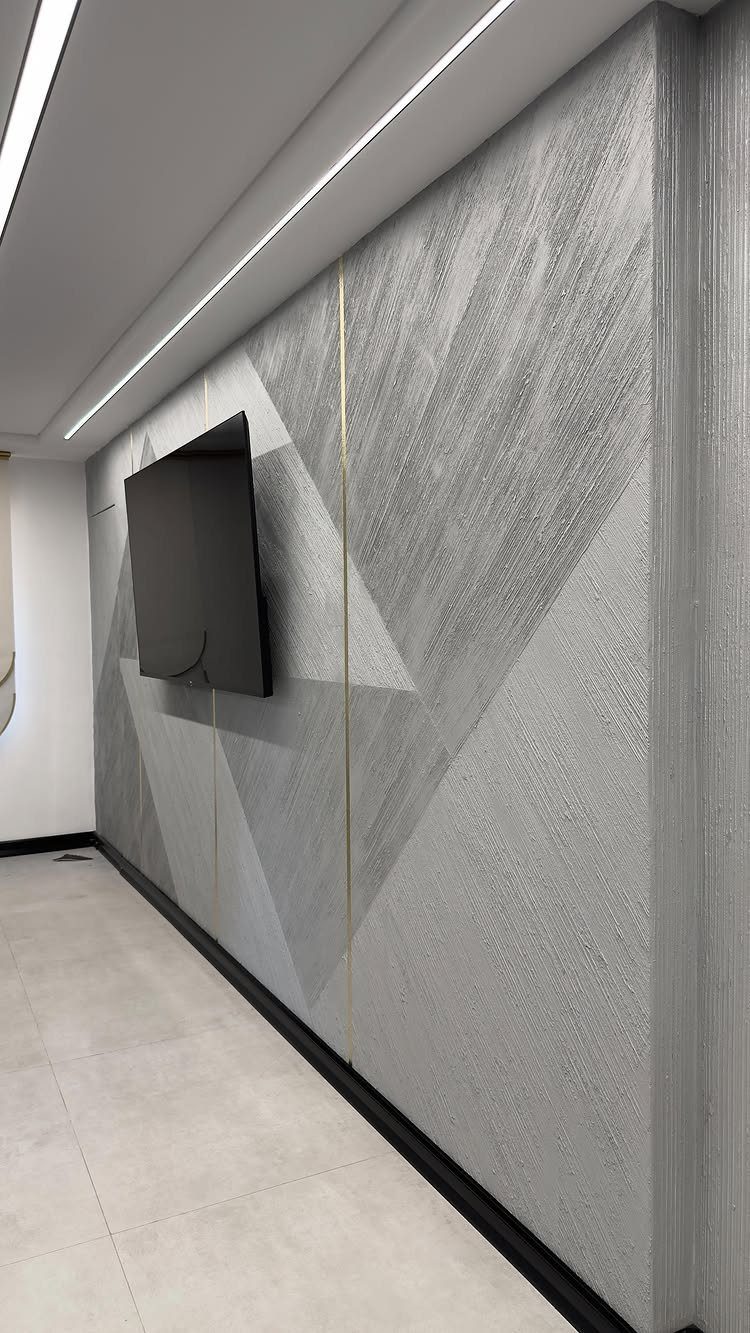
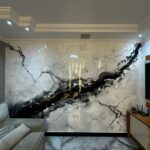
Textured triangular panels hide the flat surface behind a TV better than paint alone. The faceted plaster catches light differently at each angle, so the wall changes from morning to evening without any color shift.
This look needs professional drywall or plaster work; the panels are built up in layers, not hung. Budget for a crew or a very patient weekend with joint compound and sanding.
The gold inlay strips are thin metal trim pieces pressed in while the surface is still workable.
A hallway or room where the TV is the only focal point suits this best. In a living room with windows or art competing for attention, the texture fights everything else.

【HIGH DENSITY ACOUSTIC PANELS】: Improve sound quality and reduce echoes & reverb at your home, office, podcast studio, conference room and more. Give your space what it's been asking for, with our beautiful sound absorbing panels and keep unwanted noises down to a minimum.

【Effortless Installation】Cut effortlessly with a knife, let your creativity bloom on the wall—effortlessly craft a style that’s uniquely yours. Our hexagon acoustic panels feature a robust self-adhesive backing for direct application to any clean, flat surface—no extra tools or adhesives needed. This streamlined design ensures rapid installation in studios, theaters, or offices, making them ideal soundproof wall panels for urgent projects

Superb Soundproofing Capabilities: 0.35inch thickened core acoustic wall panels blocks voices & footsteps. Ideal for private bedrooms, living room, home offic or pro podcasting setups. Even Game nights won’t annoy the neighbors
8. Square Outline Geometric Wall Design
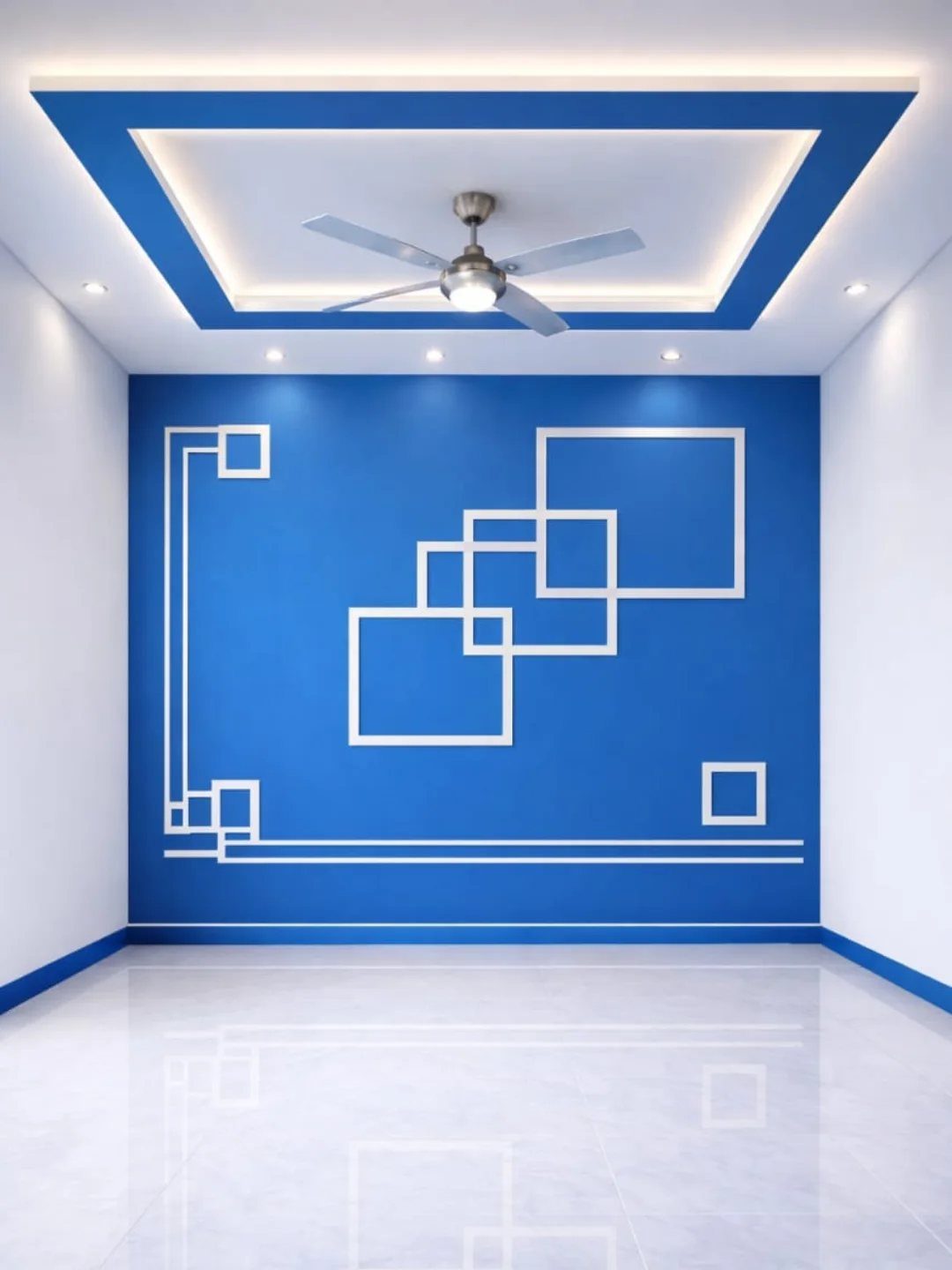
Crisp white square outlines on a saturated blue wall read as frames without anything inside them. The empty centers keep the color loud and continuous; the lines just give it structure.
Graph paper is the right tool for drafting, even if you abandon the first few sketches. I draw grids until I see what I actually want, then tape the final layout directly on the wall.
Painter’s tape, patience, and a level matter more than the sketch itself. The outlines here are painted, not applied molding, so the job stays light on supplies.
Bright colors with white trim suit renters who can paint one wall back later.
In a room with existing trim or crown molding, check how the squares meet those edges; the cleanest look runs the pattern between, not through, fixed architectural lines.

Quantity and Coverage: this board and batten wall panel kit includes 42 pre cut MDF strips, each approx 3.15"W x 0.35"T; The finished wall coverage is approx 157.5 x 94.5 inches/ 400 x 240 cm: simply measure your wall and order the exact number of kits needed

MDF Material for Lasting Use: this board and batten wall panel kit is made from MDF, offering sturdiness and water resistance; The surface is smooth, providing a comfortable touch for interior wall applications

Mdf Material: board and batten wall panel kit is made of MDF, which is durable, waterproof, and easy to clean; The surface is smooth and burr-free, and feels comfortable to the touch
9. Backlit Geometric Strip Wall
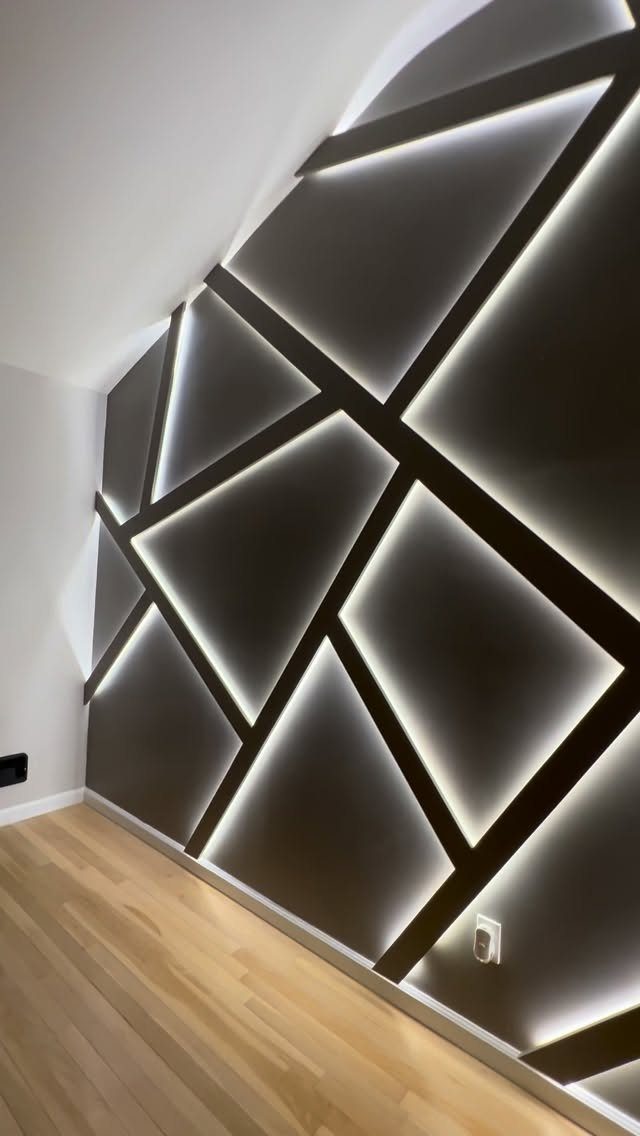
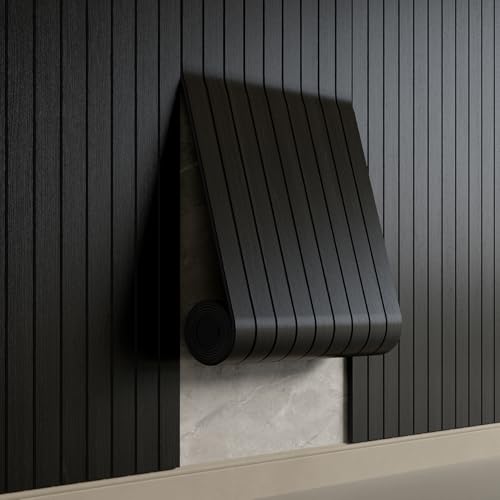
Backlit strips turn a dark wall into a geometric lantern. The light comes from behind thin gaps between panels, not from exposed bulbs, so the glow is even and the fixtures stay hidden.
The wall needs a false front: strips of wood or MDF mounted slightly out from the surface, with LED tape run in the gap. A router or careful saw work creates the channels.
Power must reach the gap, usually from a switched outlet below. The dark face absorbs light; the brightness depends on how wide the gaps are and how dense the LED spacing.
This trades daytime presence for evening impact. In a room used mostly after dark, that works.
For a space with natural light, the wall reads as plain black panels until evening.

【Blue and Gold Wall Art】This abstract ink wall art set is a popular choice for enhancing the aesthetic appeal of various interior settings. The wall decor set is characterized by a harmonious blend of blue and gold, creating a balanced and unified visual arrangement. Whether you opt to display it in your living room, bedroom, or office, the non-figurative style and neutral colors contribute to a tranquil and visually pleasing environment.

🏠DETAILS: Size 17.5 x78.8 Inch , total 9.57 sq.ft(44.5cmX2m), Self adhesive (no extra glue needed). Made of durable vinyl. Navy blue geometric wallpaper, Peel and Stick, Matte, Waterproof, Removable.

NAVY PEEL AND STICK WALLPAPER:This navy blue peel and stick wallpaper features a hand drawn herringbone stripe pattern, clean white background, dark blue lines, and a modern geometric look that adds crisp color without making the room feel too dark
10. Geometric Chevron Pattern Wall
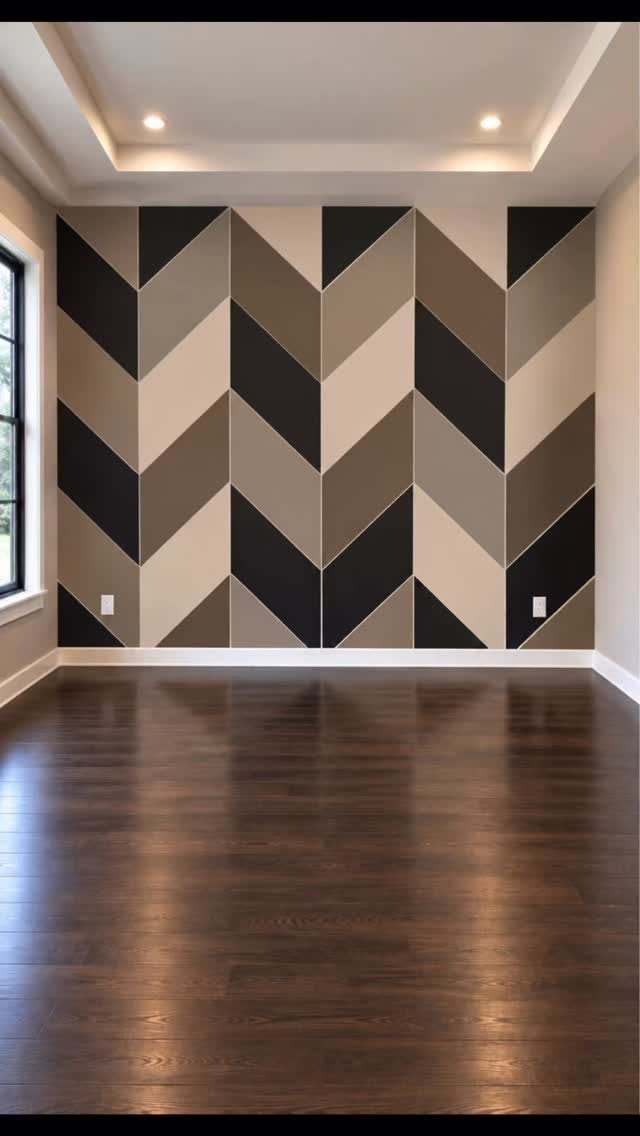
Interlocking chevron shapes in muted tones keep a bold pattern from overwhelming a whole room. The angles repeat enough to feel rhythmic, but the neutral palette lets furniture sit against it without clashing.
Frog tape and a gridded wall are the starting point; the pattern is drawn section by section, not freehand. For a wood version, cut pieces on the floor first and photograph the layout before touching adhesive.
Overlapping layers add depth, though a painted wall keeps it flat and faster.
In a room with low ceilings or busy flooring, the chevron competes with too much else.

Cost-Effective DIY Wallpaper Alternative: Achieve a custom patterned wall finish without the high cost of vinyl decals or wallpaper rolls. This kit includes comprehensive written instructions and video tutorials to guide users through pattern alignment and paint application techniques.

Quality material: geometric wall stencils use quality PET to make, stable and not easy to break, safe and reliable, with exquisite shape and clear lines, allowing you to use them with confidence for a long period

36 Unique Geometric Stencil Designs: this set includes 36 different geometric stencil patterns that help create a variety of decorative designs; The diverse patterns allow you to easily add creative details to DIY art projects
11. Raised Arch Molding Accent Wall
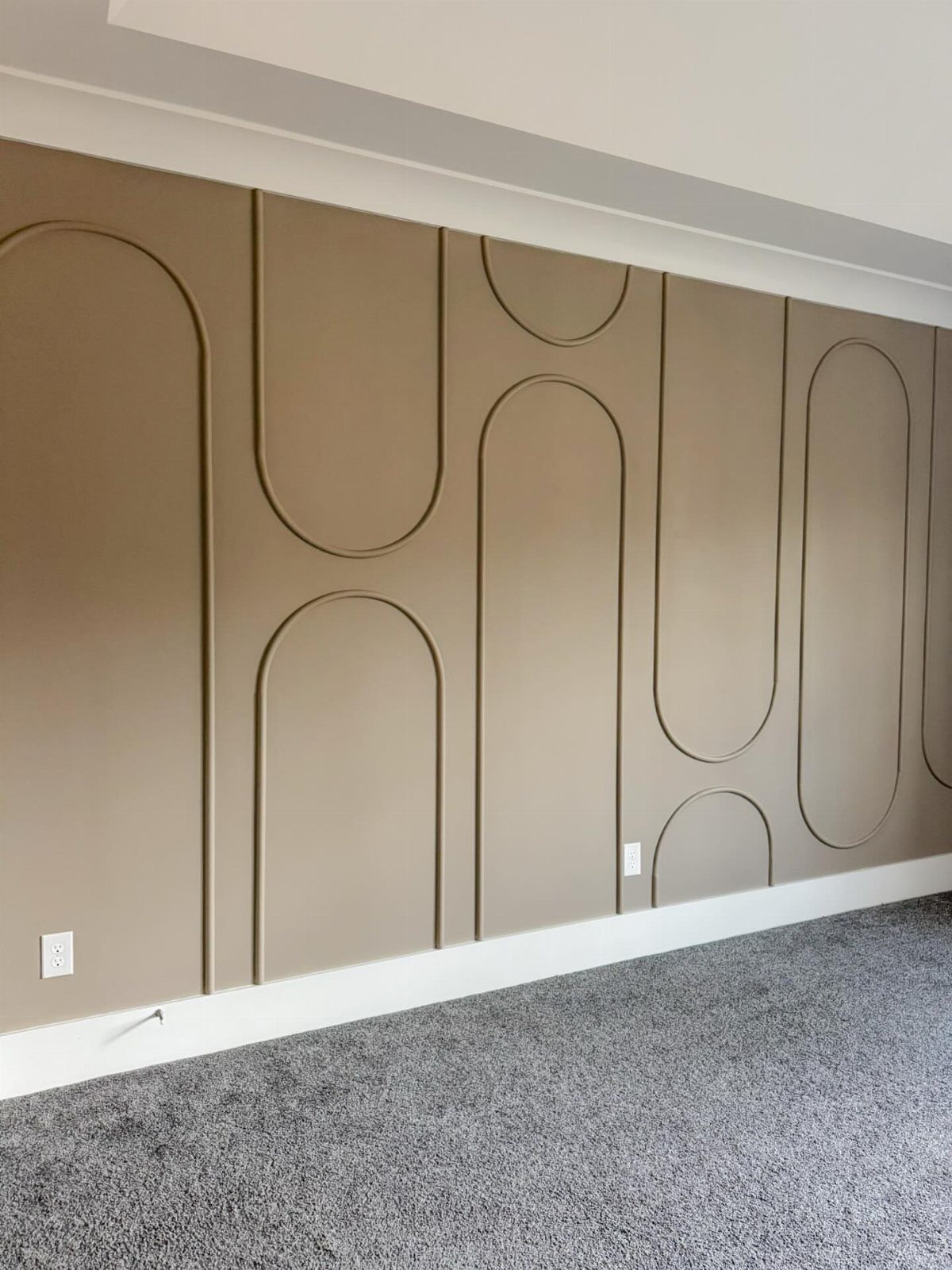
Raised arches soften the hard edges that most geometric walls lean on. The curves read as intentional, almost furniture-like, against the straight baseboard and ceiling line.
MDF cut to shape and mounted with construction adhesive builds the forms.
Where crown molding or baseboard tapers thin, bumping it out with a backing strip lets the new shapes meet cleanly; the original trim sits proud again instead of sinking behind.
This step takes extra time but saves the visual hiccup where planes change.
Curved molding suits rooms where you want calm over energy: bedrooms, hallways, spaces you walk through rather than work in. The tradeoff is shadow; dust settles on the ledges, and the shapes read as clutter in a small room.
Tools Needed
A level matters as much as the saw; the pattern is drawn straight on the wall with pencil, and a speed square or angle finder keeps corners true where the design turns.
Craft brushes help with touch-ups at edges where tape could not reach. Sandpaper is listed for spot work, though pre-primed boards cut that need down.
Tips for Beginners
Gridded paper or a level-drawn grid on the wall itself saves the pattern from drifting; freehand geometry looks handmade in the wrong way. For repeated cuts, a jig keeps angles identical and saves the hour of re-measuring.
Hot glue lets you adjust molding placement before you commit with nails, which is worth the extra step when the design is new to you. Photograph a floor layout before you transfer it upward; the wall gives no retreat.
Maintenance of Accent Walls
An accent wall lasts as long as the trend or your own patience with it. Paint can be rolled over when the color tires you; wood battens pry off and the holes patch with joint compound.
MDF swells in moisture, so a bathroom or humid climate shortens its life regardless of paint.
White accent walls read as calm long after bold colors date themselves, though dark greens, grays, blacks, and blues are what builders and listings currently favor.
The wall you choose should stand unobstructed; bedrooms, living rooms, and entryways repay the effort because you or guests actually face them.
A colonial room does not automatically welcome a modern grid, and the mismatch costs more in visual discord than the materials did.
Safety Precautions
MDF dust is fine enough to penetrate cheap masks; a proper respirator rated for particulates is the minimum when you are cutting boards, not a handkerchief or a dust mask from the paint aisle.
The same holds for sanding cured joint compound or wood putty. Eye protection matters with a brad nailer; the tool kicks, and a nail through a board can redirect.
Keep toddlers and pets out of the room entirely when the nail gun is live; the compressor noise masks their movement.
LED tape for backlit walls runs at low voltage, but the wall still needs a switched outlet and the gap behind panels must stay clear of insulation or vapor barriers you cannot see.
If you are stripping old paint, test for lead first on any older home.
Frequently Asked Questions
Are accent walls out of style in 2026?
Geometric accent walls sit somewhere between trend and timeless right now. Diamond-based patterns and wainscoting lean timeless, while triangles and circles read more current.
The style took off in the 2010s and has not fully settled into the "timeless" category yet, so your pattern choice matters more than the concept itself.
A well-built wood batten wall in a neutral palette has better odds of aging well than a bold color-blocked mural.
What is the rule for accent walls?
Pick a wall that already draws the eye, not one crowded with windows or doors, and choose a space where you actually spend time.
Pick a wall that does something for you when you’re actually in the room, not one that photographs well for a listing.
Map the whole thing out on paper first, and swatch your colors on something bigger than a paint-store card before you commit.
How do I paint a wall with geometric shapes?
Start with your lightest color across the whole wall, then outline shapes with painter’s tape pressed down hard at every edge.
A level and a slow hand beat steady freehand every time; the tape seal is where the clean line lives or dies.