These ideas run from a single accent wall to a full hallway, and from one Saturday to a full weekend of work.
Beadboard works best where walls take scuffs and need protection; shiplap suits ceilings and accent walls that need visual width.
1. Beadboard Wainscoting
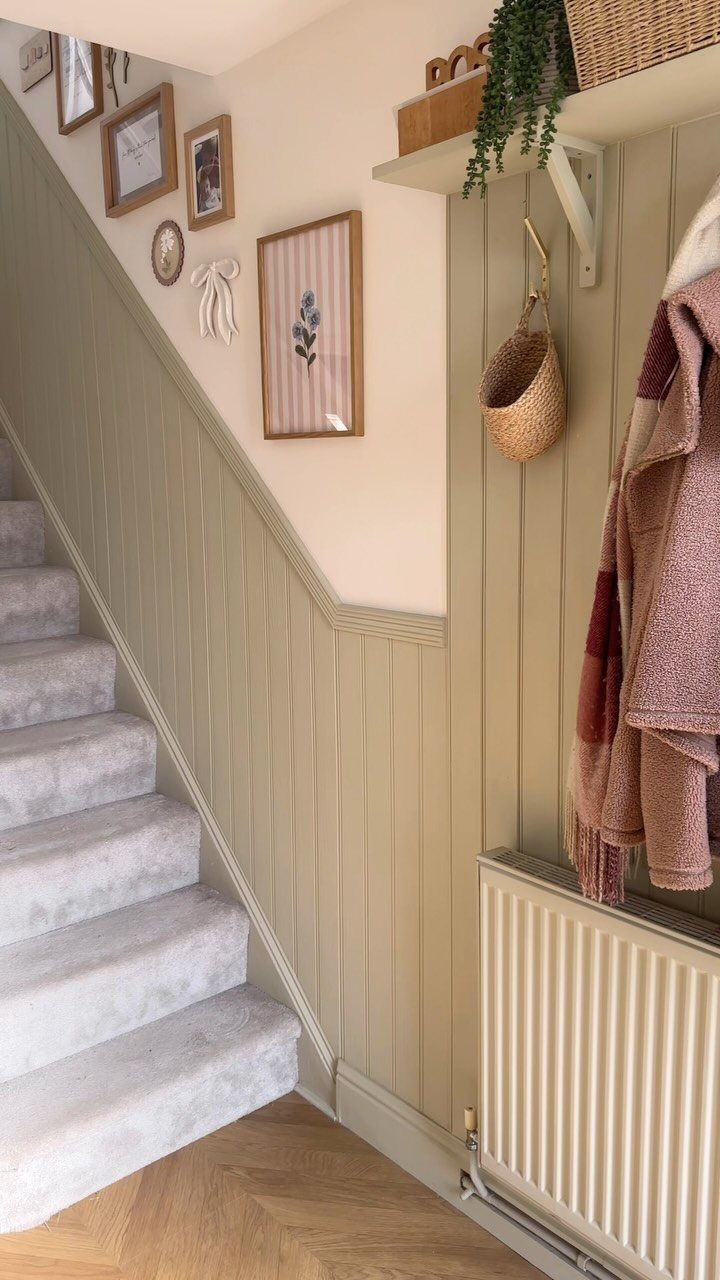
Beadboard wainscoting runs up the lower third of a wall, capped with a chair rail or trim, and the vertical ridges catch light differently than flat paint ever could.
I like it for hallways and stairwells because the boards take the hit from shoes, bags, and elbows instead of the drywall underneath.
Oak was the original choice for this, brought over from Holland or Germany; today MDF or pine keeps material costs low enough that the trim and paint often run more than the boards.
Installation means leveling each narrow plank, which slows the job down. A full weekend is realistic for a hallway if you have a saw and a nail gun.
Olive green reads traditional without trying too hard; I’d go lighter in a space that does not get morning sun.

Stylish Wall Upgrade: This wainscotting wall panel kit adds texture and charm to any space. The 37.8” tall beadboard panels create a beautiful decorative accent for living rooms, bedrooms, kitchens, studies, and more

Transform your space effortlessly without searching for separate parts. Each package comes complete with 8 premium main wall panels and 2 perfectly matching finishing trims. This curated set provides everything you need to create a cohesive, designer-level accent wall or elegant half-wall paneling right out of the box.

One Kit Covers 15 Sq Ft: 10 pre-cut beadboard wall panels run 45 x 46.5 in and the top molding trim adds 3.9 in above them, finishing a 45 x 50.5 in section. That is the whole kit, not per panel.
2. Beadboard
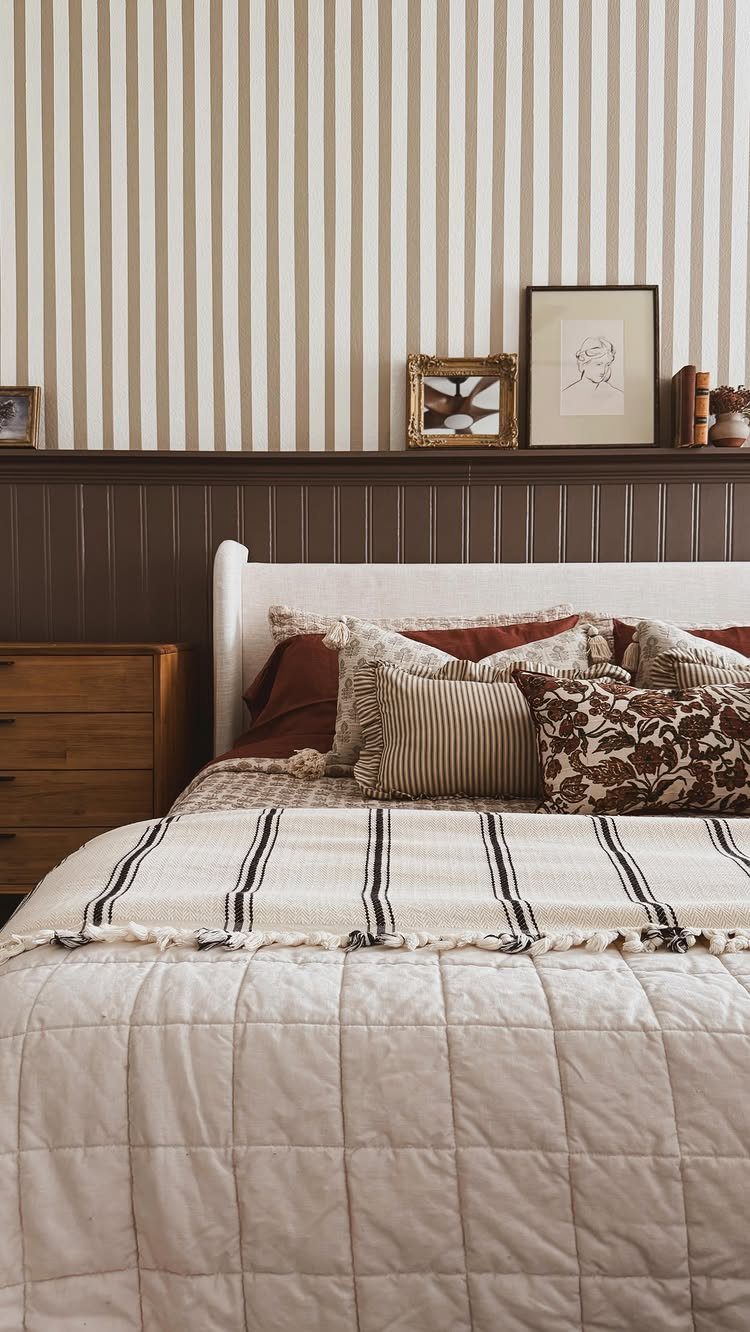
Full-wall beadboard stacks those same vertical boards from baseboard to ceiling, so the room wraps in ridges instead of stopping at chair-rail height.
Dark brown beadboard against striped wallpaper above is one way to keep the ceiling from feeling low; painting everything one color is another. Boards come as panels now, which saves the headache of individual planks.
Paint or stain both work, though stain demands wood grain worth showing. I think beadboard suits cottages, second bedrooms, and anywhere you want walls that feel hand-finished rather than gallery-smooth.
The vertical lines draw the eye up, but they also add busyness; in a small room with patterned bedding, I would stop at wainscoting height instead.

PLASTPRO PVC TRIM KIT, 2 PIECE: Complete your Plastpro wainscoting panels installation with the matching trim kit. Includes 1 pre-finished white PVC chair rail and 1 base molding with integrated rubber seal that blocks moisture from seeping between wall and panels. Pre-grooved to snap directly onto Plastpro 3 Ft and 8 Ft PVC wall panels.

Effortless Installation — Experience the simplicity of our 3-step installation process: simply cut, peel, and stick. It's a swift, hassle-free process.

Includes: 3 pre-cut 20"x27" wall molding frames and 2 chair rail trim pieces, Covers 78.7"W x 39.9"H wall area (6.5 ft wide). All pieces feature a peel-and-stick design for easy installation.
3. Shiplap Ceilings and Accent Walls
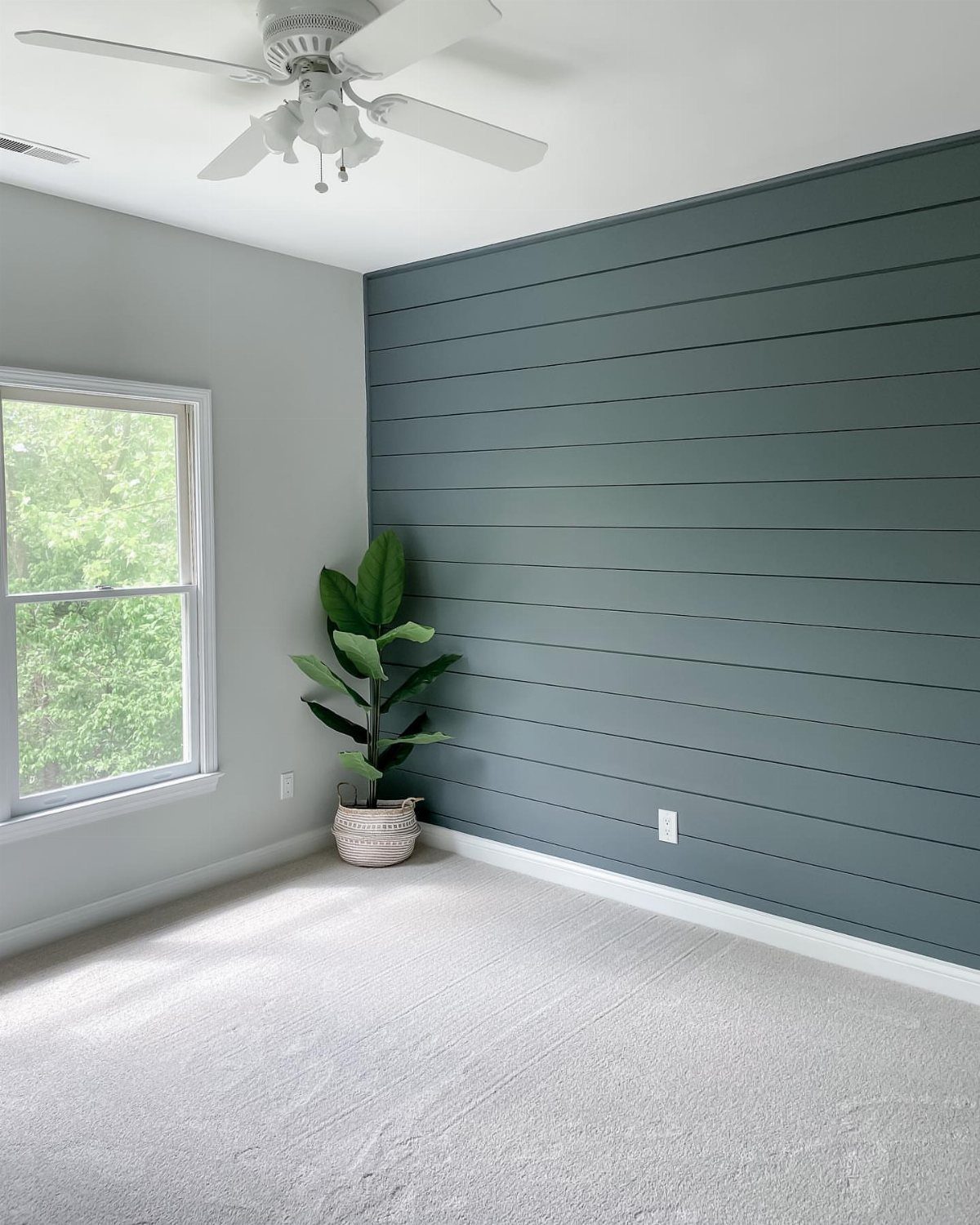
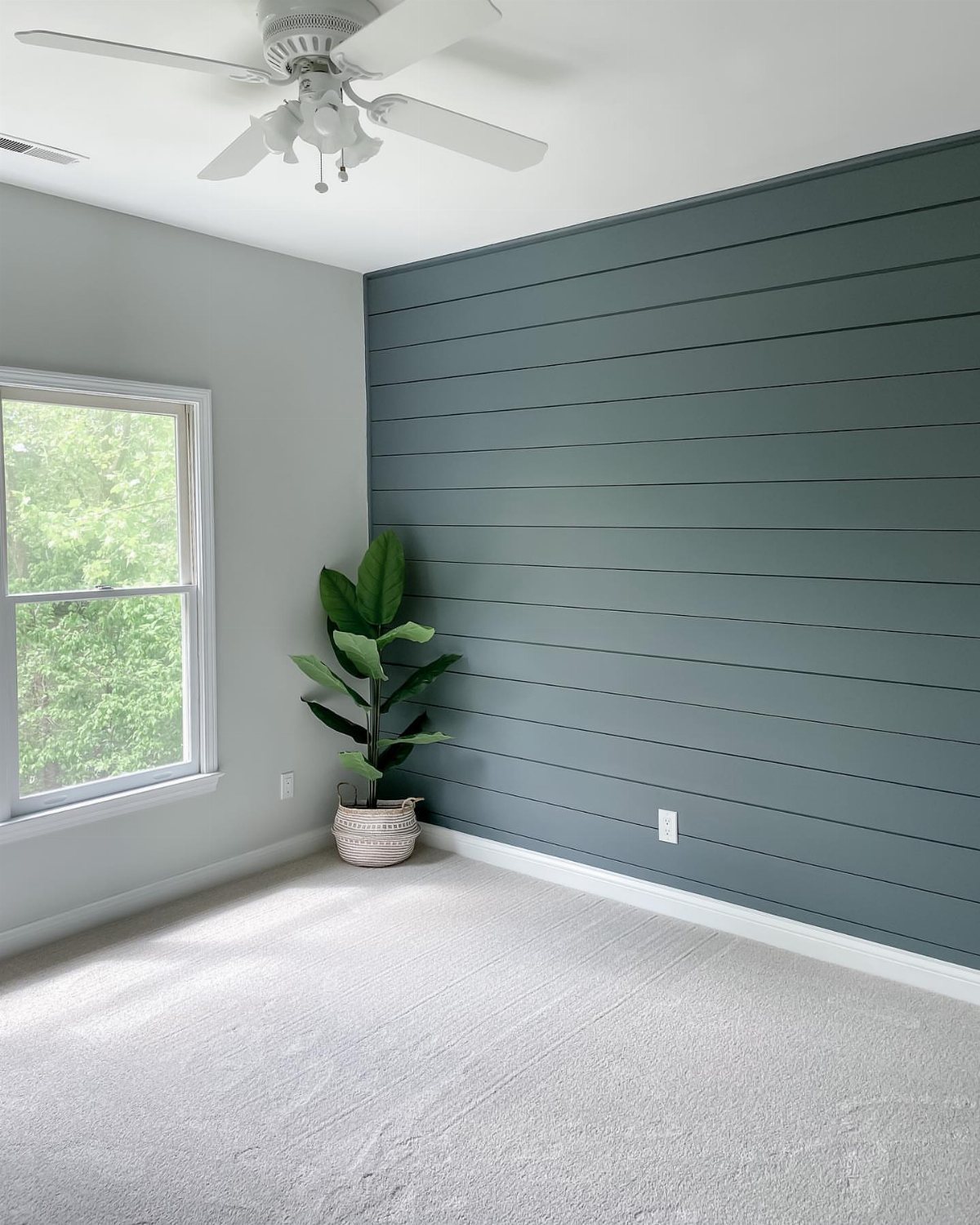
Shiplap turned horizontal changes how a room reads: the shadow gap between boards acts like a quiet stripe that widens walls and lowers ceilings visually, which is why it works on both.
A dark teal wall works as an accent, not the whole room; a ceiling fan and light carpet keep it from going cave-dark. Rabbeted edges let each board overlap the next, so the gap spaces itself as you nail.
That self-spacing is the real gift; I could panel an accent wall in a Saturday with a helper, though cutting around outlets and windows still eats time. Ceilings take longer because you are working overhead.
Pine shiplap costs more than beadboard but less than most hardwoods; pre-primed boards add to the total but skip a whole step.
I would not do a full basement in it unless the house already leans farmhouse; as one wall or a ceiling plane, it adds texture without decorating the room for you.
[Complete Board & Batten Wall Makeover] Refresh plain walls with a timeless board and batten design using one convenient kit. The premade panels and matching molding trim help create a clean, custom-built accent wall while reducing measuring, cutting, and assembly for a faster DIY installation.
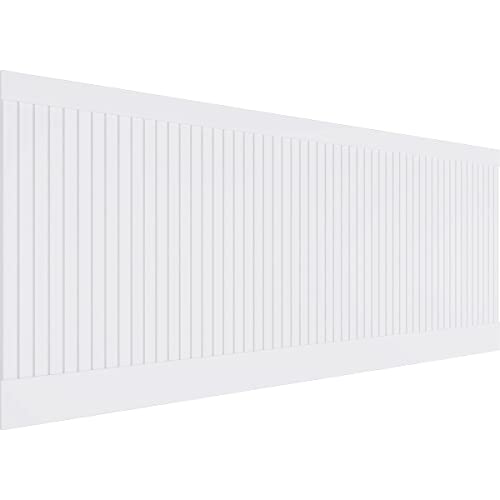
Dimensions: 94-1/2 in. Width x 40 in. Height x 0-5/8 in. Thickness x 26.24 Sq. Ft.

Stylish Wall Upgrade: This wainscotting wall panel kit adds texture and charm to any space. The 37.8” tall beadboard panels create a beautiful decorative accent for living rooms, bedrooms, kitchens, studies, and more
4. Shiplap Wainscoting
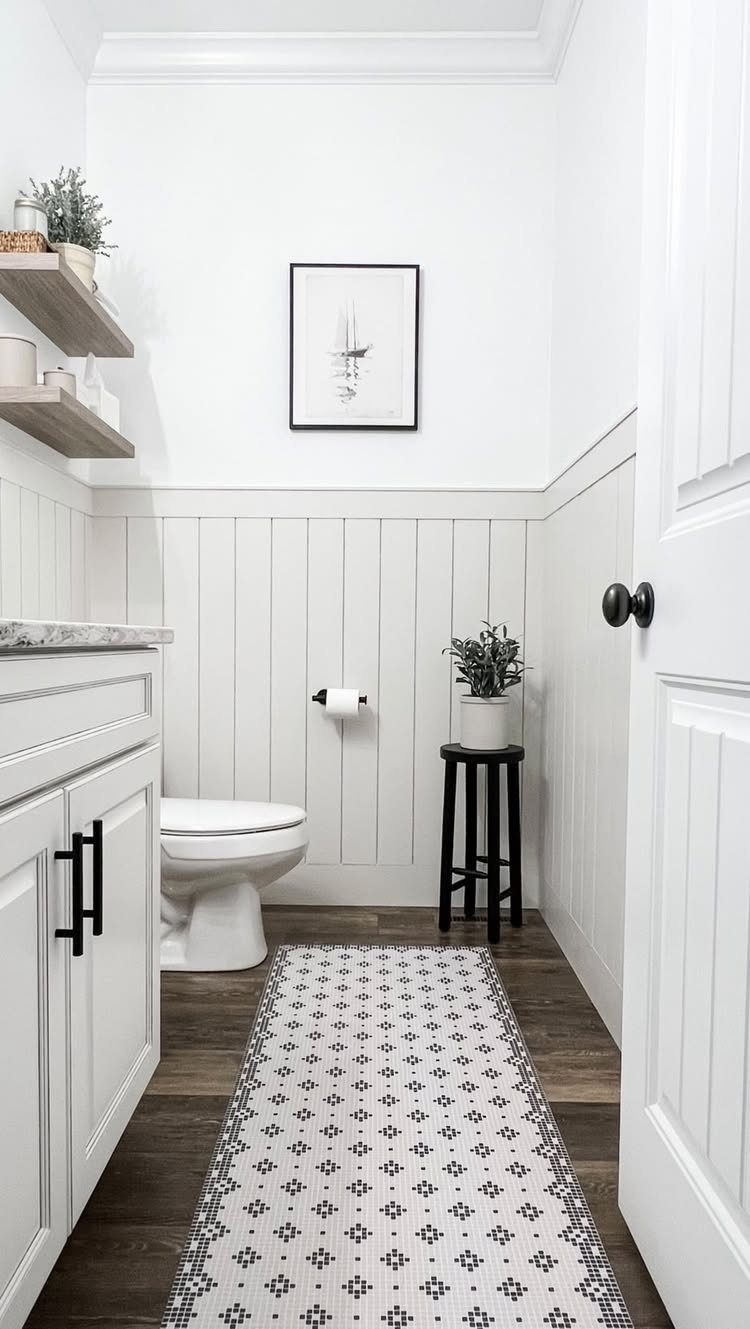
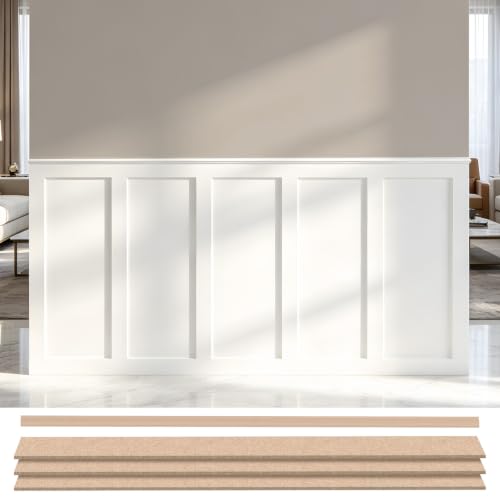
Shiplap wainscoting flips the usual pattern: horizontal boards stopped at chair-rail height, capped with trim, in a bathroom where beadboard would be the expected choice.
The white-on-white photo keeps it quiet, but the horizontal lines read more modern than vertical beadboard would in the same spot.
Water is the risk here; shiplap’s overlap helps, but I would still use PVC or at least exterior-grade paint in a bathroom with a shower. Installation follows the same rabbeted overlap as full-wall shiplap, just less of it.
A powder room this size is a single-day job. For a traditional bathroom, I would still pick beadboard.
For something between cottage and current, shiplap wainscoting splits the difference.

Real Wood Wall Planks: 100% Real Barn Wood Wall Planks With Natural Knots and Dents, the Surface Of Wood Shiplap Planks Is Processed With High Temperature Carbonization, the Real Wood Wall Shiplap Planks Is Non-Toxic, Sterilized and More Safe For Children, Voc Free Process Ensures These Stick on Shiplap Planks For Walls Are Safe To Use In Home

Size is 9/16 in. x 7-1/4 in. x 7 ft. long

【REAL WOOD】– Made of 100% dried fir wood imitating vintage reclaimed barnwood appearance for interior finish. The colors will vary from browns to grays depending on the batch.
Choosing Between Styles
Taste matters, but so does the room itself. A refined, traditional look leans toward beadboard; farmhouse or coastal settings read better with shiplap.
Humidity changes the calculation. In a full bath or damp basement, moisture-resistant MDF shiplap or PVC beadboard outlasts standard boards.

Residential Use Only: Made for residential ceilings, made of soft foam not for commercial use

Residential Use Only: Made for residential ceilings, made of soft foam not for commercial use

Finish your project faster—boards are sanded, primed twice and ready for your project
Material Options
You can build either look from wood, MDF, or PVC depending on what the room throws at it.
PVC runs a little higher than MDF but will not swell or grow mold where the air stays damp; I would spend the extra in a basement bath or anywhere the drywall already tells stories.
Moisture-resistant MDF shiplap exists for high-humidity rooms, and moisture-resistant beadboard panels suit tub decks and counter backsplashes.

PVC WALL PANELS, 6-PIECE KIT: Elevate your walls with Plastpro’s 3-ft wainscoting panel kit. The complete solution for bathrooms, kitchens, bedrooms & living rooms. Includes 6 reversible PVC panels (3 ft high × 7¼ in wide), each pre-finished, pre-grooved, and ready to interlock. No nails or adhesive required.

No More Plain Walls: Turn flat interior walls into vertical beadboard wainscoting panels that instantly add texture and dimension without complicated layout planning

What You Will Receive:Wall molding kit includes 8 pieces 9.8x37.8 inch PS wall panels + 2 pieces 1.8x37.8 inch decorative edge strip. Assemble into a 39 x 79 inch shaped wall panel,total coverage area is 21.5 sq. ft
Color Flexibility
Either style can be any color you want; the limitation is the room’s light and what else competes for attention.

DIY Installation Made Easy: Cut, peel, and stick in just 3 simple steps. No special tools required. Effortless installation for a quick and hassle-free experience.
DIY Installation Made Easy: Cut, peel, and stick in just 3 simple steps. No special tools required. Effortless installation for a quick and hassle-free experience.

PRIMED & READY TO PAINT: Factory-primed solid pine planks are ready for your chosen paint color, helping you create beautiful beadboard wall panel designs for wainscoting, bathrooms, hallways, and interior wall panels. Each box includes 12 individual wainscoting planks that install one by one to create a wainscot look. One box covers up to 3.5 linear feet of wall when installed vertically. As a natural wood product, allow 48–72 hours for acclimation before installation.
Historical Context
Beadboard arrived with Dutch and German woodworkers who used oak for wainscoting in new colonial buildings. Shiplap’s overlap was originally structural, built for barns and outbuildings where shedding water mattered more than appearance.
Its move indoors followed modern farmhouse taste, which turned a practical joint into a decorative texture.
Both styles now read across periods if you handle the rest of the room right; beadboard in a second bedroom and shiplap on a single accent wall each signal something different about the house.
Neither look is tied to a particular decade anymore.

🏠DETAILS: Size 15.8 X78.8 Inch , total 8.65 sq.ft(40cmX2m),Wide of wood slat: 1.42 inch. Self adhesive (no extra glue needed). Made of durable pvc vinyl, faux beadboard wallpaper Peel and stick, Waterproof, Removable.

Adjustable shelf height: The upper cupboard shelf can be easily adjusted up, down, or out in 3 heights (18.2 cm/ 7.2''; 24.6 cm/ 9.7''; 31 cm/12.2'') for a cabinet space customized to your needs

ONE ROLL, MULTIPLE POSSIBILITIES: A single roll gives you ample coverage to transform a focal wall or refresh a ceiling. It measures 118" x 15.75" and covers approximately 13 square feet.
Frequently Asked Questions
Can beadboard and shiplap be used together?
Yes, they work well in different areas of the same home. Beadboard’s vertical ridges suit hallways and stairwells where walls take abuse, while shiplap’s horizontal shadow gap fits accent walls and ceilings.
The two styles read differently enough that mixing them keeps each room distinct rather than mismatched.
Is shiplap outdated in 2026?
No. Shiplap’s strong horizontal lines still read contemporary, and its use in updated historic homes keeps it current. The risk is overuse: a full basement of it leans theme-park farmhouse unless the house already has that bones.
A single wall or a whole ceiling of it reads as texture now, not trend, and that distinction keeps it from feeling stuck in any one year.
Which is cheaper, beadboard or shiplap?
Material costs run similar, about $1–$4 per square foot for each, but shiplap usually wins on total cost because it installs faster. Beadboard means leveling individual narrow planks, which adds labor hours whether you are paying yourself or a contractor.
Pre-primed shiplap costs more upfront but skips a painting step.