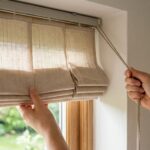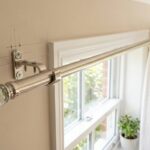
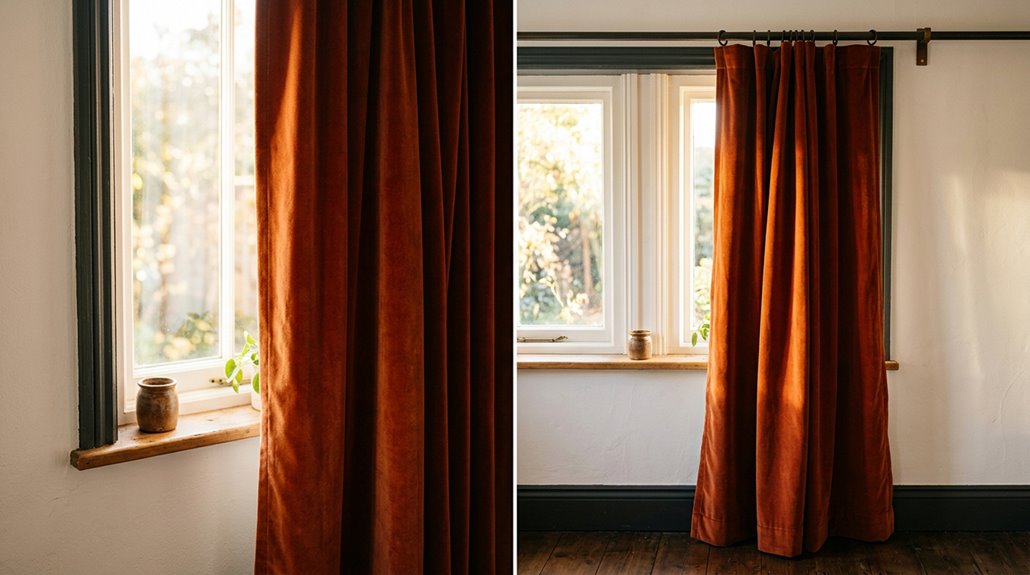
When you see “1 panel” on a curtain listing, you’re buying a single rectangular piece of fabric, not a pair. One panel covers just one side, giving you an asymmetrical look that works for narrow windows under 30 inches, decorative side sweeps, or sliding doors under 100 inches.
For standard double-hung windows, though, you’ll want two panels to get that lush, designer fullness that frames the glass properly. Single panels often result in a flat appearance that resembles a limp flag on the wall.
To avoid this outcome, double-check the listing details before checkout, measure your window width, and plan for 2x fullness. Getting curtains right requires attention to both panel count and proper sizing.
What “1 Panel” Actually Means (and Why It Usually Isn’t Enough)
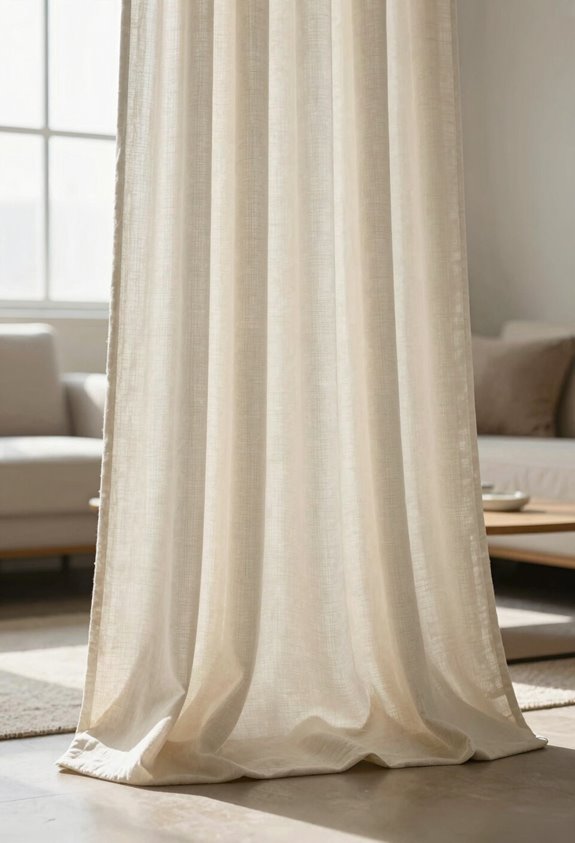
First, let me explain what you’re actually buying. A single panel means one curtain panel, not a pair. One panel covers just one side of your window, giving you an asymmetrical look. For fullness and proper light control, you’ll usually want more.
One panel works in these situations:
Single panels suit narrow windows or decorative sweeps that stay open—never full coverage for standard windows.
- Narrow windows (like a kitchen, entryway or child’s room)
- Decorative side sweeps that don’t need to close
For most windows, especially those that open in the middle, one panel falls short. You can’t close it fully, and you’ll miss the framed, polished look most spaces benefit from. Pairing curtain panels, or using four for wide openings, gives you the coverage and style your space deserves.
Why One Panel Looks Like a Sheet on Your Wall
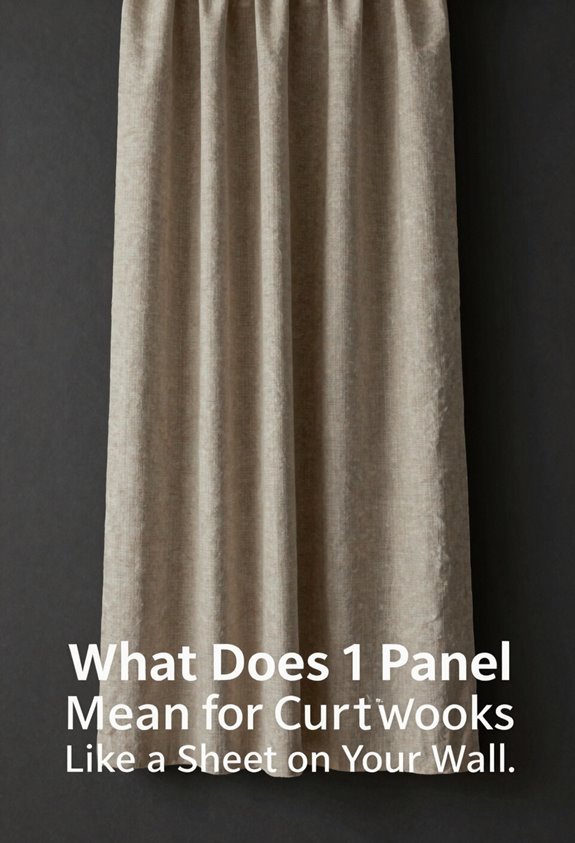
Why does a single panel often look so underwhelming once it’s hung? A single panel, just one lonely rectangle of fabric, rarely measures up to our expectations. When your fullness falls short of 2x the window width, you’re left with what I call the dreaded “sheet on the wall” effect: flat, sad, and definitely not the designer look you were chasing. This is worth fixing.
Here’s what that disappointing look brings to mind:
- A bed sheet tacked up in a dorm room
- A beach towel hung to dry
- A flattened ghost, haunting your trim
- A limp flag on a windless day
For most standard windows, skip the single panel and double up. Your room deserves that balanced, welcoming frame.
Three Windows Where One Panel Actually Works
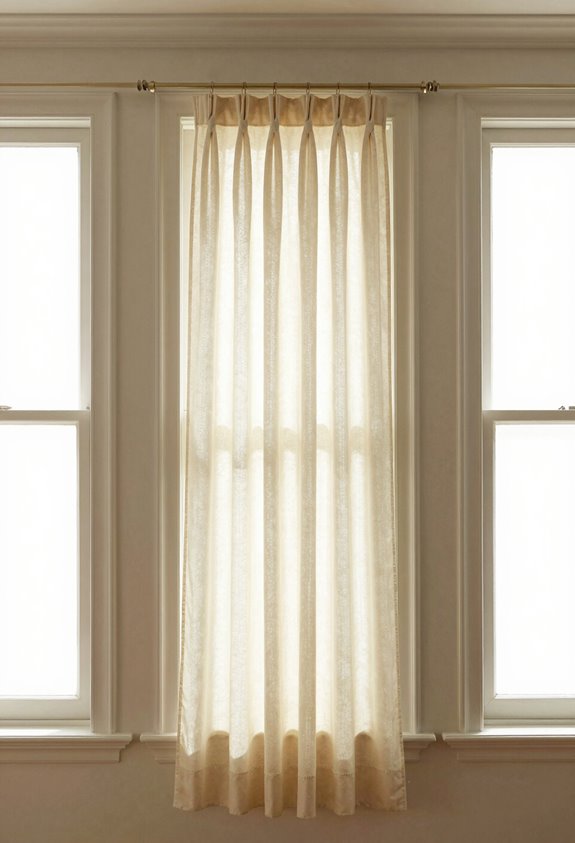
I’ve found that one panel isn’t always a mistake. Narrow windows, corner accent windows, and sliding doors each present unique opportunities for this streamlined look. This guide walks through each scenario so you can decide if a single panel fits your space.
Narrow Window Solutions
Where do you start when three narrow windows in a row need dressing? For narrow windows under 30 inches, one panel per window keeps things light, modern, and uncluttered, exactly what open-concept spaces require.
- A single panel positioned beside morning light without blocking your view
- Three slim windows dressed like siblings in matching window treatments
- Fabric that breathes rather than heavy sheets consuming your wall
- Consistent rod height creating calm, collected alignment
Size each panel to achieve proper fullness, mount at the same height, and you’ll avoid the flat, heavy appearance that comes from undersized treatments. The process is straightforward: matching proportions across all three windows eliminates visual confusion and maintains the clean aesthetic these spaces demand.
Corner Accent Windows
Narrow windows in a row are one challenge, but corners bring their own puzzle. I have unfortunately done this several times, overstuffing corners with bulky drapes that fought the architecture. Corner accent windows deserve breathing room, and a single panel is often the smartest solution.
For three-window corners, follow this approach:
- Put your Panel Curtains on the central window, the dominant pane that catches your eye first.
- Give side windows lighter treatments, like bare rods or simple shades.
- Keep rod heights continuous across all three to trick the eye into seeing unity.
One panel reduces bulk where walls meet, avoiding that crowded look I learned to dread. For clean lines, try a subtle overlap or magnet closure. This approach is straightforward to execute and maintains the crisp silhouette you want.
Sliding Door Coverage
Why fight with four panels when sometimes one will do the job just fine? If your opening is 100 inches or less, a one-panel curtain can absolutely work and is worth considering. You’ll want to skip the rod pocket and use grommets or ring clips instead. Pair your single panel with room-darkening blinds for light control, and grab a drapery wand to reduce hardware strain. When you’re dealing with that wider “Three Windows” look, the fullness rule means four panels create lush balance and hide brackets beautifully.
- Imagine grommets gliding like silver coins across morning light
- Feel that single sweep of fabric, clean and calm
- Picture wands reaching where fingertips can’t
- See brackets vanishing behind waves of soft, full folds
Sliding Doors: When One Panel Needs to Be Extra Wide
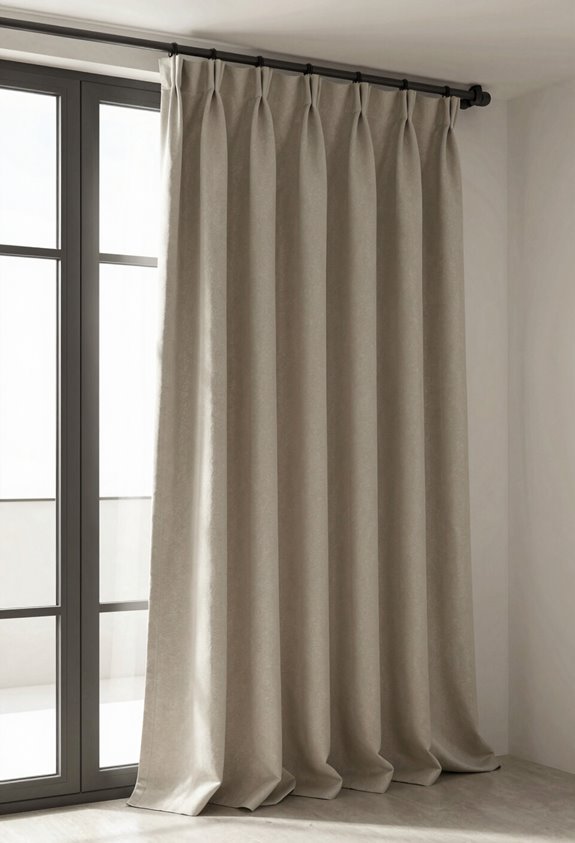
How exactly do you cover a sliding door without making it a daily headache? I have done this several times, and this approach is worth implementing.
Some solutions only reveal themselves after you’ve lived with the problem—this is one that’s earned its place through repetition.
For sliding door coverage over 100 inches, one extra-wide panel can work beautifully, but you need to plan your curtain width carefully.
Here’s what I learned:
- Calculate fullness at 1.5–2 times the door width
- Choose grommets or ring clips (rod pockets create too much friction, like a kitchen drawer that sticks)
- Install a center support bracket to prevent sagging
- Attach a drapery wand to the leading edge
I always add a center support. It’s easier than expected, and it prevents fabric strain. The quality of your hardware directly affects performance with heavy panels.
Why Two Panels Look Better on 90% of Windows
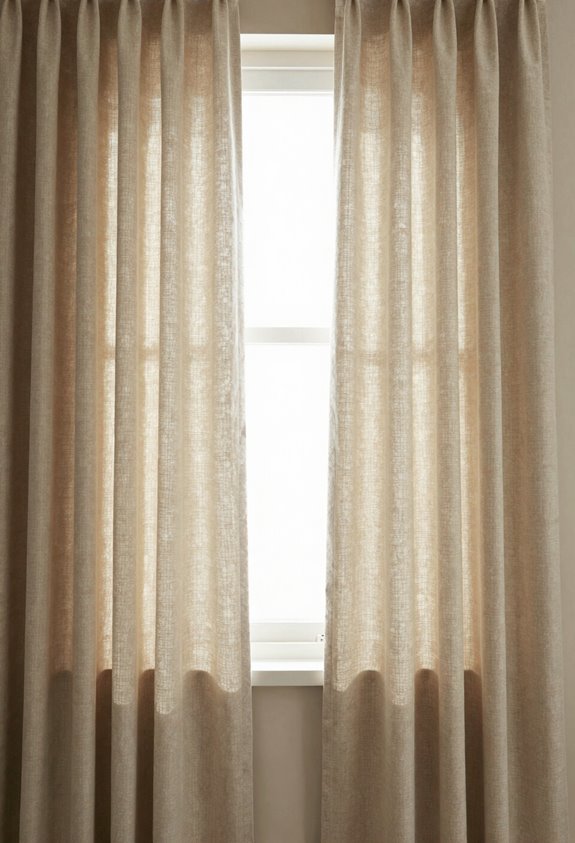
Where exactly should you start when picking curtains for a standard window? I always begin with two panels as the easiest way to get that polished look everyone wants in their home.
One panel just hangs there, flat and lonely. The 2x fullness rule means your total curtain width needs to match at least double your window width. Two panels hit that sweet spot without the math headache.
Here’s what two panels give your space:
- Fabric that pools with gentle waves, framing your view like a soft portrait
- Symmetry that makes your whole room feel balanced and intentional
- A cozy, gathered texture that signals someone who belongs lives here
- Smooth gliding on the rod without bracket battles in the center
This approach delivers measurable results in window coverage and room aesthetics.
How to Measure Real Curtain Width (Don’t Skip This)
The number on the package isn’t the real width you’ll get. I have unfortunately done this several times, and this step is worth your time. To get your true curtain width, lay that panel flat and measure the actual fabric edge to edge. This prevents gaping windows later.
For calculating your fullness, use this breakdown:
| What You Need | How to Figure It |
|---|---|
| Window width | Measure the glass, add frame if showing |
| Panel width | Check the flat, stretched fabric |
| Fullness goal | Multiply window width by 2 (industry standard) |
| Panels to buy | Divide total curtain width needed by panel width |
Which Header Style Lets One Panel Slide Smoothly
Most header styles leave you wrestling with your curtain every time the sun hits your screen. Here’s what actually works for smooth, one-panel gliding:
- Grommets feel like butter on a rod, with that satisfying whoosh as metal meets metal
- A wand lets you stand back, guiding fabric with a gentle tug from your chair
- Ring clips create that satisfying clink-clink, drapery folding like an accordion in your hands
- Rod-pocket headers bunch and stick, making them difficult for spaces where you’re rushing, such as a kitchen, entryway, or child’s room
The easiest options are grommets for everyday use and a wand for hard-to-reach spots.
When Even Two Panels Look Skimpy (Size Up to Four)
Why do two panels sometimes look disappointingly flat against your window? Hanging what seems like enough fabric often results in that sad “sheet on a wall” look. The solution: measure your window width, then apply the 2x fullness rule. For openings 100 inches or wider, you’ll likely need four panels to achieve that lush, balanced framing.
Multi-panel curtains aren’t just prettier; they’re practical too. That extra fabric hides brackets and center supports beautifully, giving you a seamless, professional finish. Keep your panel widths consistent, aiming for 50–54 inches each, so fullness stays even across the entire span. Sizing up transforms the whole room.
Dye Lot Danger: Buying Panels That Actually Match
I have done this several times. Color batch consistency is critical when hanging panels side by side. Even slight fabric shade differences become obvious in natural light, so check dye lot numbers (usually printed on the tag) before purchasing. The most effective solution is purchasing all your panels at once from the same shipment, rather than assembling your set over weeks.
Color Batch Consistency
A few subtle shade differences between curtain panels can ruin an entire room’s look, and I’ve unfortunately done this several times, thinking I could grab an extra panel later, only to discover the “same” color looked completely different in daylight.
Color consistency matters when buying multiple panels. Purchase them together from the same dye lot. Color variation sneaks up on you, especially under natural light.
Mismatched panels create these problems in your finished space:
- One panel glowing warm amber while its neighbor turns cool gray
- A sunrise spotlighting a single “off” curtain like a stage actor
- Shadows pooling unevenly where tones diverge at seams
- Guests’ eyes catching the split, breaking your room’s calm
Note those batch numbers and reorder promptly if you need more. Batch consistency prevents visible seams and color shifts that disrupt the visual cohesion of your space.
Fabric Shade Matching
How often have you hung two curtains side by side, stepped back, and realized they’re subtly, maddeningly different? This happens more often than most people expect.
Dye lot variation sneaks up on you. Even identical fabric from different batches won’t achieve true color match, especially when your panel quantity covers one wide window.
To protect yourself:
- Verify dye lot numbers match on every panel before buying
- Purchase all panels together, from the same shipment
- If mixing batches is unavoidable, test panels in consistent light first
Document your exact dye lot details and save receipts. Future replacements will match, and your windows will look intentionally beautiful rather than accidentally mismatched. This approach requires minimal effort and prevents costly mistakes.
Purchase Timing Importance
Why does timing matter so much when you’re buying curtains? Dye lots make or break your window’s look. Purchase timing isn’t just about convenience; it’s your insurance policy for color consistency. I have unfortunately done this several times, ending up with panels that look like distant cousins instead of twins.
Here’s what I picture when I get it wrong:
- Morning light hitting one rose-taupe panel, while its neighbor blushes peachier by the window seat
- Shadows pooling between mismatched midnight blues, like a visible seam down your living room
- Guests noticing the “almost” match, that subtle wrongness you can’t unsee
- Your cozy nook feeling slightly off, that belonging disrupted by a manufacturing quirk
Buy all panels together, request the same batch, and keep those records. Mismatched dye lots are visible under any lighting condition and compromise the finished appearance of your space.
Your Decision: One Panel or Two?
Where exactly you hang that rod, whether it’s snug against the window frame or extended well beyond, will shape your whole decision about one panel or two. A single panel works beautifully for side-sliding windows or when you want that breezy, asymmetrical look. Two panels frame your window treatment perfectly for balanced and complete coverage.
Consider your window type when making this choice:
| Your Window Type | Best Choice |
|---|---|
| Sliding to one side | Single panel |
| Double-hung, center opening | Two panels |
| Small space, minimal aesthetic | Single panel |
| Formal living room | Two panels |
Check your purchase carefully to confirm whether you’re buying one piece or a pair. Grabbing the wrong package happens easily, so verify this detail before checkout.