I have done this several times.
A living room window typically costs $700 to $1,800 installed.
You’ll pay less for basic vinyl double-hung windows (around $400–$700), while premium all-wood styles can hit $2,500–$3,000.
The easiest way to control your budget is choosing the frame material, deciding between retrofit or full-frame installation, and picking a simpler style.
Bay and bow windows cost significantly more but transform the space.
The following sections break down exactly where those hidden costs originate.
Repair or Replace Your Living Room Window?
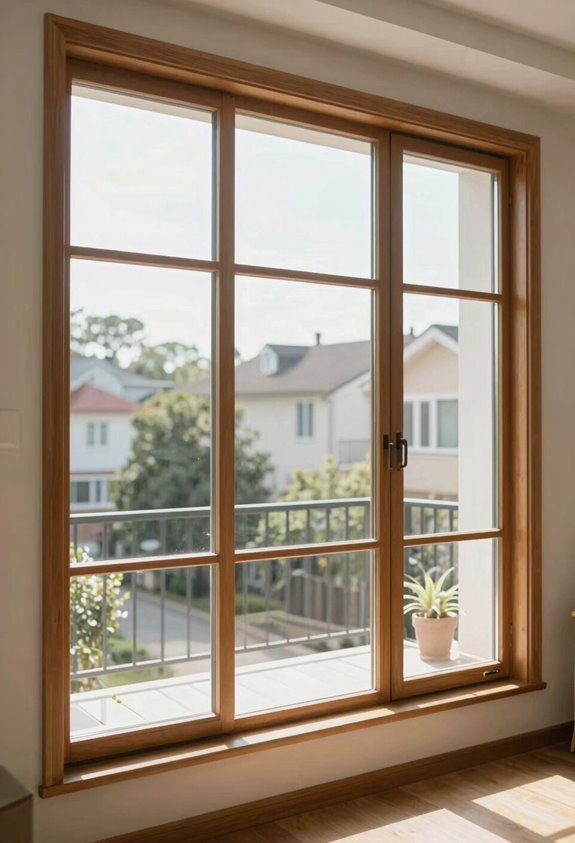
When I stand in my living room and notice that draft creeping in around the window frame, I have to make a decision: patch things up or start fresh with a full replacement. I’ve wrestled with this repair vs replacement dilemma more times than I’d like to admit, and this experience has taught me several key factors.
Your living room window choice, whether double-hung, casement, bay, or bow, shapes everything that follows. Bay and bow styles cost more and deserve consideration early in your planning. Energy efficient windows with low-E coatings add upfront expense but lower bills later, similar to kitchen or child’s room upgrades, and this investment pays back over time.
Window frame material matters too. Vinyl is affordable, wood looks classic, and fiberglass lasts longest. For installation, you’ve got two paths:
- Retrofit installation — cheaper, fits inside existing frames
- Full-frame replacement — pricier but necessary when you find rot or water damage
Hidden problems in the opening can spike replacement window costs fast. Check the opening thoroughly first. This inspection takes minimal effort and prevents unexpected expenses later.
Real Prices: One Living Room Window vs. Full Living Area
I’ve spent enough time staring at repair quotes to know that pricing anxiety shifts significantly when you’re budgeting for just one window versus an entire living area. Let me walk you through the exact numbers you can expect.
Budgeting for one window versus an entire living area changes pricing anxiety dramatically.
- A single living room window runs $329 to $504 installed, though national 2026 estimates reach $632–$967 due to regional variation and project scope.
- Full living area bulk replacement drops the per-window cost to $125–$400, but total window replacement cost increases substantially with more units.
- Historic openings require serious frame work. Full-frame installation labor represents a significant expense, particularly when multiple replacements are needed.
Comparing your single replacement window cost against scaling the entire space reveals measurable savings at volume. The per-unit economics improve substantially once you move beyond one window.
What Style and Material Cost You
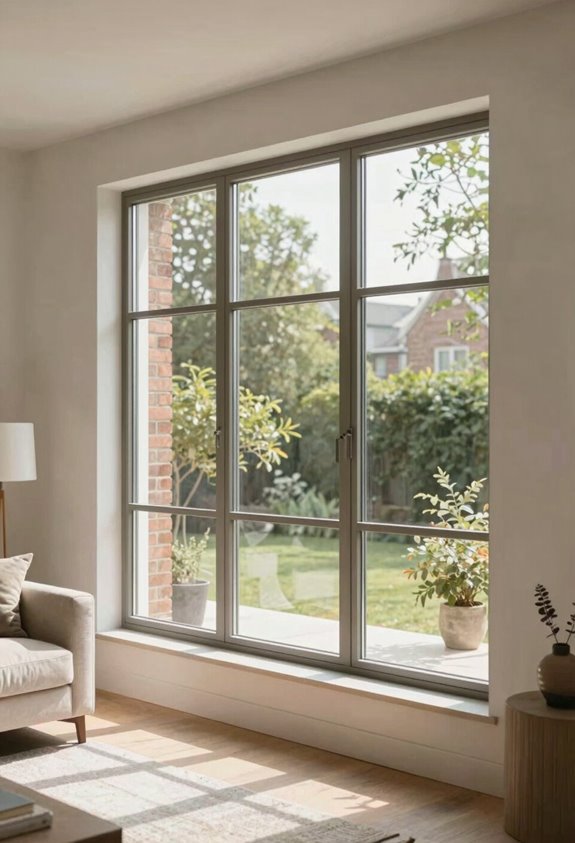
Picking the wrong frame or style can blow your budget fast. Your two biggest cost drivers are the material you choose. Vinyl keeps things affordable, while fiberglass and wood climb toward that $1,600 to $3,000 range. The style itself also matters significantly, where a basic double-hung window sits on the lower end but a showpiece bay window pushes past $886 per unit. Matching your material and style to your actual needs rather than what looks appealing online will save money without compromising on quality.
Frame Material Choices
How exactly does a window frame dictate what you’ll spend? Frame materials significantly impact your budget, and this deserves careful consideration before you shop.
- Vinyl runs $700–$900 per window, the sweet spot typically recommended for beginners.
- Aluminum hits $1200–$1500, while fiberglass sits higher still. Both require serious energy efficiency upgrades like double-pane or triple-pane glass.
- Wood windows with cladding jump to $2300–$2800. These offer aesthetic appeal but involve substantial maintenance demands.
Customization to odd sizes, like a 36″ x 60″ opening, bumps cost per window higher than standard new-construction units. Factor in upgrades for energy efficiency, and your frame choice shapes every dollar you’ll spend.
Window Style Pricing
Once you’ve narrowed down your frame material, the window style you pick will shape your final bill just as much. Skipping style research often leads to unexpected costs later. Window style pricing connects directly to function and performance, not just appearance.
Here’s your breakdown:
- Vinyl windows (builder-grade double-hung): $400–$700 per-window cost
- Premium vinyl windows: $900–$1,200, energy efficient and popular
- Wood windows (aluminum-clad): $2,300–$2,800
- All-wood windows: $2,500–$3,000
Installation matters too. Labor runs $300–$500 per window. A retrofit installation saves money; full-frame replacement increases overall costs. Matching style to budget requires research, but the investment in proper planning reduces regret and surprise expenses down the road.
Retrofit or Full-Frame for Living Room Windows?
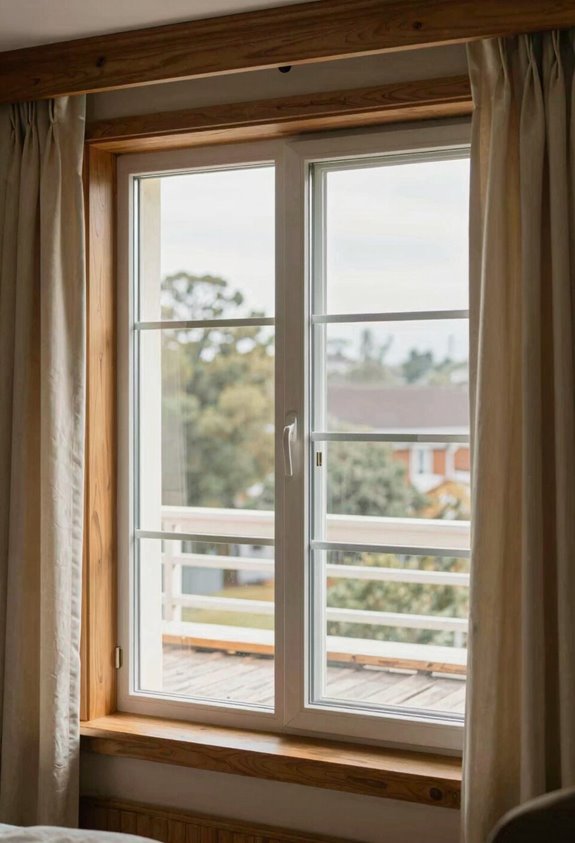
When you’re staring at your worn-out living room window and wondering where to even start, the first big decision you’ll face is whether to go with retrofit or full-frame replacement.
I’ve done this several times, and this choice significantly impacts your project budget and timeline. A retrofit living room window slips into your existing frame, which keeps the cost lower, typically $700 to $1,100 per window. Full-frame means tearing down to the rough opening and rebuilding, usually running $1,300 to $1,800 per window.
Here’s what sways the numbers:
- Vinyl double-hung or sliding styles sit on the budget-friendly end
- Bow or bay configurations jump the price up fast
- Energy-efficient upgrades add upfront costs but reduce heating and cooling expenses over time
Your living room window choice determines your overall project scope and final expenses. Select the option that aligns with your home’s structural condition and your budget constraints.
Budget for the Whole Project: A 6-Line Planner
Starting a window project can feel overwhelming until you break it into bite-sized pieces. Many budgeting mistakes occur when projects lack proper planning.
Here’s my 6-line planner for staying on track:
- Count your number of windows (like a living room window, kitchen, or child’s room) and note each per-window price.
- Choose your installation method: retrofit vs full-frame affects labor and materials considerably.
- Add energy-efficient windows if you want long-term savings.
- Calculate window replacement costs for a whole-home project, not just one room.
- Set aside 10-20% for contingency planning. This step protects your budget from unexpected expenses.
- Get your final quote, and you’re ready to go.
Skipping step 5 creates significant financial risk. Setting aside a contingency buffer is easier to do upfront than managing cost overruns later.
Surprise Costs That Inflate Living Room Quotes
Although you might think you’ve got your living room window cost figured out, surprise expenses can creep in fast. Between the $125 labor-inclusive quote and Larry Wilcox’s $400 per-window costs, you’re looking at wildly different starting points. Regional pricing shifts, like Window World’s 2012 rates near $179, remind us costs aren’t uniform.
Window replacement costs swing wildly—from $125 to $400 per window—so your final price depends heavily on who’s quoting it.
Hidden costs hit hardest when you’re scaling to a multi-window total. What actually burns budgets:
- Removal and disposal fees, often forgotten in initial quotes
- Rot or damage demanding full-frame installation, not simple retrofit
- Permits or inspections required by code in your area
Building a 10-20% budget buffer is necessary. This cushion prevents financial strain when surprises arrive.
5 Moves to Pay Less Without Cutting Corners
How can I trim these costs without picking shoddy windows I’ll regret in two years? I’ve learned five moves that keep quality high and the total project cost manageable.
- Ask about retrofit installations instead of full-frame installs. I’ve saved hundreds per window when my existing frames were sound.
- Choose your window frame material wisely. Vinyl keeps the average cost per window lowest, while fiberglass or wood can triple your replacement windows budget.
- Score off-peak savings by scheduling fall or winter. Contractors slash labor costs when they’re slow.
- Hunt rebates and tax credits. Utilities and the feds often chip in, cutting what you actually pay.
- Get three bids from licensed installers only. Skipping this step has resulted in significant overpayment in the past.