The floors ahead run from a basic threshold strip you install yourself to a full terrazzo pour that outlasts the bathroom around it, and the deciding factor is how much of the work your own hands will handle versus what you will pay a contractor to pour, grind, or seal.
A wide plank can stretch a narrow hallway visually without ripping out the subfloor, but a metallic epoxy demands the pro’s timing because the marbling sets for good in minutes.
1. Neutral Oak Flooring
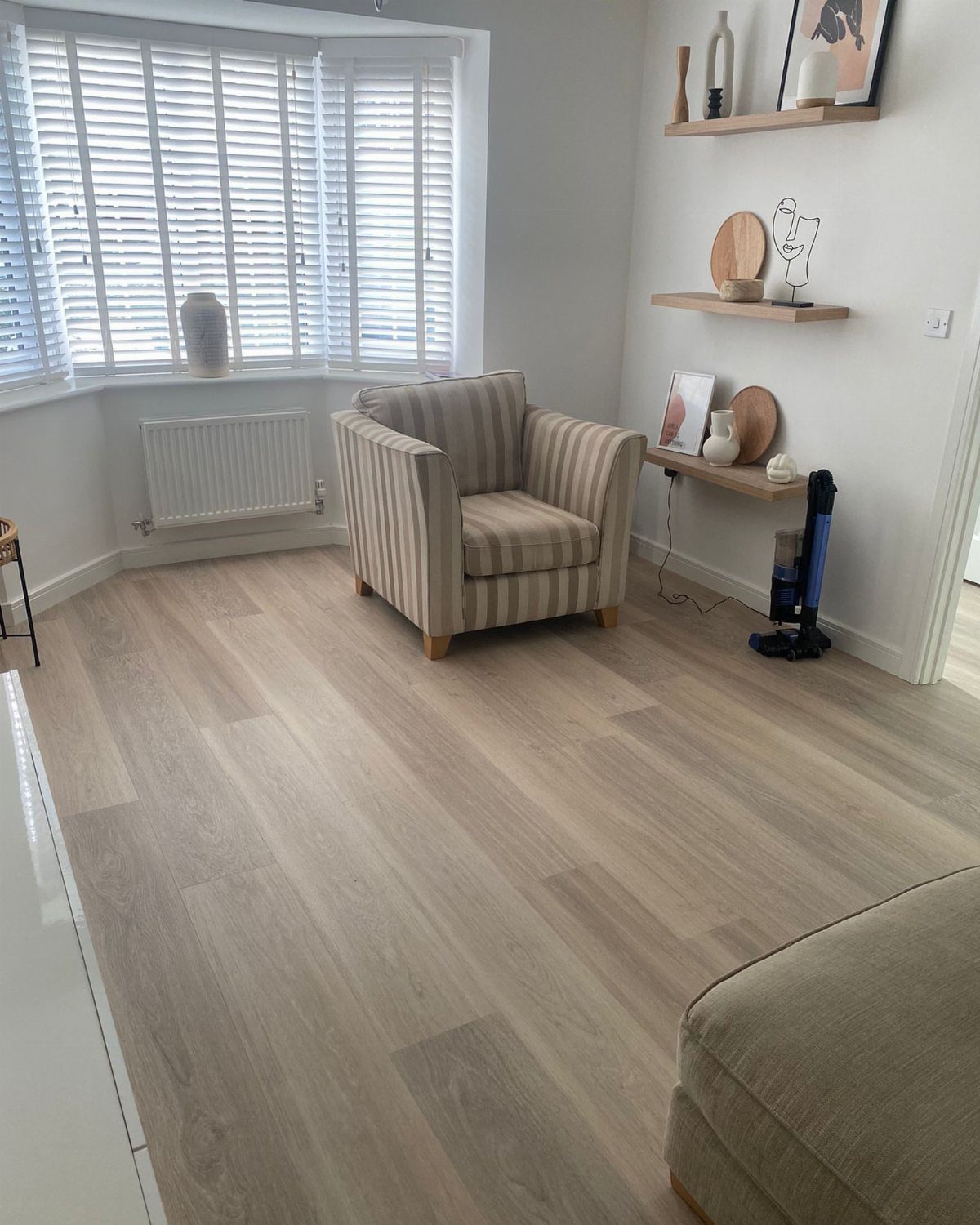
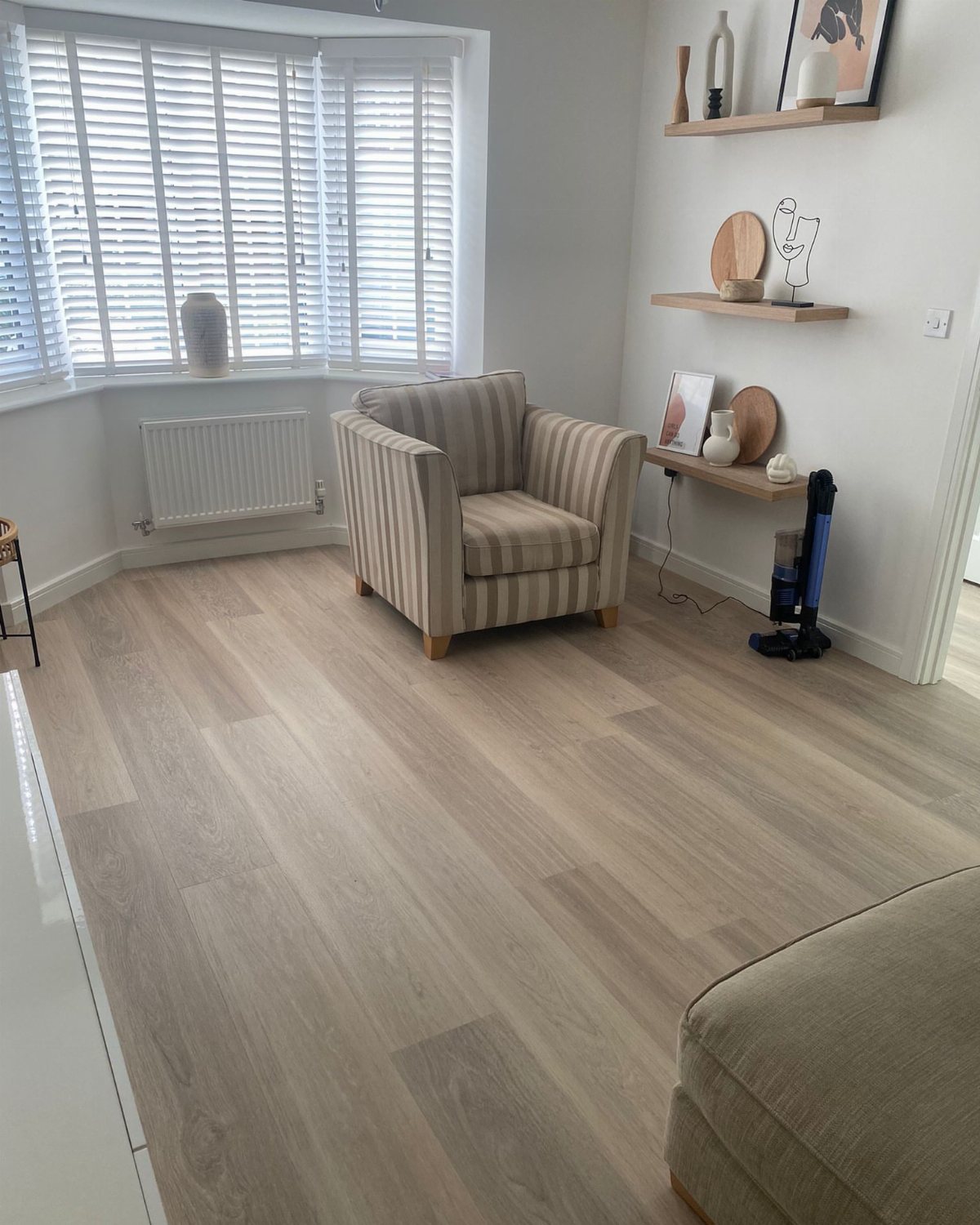
Neutral oak brings honey and caramel tones back into living rooms after years of gray that read cold on sunny afternoons.
I like it for open plans where the same floor runs from entry to kitchen; the warmth hides dust between vacuuming and softens the echo of hard surfaces.
Engineered wide-plank versions cost less than solid hardwood and handle radiant heat better without the gapping or cupping that temperature swings cause.
Auburn Oak from Shaw’s Endura Plus line hits this tone exactly if you need a sample to show a contractor. Best for homes where you want the floor to feel lived-in from day one, not showroom perfect.

Residue-free, fast drying solution that removes dust, dirt and grime to reveal the floor's natural shine
Easily refill any Bona floor cleaner spray bottle or mop cartridge

Clean, Shine & Restore: Professional hardwood floor cleaner and polish bundle removes dirt, grime, and scuffs while restoring the natural beauty of finished wood floors without leaving a sticky residue.
2. Wide Planks
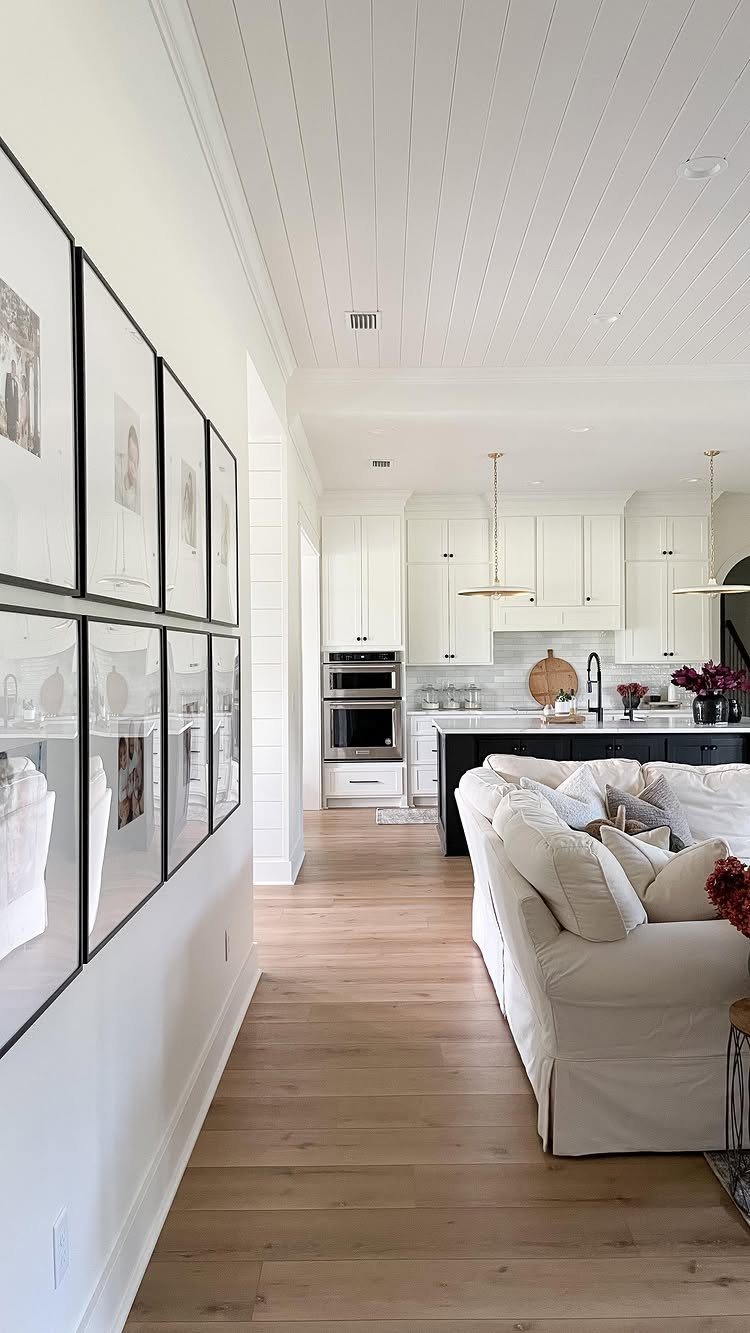
Seven- to nine-inch planks turn narrow hallways into something that breathes. Running long boards parallel to the longest wall stretches a narrow room visually; fewer seams mean less visual noise, especially against white cabinetry.
Waterproof polymer composite cores add warmth underfoot that thin stone-plastic composite lacks, worth the slight upcharge if you walk barefoot in mornings. In open kitchens, wide planks let the grain pattern do the decorating so you can skip the rug.
Skip this if your subfloor is uneven; wide boards telegraph every bump.

【Large Size&Double Width】: The gray peel and stick floor tile is designed in a large, each vinyl flooring measures 11.8” x 590” with a thickness of 0.025”, covering approximately 48.4 Sq.Ft. Compared with traditional flooring planks, vinyl flooring roll minimizing the need for frequent seams, creating a smooth, continuous finish without any visual breaks, making it easy for you to renovate bedroom, living room, saving significant time and labor costs.

🏠DETAILS: 15.8x78.8 Inch, total 8.65 sq.ft (40cmX2m) Made of durable thin vinyl, thickness: 0.015 In (0.4MM). Peel and stick wood planks vinyl flooring roll, brown shiplap planks color. Waterproof. Removable.

Realistic Wood Look: Get the authentic look of real wood with grain texture. These floor planks blend seamlessly into any decor style, adding a touch of timeless elegance to your home.
3. Herringbone Flooring
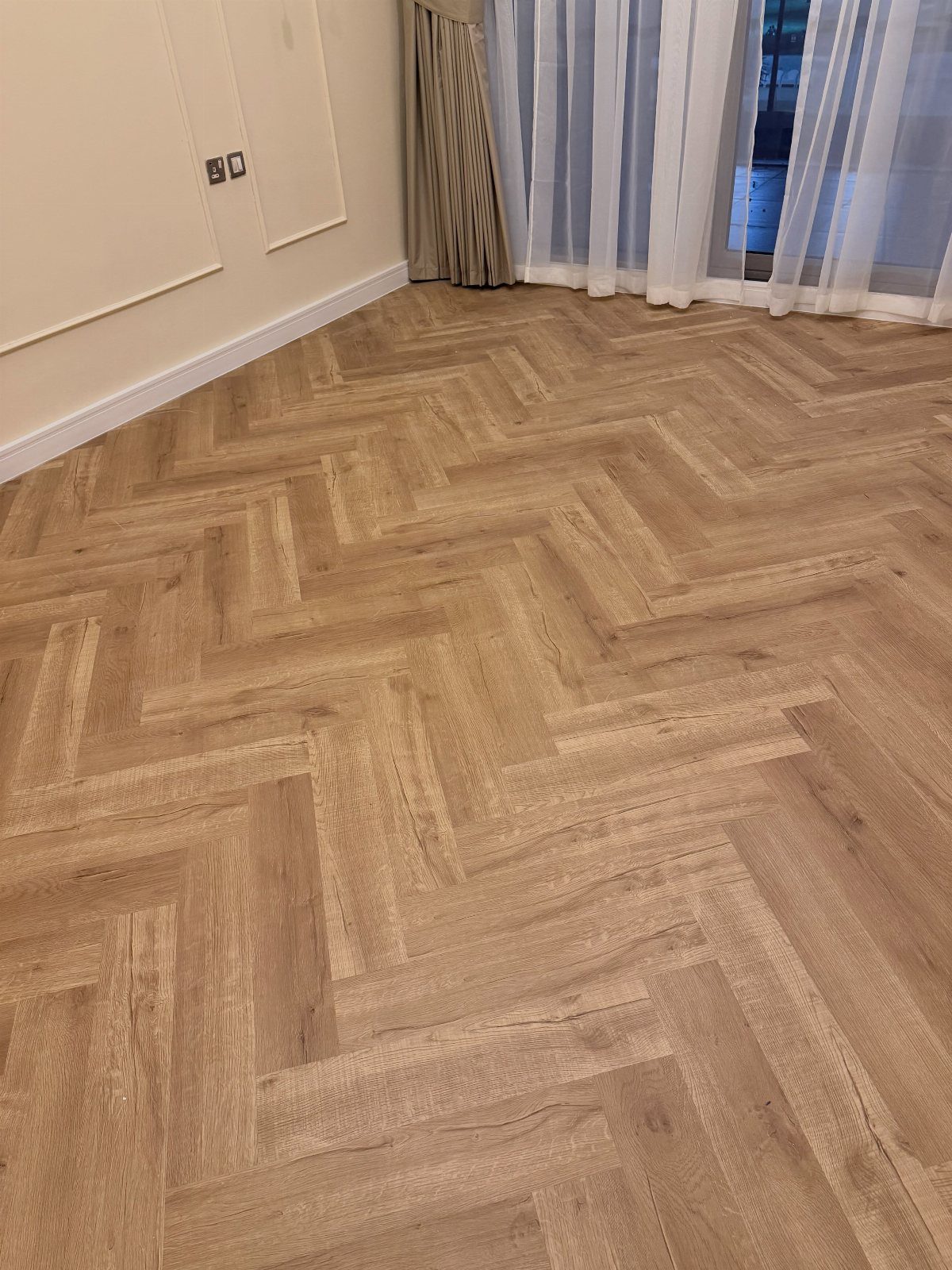
Herringbone costs more in labor and wastes more material than straight lay, which is exactly why it works in small rooms where you want the floor to be the whole design statement.
I would use it in a powder room or laundry where the square footage stays under 150; the pattern reads as intentional rather than busy at that scale.
For a modern edge, keep the tone single rather than mixing species the way older installations did. Vinyl and engineered versions now click together without the traditional glued-down fuss, bringing the labor cost closer to standard plank.
Not for households that need to replace boards often; matching the angle later is a headache.

【SPC Material】Rigid stone-plastic composite core; 100% Waterproof, resists dents and impacts; Won't expand or contract with temperature changes.

Why Choose a Floating Floor? ✅ Unlike traditional flooring, our click-lock planks snap together effortlessly—no messy adhesives or nails needed. Perfect for DIYers & quick installations.

【Ultra-Durable & Pet-Friendly】With a 0.3mm wear layer tested over 15,000 abrasion cycles, this luxury vinyl plank flooring resists scratches, dents, and spills. Ideal for busy homes with pets and kids, it stays beautiful for years even in high-traffic areas.
4. Matte Finishes
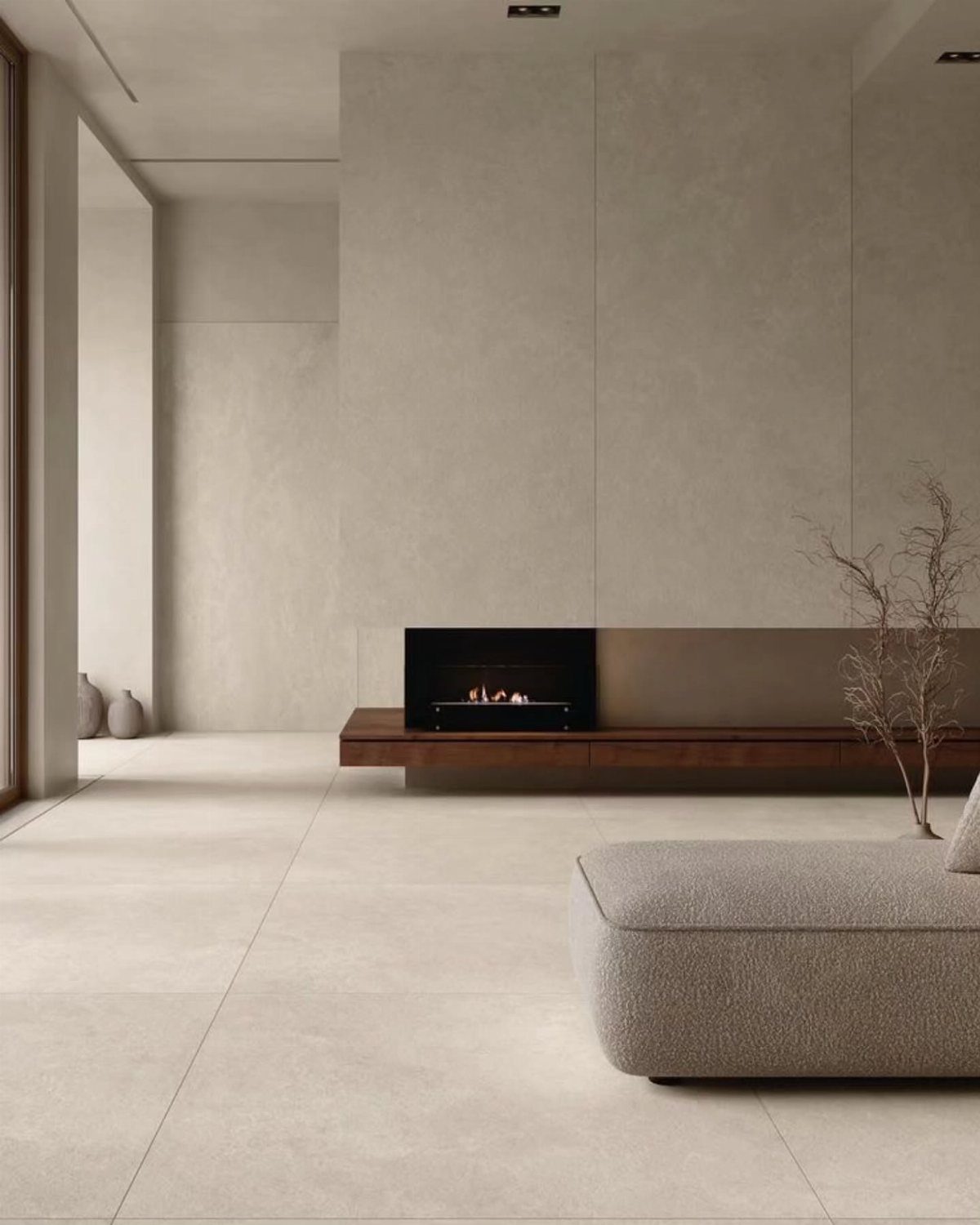
Matte finishes hide the scuff from a dog’s claws and the haze from mopping with whatever cleaner was under the sink.
UV-cured matte lacquer gives the soft look of oiled floors without the quarterly reapplication; I have lived with both and the maintenance difference is real.
Large-format matte tile reads as stone without the sealing drama, and the light diffusion flatters rooms that get only morning sun. Gloss still works for formal spaces you photograph more than walk on.
For actual living, matte wins unless you enjoy chasing reflections with a microfiber cloth.


Designed to enhance the natural color of interior floor surfaces

Ideal for updating outdated flooring at a fraction of the cost of replacement and adheres without stripping, sanding or priming
5. Deep, High-Contrast Rich Browns
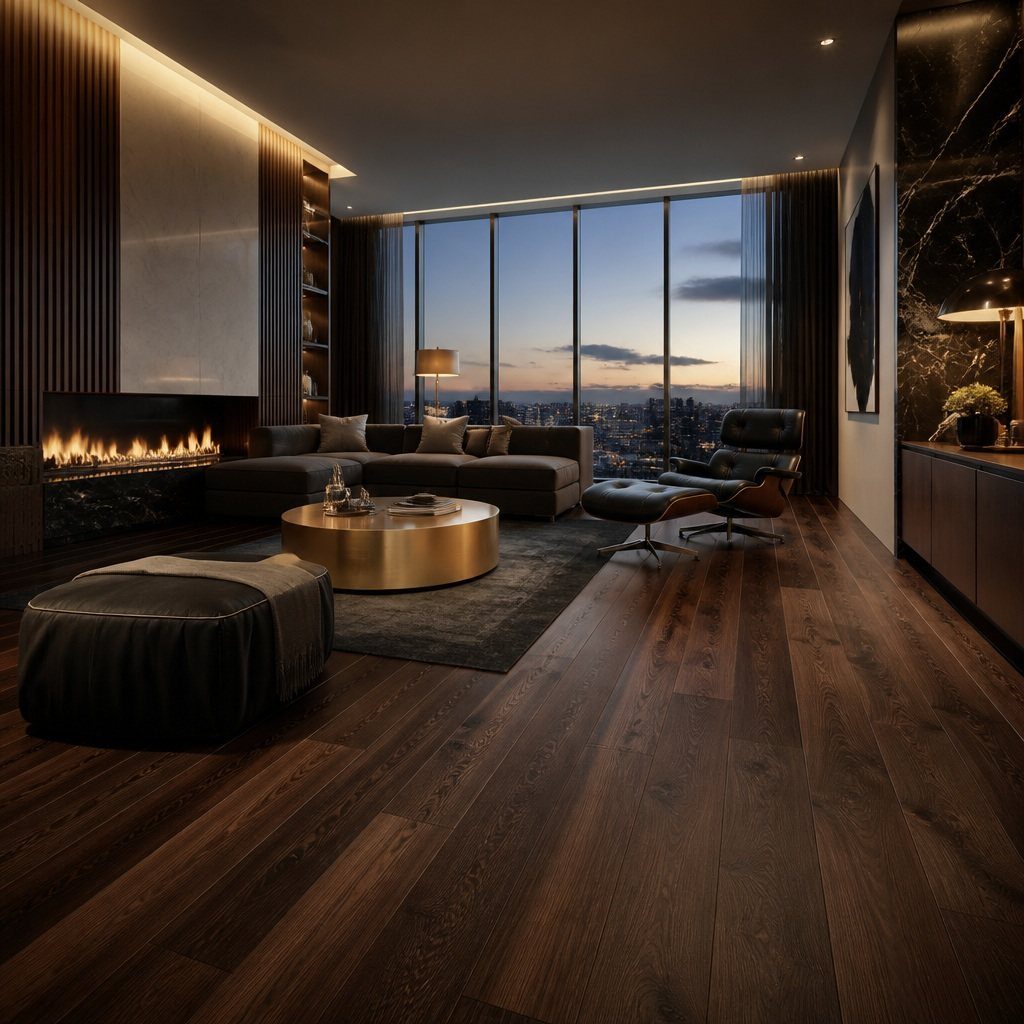
Deep walnut browns with chocolate and espresso undertones suit rooms that already have architectural weight: high ceilings, steel windows, a fireplace you want to feel like an event.
The contrast against pale walls or brass fixtures reads expensive without the actual expense of rare stone.
I would call in a sample board and live with it through a few days of light changes before committing; dark floors show every dust particle and water spot, and the mood shifts dramatically from morning to dusk.
Best in spaces with built-in cleaning help or owners who vacuum twice weekly without resentment. In small rooms, the tone can feel like a lid coming down.

Give Home a New Look - Peel and stick floor tiles can be adhered to any flat, clean and dry surface and can be removed without leaving a trace, making them perfect for renters.

Effortless Peel-and-Stick Installation:Transform your space in minutes! These self-adhesive vinyl tiles bond instantly to clean, flat surfaces—no tools or messy glue required. Great for DIY kitchen, bathroom, or living room makeovers.

10pcs 12x12in tiles: Peel and stick floor tile flexible layout combinations for custom decor.
6. Patterned Tile Flooring
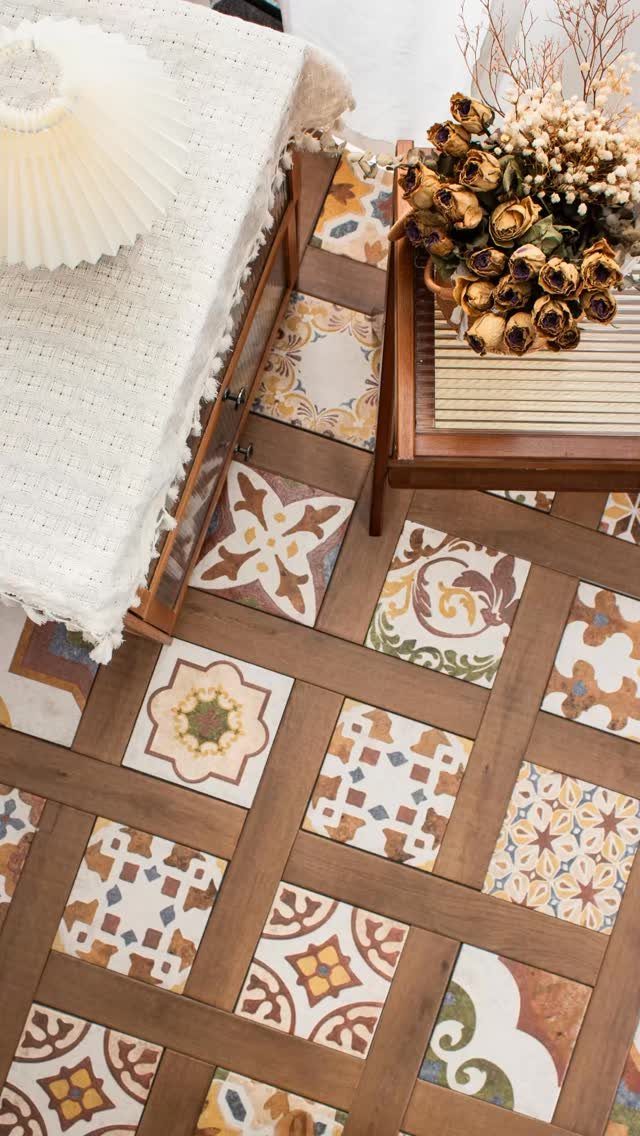
Patterned tile needs restraint to survive daily looking. Terracotta and blue work because the pattern sits in a defined zone, framed by wood lattice that breaks the field into digestible squares; wall-to-wall geometric tile exhausts the eye within months.
I would use this approach for a kitchen backsplash zone extended to the floor, or a bathroom where the pattern stops at the shower threshold.
Handmade texture and quieter repeats age better than bold geometry paired with plain cabinets, which is the balance that lets you live with it past the installation high.
Cost runs higher than standard porcelain for the artisan production; buy extra material to sort and cull the variation you want.

Mohawk Elite hardwood flooring is the ultimate in enhanced and naturally gorgeous visuals for a premium contemporary look. Peanut Oak is a warm blend of golden browns, rich and invigorating. Plank has hand beveled edge.

No More Clutter: This bathroom cabinet has plenty of storage for all your odds and ends that don't have a place. There are four pull-out drawers and a cabinet with a shelf to keep your space clean and tidy.

Glue-Free Instant Installation - Vinyl floor mat uses pre-applied adhesive tape . This enables tool-free, straightforward application, simplifying DIY projects and saving installation time.
7. Metallic Epoxy Resin Floors
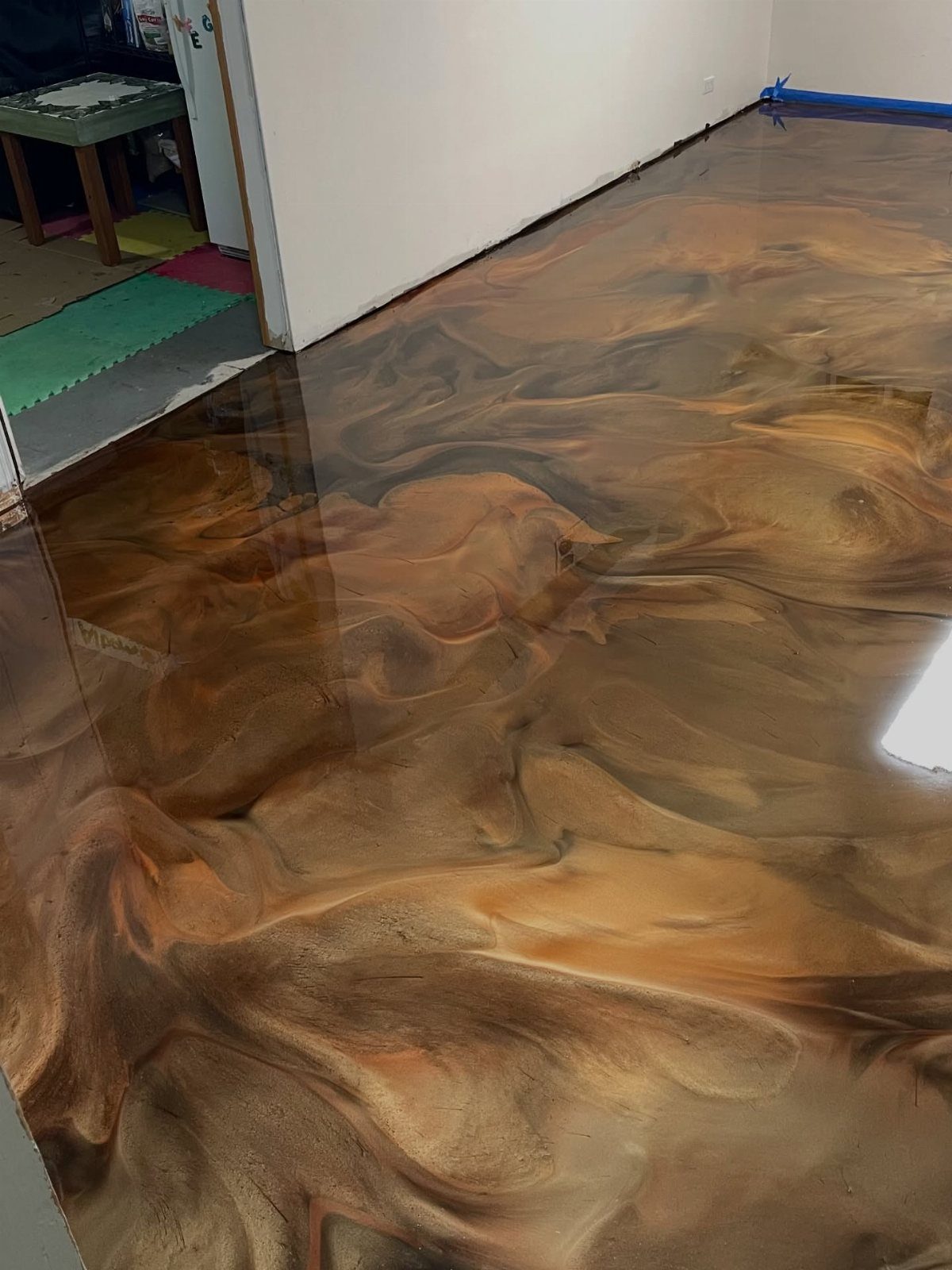
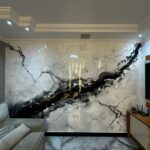
Metallic epoxy resin floors start as a liquid self-leveling pour, then metallic powders get swirled through while the resin is still wet.
Copper and gold tones read warm against white walls, though silver and pewter work better in rooms with cooler light. A contractor handles the pour and the timing; the marbling happens in minutes and sets for good.
The high-gloss finish shows every dust mote and scuff, so this suits a low-traffic space or an owner who cleans often.
I’d skip it for a kitchen or entry hall and save it for a home office, studio, or basement bar where the drama earns the upkeep.

Realistic Wood Look: Get the authentic look of real wood with grain texture. These floor planks blend seamlessly into any decor style, adding a touch of timeless elegance to your home.

Stylish - Authentic wood looking and grain texture, adding timeless features to your home

Stylish - Authentic wood looking and grain texture, adding timeless feature for your home!
8. Seamless Microcement Flooring
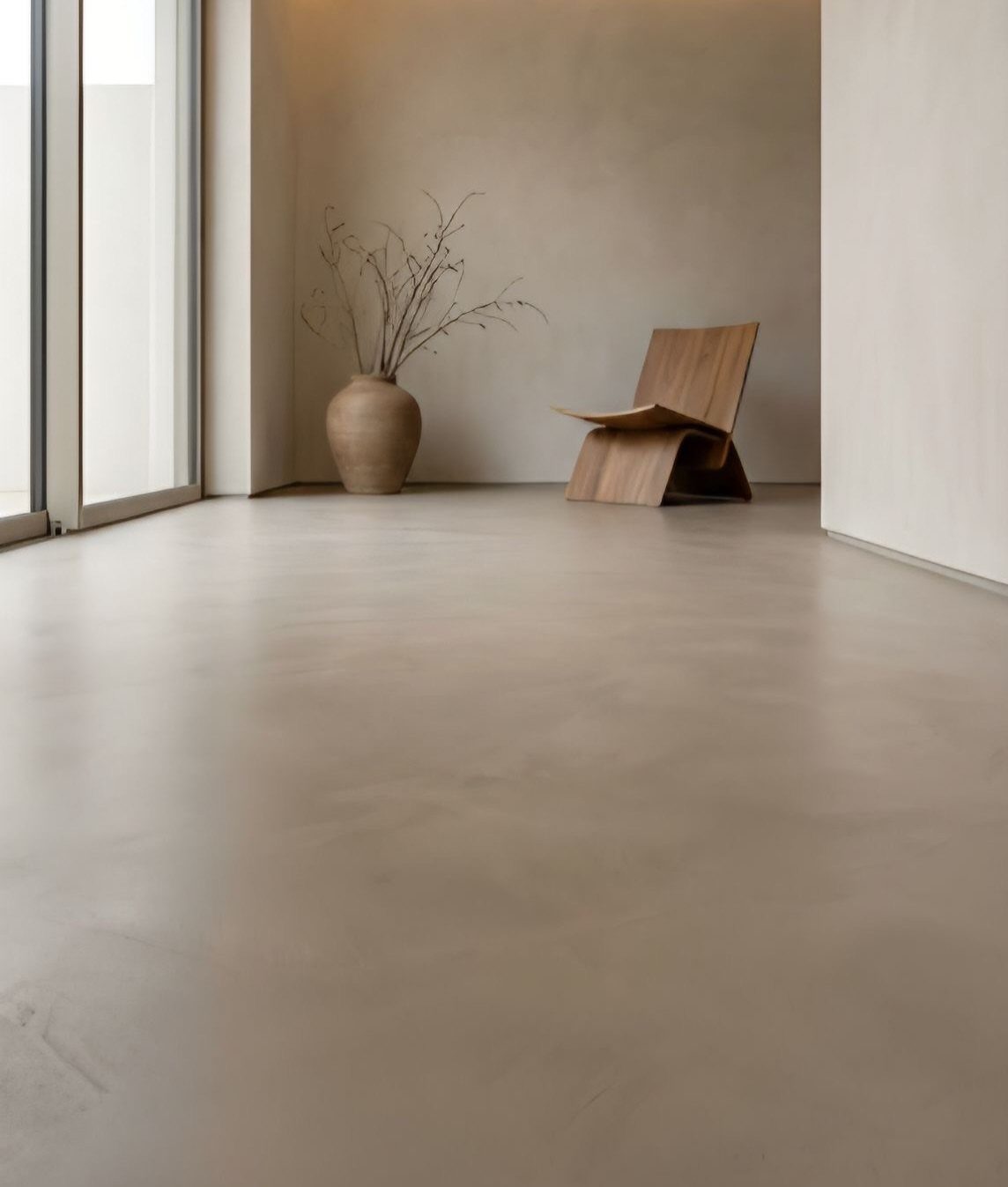
Microcement flooring runs thin over existing concrete, plywood, or tile, so you rarely need to rip out what’s there. Warm beige comes from pigment added to the base mix; cooler grays and near-whites are just as common.
A pro applies three layers: base coat, colored finish, and sealer, with sanding between each.
The surface is water-resistant once sealed but not waterproof, so it works through living areas and dry kitchens yet needs more protection in a bathroom with daily splashing.
Cracks in the substrate telegraph straight through, so the prep matters more than the top coat. Budget for touch-ups every few years in high-wear spots; the sealer wears before the cement does.

Chic Design & Wood Texture - Classic herringbone pattern with realistic wood grain texture, combining classic charm with the rustic beauty of natural wood, add a touch of earthy warmth to your interiors.

1. Softer and More Comfortable Underfoot — WPC click-lock flooring offers a more cushioned, flexible feel than traditional SPC or peel-and-stick vinyl planks. The resilient core absorbs impact and reduces noise, providing a warmer and quieter walking experience for bedrooms, living rooms, and offices.

6mm Thick with Realistic 3D Wood Visuals** Experience the authentic beauty of wood, enhanced by a generous 6mm thickness that creates deep, realistic plank bevels and a texture you can feel. This premium, substantial profile provides a solid underfoot experience that far surpasses thin vinyl floors, adding undeniable luxury to any room.
9. Terrazzo Bathroom Flooring
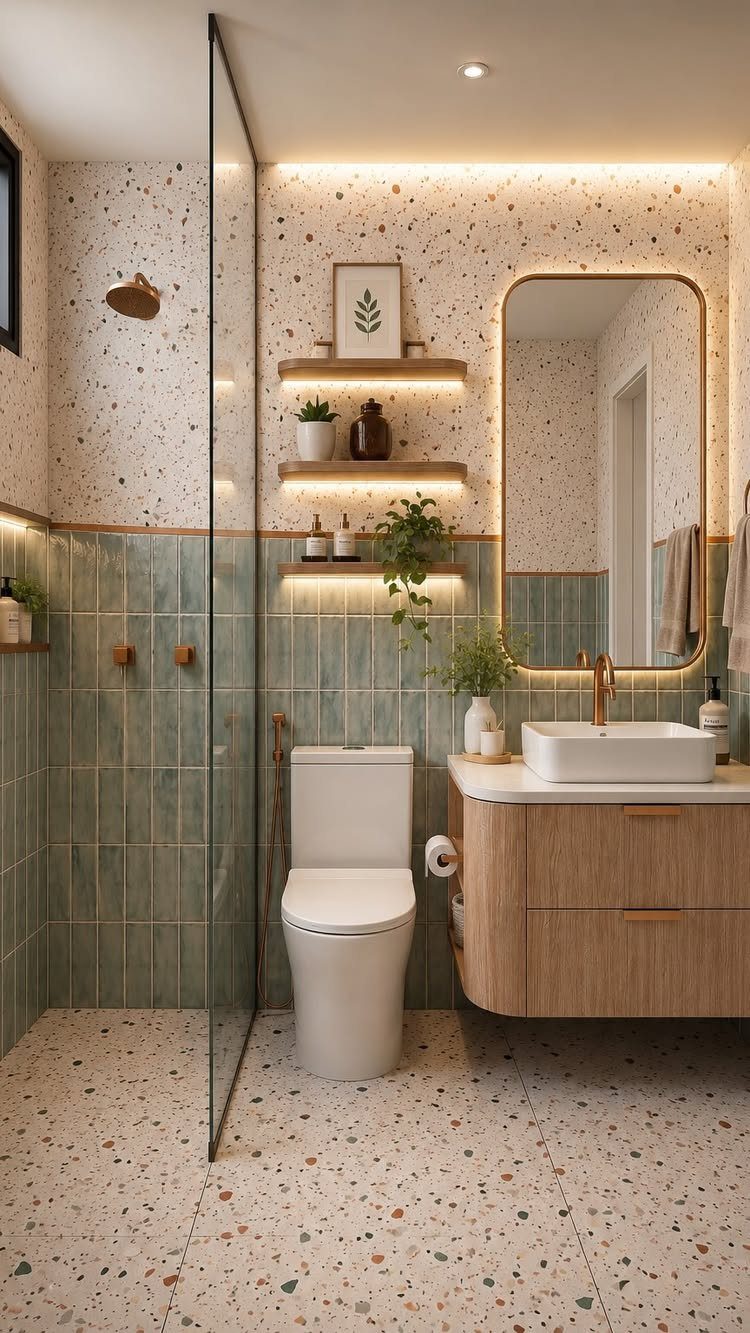
Terrazzo bathroom flooring brings the same speckled stone-and-binder mix back into residential work after decades of commercial use. The chips come in marble, quartz, glass, or recycled porcelain, set into cement or epoxy and ground flat after curing.
Sage green tile pairs well because terrazzo already carries enough pattern; a busy wall fights it. For a DIY-friendly version, large-format terrazzo-look porcelain gives the visual without the pour and grind.
Real terrazzo needs a slab substrate and skilled installers, so it runs higher and takes longer. A terrazzo floor outlasts the bathroom around it.
I’d use the real material in a primary bath I planned to keep for years, and the porcelain version anywhere else.

Ideal for updating outdated flooring at a fraction of the cost of replacement and adheres without stripping, sanding or priming

For DYI or Professional Use, Professional Grade Water Based Natural Look Sealer for Stone, Tile and Concrete

Ideal for updating outdated flooring at a fraction of the cost of replacement and adheres without stripping, sanding or priming
10. Mixed Material Flooring Transitions
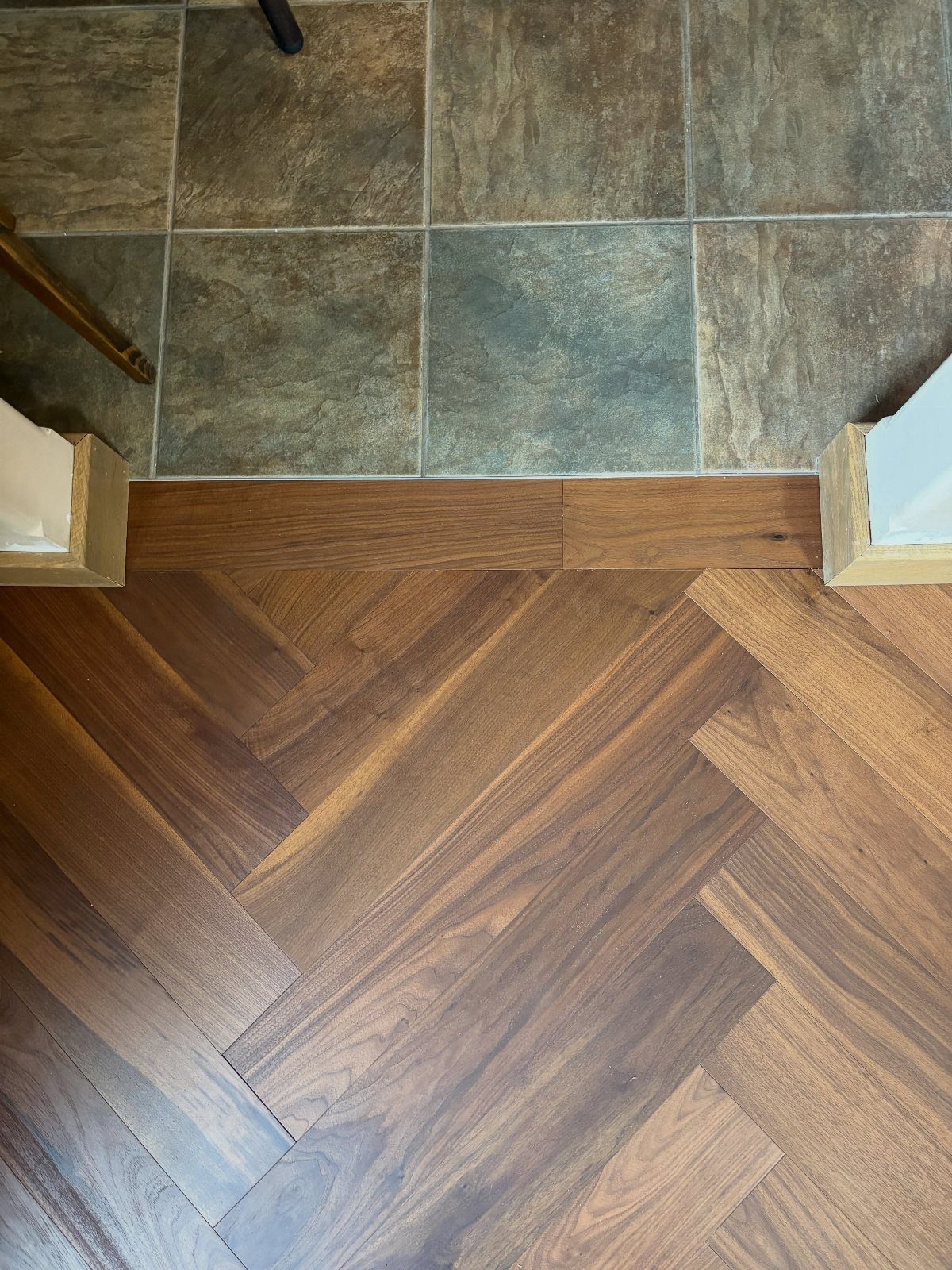
A wooden threshold strip at the doorway handles the height difference between herringbone parquet and stone tile without forcing either material to compromise.
The strip itself becomes a thin design line; walnut or oak stained to match the darker side keeps the eye moving.
For a bolder move, stone inlay set directly into wood flooring removes the transition piece entirely and treats the joint as pattern. That takes a skilled flooring contractor and precise subfloor prep.
The simpler threshold suits most renovations and most budgets. Either way, the mixed materials work best when the two sides share an undertone; warm wood against cool stone reads accidental, not intentional.

🏠Upgrade thickness: Size 12x12 inch included 4 tiles,thickness is 0.06in/tile, made of vinyl. Patterned peel and stick floor tile, waterproof, renter friendly, groutable, no special tools needed.
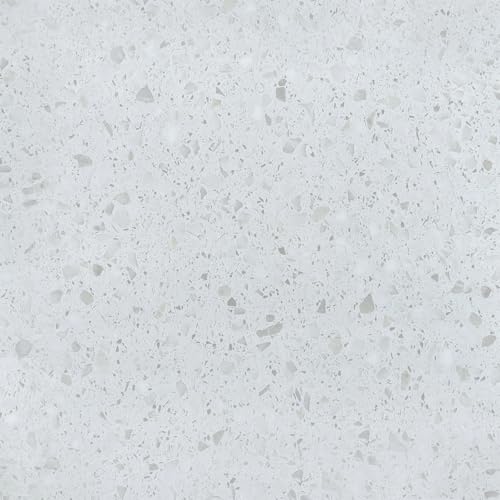
𝐒𝐢𝐳𝐞&𝐓𝐡𝐢𝐜𝐤𝐞𝐫: 18-sheet 12x12 peel and stick floor tile, 1.5mm thick, coverage approx. 18 square feet. Durable vinyl sheet flooring, thick enough to cover the high traffic area with strong adhesive, low-luster textured surface for effective slip resistance

Fiber-reinforced self-leveling floor underlayment for increased durability, tensile strength, and flexural performance
Focus on Texture
Texture matters as much as color now, and the technology behind it has gotten specific.
Embossed in Register, or EIR, aligns the surface texture of laminate and vinyl with the printed grain underneath, so the knots and grain lines you see are the same ones your hand feels.
Budget-friendly planks suddenly read like real oak or walnut because the irregularities match.
Matte finishes carry this further by copying how raw wood or stone actually looks in nature, not how a factory polishes it.
The low sheen diffuses light instead of bouncing it back as glare, which hides the small scratches a dog or a dragged chair leaves behind.
High-gloss still turns up in showrooms, but the maintenance load is real; every smudge announces itself.
I would pick EIR laminate for a rental or a first home where you want the warmth of wood without the price of solid planks. The tactile difference against standard printed vinyl is immediate when you walk across it barefoot.
Practicality and Performance
Waterproof flooring has moved past being a specialty option and into standard expectation, especially for kitchens, bathrooms, and mudrooms where moisture is not an accident but a fact.
Stone Plastic Composite vinyl handles spills and humidity without the swelling or staining that ruins wood-based products, and the surface resists the claw marks and stains that come with pets.
Thicker planks add stability underfoot and survive longer in high-traffic spaces; the extra mass reduces the hollow sound that thinner vinyl sometimes carries.
An engineered oak wide plank hits both marks, strength and visual calm, for a living room that sees daily use.
I would put waterproof SPC in any room below grade or near an exterior door, and save the fussier materials for spaces that stay dry by design.
The performance gap is too wide to ignore once you have lived through a flooded dishwasher or a rainy season.
Design Flexibility
Warm neutrals and natural wood tones stick around longer than whatever color you paint the walls or whatever sofa you drag in.
A honey oak or soft gray plank does not fight a new sofa or a wall color you find later; it adapts. That flexibility matters most in flooring because you do not replace it on impulse.
Matte and low-sheen finishes extend this adaptability. They read as current without chasing a specific trend, and they hide the wear that accumulates while you are busy with other projects.
The goal is a floor that still looks intentional a decade in, not one that dates itself to the year it went down.
I would avoid anything that demands the rest of the room coordinate with it, bold geometry or high-contrast color blocking that locks you into a single look.
A neutral base lets you evolve the space one piece at a time, which fits the budget and timeline most owners actually have.
After years of cool grays dominating, homeowners are returning to comfort and richness. Warm woods bring depth, character, and designer-approved refinement.
Mixing Styles
Mixing materials in one room solves problems instead of creating them. A tile zone under a kitchen island catches the spills and drips that concentrate there, while engineered oak warms the dining area where you actually stand barefoot.
The boundary between them is functional, not a mistake to hide.
I would keep the two materials in the same undertone family, warm against warm or cool against cool. A mismatch reads as accident, not intention, and mixing only works when every transition looks like you meant it.
Frequently Asked Questions
What type of flooring is popular in 2026?
Warm wood tones lead the year, with honey and caramel oak replacing the gray that dominated before.
Wide planks between seven and nine inches stretch small rooms visually, and waterproof cores in vinyl and engineered formats handle real life without fuss.
Herringbone and patterned tile show up as statement choices in powder rooms and kitchens where the square footage stays small enough for the pattern to read as intentional.
What flooring will not go out of style?
Neutral oak with warm undertones ages better than trend colors because it already looks lived-in.
Matte finishes help too; they hide scuffs and the haze from casual cleaning, so the floor looks the same years later as it did when it was new.
Natural wood grain and stone-look formats that borrow from actual material behavior, rather than inventing new colors, tend to outlast the cycle.