Garage floors run from a $40 can of paint to polyaspartic at $9 per square foot, and the right choice depends on whether you need to park tomorrow or want the floor to outlast the house.
A two-car space in interlocking tiles alone can run you anywhere from a long weekend away to a new appliance, so budget and timeline usually matter more than style here.
1. Interlocking Tiles
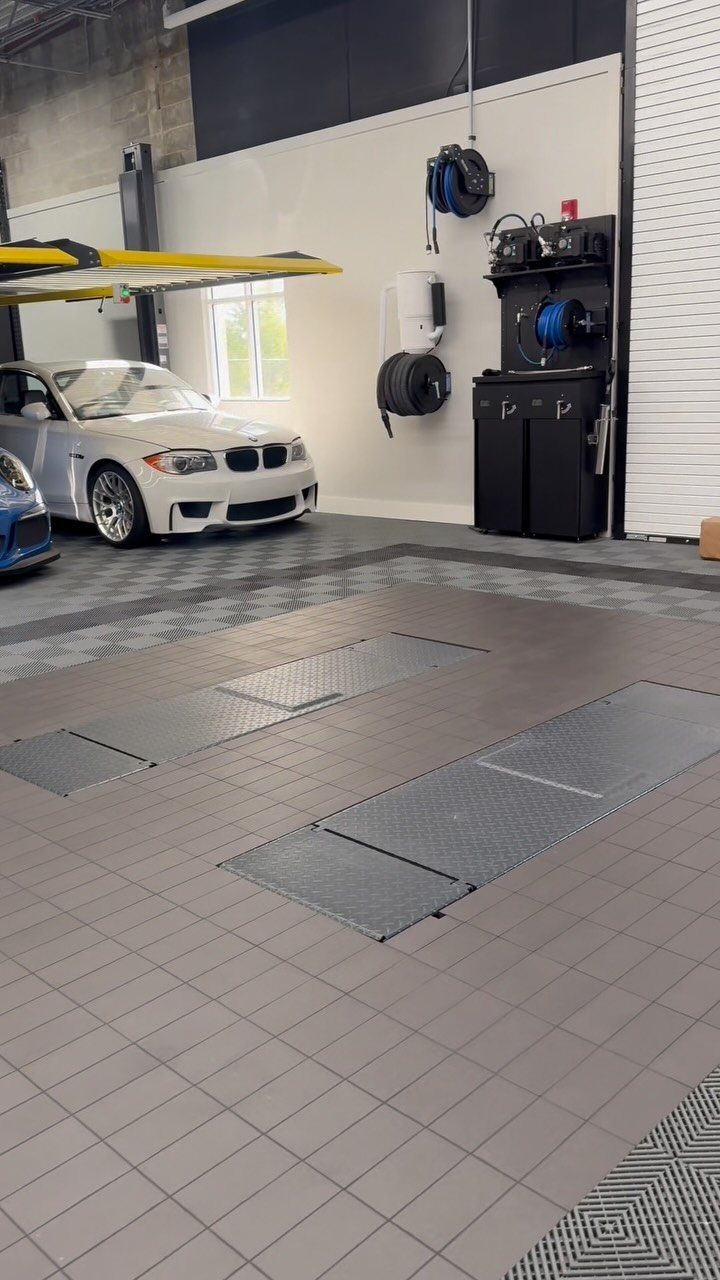
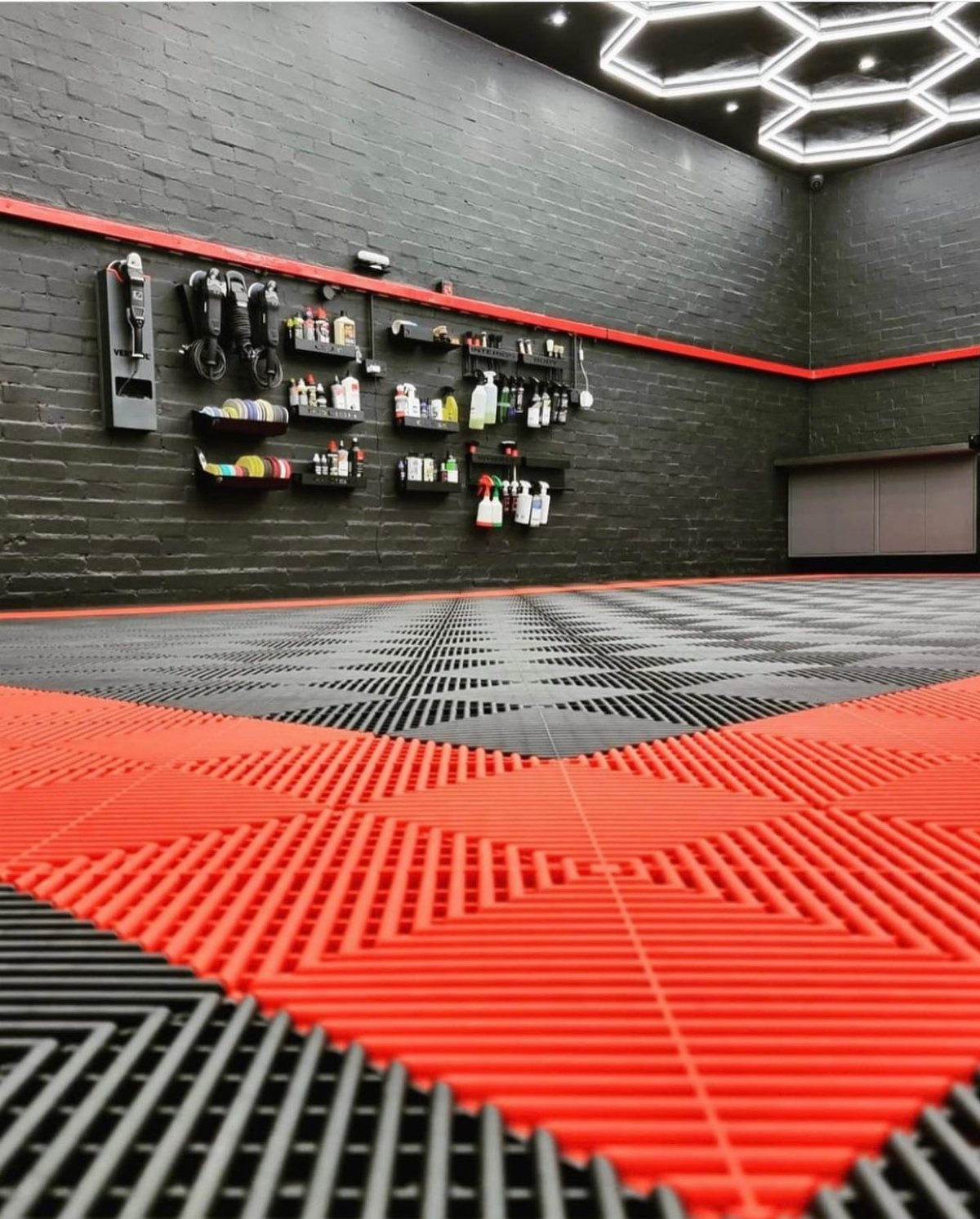
Interlocking tiles let you build a floor in an afternoon without touching a tube of adhesive. Heavy-duty vinyl or rubber squares snap together over whatever concrete you’ve got, hiding cracks as long as the surface is reasonably level.
Interlocking tiles let you mix textures, like solid grey beside diamond plate, as far as your own taste pushes it.
A pack costs $2.29 to $7.50 per square foot, so a two-car garage lands somewhere between a long weekend away and a new appliance.
I would put this at the top of the list for anyone turning part of their garage into a gym or a space where kids play.
The slight give underfoot beats bare concrete for dropped weights or knees on the floor. Sweep it, spot-clean it, and if one tile gets wrecked, pop it out instead of refinishing the whole room.
Get a size close to what you need (or order direct from Flooring Inc. to get custom sizes starting at $1.98 per square foot), and cut out the fine adjustments with a razor.
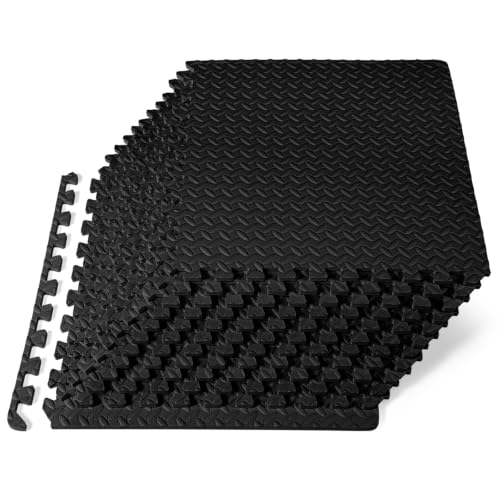
PROTECTIVE GYM FLOOR MAT: Durable, non-skid gym flooring for home gym that covers and protects your floor or carpet while creating a comfortable workout room or play mat

💪 #𝟭 𝗣𝗥𝗢𝗧𝗘𝗖𝗧𝗜𝗩𝗘 𝗙𝗟𝗢𝗢𝗥 𝗠𝗔𝗧 𝗦𝗘𝗧 𝗪𝗜𝗧𝗛 𝟭𝟴 𝗣𝗨𝗭𝗭𝗟𝗘 𝗣𝗜𝗘𝗖𝗘𝗦 + EDGE PIECES FOR PERFECT FLOOR PROTECTION - protect your floor from scratches, knocks, dents, cold, noise, sweat and other fluids with probably the best and most secure protective floor mat available on the market. Completely BPA-free for your safety and well-being.

FOAM FLOOR TILES 6-PACK - These EVA foam floor mats provide 24-square-feet of protective coverage for flooring in your home gym, garage, or family room. Create a comfortable space for fitness routines and workout equipment or a safe play area for kids.
2. Epoxy Coatings
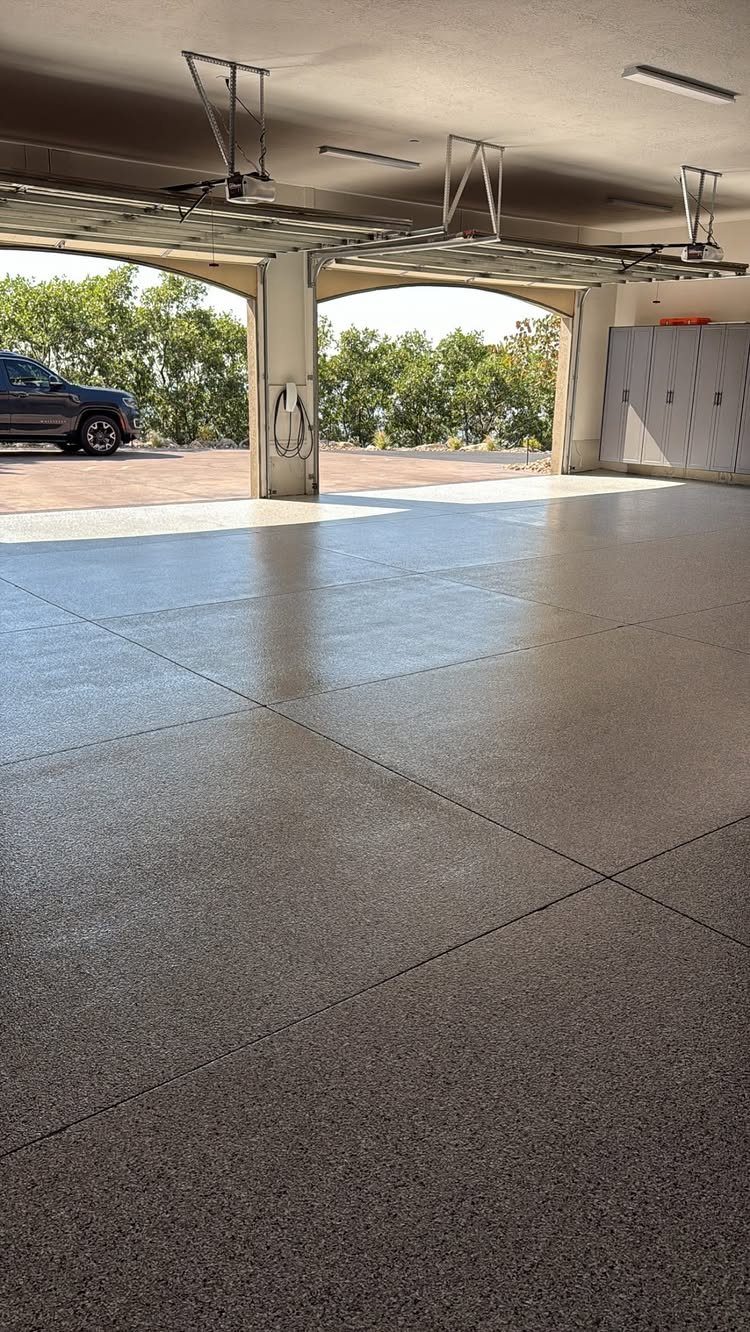
Epoxy gives a garage floor the look of something poured rather than rolled on.
The coating is paint mixed with a hardener; once it cures, you get a glossy, speckled surface that shrugs off oil, moisture, and the drag of a floor jack.
Prep is where epoxy lives or dies. Patch every crack, degrease every stain, and still expect to wait through curing time before you park on it.
Costs run $2 to $13 per square foot, with metallic or granite finishes pushing toward the high end.
I tried epoxy in my last garage and the result held up for years, but the weekend I spent on hands and knees with a grinder was not the fun part.
Hire the prep out if your back objects to that kind of work. This one suits someone who wants the floor to look finished and plans to keep the space clean enough to show it off.
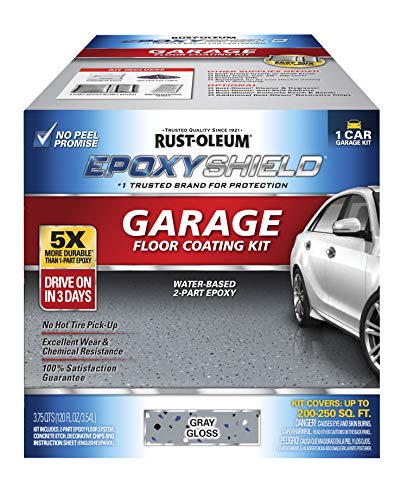
2-PART EPOXY COATING: Water-based epoxy kit finishes concrete garage floors in good, sound condition with a gloss, color-flecked finish

Epoxy Spike Shoes: In self-flowing flat paint construction, wearing epoxy resin nail shoes will prevent tracks and ensure your design remains intact. Epoxy nail shoes are essential for self-leveling, epoxy flooring, and overlay construction.
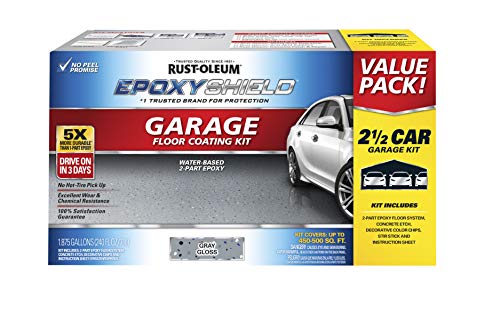
2-PART EPOXY COATING: Water-based epoxy kit finishes concrete garage floors in good, sound condition with a gloss, color-flecked finish
3. Polished Concrete
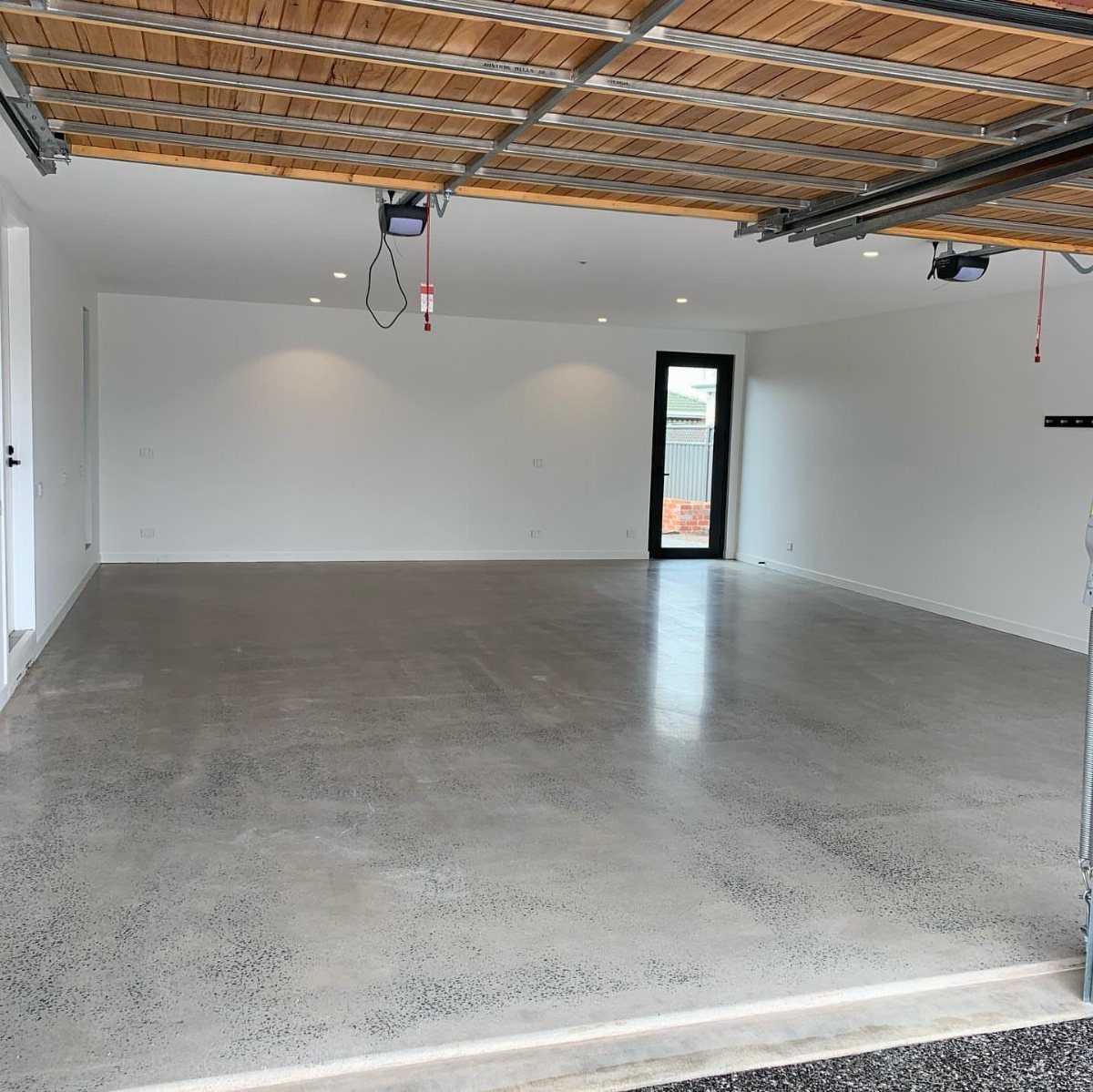
Polished concrete keeps what is already there and makes it presentable. A grinder passes over the slab with progressively finer grits, then a sealer goes down to tighten the surface against stains and the white dust that concrete sheds.
Polished concrete can go down to exposed aggregate, slightly pebbled and reflective under the lights. That level of finish needs a pro with the right equipment.
A simpler seal-and-go version, wet-look or low-lustre, runs far less if you do the cleaning and mopping yourself.
This is the choice for someone who likes concrete grey as a color and wants the least ongoing fuss. Re-seal every few years, sweep the rest of the time.
It will not warm the space up or soften a fall, but it will outlast anything else on this list.
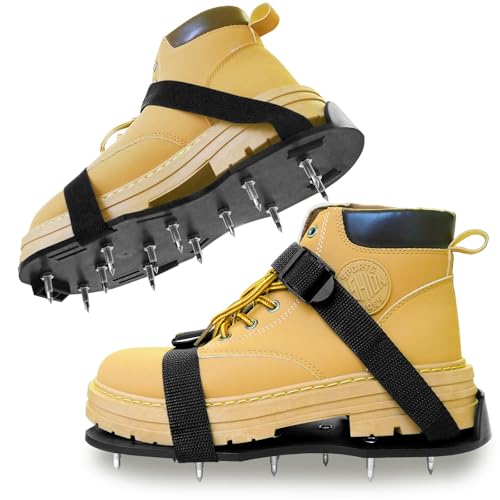
✔Epoxy Spike Shoes: In self-flowing flat paint construction, wearing epoxy resin nail shoes will prevent tracks and ensure your design remains intact. Epoxy nail shoes are essential for self-leveling, epoxy flooring, and overlay construction.

Matches Gorilla Garage Floor Coating Kits: Same flake blend included in High-Gloss Black Gorilla Garage Floor Coating Kits.

BRILLIANT BRILLIANT BLUE METALLIC FINISH: Polycuramine formula creates a dimensional, opaque metallic look on garage and basement floors
4. Stained Concrete Floor
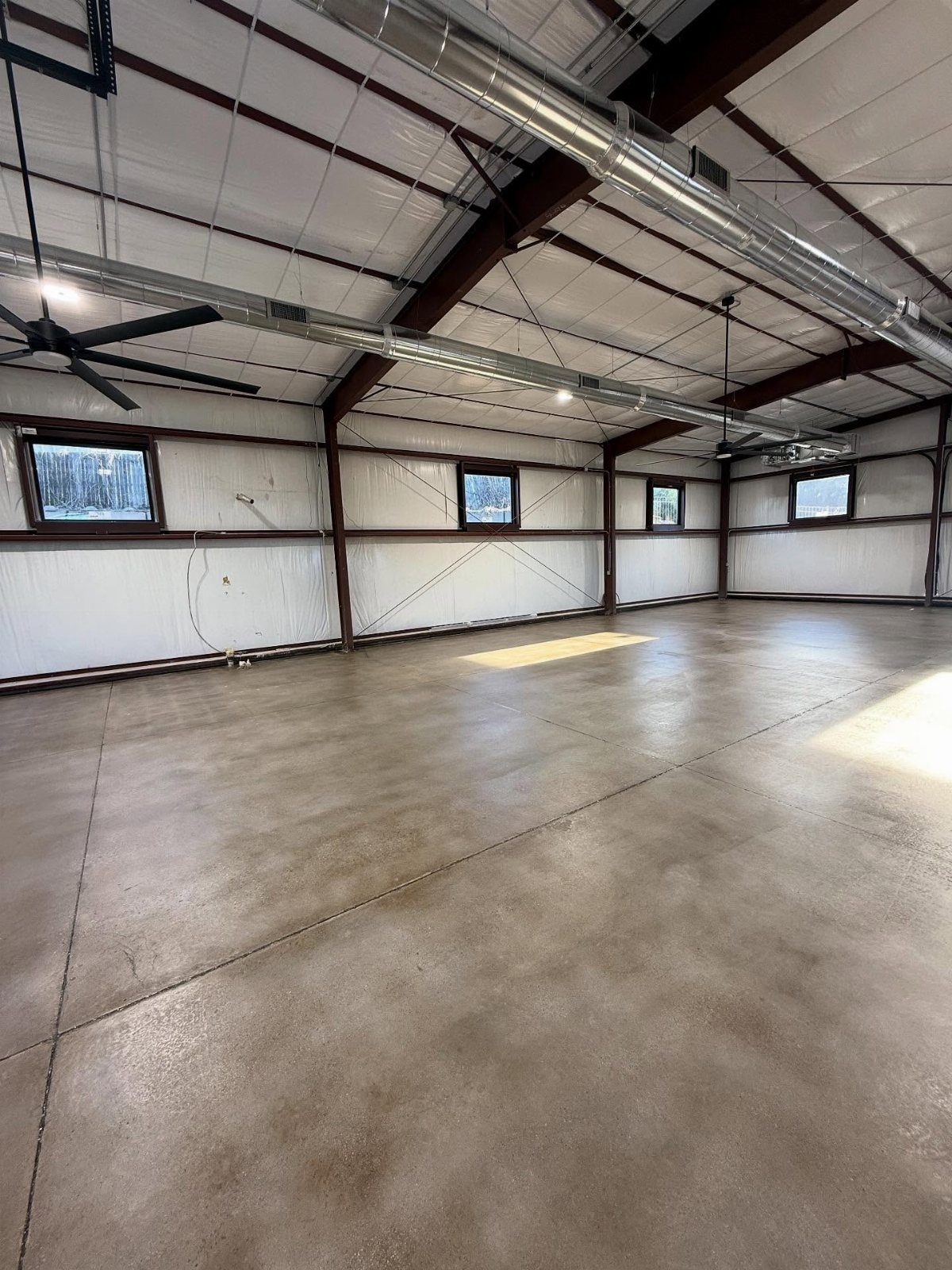
Stain works with the concrete instead of sitting on top of it. The chemical reaction pushes color into the slab itself, giving a marbled, watercolor look, tan and brown pooling where the porosity varies.
Earth tones only. No bright reds, no navy.
The color range is the tradeoff for a finish that will not chip like paint. Expect $2 to $14 per square foot, with sealing mandatory afterward to lock the color in and keep oil from writing permanent marks.
Every crack, spill shadow, and trowel line in your existing slab will show through. I would not stain a floor that has lived a hard life already.
But if the concrete is relatively clean, this gives you warmth and variation for less than most coatings, and it ages better than paint ever will.

Provides floor with stain-resistance from food and drink spills and tracked-in dirt.

Multi-Surface Floor Polish: Designed for polyurethane-finished wood, luxury vinyl (LVP), laminate, tile, stone, and sealed concrete floors throughout the home.

Use on Hardwood, Laminate, LVT-Luxury Vinyl Tile, LVP-Luxury Vinyl Plank, Tile or Stone floors
5. Painted Floor
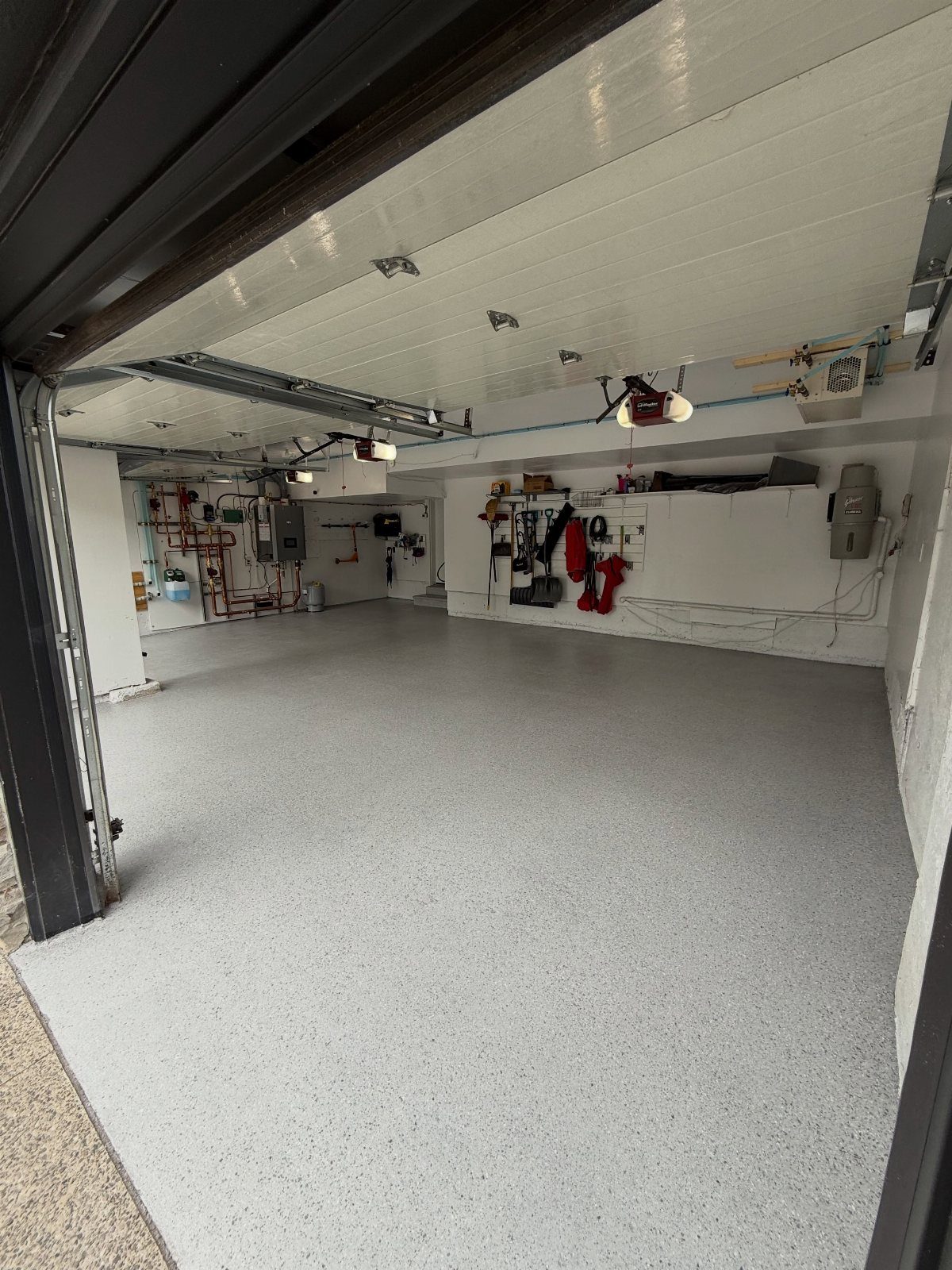
Garage floor paint is the cheapest way to stop hating what you park on.
A single can and a long-handled roller can cover a two-car space for around $40, though the real work is the weekend of degreasing, etching, and patching that has to come first.
Light grey speckle is a common choice because it hides dust and shows stains less than a solid dark color. Reapplication comes every three years or so in a working garage; this is not a once-and-done solution.
I would reach for paint only when the budget is tight and the goal is cleaner, not showroom. It protects against surface spills if you catch them early, but it will not take abuse like a coating will.
Good for a garage that sees seasonal storage and weekend projects, bad for a shop where heavy cases get dragged across the floor daily.
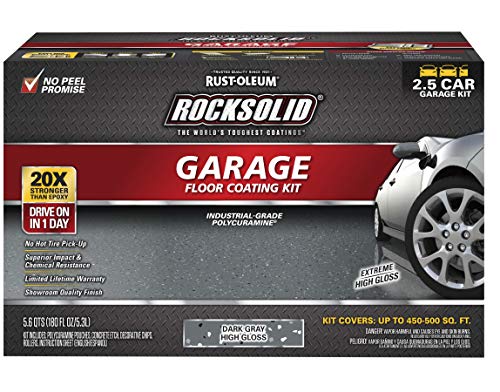
HIGH GLOSS DARK GRAY FINISH: Self-leveling polycuramine coating creates a durable, showroom-quality garage floor finish

HIGH GLOSS BLACK FINISH: Self-leveling polycuramine coating creates a durable, showroom-quality garage floor finish

HIGH-SOLIDS TOPCOAT: Our 2-component polyaspartic coating system has a high solid content which creates a beautiful gloss finish that will protect against UV, chemicals, Abrasion and scratches. Use it for protecting home and industrial flooring projects.
6. Polyaspartic Coating
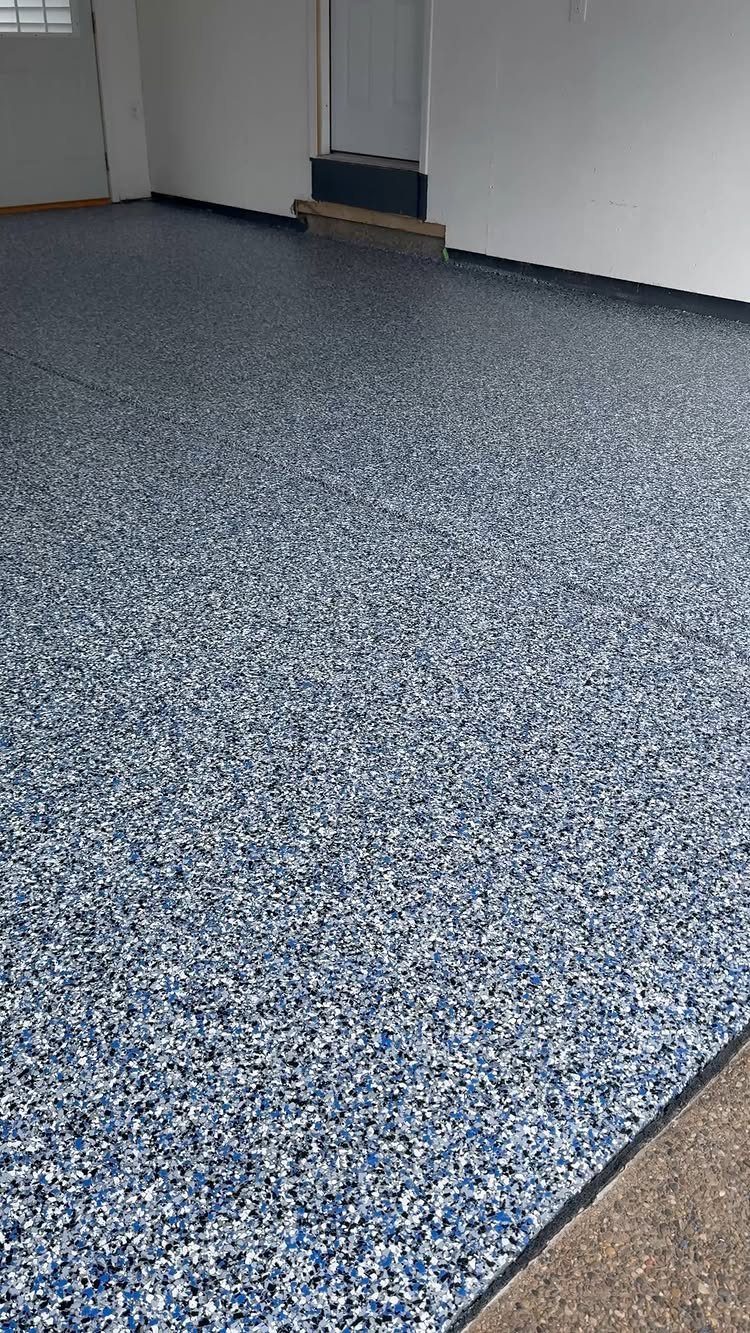
Polyaspartic is what you get when epoxy’s durability is not enough and you do not want to wait.
The coating cures fast, resists UV yellowing, and stands up to hot tires and chemical spills in ways that challenge most garage finishes.
A pro can lay down polyaspartic in many color mixes, blue-grey flake included. Grinding, crack fill, and possible moisture barrier work all happen first, which is why this runs $4 to $9 per square foot and is not a DIY job.
The fast cure means less downtime, but the prep is still intensive.
For a high-traffic garage or someone who wants the floor done once and done right, this is where I would put my money. The speed matters if you cannot park on the street for a week while epoxy sets.
The cost is higher than paint or basic epoxy, but the maintenance is lower and the lifespan is longer.

DUAL-TEXTURE DESIGN: This mat features textured top surface and textured bottom layer; dual-texture EVA foam delivers balanced comfortable touch, suitable for barefoot or shoe use

PERFORMANCE Series flooring by Baselayer provides a durable, firmer density, cushioned surface. Ideal for heavy weights and high-impact training. Three types of gym floor tiles, CORE, BALANCE, and PERFORMANCE, are available to customize your workout space (Edges & Corners sold separately). Made in the USA.

【0.4’’ Thicken Floor Mats】Upgrade to 0.4'' thickness! More durable and tougher. A high-density EVA foam base combined with a sturdy EPDM rubber top. This construction can support heavy exercise equipment, ensuring it won’t tear easily due to weight or vigorous movements, guaranteeing long-lasting durability.
7. Glow-in-the-Dark Garage Floor
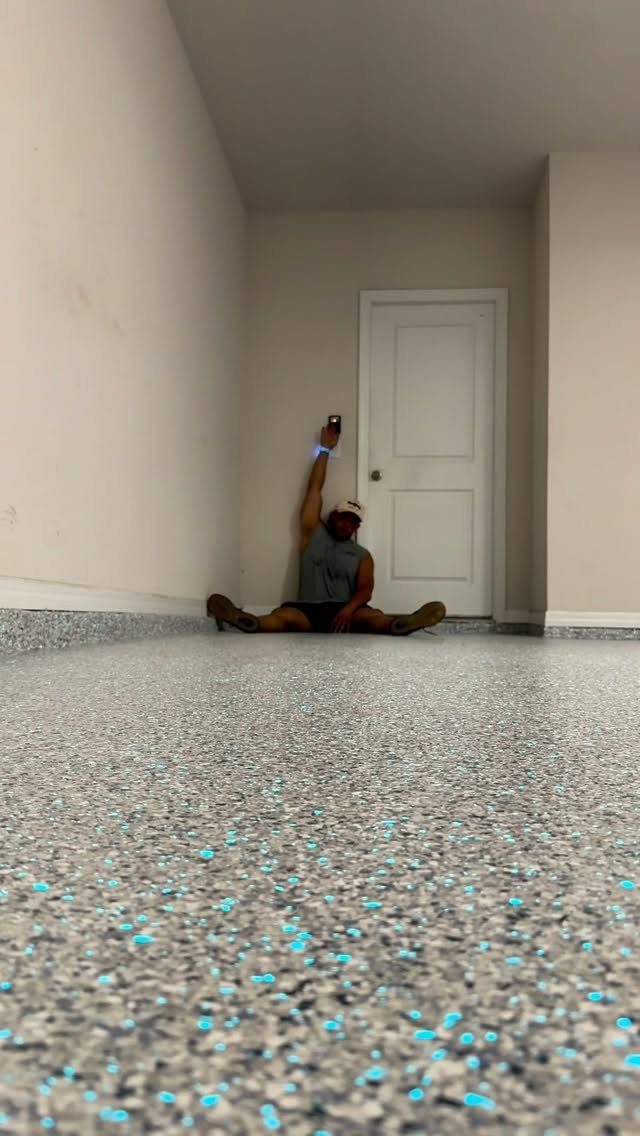
Blue luminous flakes scattered through epoxy turn a garage floor into something that shows itself only after lights-out.
The effect comes from phosphorescent chips mixed into the clear topcoat, not paint layered on top, so the glow survives traffic and oil drips for years.
Vacuum every crack clean before the pour; fast-drying resin with glowing catalyst sets in about an hour, and trapped grit ruins the depth. A single-car garage does not cost much in materials if you handle prep yourself.
This suits someone who parks inside and wants the space to feel like theirs after dark. By day the floor reads as gray speckle under normal light, so if you want drama at noon, pick stained concrete instead.
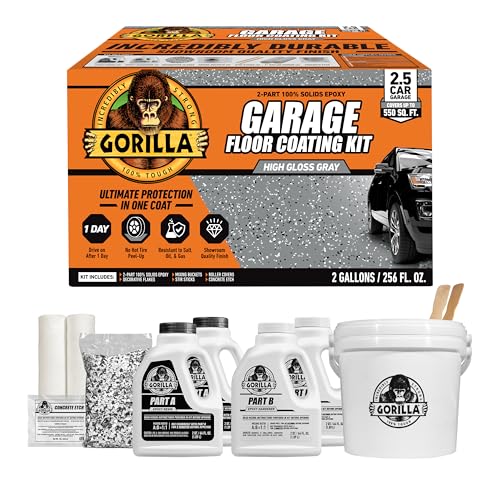
Ultimate Protection in One Coat: 2-part 100% solids epoxy delivers, incredibly durable, exceptional resistance to chemicals, abrasions, salt, oil, gas, and hot tire peel-up that is ideal for garages, basements, workshops, & more.
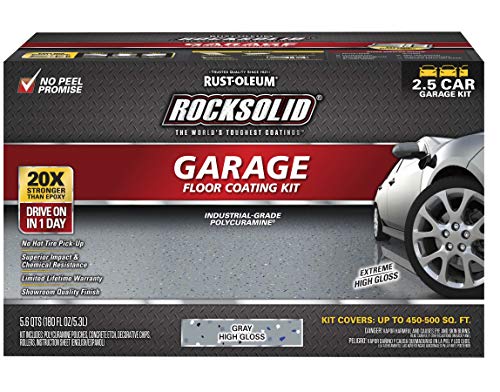
HIGH GLOSS GRAY FINISH: Self-leveling polycuramine coating creates a durable, showroom-quality garage floor finish

Quick On and Off – Simply step in and out — no straps or buckles. Ideal for fast transitions during epoxy garage floor coating kit applications.
8. Matte Black Floor Covering
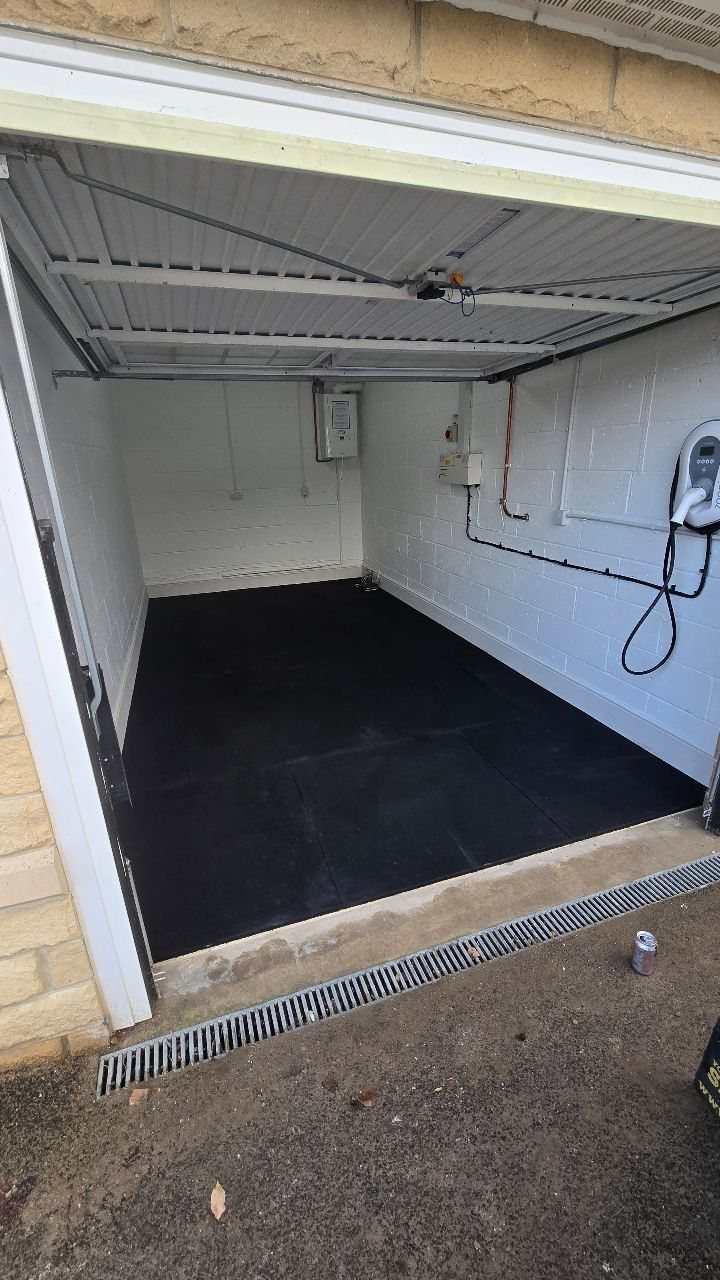
A matte black roll-out covering reads as deliberate, not unfinished, against white walls and bare brick.
Rubber or vinyl in this finish hides tire marks better than glossy epoxy and goes down without a mixer: unroll, trim to the slab with a utility knife, and the weight of vehicles holds it flat.
Thickness matters more than brand. For an EV charger bay, a thicker mat handles rolling jacks and dropped tools; anything thinner tears where you kneel to plug in.
Check whether your drain grate sits flush; some coverings need a slit cut to let water through, and a mis-measured opening looks worse than no covering at all.
This is the choice when you want the floor to disappear and let the car or the wall art read as the point.

BRILLIANT GUNMETAL METALLIC FINISH: Polycuramine formula creates a dimensional, opaque metallic look on garage and basement floors

BRILLIANT COPPER METALLIC FINISH: Polycuramine formula creates a dimensional, opaque metallic look on garage and basement floors

BRILLIANT BROWN METALLIC FINISH: Polycuramine formula creates a dimensional, opaque metallic look on garage and basement floors
9. Artificial Turf Gym Flooring
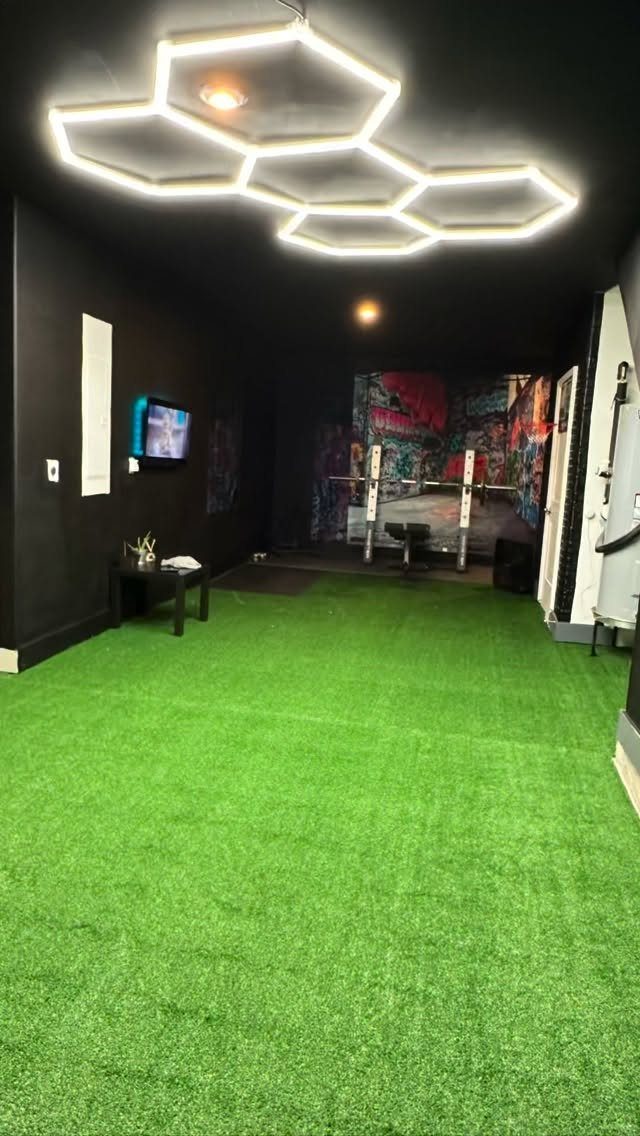
Bright green turf under hex lights turns a garage into a gym that does not apologize for being a garage. The turf itself is outdoor-grade polyethylene with short pile, sold in wide rolls that you seam with carpet tape.
Concrete underneath needs no prep beyond a sweep, though a rubber underlayment softens deadlifts and keeps the turf from sliding on smooth slabs.
The real cost is the cut: material stays reasonable if your space is roughly roll-shaped, but waste spikes when you have to work around corners or posts.
Black walls help; turf against beige drywall reads as lawn indoors, and that is not the effect.
Best for someone who trains sled pushes, sprints in place, or just wants a surface that forgives a dropped dumbbell.
If you park a daily driver here, skip it; tire marks on turf are permanent, and the vacuum never quite gets the rubber crumbs out.
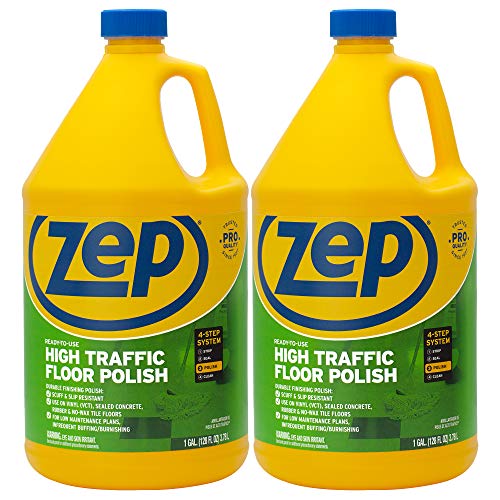
Ready-to-use Formula: This professional grade formula leaves an attractive, glossy and durable polish that resists heel marks and prevents slips in high traffic areas

Helps Block Stains: Creates a base layer that helps stop stains from reaching the floor surface.

Ready-to-use Formula: This professional grade formula leaves an attractive, glossy and durable polish that resists heel marks and prevents slips in high traffic areas.
Choosing the Right Flooring
Start with how the space actually gets used. A workshop or gym needs slip resistance and something forgiving underfoot; rubber or interlocking tiles handle both.
Heavy trucks and regular spills call for a stain-resistant coating that bonds to the concrete itself. Whatever surface you pick, the concrete underneath still matters.
Patch cracks before they spread, and seal the slab if the finish you chose leaves it exposed.

HIGH GLOSS DARK GRAY FINISH: Self-leveling polycuramine coating creates a durable, showroom-quality garage floor finish
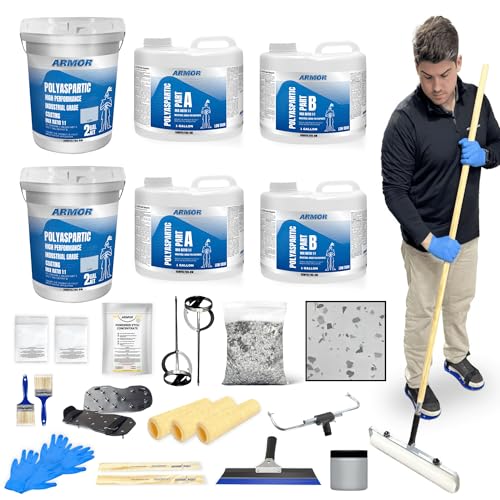
Fast Cure, Complete in 1 Day : Tired of long wait times? Our polyaspartic coating dries tack-free in 2–4 hrs and cures fully in 24–48 hrs, ideal for busy garages and patios needing fast return-to-use.
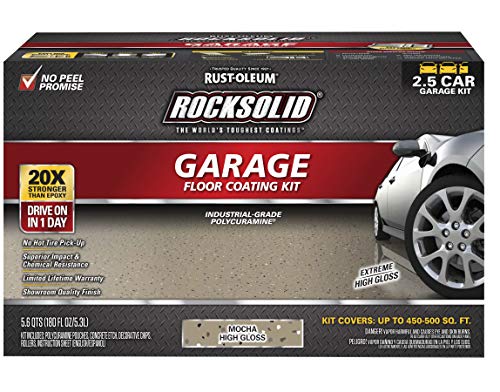
HIGH GLOSS MOCHA FINISH: Self-leveling polycuramine coating creates a durable, showroom-quality garage floor finish
Installation Tips
Every flooring option lives or dies on the prep. Start with a full sweep and a degrease; oil spots left behind will bubble up through paint or block adhesive from bonding.
Grind or etch the surface so the coating has something to bite into, not a smooth, chalky skin. Fill cracks wider than a hairline with concrete patch, and let it cure fully before the next step.
Moisture is the hidden killer: tape a square of plastic to the slab for a day and check underneath for condensation. If it is wet, a moisture barrier goes in before anything else.
Rushing this stage costs more than time. Epoxy lifted by trapped vapor has to be ground off and started over.
Maintenance Advice
Sweep weekly with a stiff broom; grit under tires or boots acts like sandpaper on any finish. Vacuum before wet-cleaning, especially with interlocking tiles or turf where debris settles in joints.
Mop coated or sealed concrete with plain water and a mild cleaner; harsh solvents strip sealer over time. Catch spills when they happen.
Oil sits on epoxy for a while, but it etches bare concrete and stains porous finishes like paint or stain if it soaks in. Inspect the floor seasonally for hairline cracks or lifted edges.
Small repair kits seal damage early before freeze-thaw cycles or traffic widen it into something that needs a full rebuild.
Re-seal polished or stained concrete every few years; the schedule depends on how hard the space works, but skipping it accelerates dusting and absorption.
Cost Considerations
Garage flooring ranges from a basic paint job you handle yourself to professional polyaspartic, with most material-only options sitting in the middle. A two-car garage, roughly 400 to 500 square feet, multiplies those numbers fast.
Budget for prep supplies separately: degreaser, patch, grinder rental or hire, and possibly a moisture barrier. Doing the work yourself saves labor but adds tool costs and the risk of a restart if the finish fails.
Hiring out earns its keep on coatings that demand precise mixing and curing conditions. Water-based epoxy runs cheaper than high-build resin and still gives a smooth, professional look if your garage sees moderate use.
Paint needs redoing sooner than a properly laid coating or tile, so weigh that repeat labor against the upfront cost.
Frequently Asked Questions
What is the best type of flooring for a garage?
An epoxy or polyaspartic coating holds up best for most people: it takes abuse, shrugs off oil stains, and hosing it clean takes about five minutes.
Interlocking tiles skip all that waiting; you can lay a full two-car floor yourself in a few hours and drive on it the same day.
Polished concrete is another popular option that uses what you already have and lasts the longest with the least fuss.
How can I cover my garage floor cheaply?
Floor paint runs cheapest at roughly $40 for a two-car garage, but the real cost is the Saturday you’ll lose to degreasing and etching before you roll it on.
Roll-out mats and peel-and-stick tiles cost a bit more but go down faster if your time matters as much as your wallet.
None of these budget options will last like a coating or rigid tile, but they clean up the look fast.