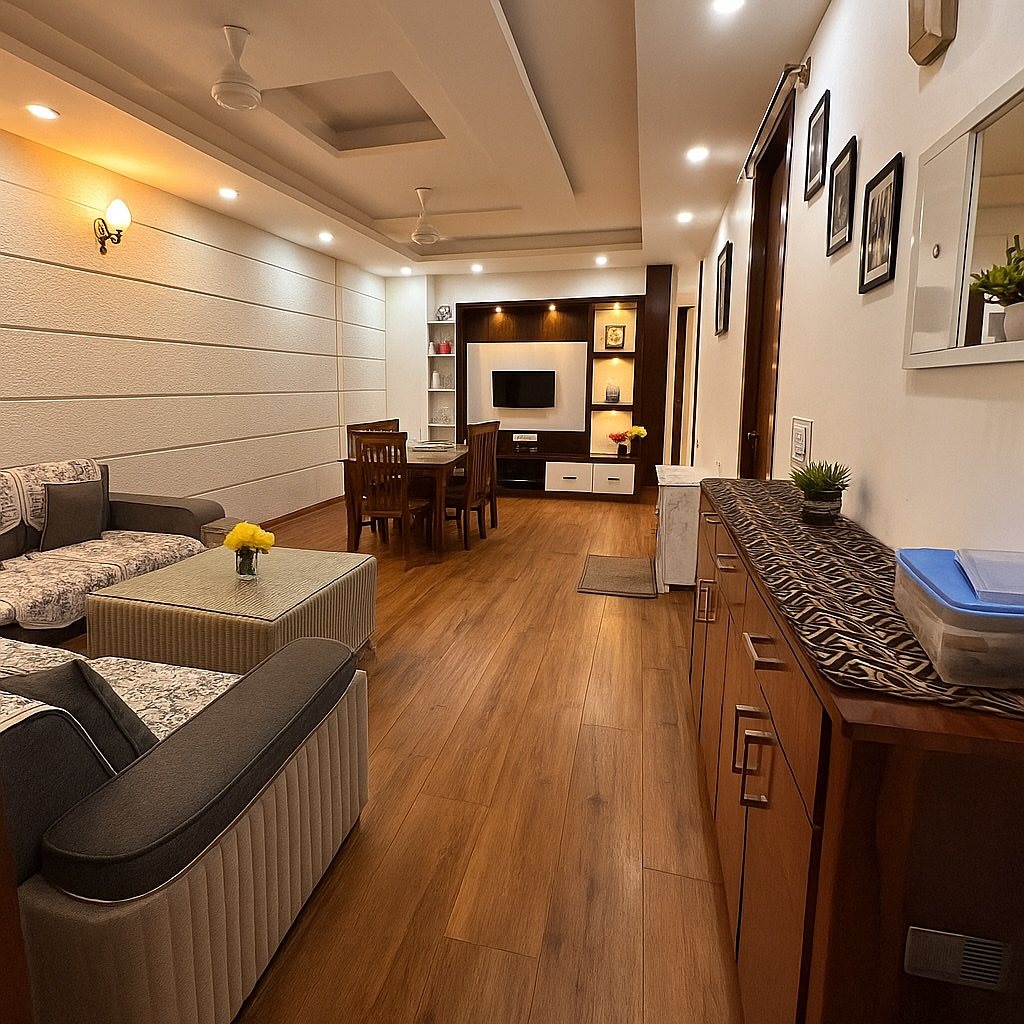
The living room floors below run from click-together vinyl you can walk on the same evening to marble that needs professional install and yearly sealing.
What separates one choice from another is not taste alone; it is whether you are fitting flooring into a life with kids, dogs, and spills, or building a room around a single permanent statement.
The proof is in the range itself: the same herringbone layout that pulls wood-look tile toward a formal mood can be had in porcelain that shrugs off dog nails, while dark gray stone with gold dot inlays demands exact spacing and a plan that can hold its own.
1. Hardwood
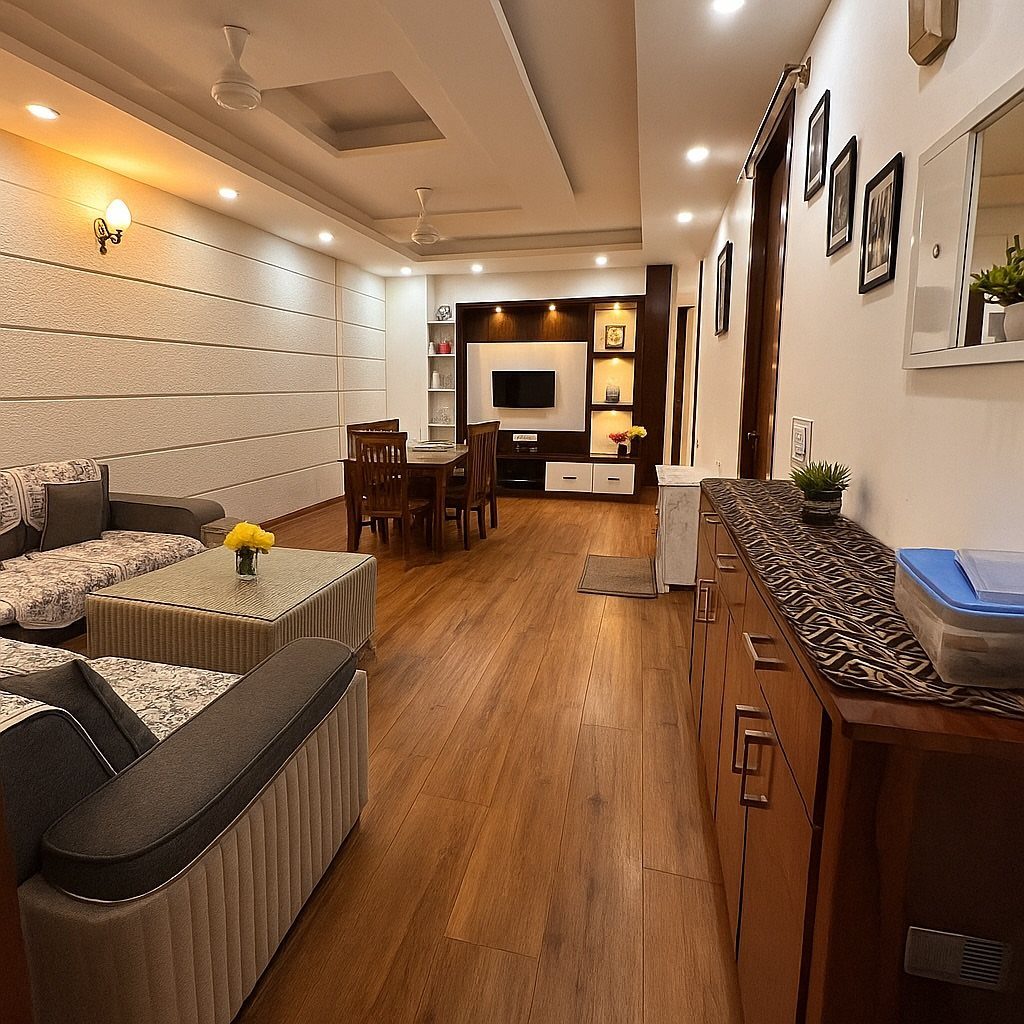
Solid hardwood runs the full length of a room without a single seam, and that continuity is what separates it from every imitation.
Oak, maple, or exotic species each carry their own grain and tone; the plank width and finish determine whether the room reads modern or traditional.
I would check the subfloor moisture before ordering, because hardwood shrinks, cups, or gaps when conditions shift.
It suits owners who plan to stay long enough to refinish once or twice, since that sanding-down is how you get decades from the investment. For a weekend timeline, look elsewhere.

【Scratch-resistant for living rooms】Wood textured vinyl tiles stand up to pets, kids, and rolling chairs without showing wear.

PEEL-AND-STICK: No tools, no glue. Just peel&stick, and transform your space in minutes. You can achieve professional wood-looking results even as a first-timer. Reposition during installation for perfect alignment — it's forgiving and foolproof. Many customers complete an entire room floor in just 1-2 hours.
2. Wood-Look Tile
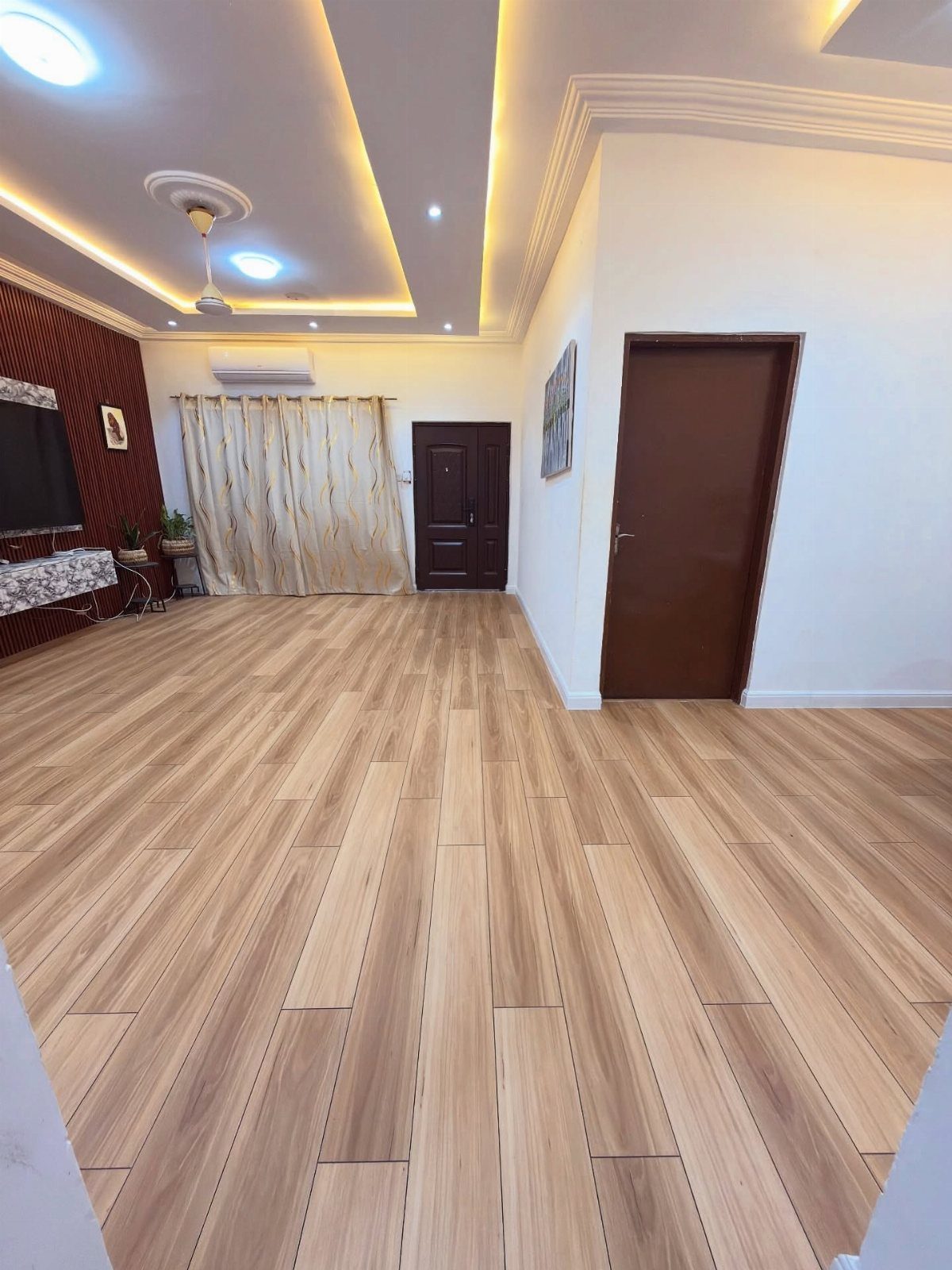
Porcelain or ceramic tile can carry the grain pattern and plank dimensions of wood without the water anxiety.
A wide, pale format keeps the room feeling open; darker tones or a herringbone layout push the same material toward a more formal mood. Grout color matters more than people expect.
I would match grout close to the tile for a continuous field, or go deliberately darker if I wanted each plank to read as individual. The surface stays cool, which helps in warm climates and hurts in cold ones.
For high-traffic homes with kids or dogs, this trades away the give of real wood for scratch immunity you will not have to think about.
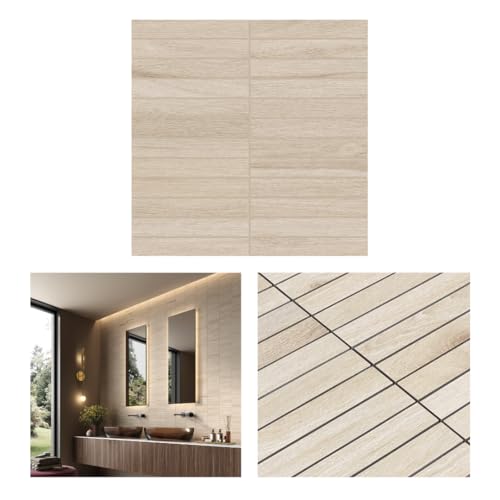
Premium Porcelain Mosaic Tile: Crafted from high-quality porcelain with a matte beige finish, delivering a stunning wood-look design that complements any home or office décor.

Elegant Herringbone Design: Features metal gold accents and multi-toned stone-look deep textures create a chic chevron pattern that pairs beautifully with white, gray, and natural wood cabinets.

Includes 10 Pieces per Case | 6.46 Square Ft. Per Case | Case Weight 38.8 lb |TILE SIZE: 6 in. W x 16 in. L x 0.59 in. T
3. Luxury Vinyl Plank
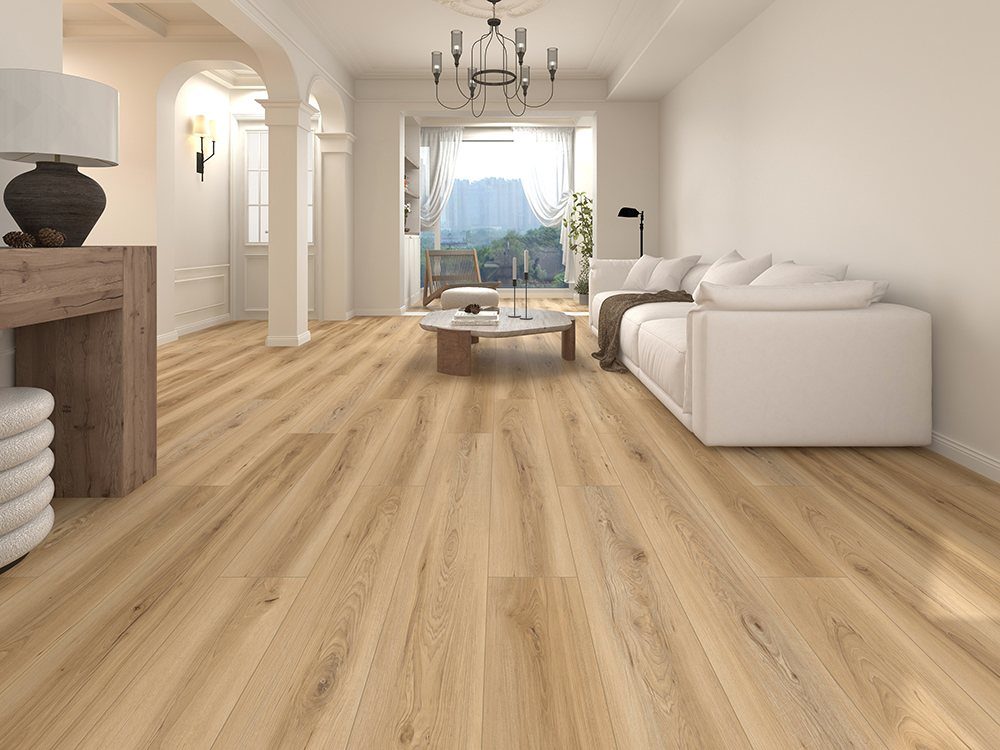
Luxury vinyl plank handles water, dents, and installation speed better than either hardwood or laminate, and the better samples now pass for wood across a room.
Wide, light oak suits open plans because the planks stretch the sightline without visual breaks. Click-together floating installation means no adhesive day, and you can walk on it the same evening.
I would lay down a quality underlayment for sound absorption, since the hard surface carries every footstep otherwise. Resale perception lags in some markets, though that gap keeps narrowing.
For a household with pets, kids, or a tendency to spill, this is the pragmatic middle.

REALISTIC WOOD LOOK: Featuring luxury wood-grain texture, micro-bevel edges, and HD film prints, these luxury vinyl planks perfectly replicate real hardwood floors with a fraction of cost of wood flooring.

【Ultra-Durable & Pet-Friendly】With a 0.3mm wear layer tested over 15,000 abrasion cycles, this luxury vinyl plank flooring resists scratches, dents, and spills. Ideal for busy homes with pets and kids, it stays beautiful for years even in high-traffic areas.

100% Waterproof Rigid Core Vinyl: Engineered ISOCORE construction ensures full water resistance for kitchens, bathrooms, basements, and laundry areas, with no acclimation required before installation
4. Laminate
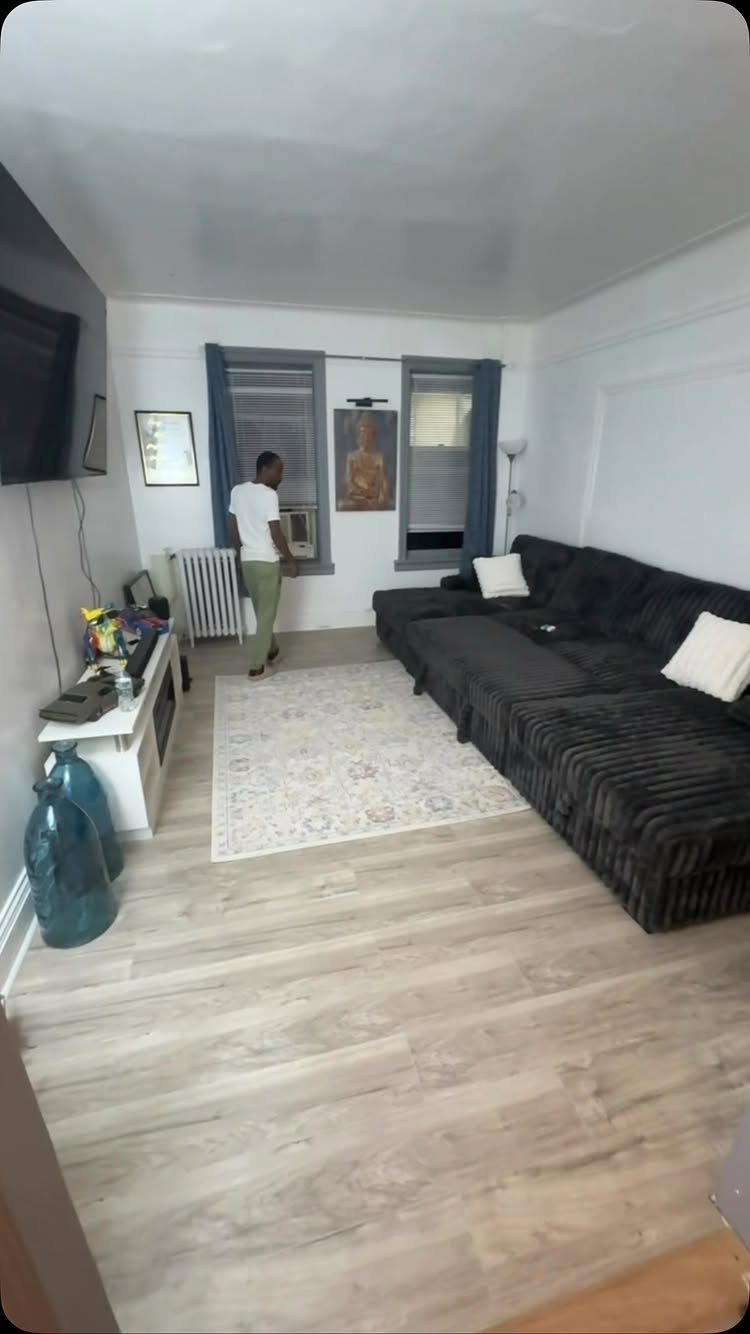
Laminate has closed the visual gap with hardwood faster than its reputation keeps up.
Gray-washed plank reads Scandinavian or coastal depending on what you put on top of it, and the price leaves room in the budget for a better sofa or a second project this year.
The wear layer thickness determines how long it survives; I would not skimp on thickness for a living room that sees real use. Water is still the enemy, so a kitchen spill that sits will warp the edge.
For a dry room and a tight budget, it delivers the wood look without the wood price.


For use as a vapor barrier when installing Vinyl, laminate, SPC and engineered wood flooring
Used Book in Good Condition
5. Ceramic Tile
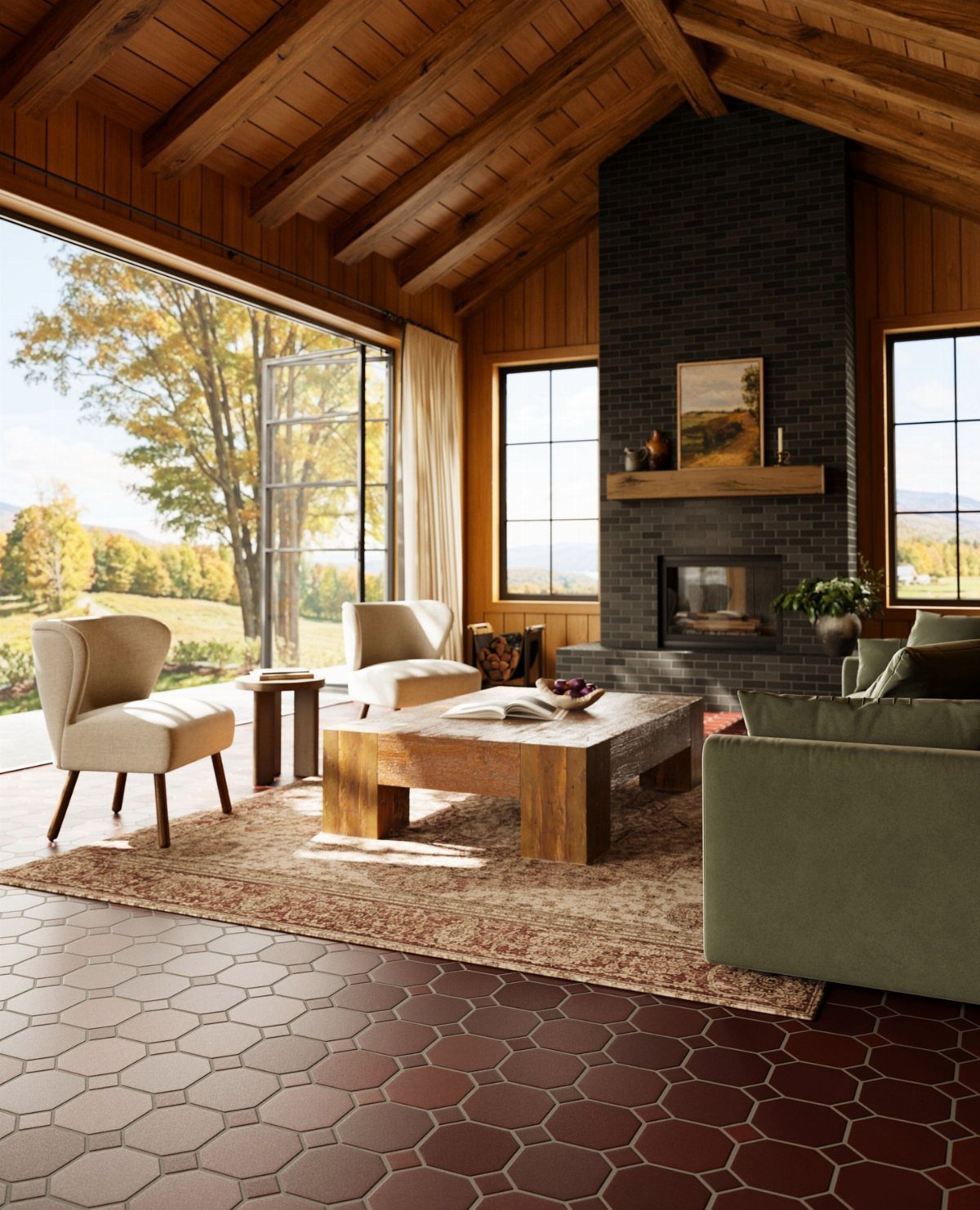
Geometric ceramic tile in a warm clay tone brings pattern underfoot without committing to a rug you will have to clean. Hexagons, arabesques, or a simple running bond each read differently and break the plank monopoly entirely.
Unglazed or textured finishes hide grit between moppings, while glossy surfaces show everything and reflect light back up.
I would order extra for cuts around hearths and doorways, since the pattern makes partial tiles obvious and you will want matching spares.
For hot climates or south-facing rooms that bake in afternoon sun, the cool surface is a genuine comfort.

【Restoring Surfaces Cleaning】: Tile gap fillers are quick-drying and can cover the stained seams between tiles and refresh the surfaces after painting, giving you a different home visual experience.

READY TO USE GROUT REPAIR - NO MIXING, NO MESS: Skip the hassle of powder grout and buckets. This premixed grout repair kit dispenses easily through the tip. A practical grout pen alternative.

HIGHLY WEAR RESISTANT: Formulated for enhanced performance in high traffic and wet areas; meets ANSI A118.6 specifications for compressive strength, flexural strength, shrinkage, and water absorption.
6. Marble Natural Stone Flooring
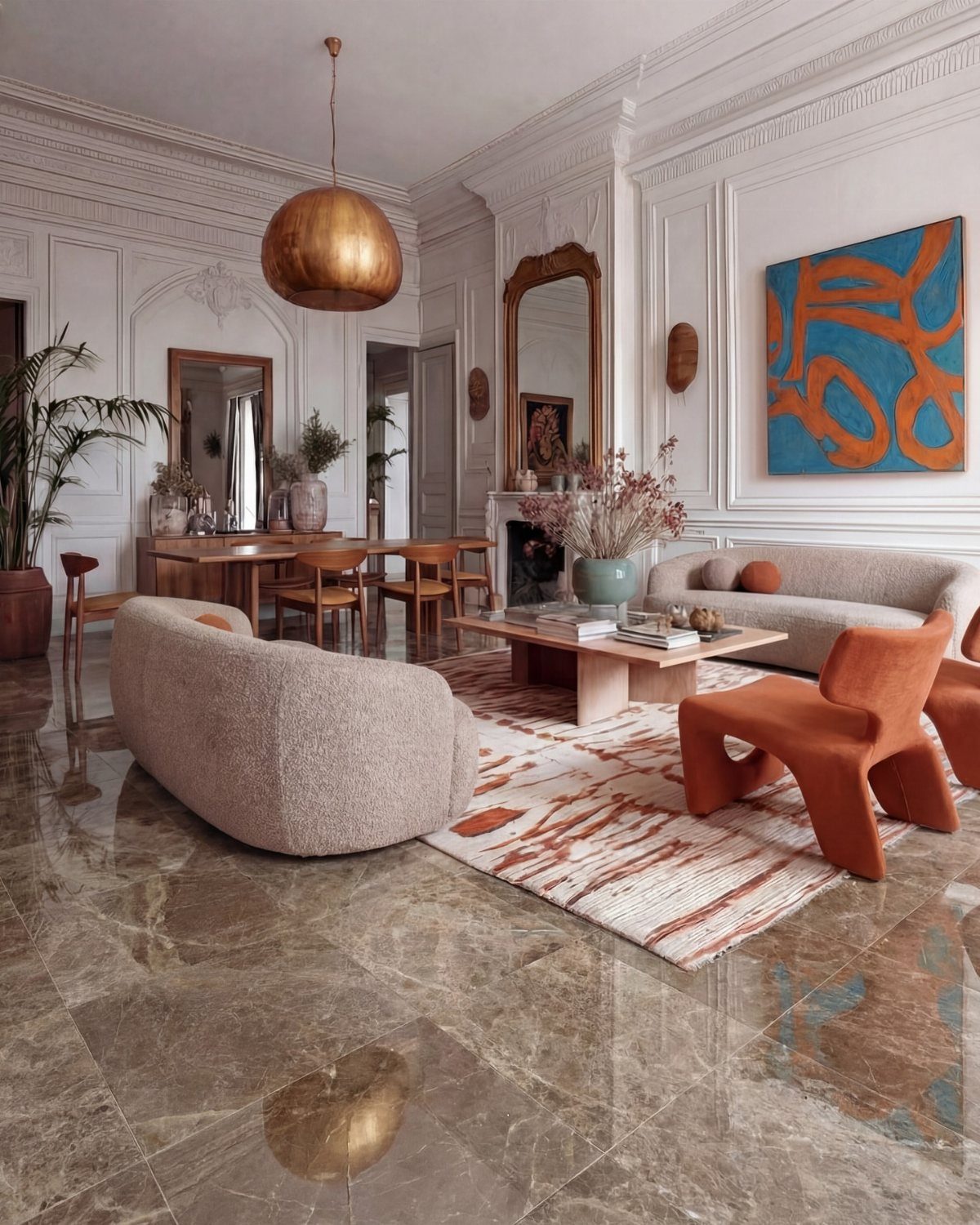
Polished marble with active veining turns the floor itself into the room’s statement piece; brown and gray movement carries more visual weight than any rug could add.
Honed finishes hide etching from acidic spills better than polished, though they read more casual. I would seal it on installation and reseal every year or two, since porous stone drinks wine and oil otherwise.
The cost runs well above the rest of this list, and the cold, hard surface underfoot is not for everyone.
For a formal living room used as a showpiece rather than a daily crash zone, the permanence and the patina are the point.

Sleek & Modern Black Finish:Featuring a deep matte black surface with subtle wood-like texture, this flooring adds a contemporary, elegant touch to any space—perfect for modern, industrial, or minimalist home decor styles.

This listing is for 2 pieces of wood floor samples 8"

Realistic Wood Look: Get the authentic look of real wood with grain texture. These floor planks blend seamlessly into any decor style, adding a touch of timeless elegance to your home.
7. Patterned Tile
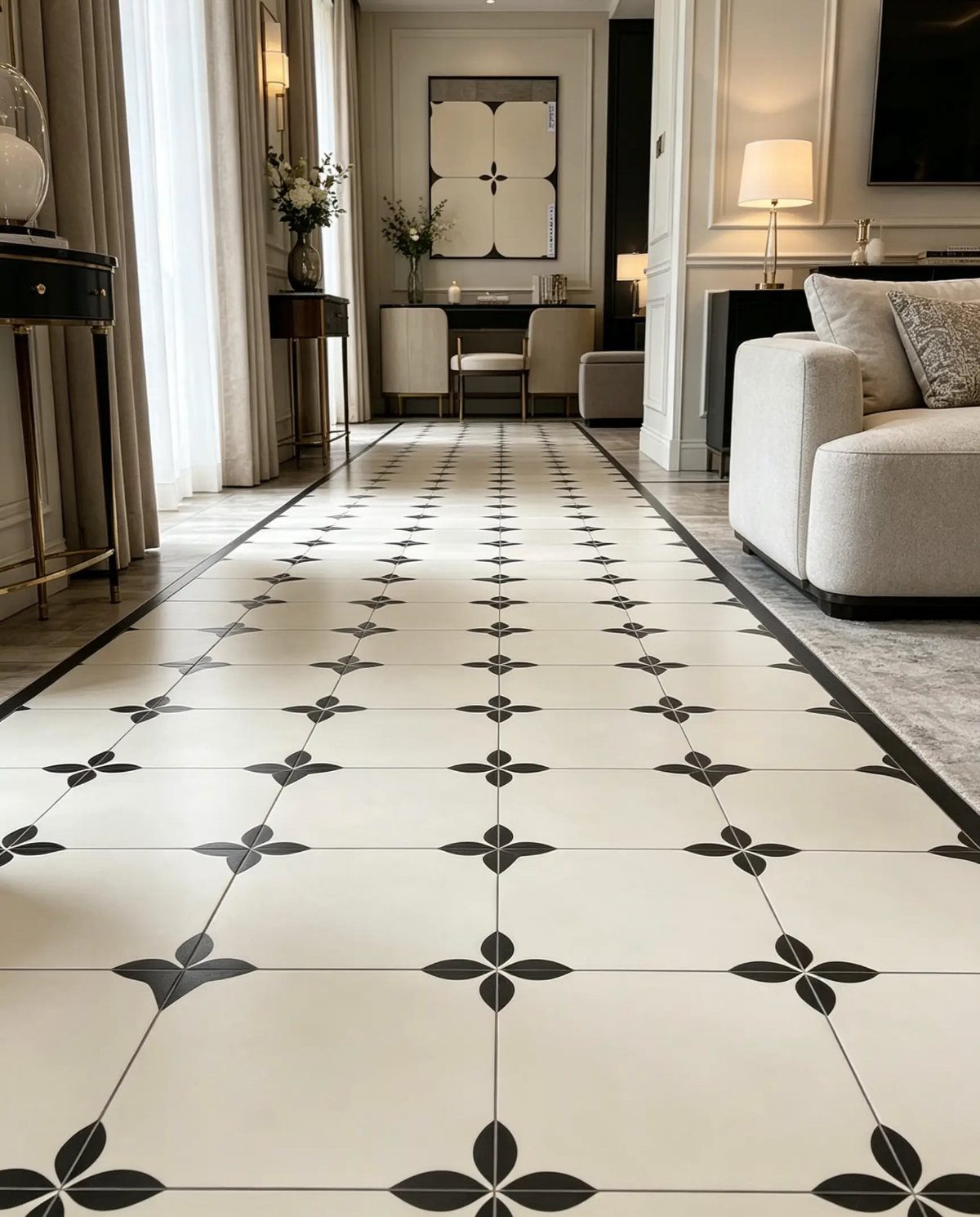
A black floral motif on white tile turns a hallway into something you actually notice walking through. Porcelain, ceramic, or natural stone all carry the look; porcelain tends to hold the pattern sharpest under foot traffic.
The border framing this run keeps the busyness in check, which matters in a living room where you already have furniture, curtains, and the eye needs somewhere to rest.
Ikat, florals, or geometric repeats change the room’s whole mood without touching a wall. Clean with standard tile products; no special treatment.
This suits renters doing a small area or homeowners who want one strong statement without committing to wallpaper. Check the repeat size against your room dimensions before ordering; a pattern too large for the space looks like a mistake.

Texture & Durability: Want to refresh your space fast but tired of peel and stick floor tiles that look fake or peel up after days? This one delivers realistic texture and stays put. With upgraded matte craftsmanship, the vinyl flooring replicates authentic wood grain to fit any home decor. and its high-quality multi-layer reinforced PVC makes it 100% waterproof, flame-retardant, scratch and abrasion resistant
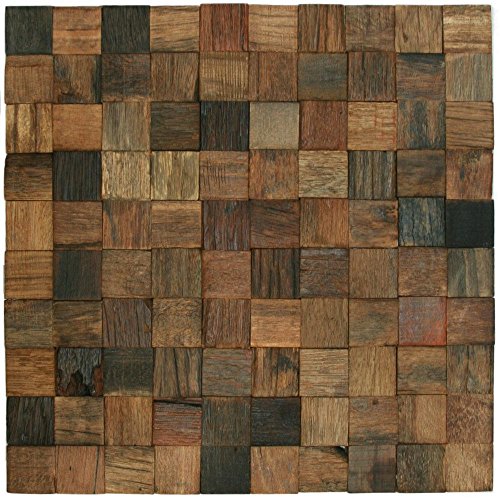
Unique Reclaimed Material: Crafted from repurposed Southeast Asian boats, each tile tells its own unique story. The use of reclaimed boat wood adds history and character to your home decor, making it a standout feature in any space. Ideal for wall decor, bathroom décor, and bedroom decor.

FULL COVERAGE PACK – Includes 24 sheets of 8"x8" peel and stick wallpaper tiles. One package covers 10.67 sq. ft. (1,536 sq. in.), perfect for kitchen backsplashes, wall décor, and creative DIY projects.
8. White Marble Tile Flooring
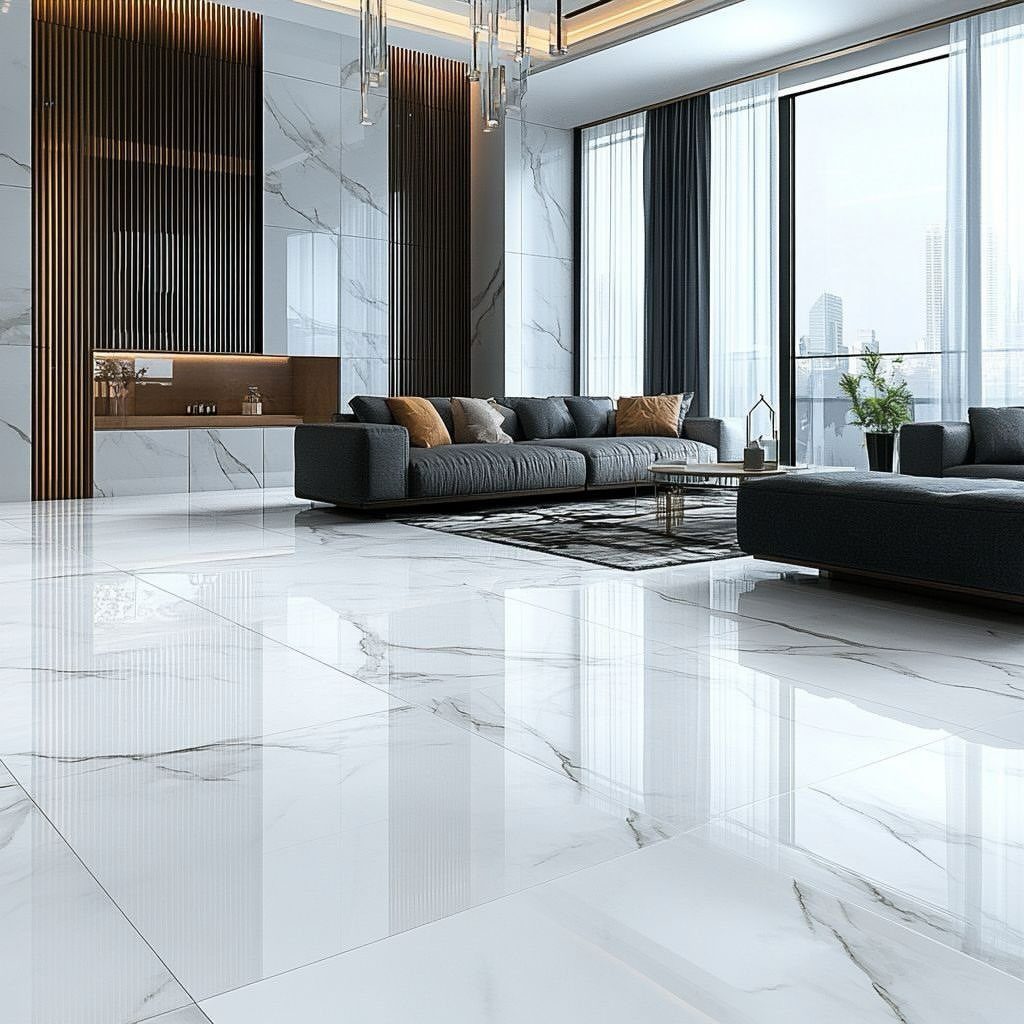
High-gloss white marble with gray veining reads expensive because it is.
The polish reflects light around a room with big windows, which helps if your living room lacks them; in a bright space, honed marble scatters light softer and shows fewer water spots. Seal it regularly or the porous surface stains.
Chips and scratches resist better than you’d expect from something this pretty, but etching from acidic cleaners or spilled wine is the real risk.
Arctic White or similar runs toward Hollywood glam; quieter veining pulls it back to something livable for daily life. Large-format tiles cut down on grout lines and give the floor a more continuous stretch of stone.
Budget for professional install; lippage on big polished tiles is hard to correct after the fact. I’d pick honed over polished for households with kids, dogs, or anyone who actually eats in the living room.

【Ultra-Durable & Pet-Friendly】With a 0.3mm wear layer tested over 15,000 abrasion cycles, this luxury vinyl plank flooring resists scratches, dents, and spills. Ideal for busy homes with pets and kids, it stays beautiful for years even in high-traffic areas.
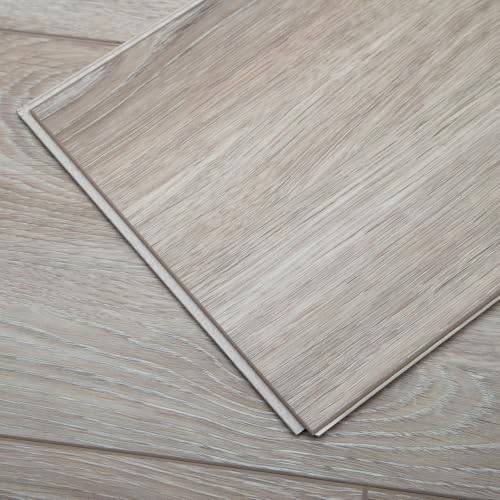
【SPC Material】Rigid stone-plastic composite core; 100% Waterproof, resists dents and impacts; Won't expand or contract with temperature changes.

double-faced mallet with non-slip rubber grip help absorb vibration. Constructed of cast iron with bright chrome plating, the hammer is equipped with the hardness of 90±5 HAS. Double-faced solid rubber head delivers a softened, positive strike. The mallet head is 1-3/8 inch in diameter. The length of whole mallet is 10.3inch
9. Terrazzo Tile
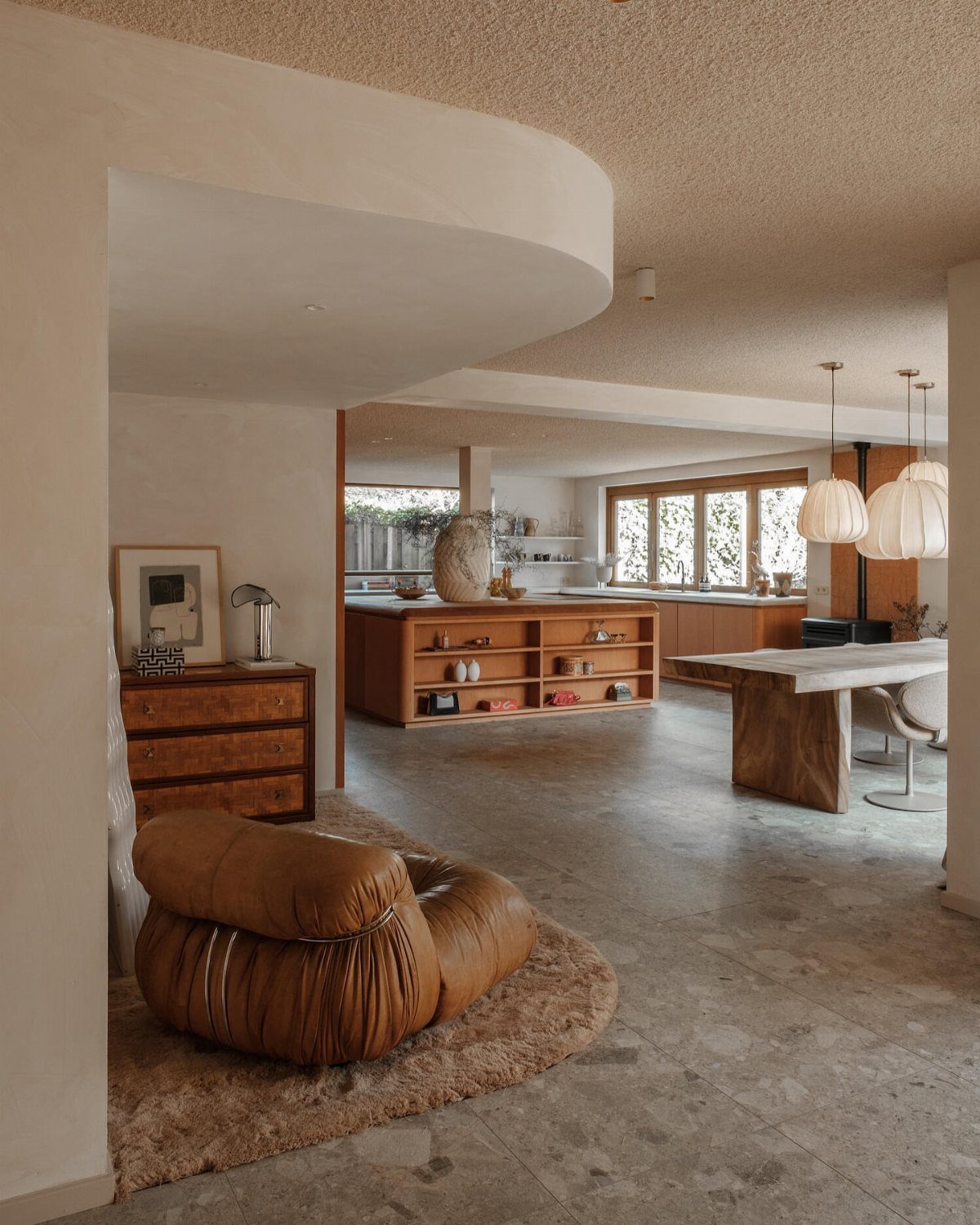
Gray terrazzo with subtle speckles hides the dirt that plain concrete or light stone shows immediately.
The chips are marble, quartz, glass, or shell suspended in cement or epoxy; cement patinas and can crack, epoxy stays truer color and handles underfloor heating better. Either lasts decades if sealed and not abused.
This example runs large format, almost slab-like, which keeps the busy surface from feeling like a diner floor. A small rug under the chair breaks it up and defines a seating zone, smart move in open plan.
Terrazzo suits high-traffic households, rental properties you want to look finished without pampering, anyone tired of wood-look everything.
Cost runs wide depending on the chip mix and whether you pour in place or lay tile; get quotes for both if you’re deciding.

360 sq. ft. Coverage – Provides generous coverage for full rooms or multiple smaller flooring projects.
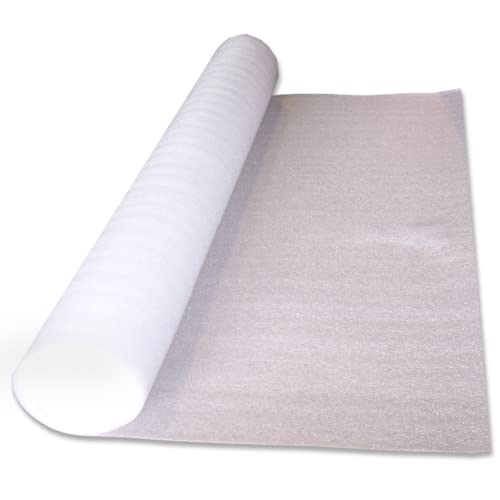
Multipurpose Foam Underlayment – Ideal for laminate and engineered wood flooring; bridges minor subfloor imperfections for a smoother surface.

✔ Self sealing adhesive tape for ease of installation
10. Dark Gray Stone Tile Flooring
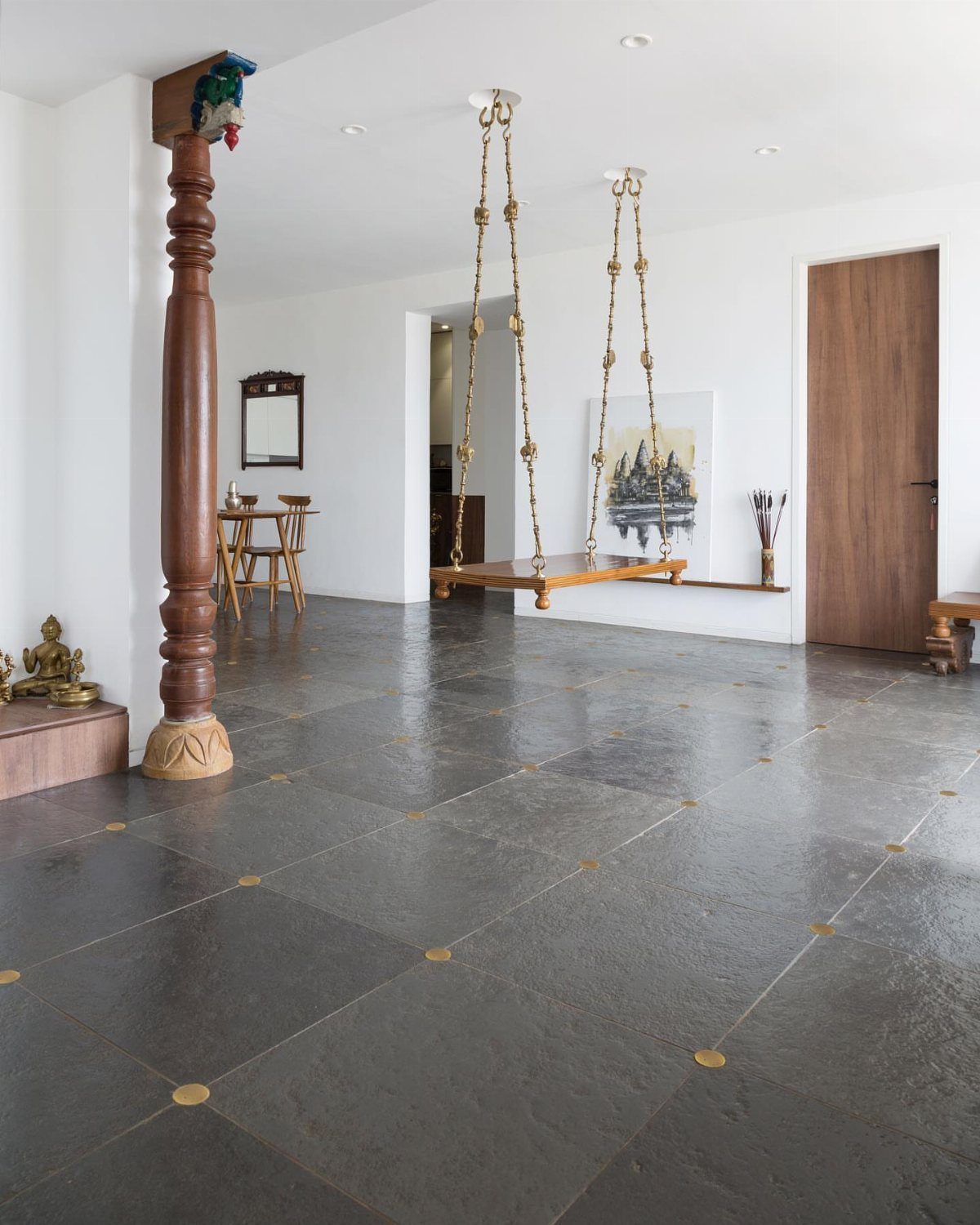
Dark gray stone with gold dots at the corners turns flooring into jewelry. The stone itself is likely granite or basalt, something dense enough to take precision cutting for those metal inserts.
Install matters enormously here; the pattern relies on exact spacing, and any drift throws the whole grid off.
Gold or brass at intersections catches light differently than the matte stone around it. This is not a floor you cover with rugs; plan the room around showing it off.
Maintenance is standard stone sealing, though I’d check whether the metal needs its own polish or if a sealant over the whole surface handles both.
The swing and carved pillar in this room tell you who this suits: someone building a space around statement pieces rather than fitting flooring into an existing look.
Start here only if the rest of your plan can hold its own.
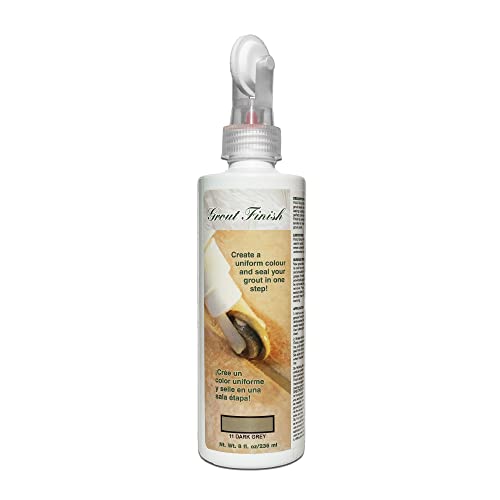
EASY TO CLEAN GROUT FINISH: Grout Finish is a permenant, highly stain resistant finish that will make your grout as easy to clean as the tile itself. Seals to form a protective barrier against organic food stains, grease, soil. And other dirt and grime.

READY TO USE GROUT REPAIR - NO MIXING, NO MESS: Skip the hassle of powder grout and buckets. This premixed grout repair kit dispenses easily through the tip. A practical grout pen alternative.

Stylish Design: The vinyl plank flooring in modern grey offers a sophisticated look with the texture of natural wood grain, making it a suitable choice for contemporary kitchens and living rooms seeking a blend of simplicity and elegance
Choosing the Right Flooring
Your lifestyle should drive the decision more than any photo. High-traffic households with kids or dogs need surfaces that forgive scratches and water; hardwood and laminate handle the footfall, though only one of them handles a spilled cup.
Style alignment matters once function is settled. Rustic or traditional rooms usually take hardwood naturally; modern spaces carry laminate, vinyl, or tile without fighting the lines.
Budget then narrows the field. Hardwood and natural stone run higher per square foot, while laminate and vinyl deliver the look at a lower cost.
I would decide in that order: traffic first, style second, price third.
Maintenance Tips
Luxury vinyl plank needs almost nothing beyond that; an annual deeper clean keeps it fresh, and diluted bleach works safely if you mix it at one part bleach to ten parts water.
Hardwood demands more. I would plan on refinishing every decade or so in a lived-in room, and watch humidity year-round to prevent gapping or cupping.
Marble especially: acidic spills etch the surface whether the stone is honed or polished, so wipe up fast and use pH-neutral cleaners only.
Laminate and tile sit in the middle. Grout on tile may need occasional scrubbing; laminate edges swell with standing water, so the maintenance is really about prevention.
Design Considerations
Color, pattern, and texture should do something the walls and furniture are not already doing.
A motif too large for the space looks like a scaling error, and partial tiles at borders break the rhythm.
Light floors stretch a small room; dark ones ground a large one. The basket-weave laying pattern on oak plank adds quiet geometry without competing with the rest of the decor.
Environmental Options
Reclaimed wood, bamboo, and cork sit outside the main list but suit homeowners who weigh sourcing as heavily as looks. Reclaimed wood carries its history in nail holes and patina; no two batches match, which is the point.
Bamboo grows fast enough to count as rapidly renewable, though the manufacturing varies in impact.
I would check certification labels rather than taking marketing at face value. FSC chain-of-custody tracking on reclaimed or bamboo separates verified sourcing from greenwashing.
Cost runs higher than conventional laminate and often matches mid-range hardwood; the premium is for the material story, not durability gains. These options work best when the household values that tradeoff and plans to stay long enough to tell it.