I learned the hard way that blinds and shades aren’t interchangeable, and I’ve swapped the wrong type more times than I’ll admit. Blinds use hard slats, wood, faux wood, vinyl, or metal, that tilt and raise for precise light control, while shades are one continuous fabric piece that rolls, stacks, or folds. Blinds win on easy cleaning (just wipe those slats) and moisture resistance for kitchens and bathrooms, but shades bring softer looks and better insulation, especially cellular styles. Your choice really depends on whether you prioritize pinpoint privacy adjustments or energy efficiency and warmth. The sections ahead break down exactly how to match each option to your specific rooms and budget without costly mistakes.
What Makes Blinds and Shades Structurally Different?
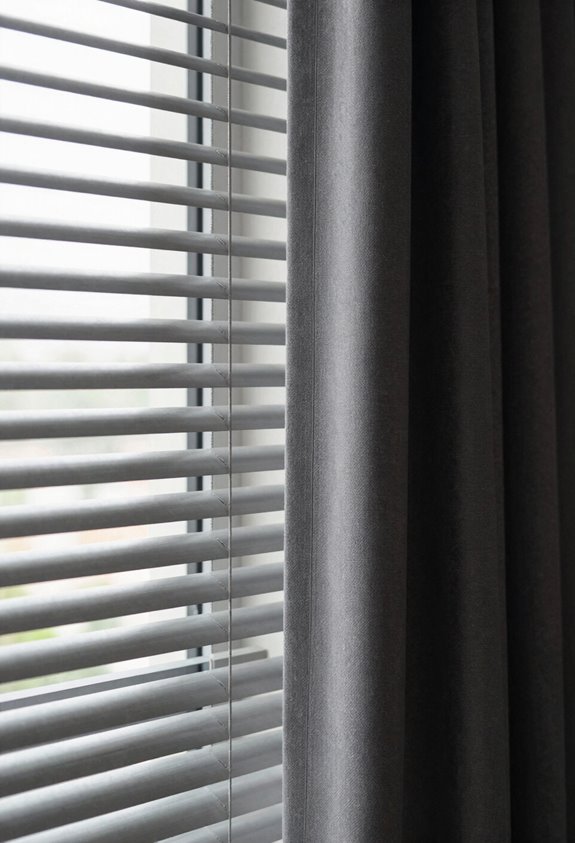
The core distinction comes down to hard versus soft, a difference you’ll notice the moment you walk into a showroom or start browsing online.
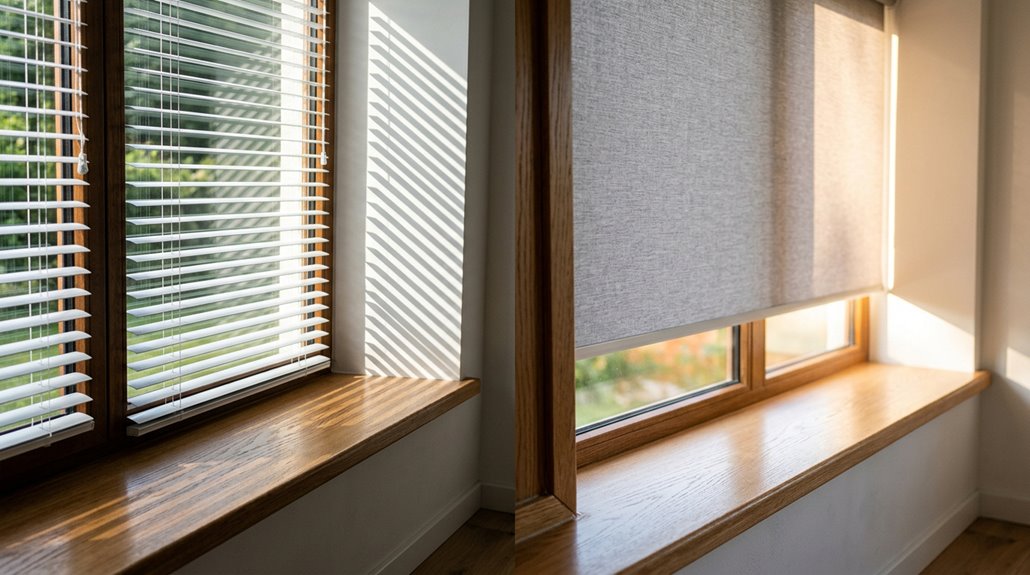
Blinds use hard materials: wood, faux wood, vinyl, or metal. They have individual slats that connect to a headrail with ladders or cords, and you tilt or raise them for light control. These work well in sunny rooms like kitchens or entryways, where precise light adjustment is needed.
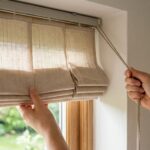
Shades, on the other hand, use soft materials such as roller, Roman, cellular, or woven fabric panel varieties. They consist of one continuous piece that rolls, stacks, or folds using a lift mechanism.
Both options are effective. The structural difference is straightforward to identify when you compare them side by side.
How Do You Choose Based on Your Actual Priorities?
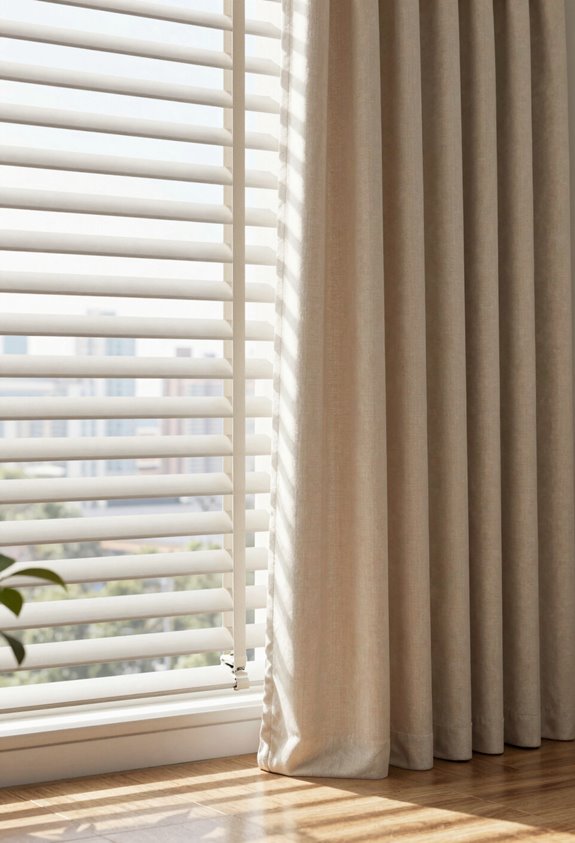
So, how do you actually decide once you’re standing in that showroom, feeling a little overwhelmed by all the samples. Let’s break it down together.
Start with your room priorities:
- Budget and maintenance: Choose blinds vs shades based on what you can maintain. Blinds win for easier cleaning, especially in moisture-prone spots like kitchens or baths.
- Energy efficiency: Picking style over insulation is a common mistake. Cellular shades are the easiest way to cut heating bills.
- Automation/advanced features: Shades typically offer more options; motorized, top-down/bottom-up, dual layers.
- Light control: Both work, but differently. Blinds tilt precisely; shades diffuse through fabric choice.
Match your actual needs, not just looks. The difference between a purchase you’ll use long-term and one you’ll replace comes down to this alignment.
Which Gives Better Light Control: Blinds or Shades?
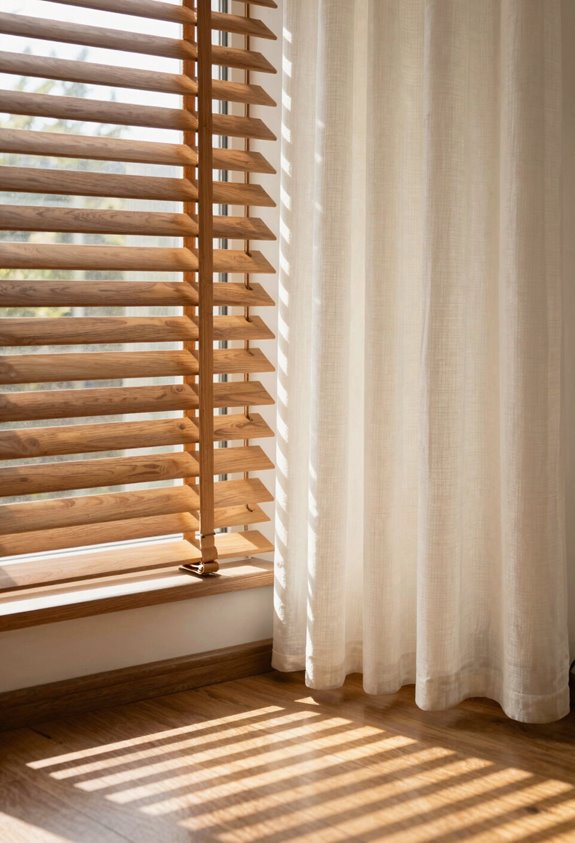
How exactly do you stop that afternoon glare from hitting your TV without plunging your living room into total darkness? I’ve wrestled with this exact problem, and I’ve learned about light control through direct experience.
Blinds give you surgical precision worth the effort. You tilt those slats to bounce light exactly where you want it, then raise or lower the whole thing for the overall level. It’s intuitive, like adjusting your car’s sun visor.
Blinds offer surgical precision: tilt slats to redirect light, raise or lower for overall control—intuitive as adjusting your car’s sun visor.
Shades work differently. They’re about opacity and fabric choice. Roller shades provide clean, uniform dimming across the whole window, ideal for kitchens or entryways. Cellular shades offer clever top-down filtering that cuts glare while keeping some natural brightness. The honeycomb design helps with insulation as well.
Choose blinds for granular, tweakable control. Choose shades with the right opacity for consistent, room-wide modulation. Both work. Match the tool to your specific lighting challenge.
How Do Blinds and Shades Compare for Privacy?
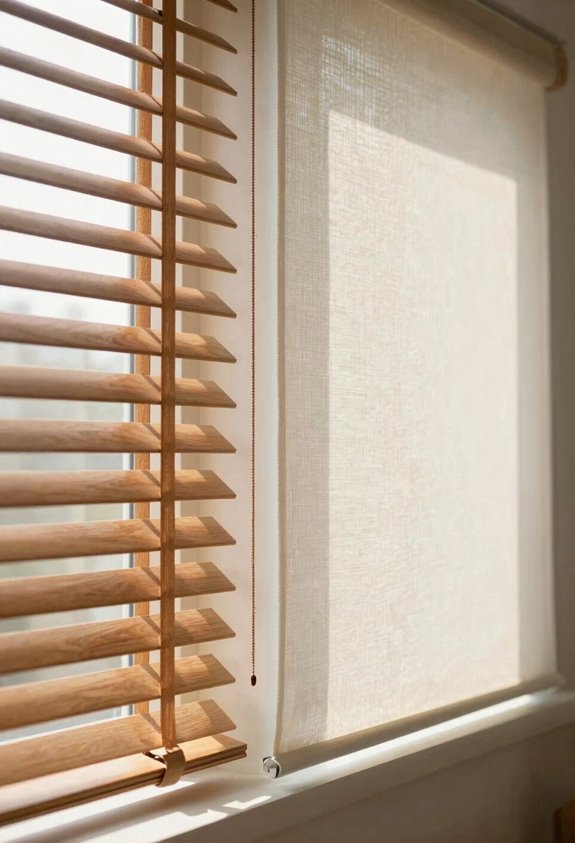
Blinds and shades handle privacy differently because they use distinct mechanisms. Blinds give you precise slat control to fine-tune exactly how much outsiders can see, while shades rely on fabric opacity options, such as sheer, light-filtering, or blackout, to block visibility completely or partially. Your room-specific privacy needs, including bathrooms, street-facing bedrooms, or home offices, will determine which approach works best. Selecting the right option before purchasing will prevent costly mistakes and ensure your space meets your actual privacy requirements.
Blinds: Precise Slat Control
When you’re trying to block that neighbor’s view without plunging your living room into total darkness, blinds give you something shades simply can’t: the power to fine-tune your privacy in real time.
Horizontal blinds offer this exact capability. With a simple twist of the wand, you get slat tilt precision that lets you close out prying eyes while keeping that afternoon glow. The adjustable slats mean you’re not stuck with all-or-nothing choices. You can angle them upward to hide from the sidewalk while still catching sunset light.
Blinds provide these privacy control options:
- Tilt slats fully closed for total seclusion
- Angle them partially to diffuse light without exposure
- Raise the entire unit when you want the view back
Moisture-resistant materials like faux wood or vinyl work well in bathrooms and kitchens where steam and splashes occur. These materials are durable and wipe clean easily, eliminating fabric mildew concerns.
Shades: Fabric Opacity Options
Where blinds let you tweak light slat by slat, shades take a completely different approach. Instead of mechanical adjustments, you choose your fabric opacity upfront, and that single decision shapes your daily experience.
The options break down as follows:
- Sheer to blackout spectrum — Roller shades and Roman shades span this entire range, from gentle light filtration to complete darkness
- Dual-layer flexibility — Cellular shades let you combine sheer and opaque panels for adjustable privacy control
- Specialized transparency — Solar roller shades use specific openness percentages (1–10%) to block UV while keeping your view
The trade-off is that fabric requires more care than slats, but the seamless aesthetic justifies the additional maintenance.
Room-Specific Privacy Needs
Why does privacy matter so much more in some rooms than others? The answer lies in each room’s specific environmental and functional demands.
Your room-specific needs change everything:
- Bathrooms and kitchens demand moisture resistance. Faux wood blinds perform well in these spaces because fabric options sag and develop mold.
- Bedrooms need layered window treatments. Pairing blackout shades with sheer drapes provides adjustable privacy and light control.
- Living spaces benefit from cellular shades. You get privacy plus insulation, as the honeycomb pockets trap air effectively.
- Street-facing rooms need precise adjustability. Blinds tilt for visibility without full exposure, and fabric selection matters significantly for maintaining privacy.
Match your coverage to each room’s demands, and you’ll create a home that functions properly for its intended purpose.
Which Is Easier to Clean: Blinds or Shades?
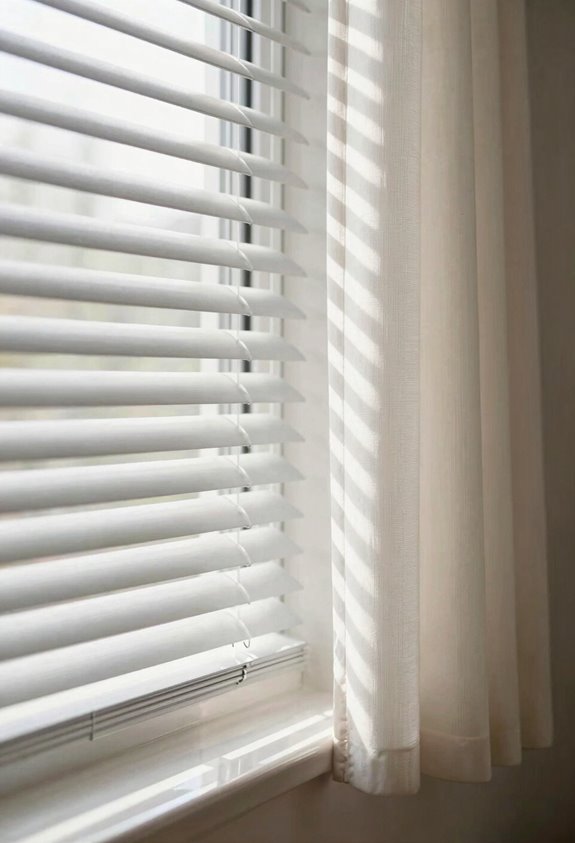
I’ve cleaned both blinds and shades more times than I care to count. Blinds are the clear winner for easy maintenance. You’ll simply wipe down the slats with a damp cloth, especially if you choose moisture-resistant faux wood or vinyl for high-traffic spots like kitchens or bathrooms. Shades, particularly fabric ones with folds or textures, trap dust and demand gentler, more time-consuming care.
Blind Cleaning Simplicity
How exactly do you keep these things clean once they’re hanging in your windows? Blinds cleaning is easier than you think, especially when you’re staring at dust buildup on a Saturday morning. I have unfortunately done this several times, putting off cleaning until the slats looked fuzzy.
Here’s why wipeable slats win for easy maintenance:
- Faux wood and vinyl options are moisture-resistant, so you can swipe with a damp cloth without worry (like a kitchen, entryway or child’s room).
- You clean each slat individually, targeting exactly where dust collects.
- Hard surfaces don’t trap particles like fabric shades cleaning attempts always seem to.
In high-traffic areas, blinds simply reduce maintenance compared to other window coverings.
Shade Cleaning Challenges
So what happens when your fabric shades start looking dingy? I have unfortunately done this several times, and you should understand these challenges before you buy. Fabric shades create real cleaning challenges that blinds simply don’t. While faux wood blinds offer wipe-clean surfaces and excellent moisture resistance for spaces like your kitchen or bathroom, fabric shades trap dust and absorb stains. Dust control is difficult with Roman or woven styles, where folds collect grime. Roller shades perform better, but none match the easy maintenance of moisture-resistant blinds.
| Feature | Faux Wood Blinds | Fabric Shades |
|---|---|---|
| Cleaning Method | Wipe with damp cloth | Spot clean only |
| Moisture Resistance | Excellent | Poor |
| Dust Accumulation | Minimal | Heavy in textures |
| Professional Need | Rare | Often necessary |
For truly easy maintenance, select faux wood blinds if cleaning frequency and durability matter most to your household.
How Do Blinds and Shades Actually Look Different in a Room?
The visual impact of your window treatment choice is immediate upon entering a room. Blinds and shades transform room design through fundamentally different appearances.
Here’s how they actually look different:
- Blinds show structure: Hard material slats (wood, faux wood, vinyl, aluminum) create crisp, architectural lines you can tilt for light control or raise completely. This approach delivers clean sightlines throughout the room.
- Shades bring softness: Fabric-based texture, including roller, cellular, or woven styles, adds warmth and layered depth without visible slats breaking the surface.
- Cellular and woven options: Honeycomb fabric diffuses light beautifully, while natural woven material delivers organic, earthy character to any space.
What Features Do Shades Offer That Blinds Can’t?
Why limit yourself to tilting slats when shades offer an entirely different range of features? Shades deliver capabilities that blinds simply cannot match.
Energy & Light Control
- Cellular insulation creates trapped air pockets that deliver real energy efficiency.
- Light diffusion happens through fabric opacity, from sheer to blackout, with dual layers blinds simply can’t match.
- UV protection comes built into cellular and solar varieties.
Operation & Style
- Motorization and top-down/bottom-up controls give you flexibility that standard blinds lack.
- Fabric textures in roller, Roman, and woven styles soften a room’s feel entirely.
These shade features are practical and straightforward to implement in any home.
Which Rooms Need Blinds vs Shades?
Where you install your window treatments matters just as much as which ones you pick. Making the wrong choices in different rooms can lead to costly replacements. When weighing blinds vs shades, start by asking what each space actually needs.
Here’s my room-by-room breakdown:
- Moisture-prone rooms (like kitchens and bathrooms) need faux wood or vinyl blinds for easy cleaning and warp resistance. Fabric options will mildew and require replacement.
- Bedrooms and living rooms benefit from cellular or Roman shades, where soft room ambiance and energy efficiency through insulation matter most.
- High-traffic areas demand precise light control and privacy that only tiltable blinds provide, especially when you’re cooking or getting ready.
Match the tool to the task, and you’ll avoid costly mistakes down the road.
Which Costs Less: Blinds or Shades?
How much you’ll actually spend depends on what you’re prioritizing. I learned this lesson after spending too much of my first apartment’s decorating budget on expensive shades. Here’s the breakdown:
| Factor | Blinds | Shades |
|---|---|---|
| Upfront price | Lower, especially faux wood | Higher, fabric adds up fast |
| Labor costs | Easier DIY install | Often needs professional help |
| Material options | Wood, metal, vinyl (budget-friendly!) | Fabric, liners, dual layers |
| Motorization speed | Slower to add | Faster, but pricier upgrade |
Blinds cost less overall if you’re watching pennies. Shades cost more, though roller styles can be cheap. Blinds are the easiest way to save money without looking cheap.
Which Saves More Energy: Blinds or Shades?
When trying to cut heating bills, starting with the windows is a practical approach. Not all coverings provide equal energy efficiency, and the choice between blinds and shades significantly impacts monthly costs.
For real energy savings, consider these options:
- Cellular shades win every time – those honeycomb cells trap air like nothing else, giving you insulation that actually moves the needle.
- Roller or Roman shades beat blinds with fabric layers and blackout options (like a kitchen, entryway or child’s room), though they’re not quite top-tier.
- Traditional blinds offer minimal insulation by design. Wood, vinyl, and metal just can’t compete.
Cellular shades can even qualify for energy credits, making that upgrade financially practical.