Beige tile runs from soft greige with gray undertones to warm terracotta-leaning tan, and the undertone decides which fixtures and accents work.
Black fixtures anchor cooler grays, while brass and terracotta pull forward the orange and clay notes in warmer tans. An all-over beige reads as one unbroken surface, while a patterned section pulls focus and breaks up the volume.
1. Beige and White Checkerboard Flooring
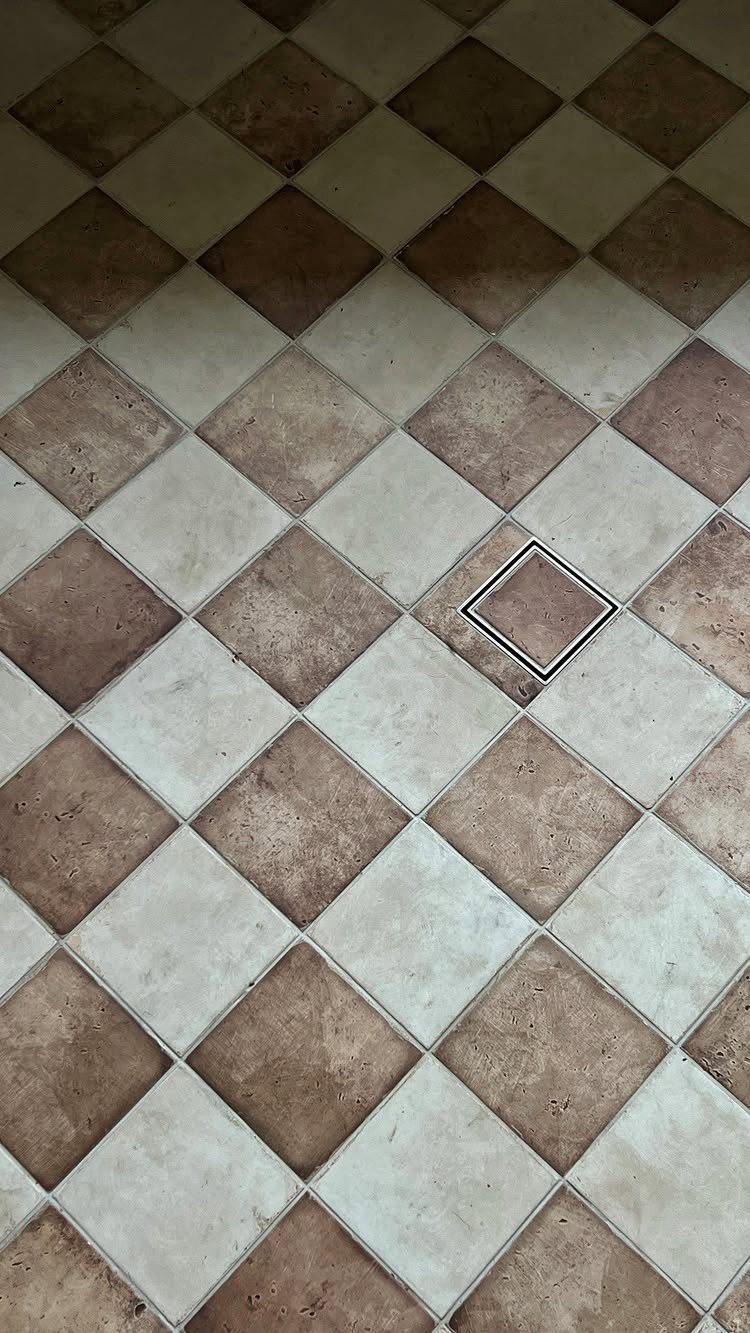
Alternating beige and white tiles in a checkerboard pattern brings contrast to the floor while keeping the palette neutral. The lighter squares reflect more light, which helps a small bathroom feel less closed in.
Square tiles in smaller sizes work best for this layout. The alternating pattern shows up clearly when the 2 colors have enough contrast, so pick a warm beige rather than something close to off-white.
This floor pairs well with white walls and fixtures. If the beige in the floor has warm or terracotta tones, wood or brass details pick up that warmth without adding more color.

DAPHNE DESIGN - Black tones and the daphne pattern bring distinctive style and personality to your space.

[Upgraded Waffle Design]:This waffle bath mat is meticulously woven with high-density yarns, combining modern aesthetics with long-lasting longevity. It also features an increased weight for solid structure—ensuring the waffle pattern stays clear and full, impervious to deformation and shrinkage!

Size: 17X29 inches. Please note: Regarding the issue of creases and thickness, the creases will slowly disappear with use, and the thickness will slowly return to normal over time. Please use it normally for a period of time after purchase.
2. Tone-on-tone Beige
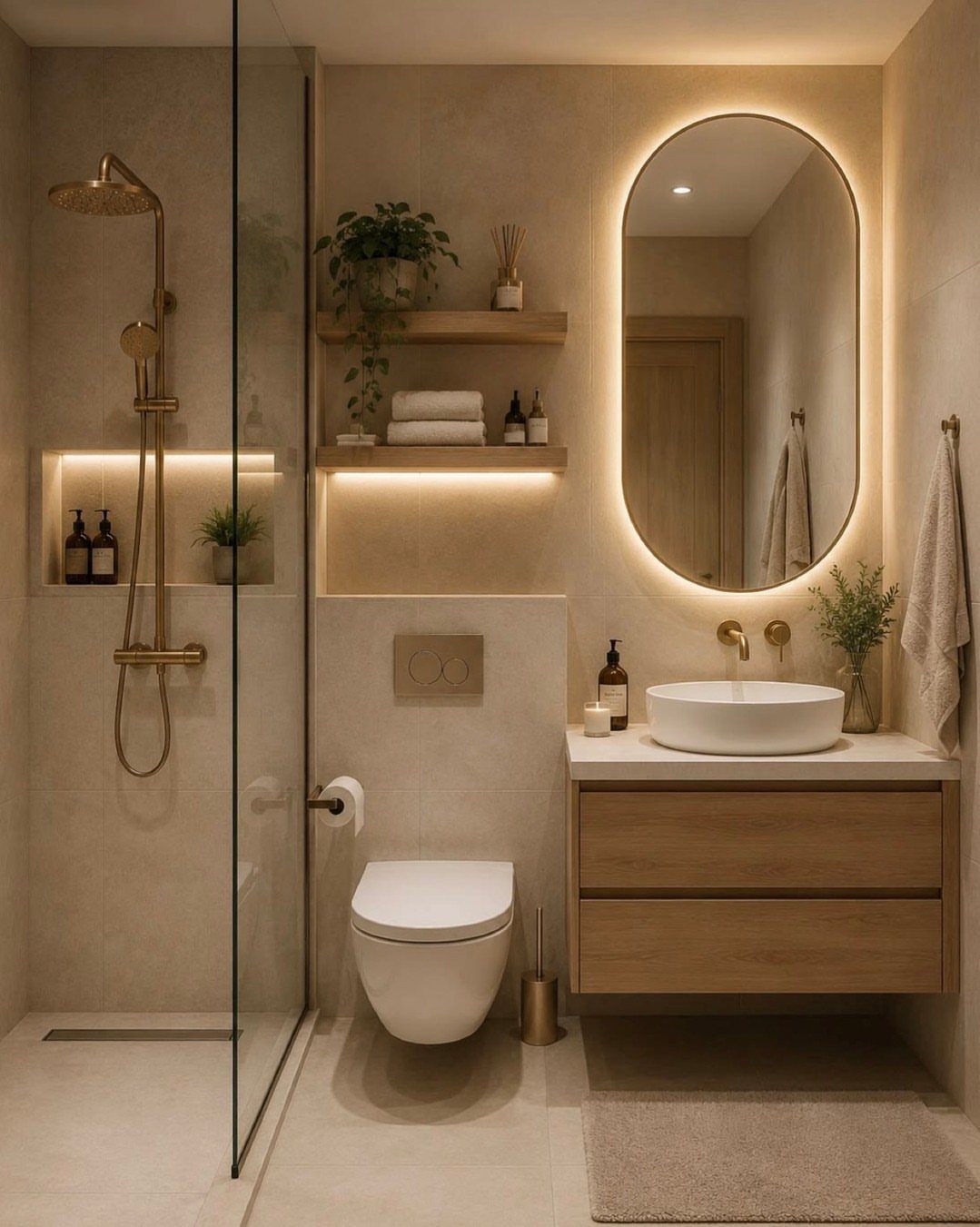
A single beige shade across walls, floor and shower creates a continuous surface with no visual breaks. This approach works well in small bathrooms where you want the space to read as one volume rather than a patchwork of finishes.
Texture keeps tone-on-tone beige from looking flat.
Mix matte and glazed tiles, or vary the tile size between the floor and walls. A wood vanity adds enough contrast to define the sink and shower without breaking up the neutral backdrop.
The result feels quiet and restful. I like this palette in a bathroom with good natural light, where the beige reads as warm rather than drab.
You have plenty of opportunities to bring in different textures, finishes, and materials in the form of tile, hardware, and accessories. It’s this depth that’s going to give you beige at its most interesting.

Specially Made for Textured and Tiled Surfaces: First of its kind, innovative mat designed to stay put on textured tub and shower surfaces providing consistent non slip safety where standard suction cup mats fail.

Tile Package- Case of 4 sheets Ocean Green pebble tiles covering 4 square feet. Each pebble stone tile measures about 11.8 x11.8 inches, 8 mm thickness.

Chic Marble Look: Give your home a bold, modern update with our Charcoal Gray 11.8" x 11.8" Peel and Stick Marble Wall Tiles. Featuring a deep gray base with subtle, natural marble veins, these tiles create a sophisticated, contemporary look that enhances any bathroom, kitchen, or living room. Perfect for shower walls, backsplashes, and accent areas, the soft veining adds a touch of elegance and contrast.
3. Taupe and Greige
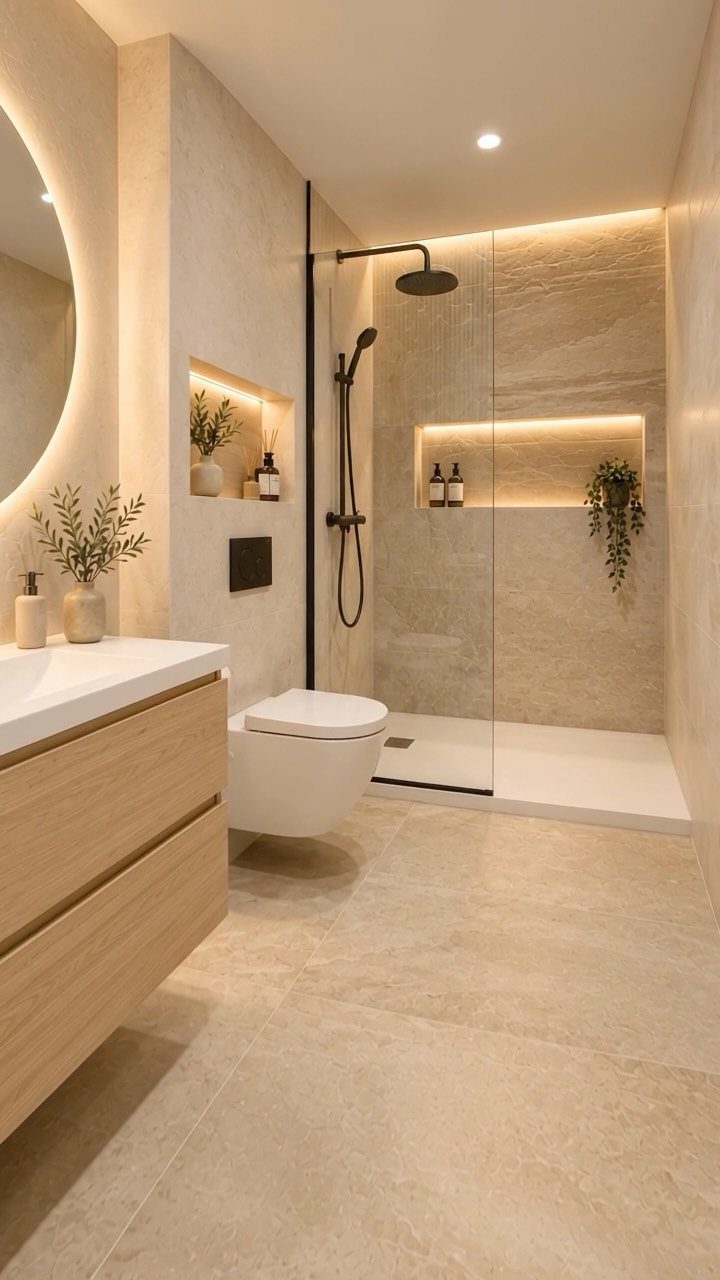
Taupe and greige tiles bring gray into the beige family, which cools the palette slightly and pairs well with both warm wood and cool metal finishes.
These gray-beige hybrids work when you want a neutral bathroom that feels contemporary rather than traditional.
Large-format stone tiles in taupe show natural variation without busy patterning. Greige works on walls or floors and bridges the gap between a warm beige vanity and cooler black or brushed-nickel fixtures.
The gray undertone makes taupe a better match for modern black hardware than a warmer tan would be. If your bathroom gets little natural light, test samples first; greige can read as cold in a dim room.

Natural Wood Floating Shelves: These real wood shelves are handcrafted from 100% solid pine and finished in a warm walnut tone that highlights natural grain and knots for a clean rustic and farmhouse look

100% SOLID WOOD WITH HAND-DISTRESSED FINISH - Crafted from solid wood, each floating shelf undergoes meticulous hand-distressing to amplify its prominent natural wood grain. This authentic distressed finish delivers a warm, weathered, reclaimed barn-wood aesthetic, infusing any modern, boho, or rustic space with timeless farmhouse charm.

[Paulownia Material] Paulownia is the high quality material which is used to make our floating bathroom shelves.. Paulownia is lighter than pine, but it can support heavier loads.
4. Beige with Blue
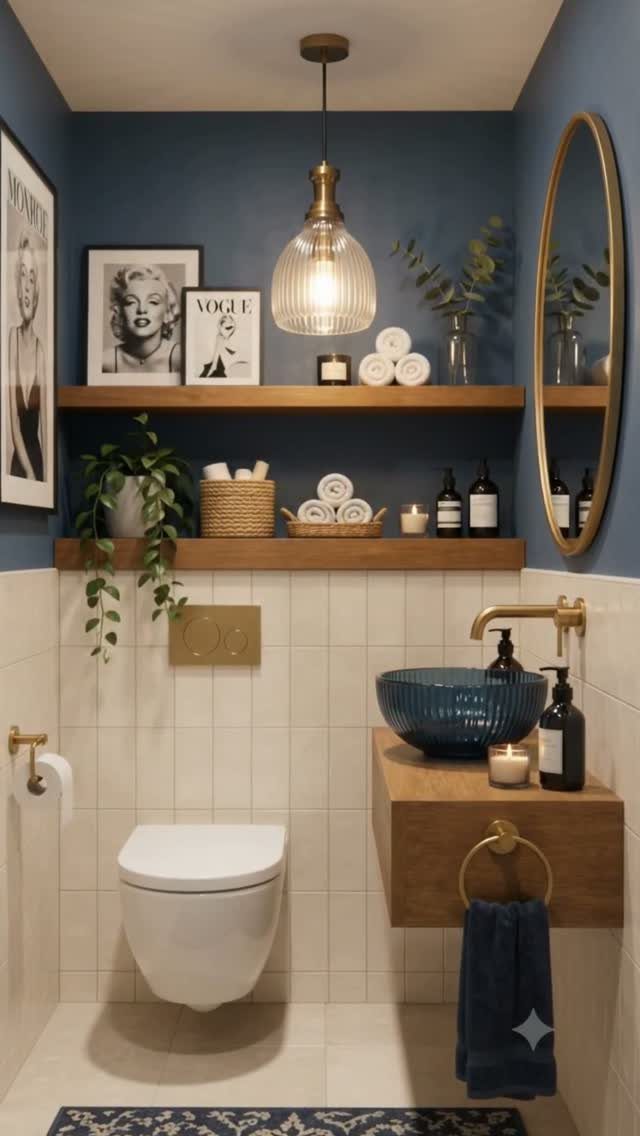
Blue against beige gives you the option to cool down a warm tile or add a bold accent.
A soft sky blue feels fresh and coastal, while a deep navy or teal creates more contrast and works in a bathroom with stronger lighting.
Use blue on one wall, or bring it in through smaller details like a glass sink, cabinetry or window trim. The beige tile stays neutral and lets the blue carry the color.
I prefer this pairing when the beige tile has warm undertones; the cool blue balances the warmth without clashing. Brass or gold fixtures pick up the warmth in beige and play off the cool in blue.

✅ Turkish Luxury 6 Piece Towel Set Includes 2 Bath Towels of 27 x 54 inches, 2 Hand Towels of 16 x 28 inches and 2 Washcloths of 13 x 13 inches.

Each set contains 2 oversized bath towels 28x55 inches, 2 hand towels 16x24 inches & 2 wash cloths 12x12 inches

Each set contains 2 oversized bath towels 28x55 inches, 2 hand towels 16x24 inches & 2 wash cloths 12x12 inches
5. Beige and Black
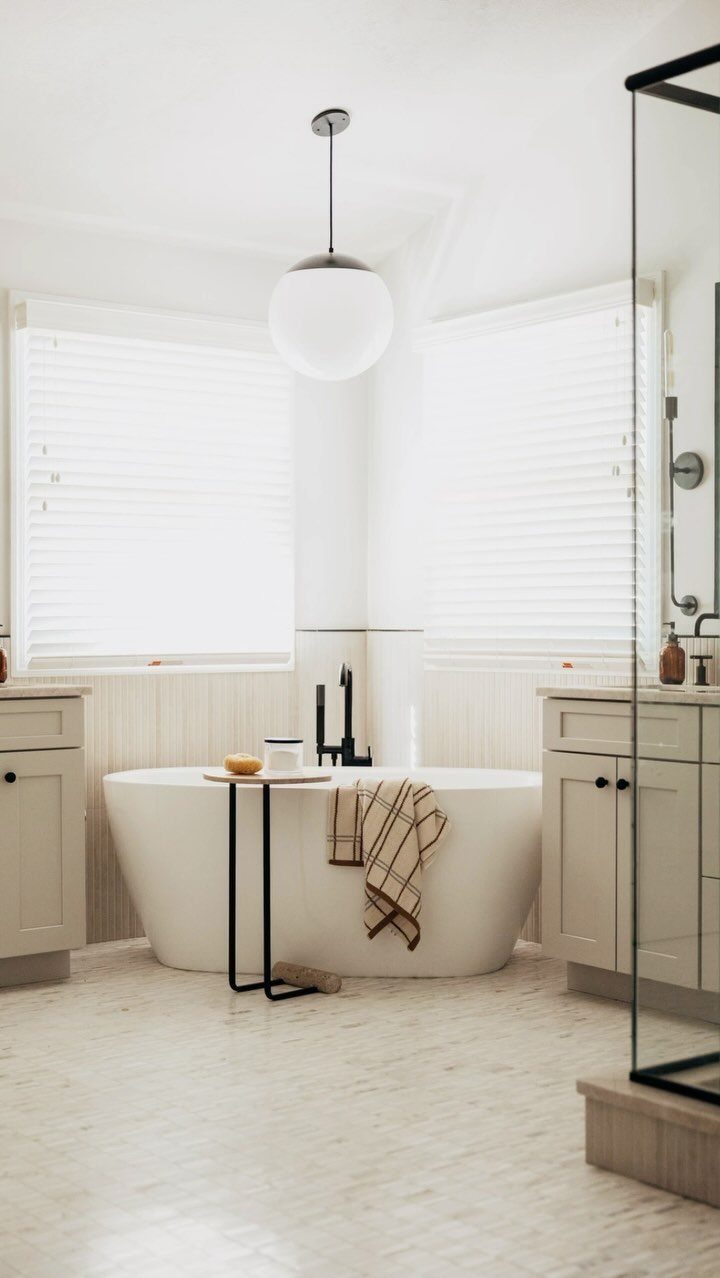
Black fixtures, hardware and furniture stand out sharply against beige tile and give the space defined edges. A black faucet, mirror frame or side table creates contrast without adding color, which keeps the palette simple.
This combination works in bathrooms of any size.
The beige tile holds the warmth, and the black fixtures anchor the sink, tub or shower. Matte black finishes look modern; polished black reads more traditional.
Black grout lines spread that contrast across the whole wall without adding fixtures. They emphasize the tile grid and add graphic interest to a beige floor or wall.

HIGH QUALITY MATERIAL - The 2 pack plant hanger indoor is made of cotton cord. Sturdy, durable and premium quality. hanging basket has a strong flexible woven design that can accommodate various shapes and sizes of planters (pots not included).

Product Upgrades: More color choices to match your decor. Upgraded to four cotton ropes for stronger weight support. Added more knots at the bottom of each tier to greatly reduce the risk of small items falling through

COMPLETE SET WITH HEAVY DUTY HOOKS: 3 handmade cotton hangers (34"/41"/46" lengths) + 3 durable metal hooks. The flexible woven design fits 5-10 inch pots (ceramic, plastic, glass, metal) and supports various plant shapes for displaying succulents, pothos, or ferns (Pots and plants are not included)
6. Reclaimed-oak Floating Vanity
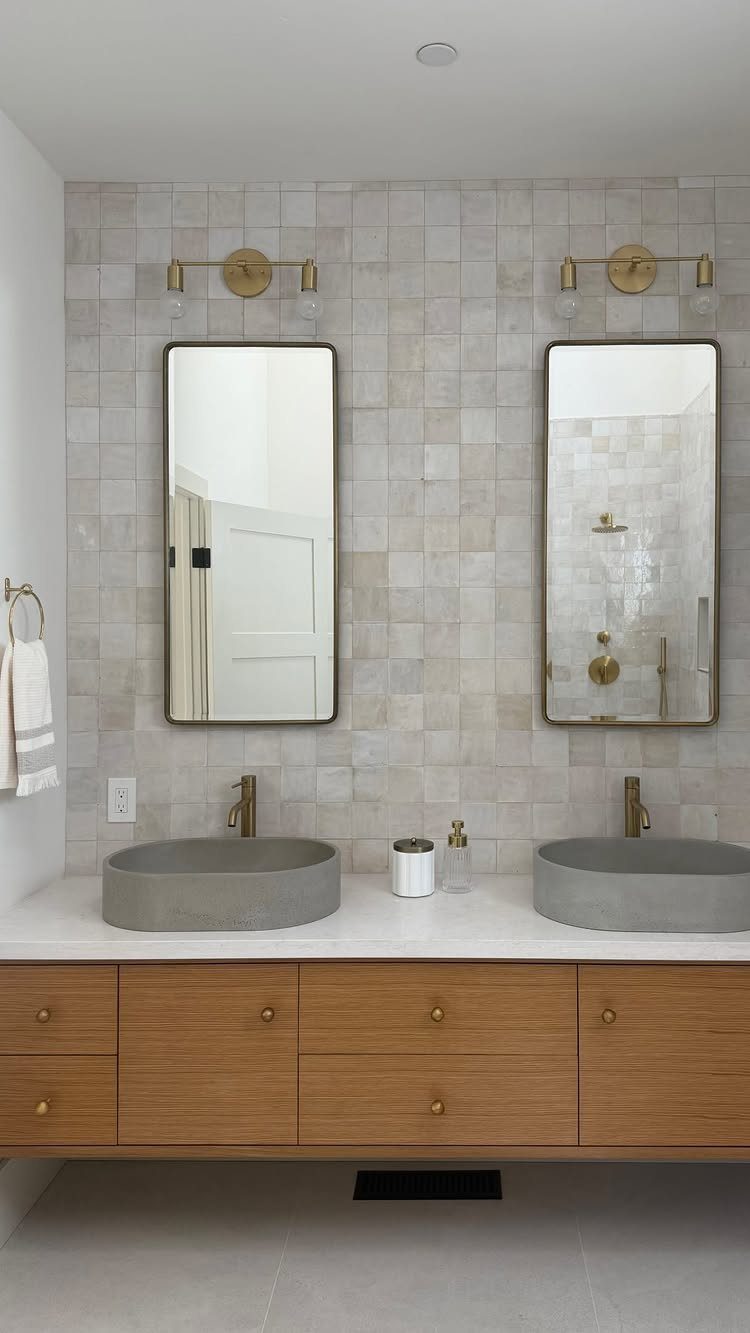
A floating vanity made from reclaimed oak or light-toned wood keeps the warmth of beige tile going without repeating the same color.
The vanity sits a few inches off the floor, which makes the bathroom feel more open and simplifies cleaning underneath.
Concrete or stone vessel sinks on top of the wood add texture and weight.
Reclaimed oak has visible knots, grain variation and sometimes old nail holes, which gives the vanity more character than new lumber. Pair it with brushed brass or gold fixtures to match the warm tones, or use black for contrast.

Boho Kitchen Mats for Floor: Bring a touch of timeless sophistication to your cooking space with our boho kitchen mat. Featuring intricate vintage patterns and rich, fade-resistant colors, it instantly elevates your kitchen style while blending beautifully with modern or traditional interiors

Cloud-Like Comfort & Style: Step onto our super soft waffle bath mat! Its chic boho design feels like a warm hug for your feet. Perfect for farmhouse decor, it turns your bathroom into a cozy, spa-like retreat. You will love starting your day this way

Cloud-Like Comfort & Style: Step onto our super soft waffle bath mat! Its chic boho design feels like a warm hug for your feet. Perfect for farmhouse decor, it turns your bathroom into a cozy, spa-like retreat. You will love starting your day this way
7. Terracotta Accents
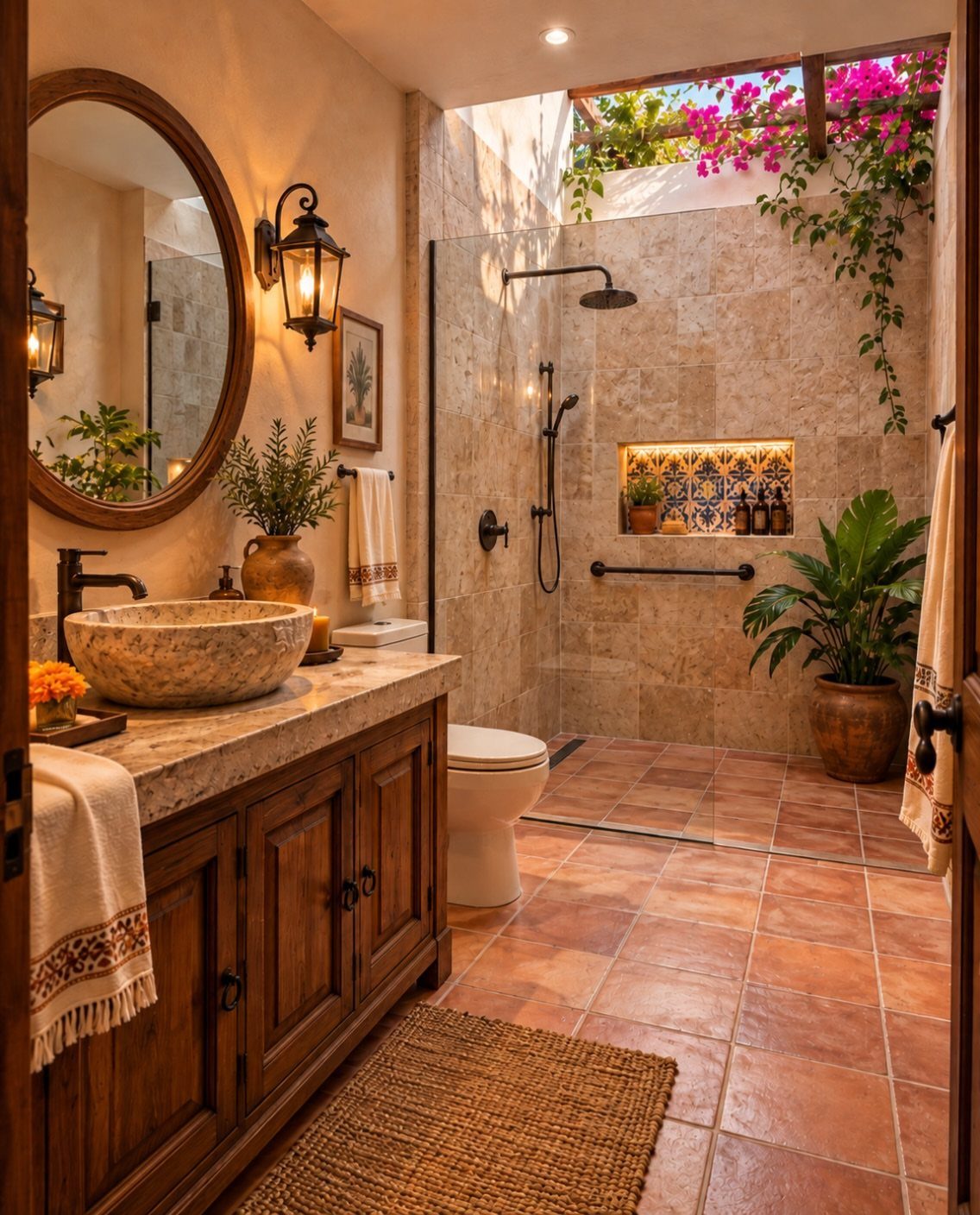
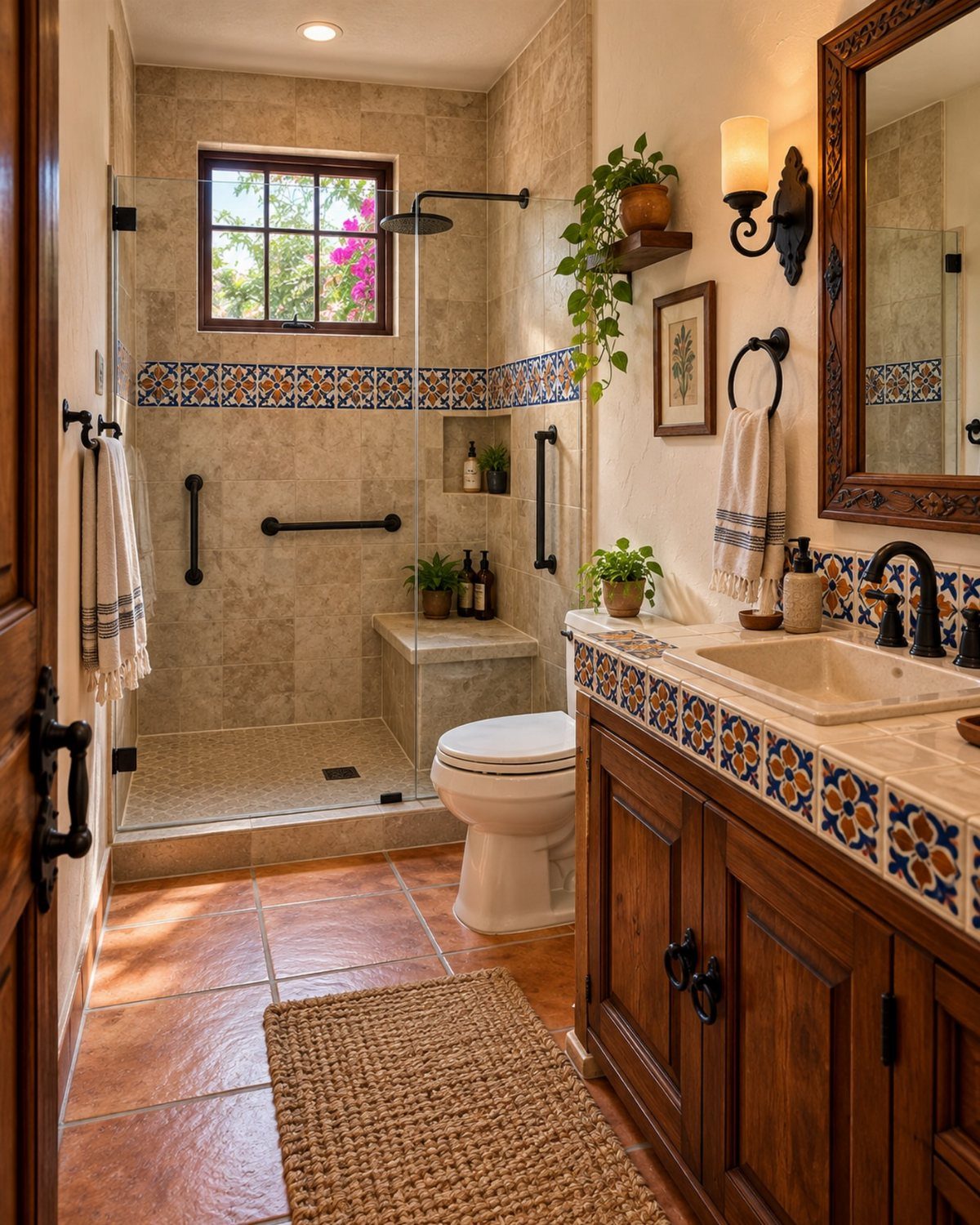
Terracotta floor tiles or accessories bring a reddish-brown clay tone that warms up beige walls and adds an earthy, Mediterranean feel. The orange-red undertone in terracotta sits naturally next to warm beige stone or ceramic tile.
Use terracotta on the floor to ground the space, or bring it in through smaller pieces like planters, soap dishes or a bath mat. The clay color works best when the beige tile leans warm rather than gray.
Pair this combination with wood furniture and brass or bronze fixtures. The warm metals echo the terracotta without competing with it.

PVC Wall Panels: you will receive 36 peel and stick wall tiles, each measuring about 12 x 12 inch/30 x 30 cm and featuring a simulated marble texture for a refined, textured look; A tool kit is also included, including a red measuring tape, a utility knife, a small blue scraper (about 4 x 2.8 inch) and a large red scraper (about 7.5 x 4.7 x 4.3 inch), ideal for installation, eliminating the need to purchase additional accessories

Elegant Marble Look: Transform your kitchen or bathroom with the stunning appearance of genuine stone, without the heavy cost. Our peel and stick marble tile features a clean, repeatable pattern that aligns easily and minimizes waste. These peel and stick tiles deliver a high-end aesthetic, ideal for renters who want a premium upgrade on a tight budget.

Detail Parameters: Individual pieces, 3x6x0.2inch (75x150x6mm),32 pieces/box, 4 sq.ft/box.
8. Natural Stone Tile
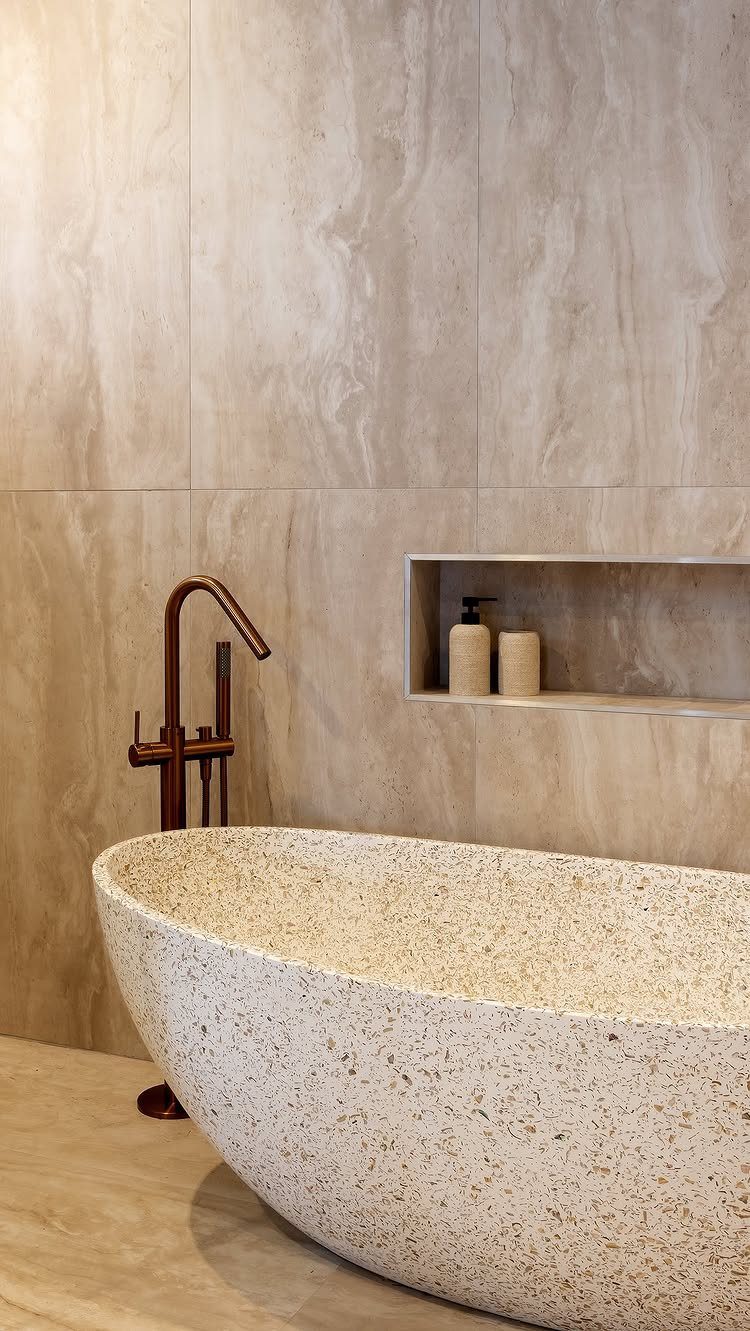
Limestone, travertine and marble give you natural color variation and texture that manufactured tile cannot match. Each piece differs slightly in tone and veining, which keeps a large beige surface from looking uniform.
Stone tile comes honed, polished or tumbled.
Honed finishes have a matte surface that hides water spots and soap residue better than polished stone. Tumbled edges soften the look and feel underfoot.
Stone needs sealing to resist water and staining, especially in a shower or around a tub. Reseal once a year or when water stops beading on the surface.

Solid reclaimed wood construction. Each shelf is made from real reclaimed wood with natural variation in color, grain, and character due to previous use and aging

Unleash Possibilities -Maximize your wall space by transforming empty areas into functional wall storage and stylish displays. Whether you're seeking to declutter your bedroom with a chic sideboard, tidy up your bathroom with a convenient bathroom storage wall shelf, or enhance the ambiance of your dining room with an eye-catching display, our solution covers all your needs.

【 Farmhouse Floating Shelves That Wow】Our bathroom shelves over toilet wall mounted are rustic, coastal, and functional. The wall basket lets the gorgeous inlaid design shine in your bathroom farmhouse décor
9. Chocolate Brown Accents
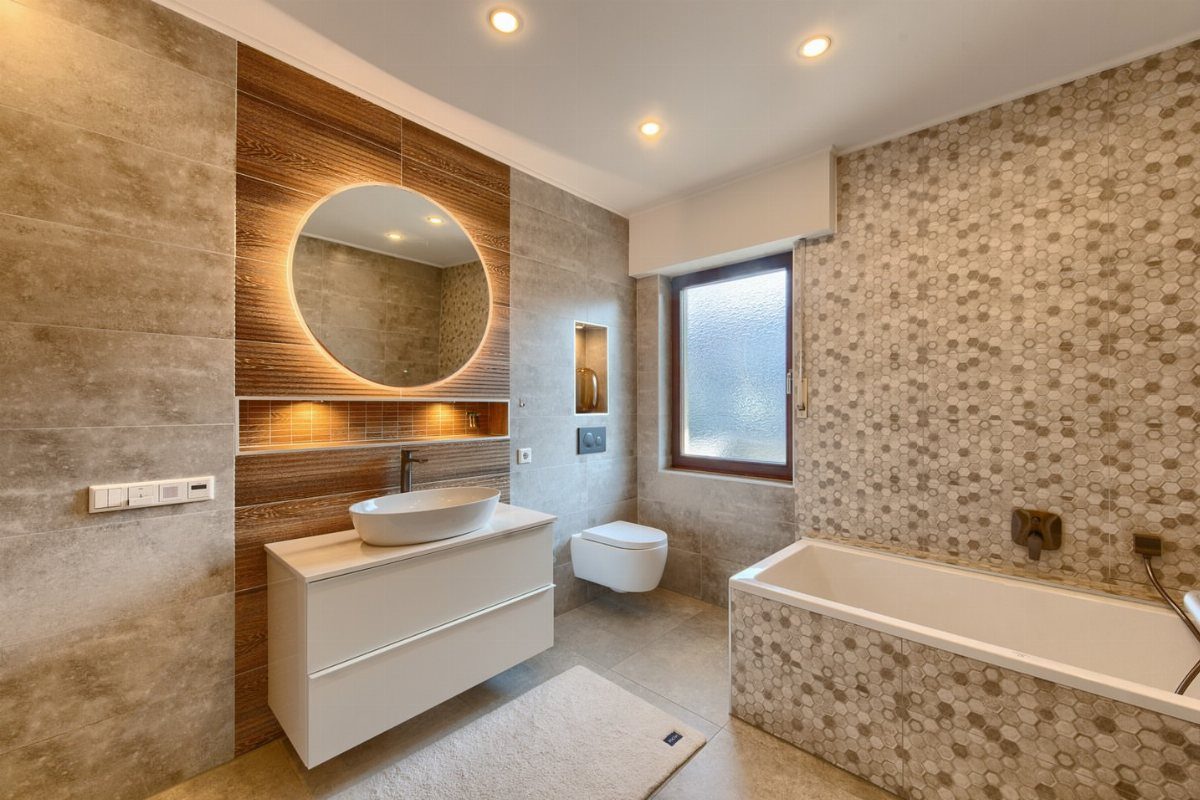
Chocolate brown wood, tile or paint deepens beige without leaving the neutral family. The darker brown reads as a shadow of the lighter beige, which makes the 2 colors sit together easily.
A brown accent wall behind the vanity or tub creates a focal point without adding another color to the palette. Brown cabinetry or shelving does the same while adding storage.
The contrast between beige and chocolate brown is softer than beige and black, so this pairing works when you want definition without sharp edges. White fixtures brighten the space and keep the darker browns from feeling heavy.

This complete 6-piece bath towel set includes 2 bath towels measuring 30 x 54 inches, 2 hand towels measuring 16 x 28 inches, and 2 washcloths measuring 13 x 13 inches for a coordinated primary, guest, or dorm bathroom.

SET INCLUDES: Two Oversized, Large 30 inches x 54 inches Bath Towels, two 16 inches x 28 inches Hand Towels, and two 12 inches x 12 inches Wash Cloths in Linen

Crafted from ultra-soft, 100% cotton, these towels offer a plush feel that gets softer with every wash. The high-quality 550 GSM weight ensures lasting softness, superior absorbency, and a spa-like experience every time you step out of the shower.
10. Patterned Beige Tile
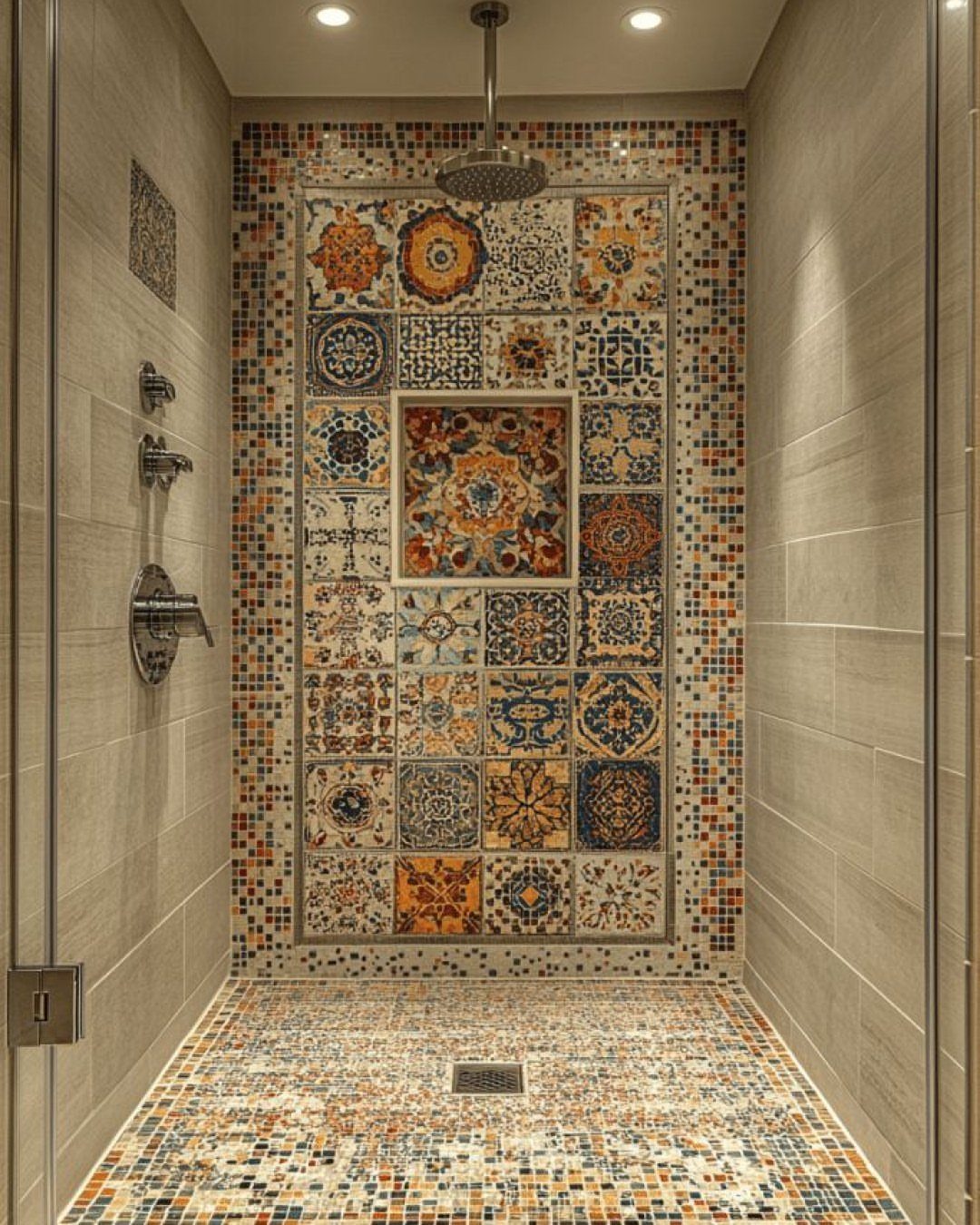
Patterned tile in beige with contrasting colors or shapes adds visual interest to a single wall or the shower floor. Geometric, floral or Moroccan-inspired motifs work as long as beige stays the dominant color.
Use the patterned tile in one area and plain beige everywhere else. The pattern draws the eye, so placing it in the shower or behind the vanity gives that spot more weight.
Smaller patterns show up better in a compact space. Larger motifs need more wall area to read clearly, so save those for a bigger bathroom or a long accent wall.

Upgraded Basket: 4 cotton rope connecting straps for enhanced weight bearing support. Available in multiple color options: White, Black, Caramel and Dark Green, esay to match your home decor.

STYLISH AND UNIQUE: The modern, vintage-inspired plant hanger adds the perfect touch to your room and living room. This beauty would be gracing your home or balcony garden, or brightening up an office. Easily add some special to your beautiful bohemian home decor, sweet farmhouse decor, or modern minimalist style

Complete Set: This macrame plant hanger set includes 6 baskets, each measuring 9.4x5.1inch/24x13cm, perfect for small plants like succulents or herbs. The quantity allows you to arrange them creatively on your wall, adding life to any room. These wall planters for indoor plants also work well for storing keys, candy, or toiletries. The openwork design promotes airflow to keep roots healthy.
11. Large-format Beige Tile
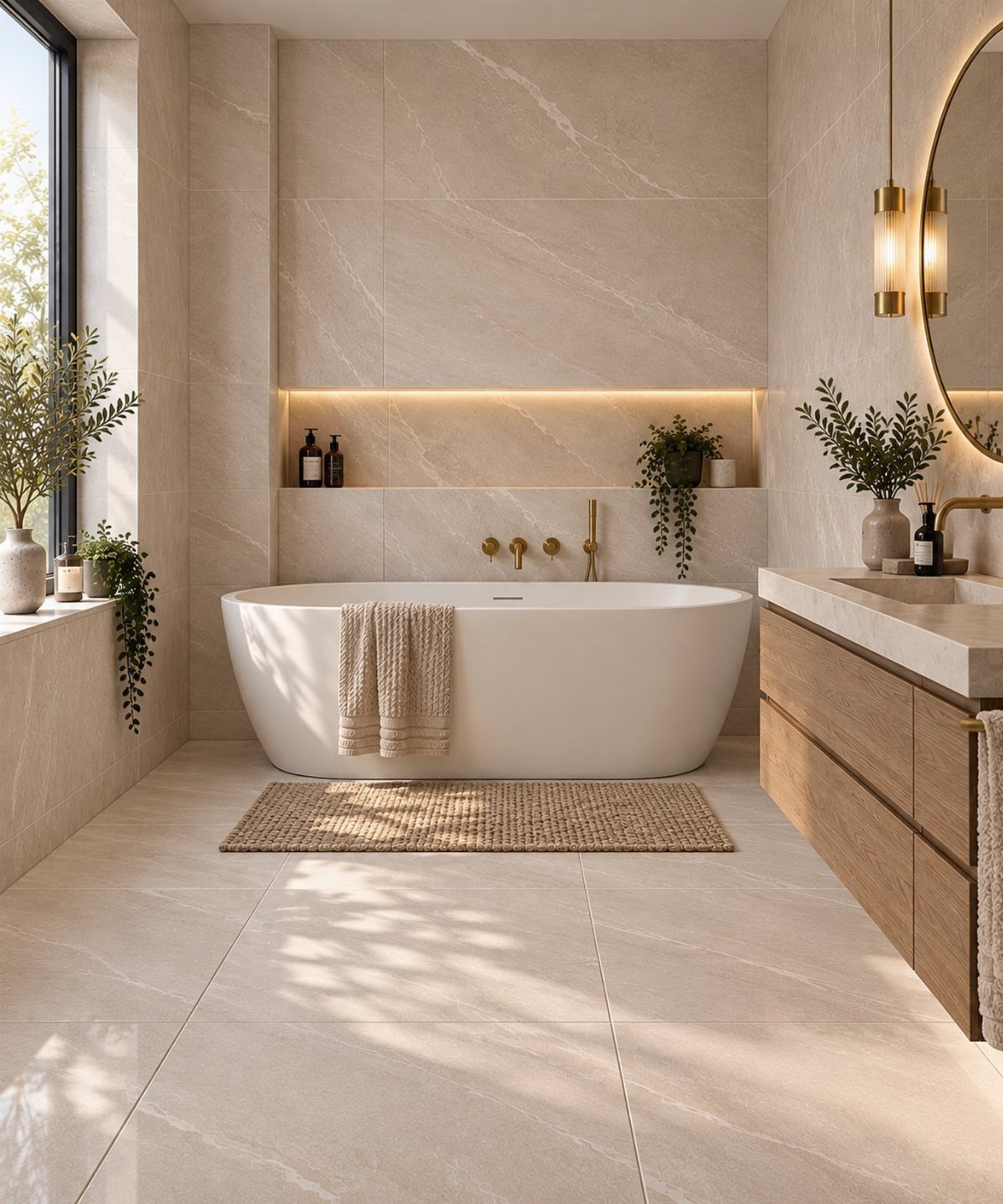
Tiles larger than 12 by 24 inches reduce the number of grout lines and make the floor or wall read as a continuous surface. Fewer seams mean less visual clutter and less grout to clean.
Large-format tiles work well in small bathrooms because the cleaner surface makes the room feel bigger. They also suit modern or minimalist bathrooms where you want the tile to recede into the background.
Installation requires a flat substrate. Any dips or bumps in the wall or floor show up more with a large tile than with smaller ones, so surface prep matters.
12. Curbless Beige Shower
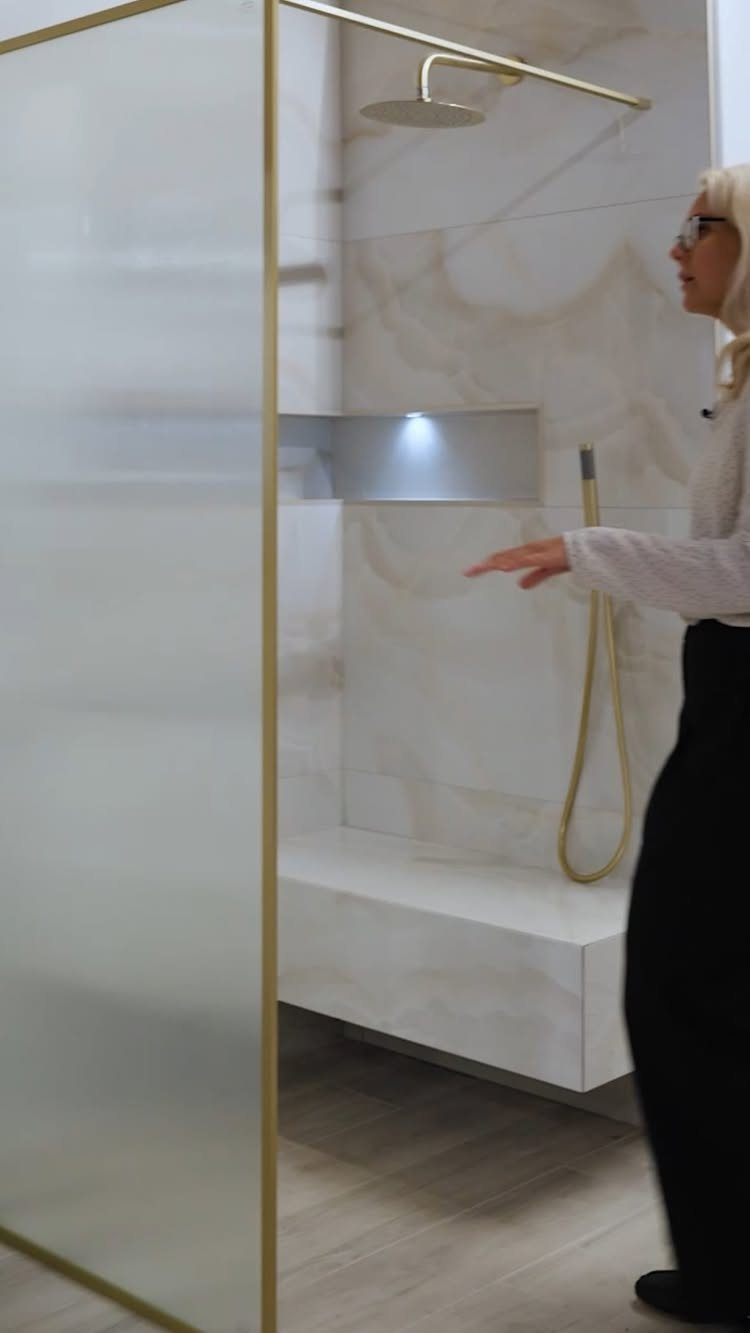
A curbless shower runs the same tile across the bathroom floor and into the shower without a raised threshold. The continuous surface makes the bathroom feel larger and simplifies entry for anyone who has trouble stepping over a curb.
The shower floor needs a slight slope toward the drain so water does not pool or run back into the bathroom. A linear drain along one edge handles water flow better than a center drain in a curbless layout.
This design requires careful waterproofing under the tile.
The shower pan membrane extends beyond the wet area, and the slope starts outside the visible shower zone. Hire someone experienced with curbless installations if you are not confident with the waterproofing details.
13. Beige Wood-look Tile
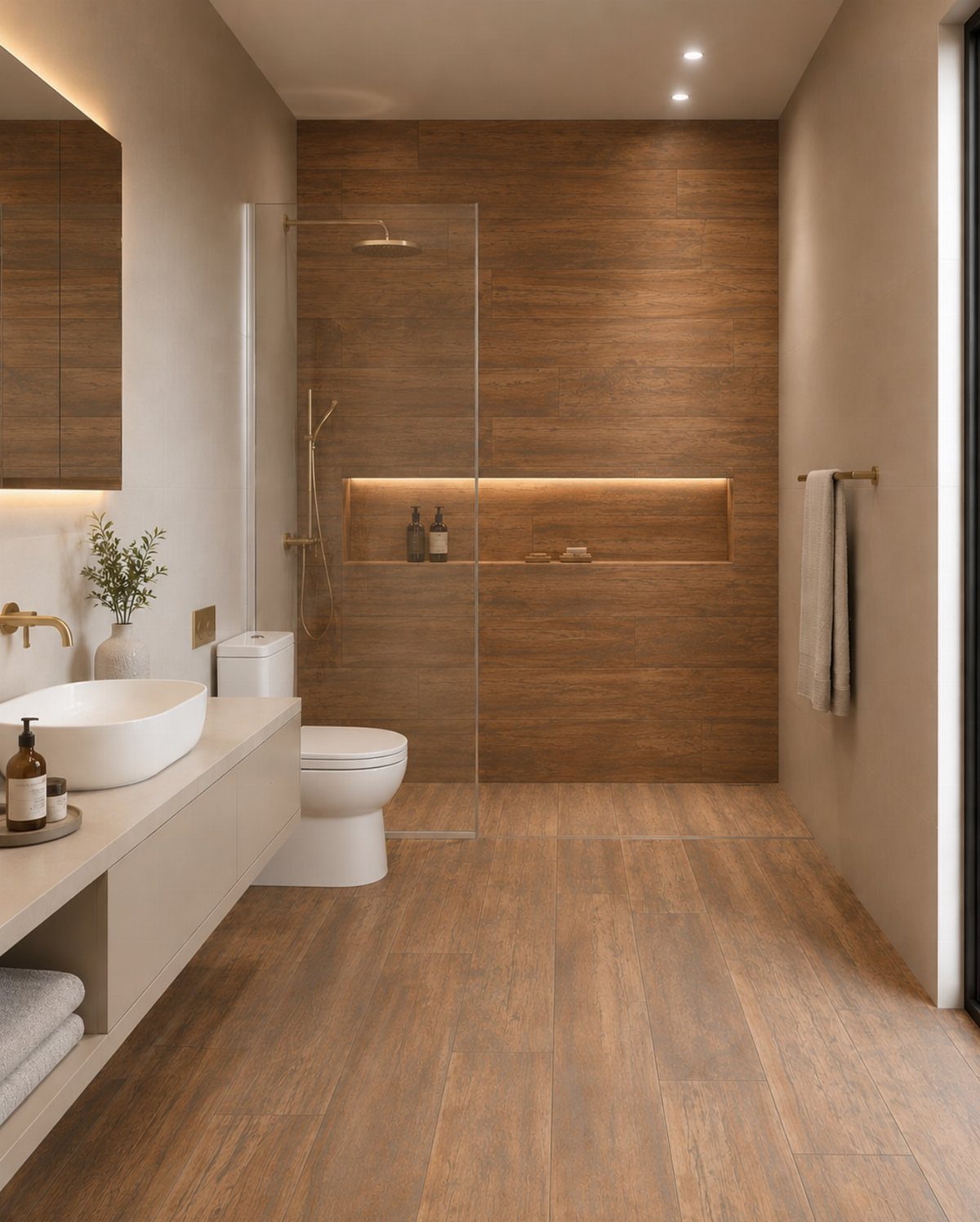
Porcelain tile printed with a wood grain gives you the look of oak or pine without the water damage real wood invites in a wet room.
The tile can run across the floor and up the shower wall in one material, which simplifies the install and keeps the grain pattern going.
Wood-look tile comes in planks sized like real flooring.
Lay them in a staggered pattern the way you would hardwood. The beige tones warm the space, and the grain adds texture without introducing another color.
Grout lines stay visible, so this tile does not fool anyone up close. The benefit is durability: it handles standing water, never needs refinishing, and cleans with the same products you use on ceramic.
14. Glazed Zellige and Tumbled Travertine
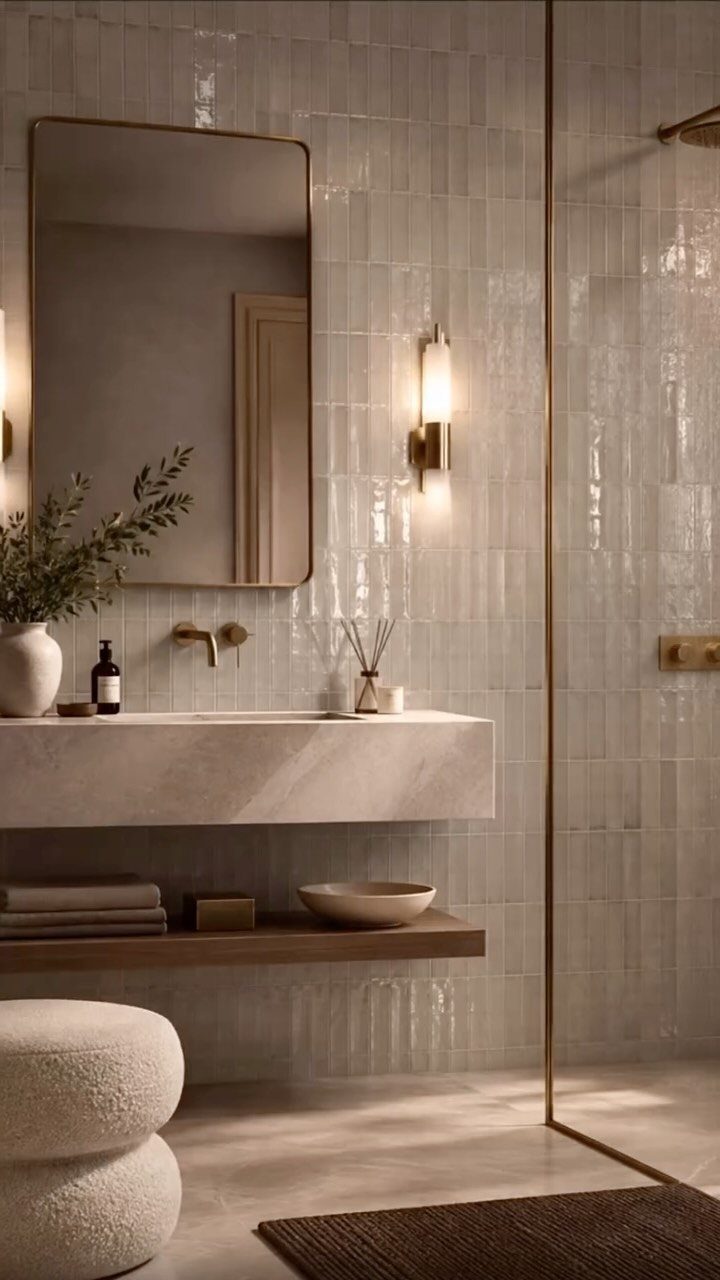
Glazed zellige tile has an uneven, handmade surface that catches light differently across each piece. The glaze pools in the low spots and thins on the high points, which gives a beige wall subtle variation.
Pair it with tumbled travertine for the sink or countertop; the stone has rounded edges and a matte finish that contrasts with the glossy tile.
Gold fixtures and a framed mirror pick up the warm tones in both materials. The combination reads as layered and collected rather than matched from a single product line.
Zellige tiles are individually formed, so expect size variation. Work with someone experienced in setting handmade tile for clean alignment.
Test Tile and Paint Samples
A sample that looks warm and creamy in the showroom can read pink or yellow once it’s on your wall next to white trim or a cool gray ceiling.
Test samples in the actual bathroom at different times of day.
Tape a few tiles to the wall and check them in morning light, midday sun and evening artificial light. Compare them against the color of your ceiling, existing woodwork and any fixtures that will stay.
In a dim room, cool-toned beige can look dull rather than crisp.
Frequently Asked Questions
What color would look good in a bathroom with tan tile?
White, blue, black and chocolate brown all pair well with tan tile.
White keeps the space bright and lets the tile warmth come through, while blue adds a cool contrast that balances beige undertones. Black fixtures create sharp definition, and chocolate brown deepens the neutral palette without leaving it.
What are some ideas for a bathroom with beige tiles?
Use tone-on-tone beige across all surfaces for a quiet, continuous look, or add patterned tile in one area like the shower floor for visual interest.
Natural stone brings texture and color variation, while large-format tile reduces grout lines and makes the room feel bigger. Pair beige with contrasting fixtures in black or brass to define edges and add warmth.