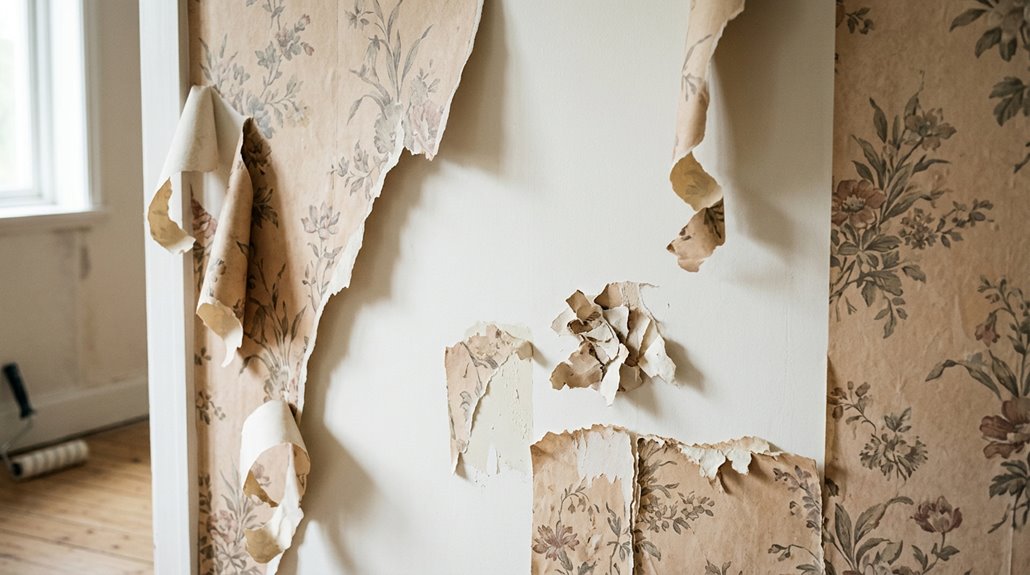
I’ll paint over wallpaper when it’s smooth, firmly adhered, and you need to save significant time. Priming first creates a barrier that lets you skip the stripping process. However, loose edges, high-humidity rooms, or textured patterns will bubble and ghost through within months. If the paper’s damaged or you’re in a bathroom, strip it. Otherwise, seal those seams with caulk, prime heavily, and you’ll get a fresh look without spending a weekend scraping. The following section explains how to determine which approach your walls need.
Check If Your Wallpaper Can Be Painted Over (And When It Saves Time)
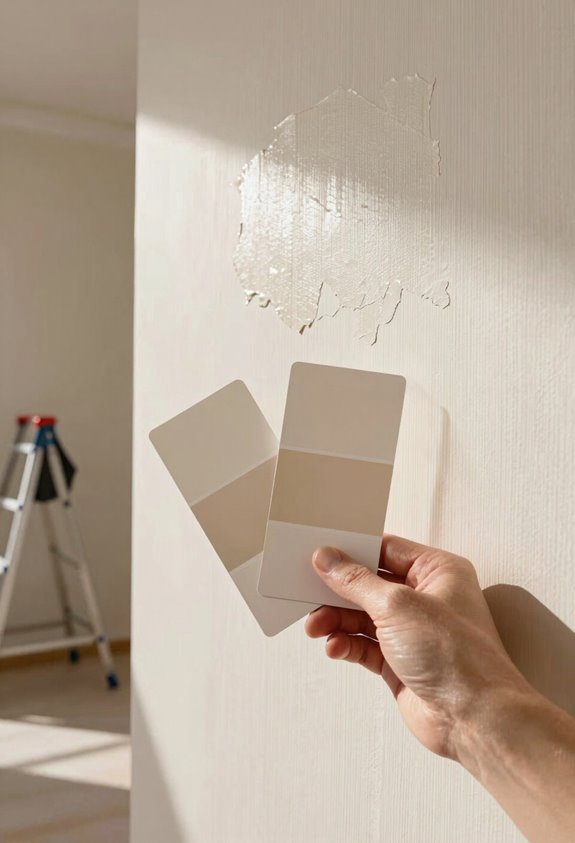
Why do so many of us assume wallpaper has to come down before paint goes up? I have unfortunately done this several times, and this approach is worth reconsidering: sometimes, you can skip removal entirely.
Smooth, durable wallpaper in kitchens, entryways, or children’s rooms can be painted over with proper priming. Clean first, then prime. This seals adhesion issues before adding color and saves hours, possibly days.
Painting over smooth, durable wallpaper with proper priming saves hours—just clean, prime, then add color.
Check these factors first:
- Is the wallpaper firmly attached? Any peeling means trouble.
- Is it textured or patterned? Seams will show through.
- How’s the maintenance history? Older paper risks bubbling.
In rentals, painting over limits future options. Choose wisely for the best results.
How to Paint Over Wallpaper Without Bubbling or Peeling
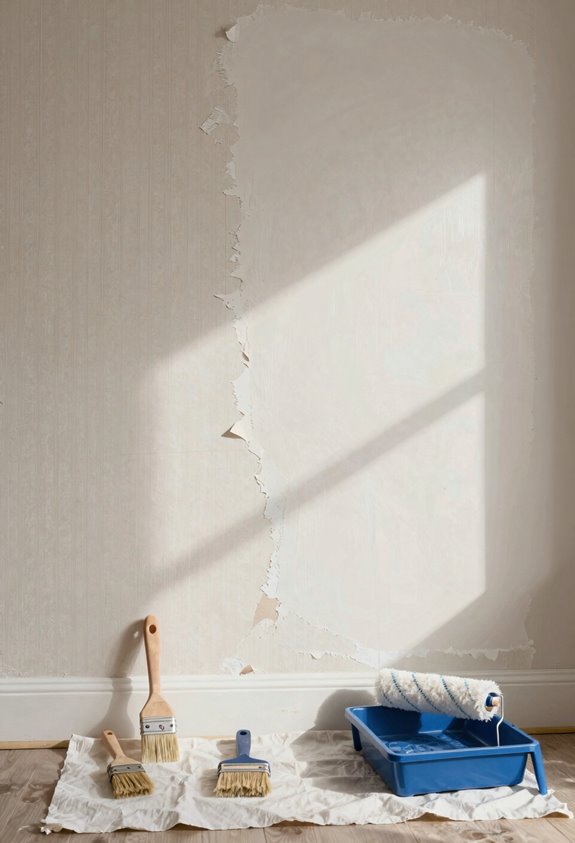
I’ve learned that painting over wallpaper without disaster comes down to controlling moisture and locking down every edge. This approach is effective and straightforward.
Here’s the easiest way I know:
- Clean the wallpaper thoroughly. Remove dirt, grease, and mildew so the primer gets proper adhesion and bubbling is avoided later.
- Apply high-adhesion primer. Use one made for glossy or peeling surfaces, creating a barrier between the old adhesive and the paint.
- Keep moisture minimal. Soaking edges causes curling, so use a small amount of water and work carefully.
- Seal every seam with caulking. Include areas where wallpaper meets the ceiling. This prevents lifting and creates a seamless finish.
Paint Over or Strip? A Quick Decision Guide for Your Walls
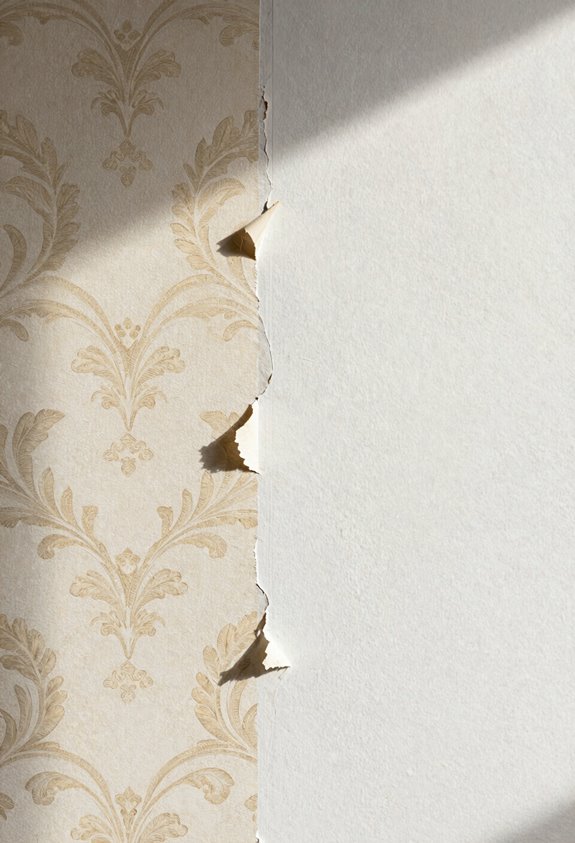
After learning how to paint over wallpaper the right way, you’re probably wondering if all that prep work is even worth it. I’ve faced this crossroads more times than I care to admit.
Painting over wallpaper saves time and money. However, moisture from paint can trigger bubbling, peeling, and edge lifting you won’t notice until months later. Even with careful priming, those stripes and seams often ghost through, becoming more obvious with each coat.
Painting over wallpaper trades a weekend of work for months of bubbling, peeling, and ghosting seams you can’t undo.
I have unfortunately done this several times, skipping the hard work to save a weekend. The result was a faster fix that created bigger headaches.
When to remove wallpaper instead:
- The paper is already loose or damaged
- You’re working in high-humidity spaces (like a kitchen or bathroom)
- You want truly smooth walls for future projects
Strip now, and repainting stays easy. Paint over, and you’re locked into that choice for future updates.