A chair rail can read as quiet texture or as deliberate jewelry, depending on whether you paint it one color, paper above it, add panel molding beneath, or spray it metallic against two tones.
The deciding factor is usually how much of the work you can do in a weekend and whether your walls are smooth enough for peel-and-stick wallpaper or textured enough to need real wood wainscoting.
For proof that the details matter, check the rail height against your tallest chair and add 2 inches; protection only works if the placement does.
1. Monochromatic Chair Rail
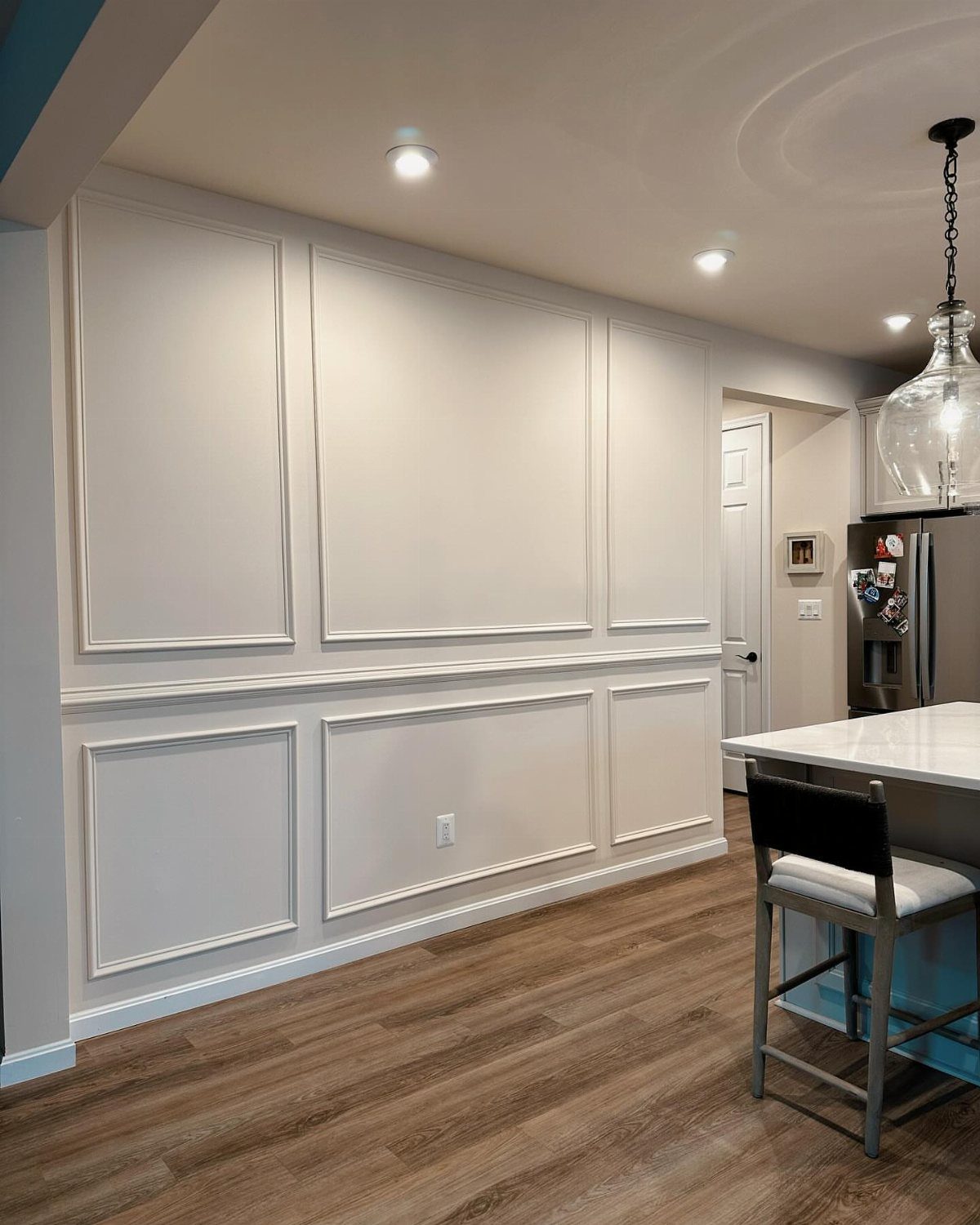
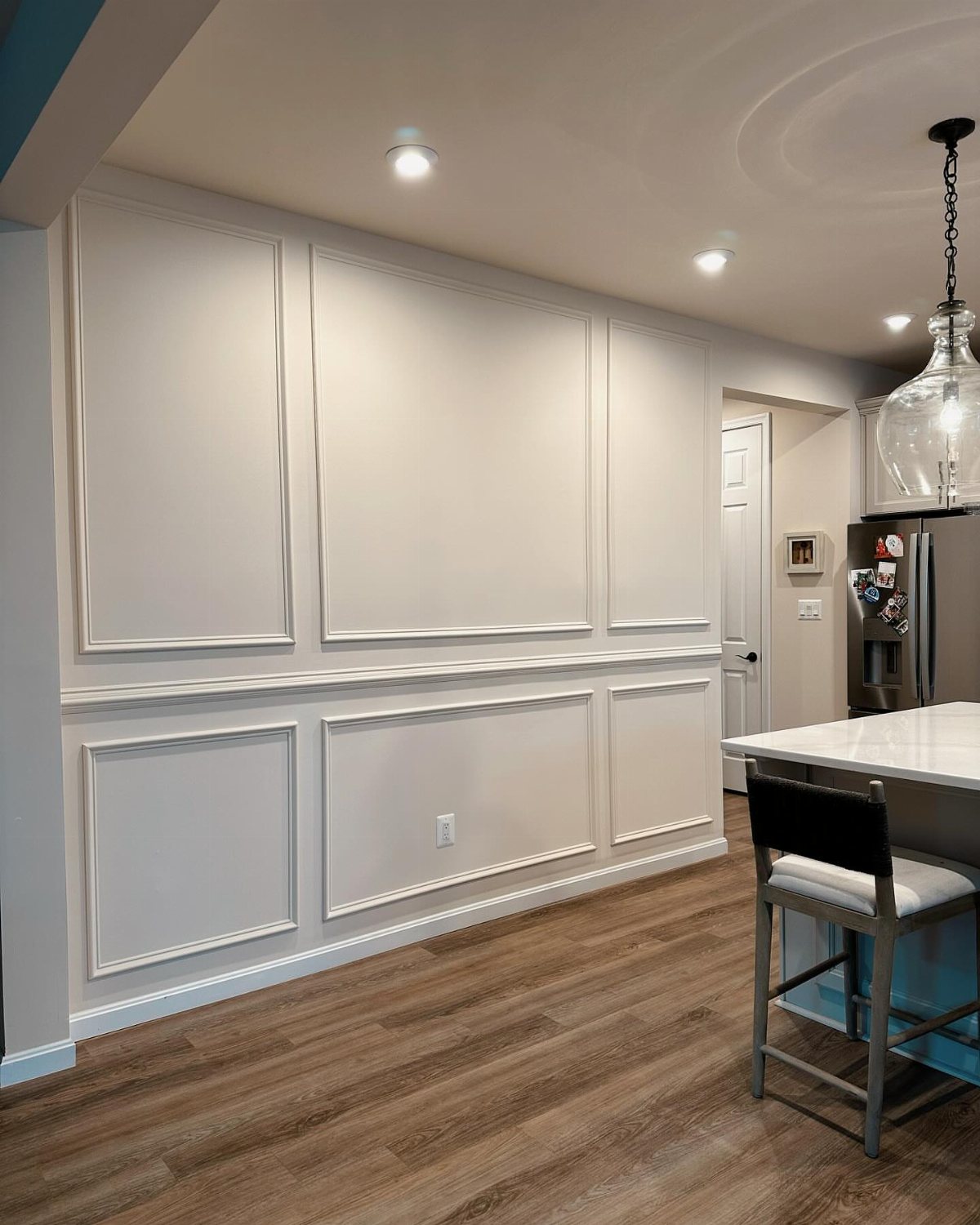
A monochromatic chair rail lets the molding do the work without shouting. A single cream color works across both halves if you change the finish: satin on the rail and frames, matte above and below.
The shift catches light without shouting. The light catches the trim just enough to read the shadow lines.
For this to read as texture and not a mistake, the sheen gap needs to be real: at least one full step, from matte to eggshell or eggshell to satin. Check your paint line’s sheen scale; they vary.
Same-color works best in rooms with good natural light, where shadows give the molding its shape.

Warm Cream White Tone: Ideal for warm-toned interiors, this molding trim features a soft Cream White (Milky/Off-White) finish, distinctly different from standard bright white. It blends perfectly with vintage furniture, wooden cabinets, and warm-colored walls, adding an elegant, non-glaring aesthetic to your home decor. Note: Please check the color match before installation.

PLASTPRO PVC TRIM KIT, 2 PIECE: Complete your Plastpro wainscoting panels installation with the matching trim kit. Includes 1 pre-finished white PVC chair rail and 1 base molding with integrated rubber seal that blocks moisture from seeping between wall and panels. Pre-grooved to snap directly onto Plastpro 3 Ft and 8 Ft PVC wall panels.

Warm Cream White Tone: Ideal for warm-toned interiors, this molding trim features a soft Cream White (Milky/Off-White) finish, distinctly different from standard bright white. It blends perfectly with vintage furniture, wooden cabinets, and warm-colored walls, adding an elegant, non-glaring aesthetic to your home decor. Note: Please check the color match before installation.
2. Wallpaper and Paint with Chair Rail
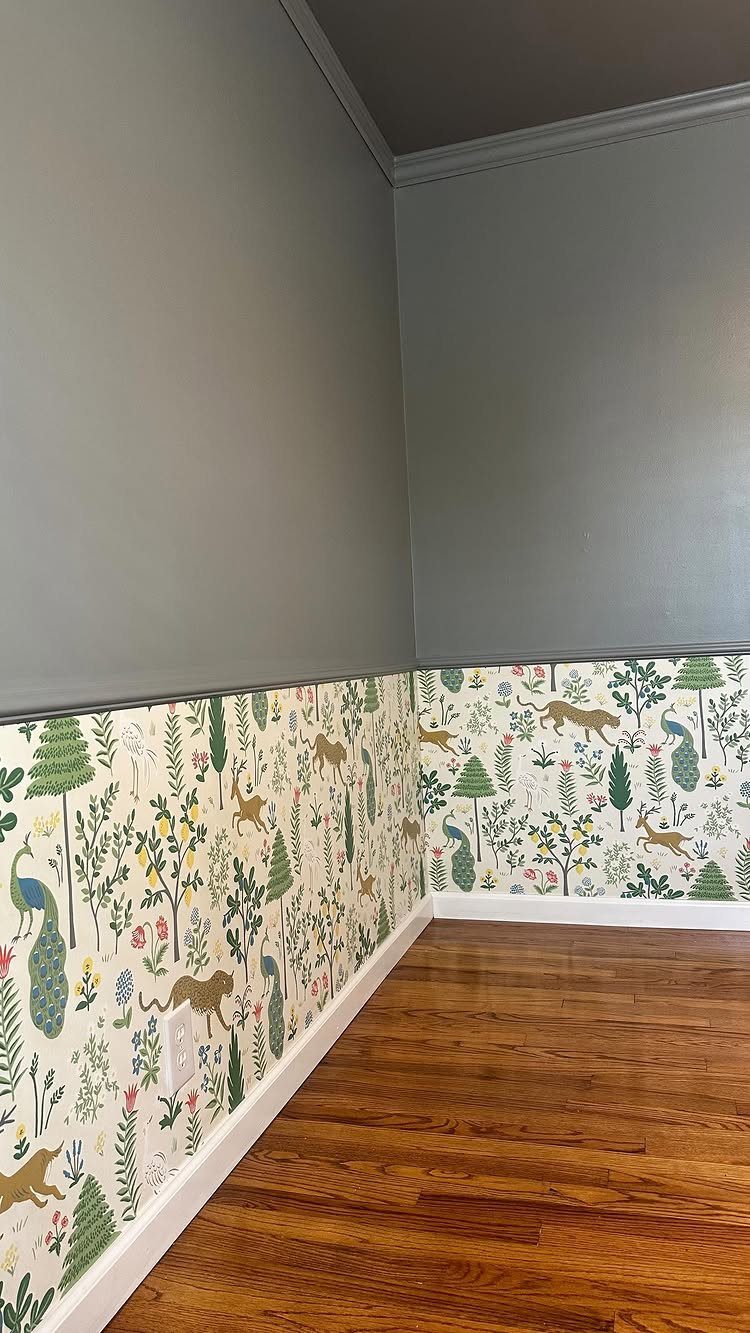
A chair rail that sits almost flush lets the pattern read continuous across the divide. A bolder profile would fight the paper.
For the upper paint, pull a neutral from the wallpaper itself rather than matching a dominant color; the wall stays calm and the paper gets to be the event.
If you reverse this, paper above and paint below, keep the pattern small or the ceiling will feel lower than it is.

Wallpaper border SIZE:Measures 3.9 inch wide x 196 inch long (10cmx10M)

DIY Installation Made Easy: Cut, peel, and stick in just 3 simple steps. No special tools required. Effortless installation for a quick and hassle-free experience.

Effortless Installation — Experience the simplicity of our 3-step installation process: simply cut, peel, and stick. It's a swift, hassle-free process.
3. Chair Rail with Panel Molding
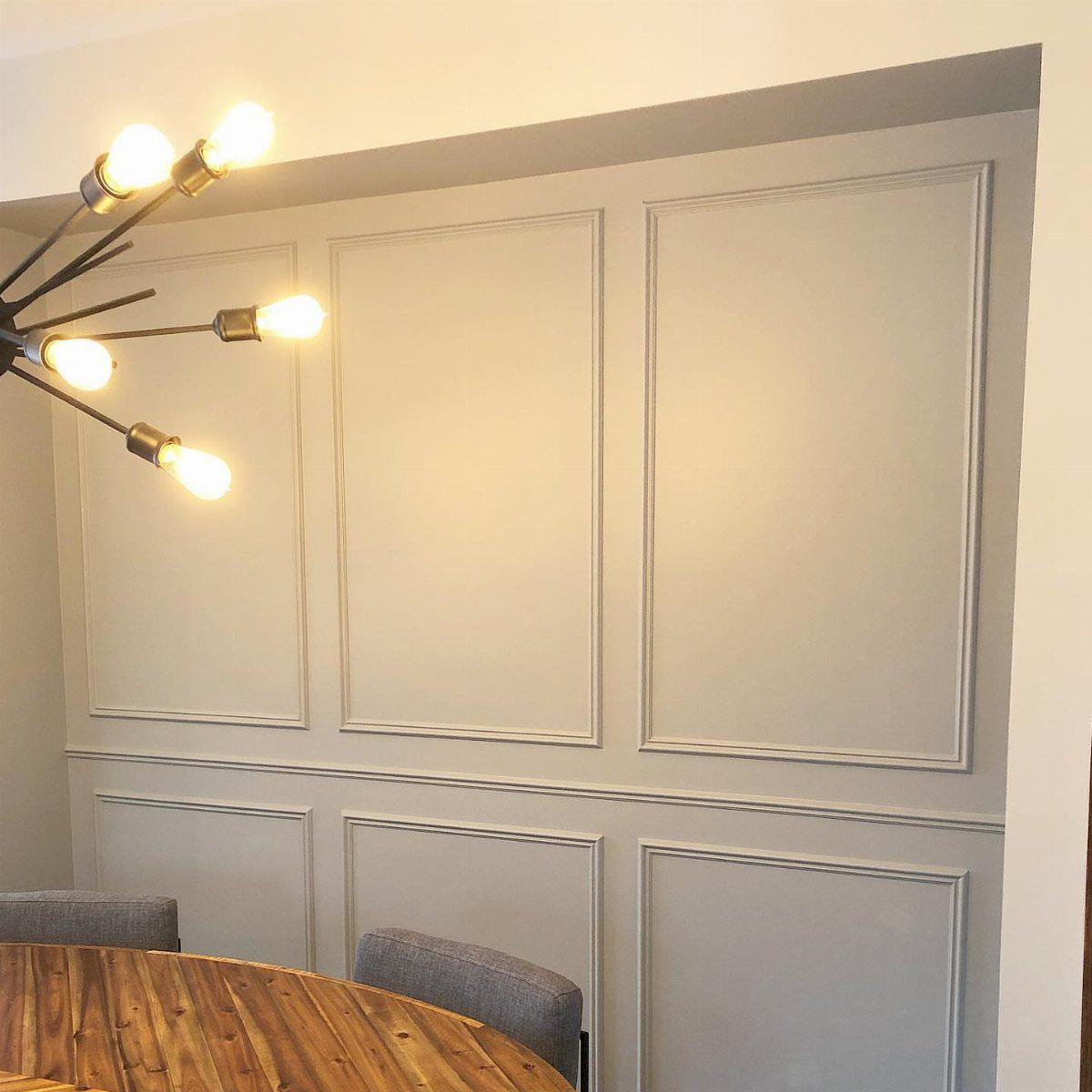
Panel molding turns a chair rail from a single line into a grid. The dining room photo shows picture-frame boxes above and below the rail, which means twice the measuring and twice the mitered corners.
Peel-and-stick molding exists now, and I have used it for a single accent wall where the wall itself is smooth and the budget is tight.
Real wood wins if your walls have any texture; the gap between strip and wall catches light and looks cheap. For paintable peel-and-stick, plan to caulk the inside corners after painting, not before.
The adhesive softens some caulk formulas.

Seamless Application - Peel and stick design ensures hassle-free installation, no tools required

Pre-cut Wall Molding Kit : Our wall moldings include 22 pieces of 24 inch decorative strips and 12 pieces of 30 inch decorative strips.Can be freely matched according to your needs,bringing an elegant finished appearance to doors or walls

Wall Molding Kit: The package includes 24 pcs wall molding (24in-14 pcs, 54in-6 pcs, 48in-4 pcs), which can be combined into 6 frames, allowing you to easily create a stylish accent wall. The 6-frame layout shown is designed for a wall measuring approximately 10 feet high by 11 feet wide. Please measure your wall and plan the layout before installation.
4. Chair Rail and Wainscoting
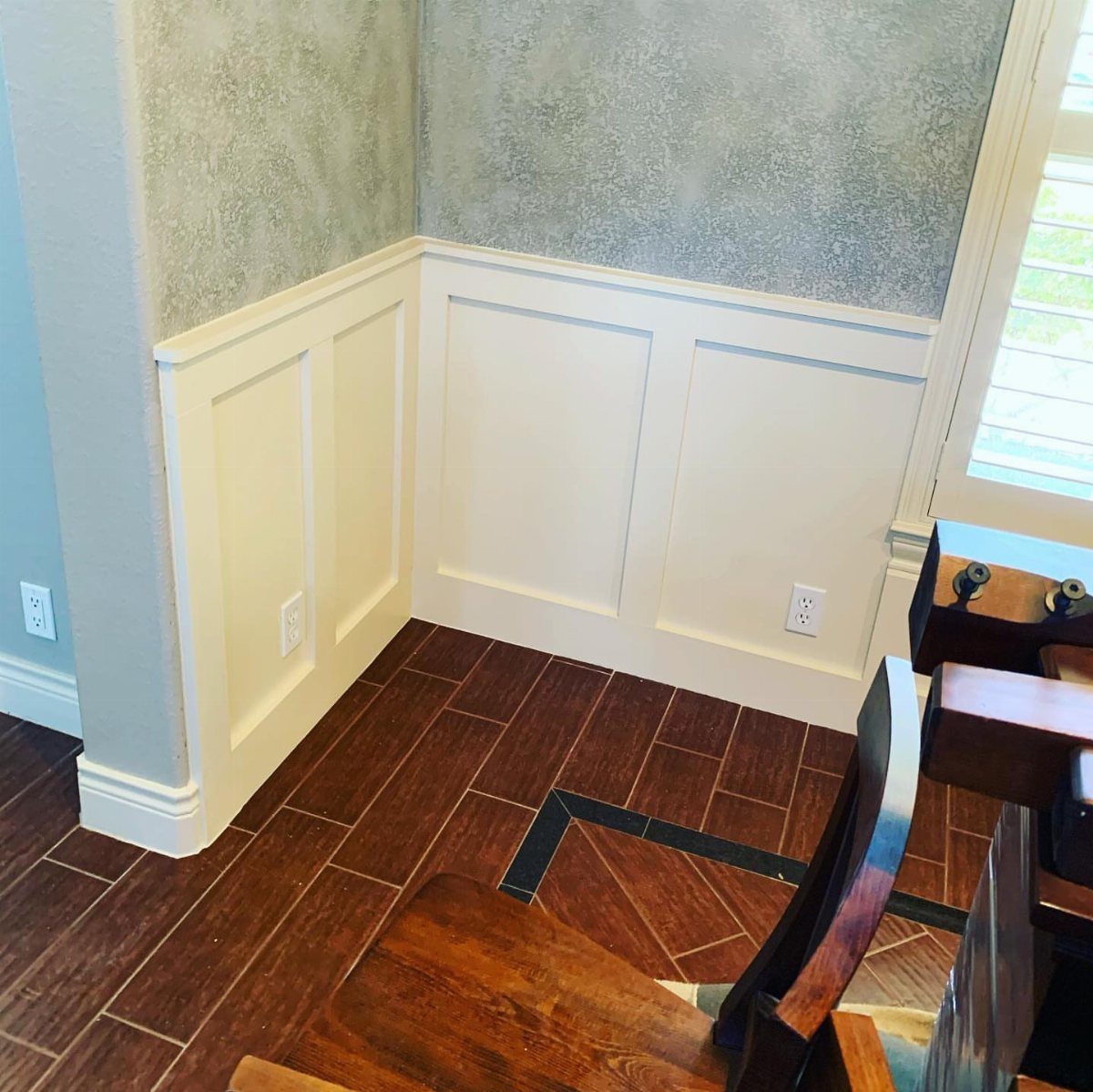
Wainscoting needs a cap, and a chair rail is the easiest one to source. The panels stop at a rail with a flat back, not a true wainscot cap with a groove that overlaps the panel edge.
That detail changes how you trim the top. That overlap matters if the panel material is thin or if chairs will hit below it; without it, the edge can chip.
For a dining room with wooden chair legs, I would check the rail height against the tallest chair you own, then add 2 inches. The protection is only as good as the placement.
DIY Installation Made Easy: Cut, peel, and stick in just 3 simple steps. No special tools required. Effortless installation for a quick and hassle-free experience.
DIY Installation Made Easy: Cut, peel, and stick in just 3 simple steps. No special tools required. Effortless installation for a quick and hassle-free experience.
DIY Installation Made Easy: Cut, peel, and stick in just 3 simple steps. No special tools required. Effortless installation for a quick and hassle-free experience.
5. Chair Rail in Bathrooms
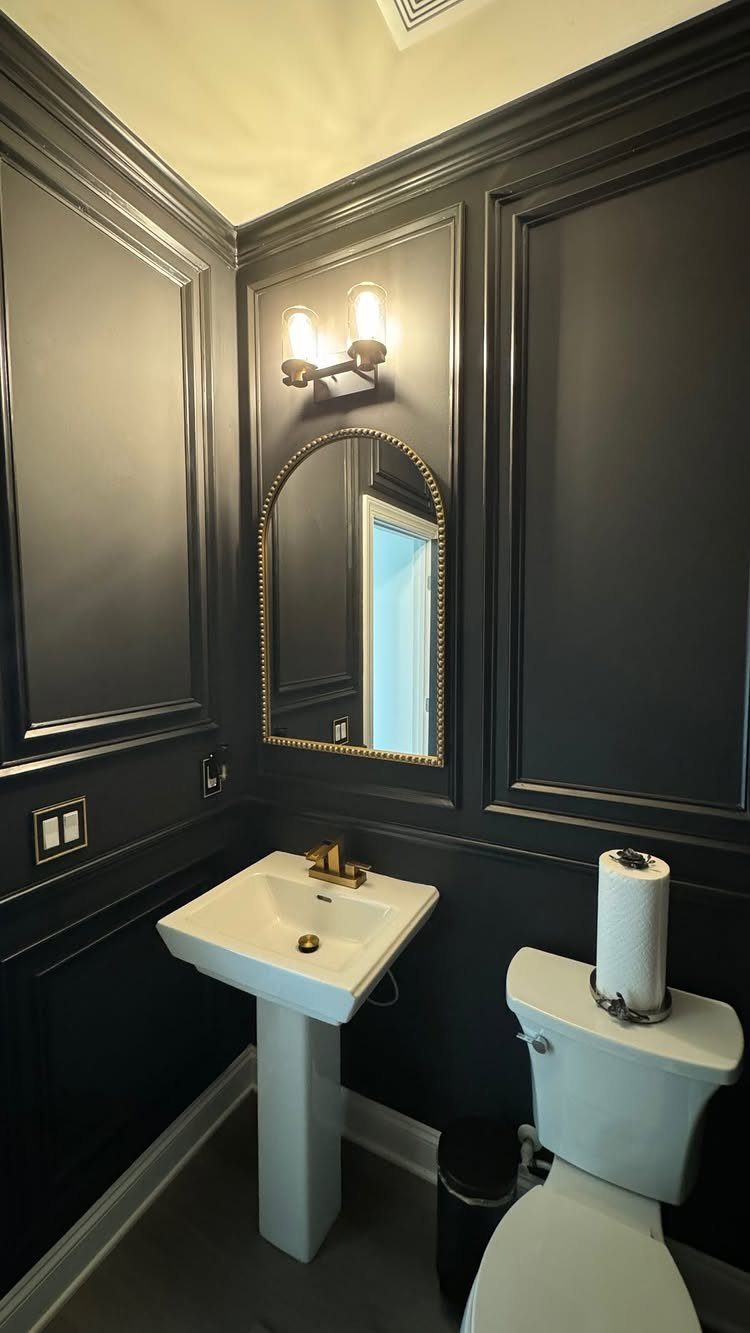
A bathroom chair rail has to survive steam and the occasional splash, so the finish matters more than the profile. Semi-gloss on the panel detailing against matte walls gives a powder room depth without going dark everywhere.
That gloss level also wipes clean. I would not install standard MDF in a full bath; for a powder room with a sink only, it is workable if the ventilation runs.
For the rail itself, solid wood or PVC holds up better than finger-jointed trim at the joints, where water finds its way in.
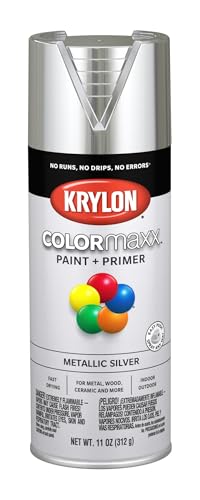
SPRAY PAINT AND PRIMER – Krylon COLORmaxx Spray Paint and Primer provides a smooth application with a brilliant, metallic sheen. This primer and spray paint can be used on wood, metal, wicker, most plastics, glass, plaster/ceramic, fabric, paper and more.
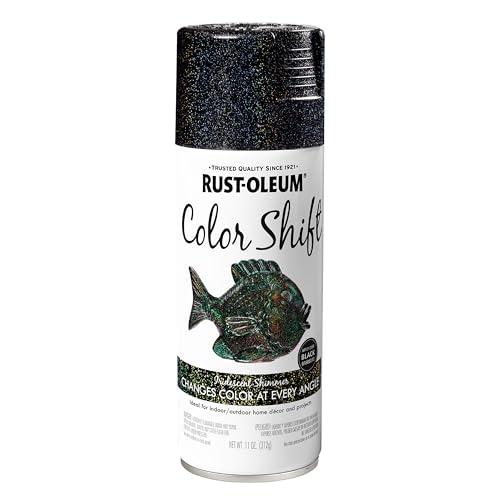
Applies to all surfaces including wood, metal and plastic

ALL-IN-ONE SPRAY PAINT – Krylon All-In-One Spray Paint delivers best in class adhesion, durability, and rust protection. The aerosol spray paint offers a broad color palette with multiple finishes and sheens for indoors and out.
6. Two-tone Wall with Metallic Rail
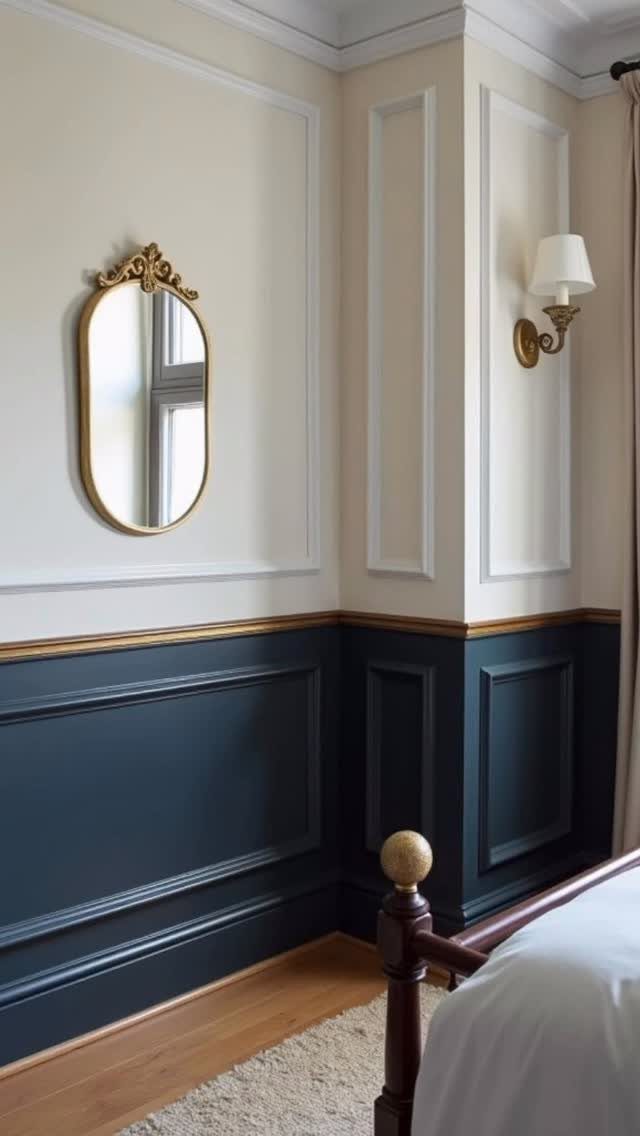
A gold rail does more work than a white one would; it turns the color break into a deliberate moment.
Two-tone walls with chair rail usually play it safe with adjacent neutrals, but the cream and navy here need that metallic line to keep them from looking like a mistake in rental trim.
If you want this effect, buy the rail in a finish you can live with, or plan to prime and spray. Brushing metallic paint on a profile this small leaves streaks that read from across the room.
Spray or a very soft roller saves the finish. For a quieter version, two shades of the same color with a white rail still gets you the architecture without the jewelry.

【High Quality】This black wall molding trim is made of nano PVC material, with high flexibility and finish black paint surface, making the room space more luxurious.DIY manual operation allows you to enjoy more fun.

Product Dimensions: 12"(l)x2"(h)x1"(d), 305mmx50mmx25mm, 10 Pcs/Box.

Premium Flexible PVC with Self-Adhesive: The wall molding trim made from high-quality flexible PVC, this chair rail classic wall molding trim offers a smooth surface with properties. The self-adhesive backing ensures easy application and long-lasting adhesion without fading or deformation over time.
Chair Rail Installation Tips
Mock up the height with scrap wood or a spare strip before you commit. 32 to 36 inches covers most rooms, roughly one-third up from the floor, but tall ceilings can carry it a few inches higher without looking lost.
Pick a height and hold it; measure from a level reference line, not from the floor, since few floors are flat enough to trust.
Pre-finish your stock before cutting if the profile is complicated. A brush in the corner of a detailed molding never looks as clean as the factory face.
Cut test joints at inside corners; walls are rarely square, and the gap shows up worst where two pieces meet. Fasten into studs when you can, and fill nail holes after the glue has set, not before.

Easy Installation: Installation is a snap with our simple 3-step process: cut, peel, and stick. It's quick, effortless, and requires no special tools

EVA Material: Made from high-quality, lightweight EVA foam - up to 90% lighter than wood or PVC moldings, flexible for curved walls and arches, and built for lasting reliability

Product Size: the package includes 1 roll of peel and stick chair rail panel molding, measuring about 19.7 ft x 1.57 inches/ 6 m x 4 cm, which provides you with adequate length to cover large areas; Additionally, its width will well define edge to most applications, enhancing your home decor with minimal effort
Choosing Colors for Chair Rail
White semi-gloss on the rail and baseboards is the default for a reason. It reads as architecture rather than decision, and it survives in almost any room.
But the rail is also a chance to do something else. A stained wood rail brings warmth that paint cannot fake; a contrasting color turns the molding itself into the statement.
If you are working with two wall colors, the rail can match either, match neither, or disappear entirely into the wall color behind it.
Test your colors at the height they will live. Light at 36 inches off the floor is different from light at eye level, and both change through the day.
Buy samples, paint boards, and move them around.
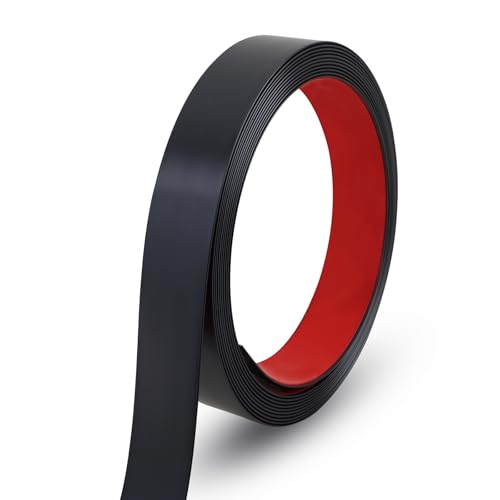
Effortless Apply: Only need to measure and cut, peel off the backing, and press into place


【Material and Appearance】Wall peel and stick molding trim is made of flexible TPE material, which are reliable. It can be used and not easy to fade after installation. Note: not paintable
Materials for Chair Rail
Wood, MDF, PVC, and flexible TPE each answer a different problem. MDF gives the smoothest painted surface but swells at the joints if moisture finds it.
I would keep it out of full bathrooms and anywhere a mop hits regularly.
PVC and polyurethane tolerate damp conditions without complaint. They are harder to paint; the surface needs sanding and the right primer or the finish will chip.
Flexible TPE follows a curved wall, which wood and MDF cannot do without steam and patience.
Water finds its way into the joints of finger-jointed stock, and the swelling shows as a line across the profile.

Includes 3 pre-cut 20"x27" wall molding frames and 2 chair rail trim pieces, Covers 78.7"W x 39.9"H wall area (6.5 ft wide). All pieces feature a peel-and-stick design for easy installation
DIY Installation Made Easy: Cut, peel, and stick in just 3 simple steps. No special tools required. Effortless installation for a quick and hassle-free experience.

Premade Wall Molding Kit: Our wall moldings are pre-cut, eliminating the need for tedious cutting and alignment, simplifying the installation process and making it easier for you to decorate your walls
Visual Impact of Chair Rail
Without it, a tall blank wall can feel like a waiting room. The rail gives the eye a place to rest and the room a sense of proportion that furniture alone cannot supply.
Most of us use it for decoration now, but the practical memory lingers in the height and the heft of the profile.
Today’s rooms usually run a simpler strip with paint matching above and below. Traditional rooms can carry deeper molded profiles, paper, or paneled lower walls.
The rail should read as part of the same decision as everything else in the room, not an afterthought nailed up to hide a crack.
Wall molding is back, and chair rails are the perfect way to dip your toe into the traditional wall treatment," says Larisa Barton, founder of Soeur Interiors. "Chair rails are also a great way to introduce an unexpected accent color into a design.
— Hunker

Ideal for use on glass vases, jars, framed glass, table tops, candle holders and more

Transform ordinary surfaces to a stainless steel finish

Ideal for striping interior/exterior concrete, blacktop, grass, gravel and soil
Frequently Asked Questions
Is chair rail outdated in 2026?
A chair rail only looks stuck in the past when an elaborate white profile cuts between two colors that have nothing to say to each other.
Plain molding, one color above and below, or a clean panel layout all read as current. Square-edged flat stock, slim half-round strips, or molding painted to match the wall itself all read as current.
What is the rule for accent walls?
The wall you choose should follow where your eye already lands and stay inside the colors already in the room, not fight them.
Lighting, sheen, and surface texture all affect how the color reads; the wall should draw attention without fighting the room’s proportions or function.
What colors work well with chair rail?
Crisp semi-gloss white on the rail itself is the safest default; it pairs with almost any wall color and ties the room to the baseboards.
For more interest, stain the rail for warmth, or go metallic if you want the break itself to be the event.
Two-tone walls work best when the colors relate, either as shades of the same hue or as deliberate contrasts with a unifying line between them.