A horizontal slat fence can be built from cedar and a brush over a couple of weekends, or assembled from aluminum in an afternoon and left silent for years.
What separates one choice from the next is not looks but maintenance temperament: whether you schedule a resealing day each spring or want to forget the boundary exists.
The gap dimension alone carries that decision, from 1/4 inch that nearly seals a yard to 1 inch that keeps the breeze and the street in conversation.
1. Composite Horizontal Slat Fence
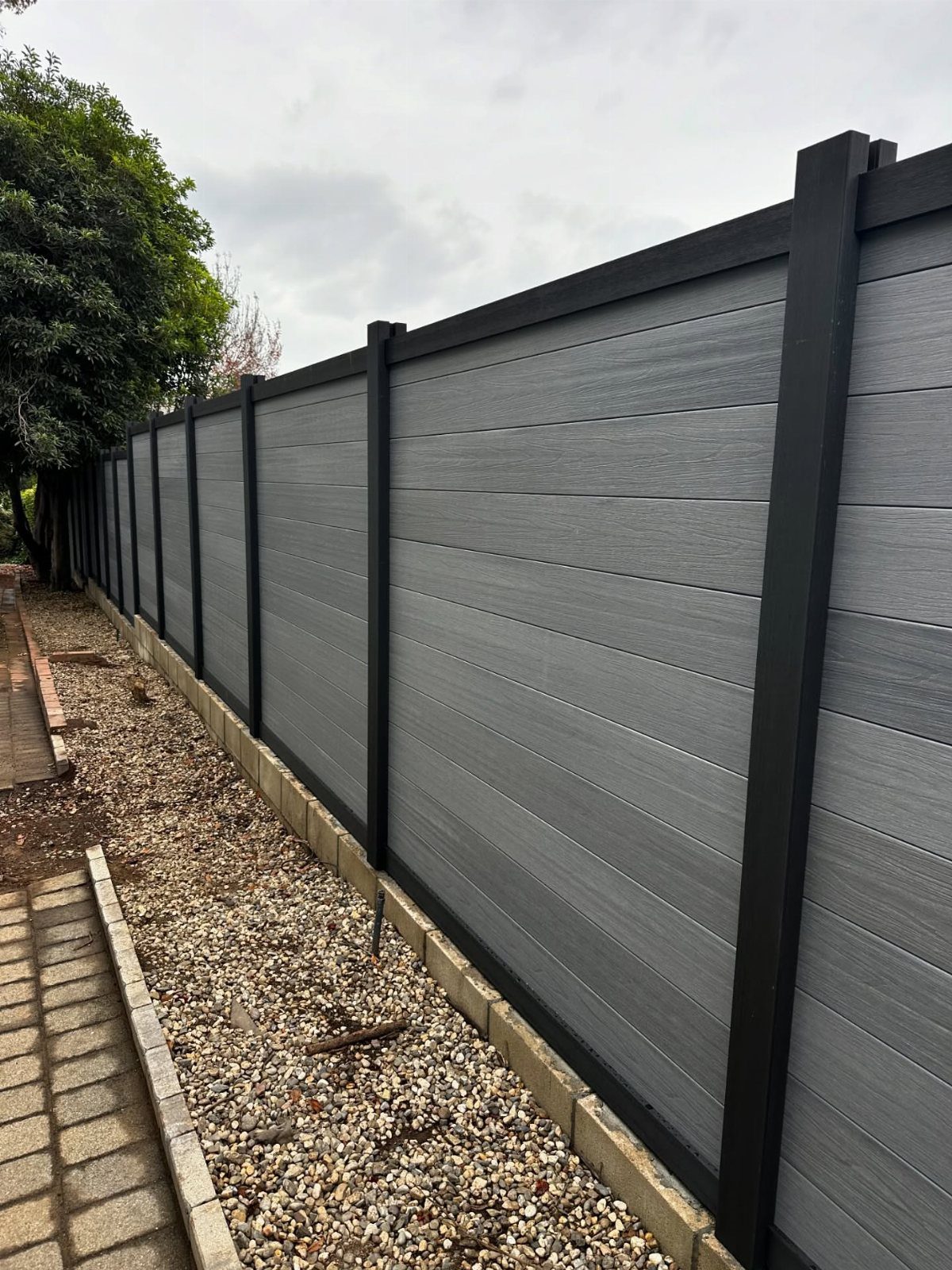
Grey composite slats over black posts give the clean, even look of painted wood without the annual sanding and resealing.
The boards come from a mix of wood fiber and plastic, so rot and insect damage are not part of the maintenance list.
What the choice hinges on is span length. Composite flexes more than solid wood over time, so the distance between posts matters more than it would with cedar or pressure-treated lumber.
Check the manufacturer’s span rating before you set your post spacing, and know that a shorter run will hold shape better than a long one.
This suits the reader who wants the weekend install and the decade of quiet after it, but only if the upfront cost fits a budget that runs higher than basic wood.

Innovative Design: The wooden fence panels posts features a U-channel design—simply attach the brackets to the posts and slide in (3/4" x 5.5") wood planks to lock. Easy DIY installation and plank replacement, even for one person, saving time, effort, and labor costs in the short and long term

EASY ORDERING: Everything you need for your fence project is in the box except for the final post. Only ONE additional post, BL19112, is required for the end of your project. A gate is available by searching BL19111.

REALISTIC WOOD-LOOK WITHOUT THE MAINTENANCE: Beautifully embossed wood-grain boards provide the warm, natural look of real wood in Slate Grey or Walnut Brown — no staining, sealing, or painting required
2. Semi-Privacy Fence
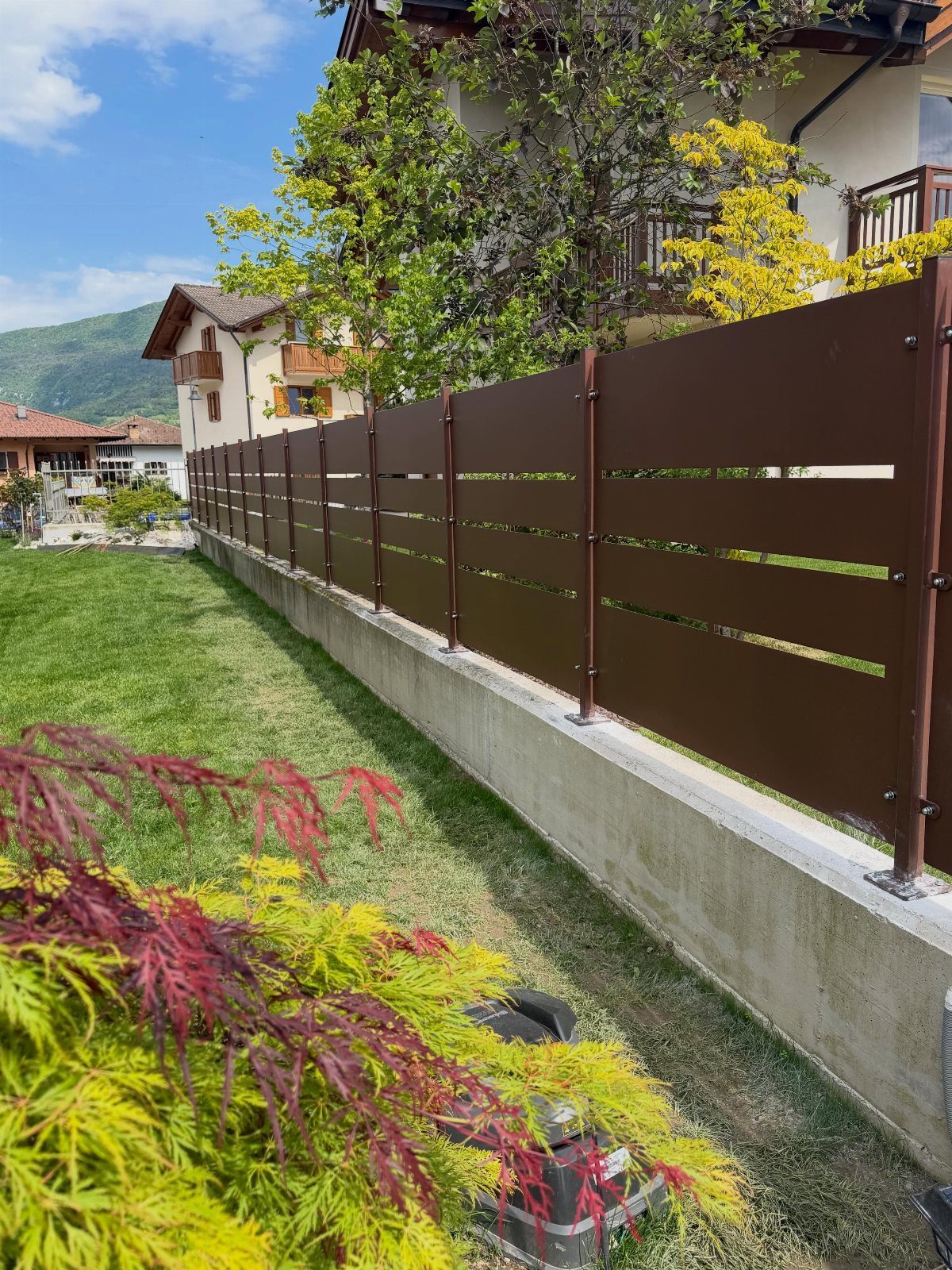
A low concrete wall topped with spaced brown slats blocks the direct sightline without sealing the yard off from light or breeze.
The gap between boards is the variable: 1/4 inch reads as nearly solid from a distance, while 1 inch keeps the conversation open with the street or the neighbor’s lawn.
Wider spacing drops material cost and wind load, both of which matter on a raised wall. Closer spacing, or mixing two widths in alternating rows, adds visual weight without going full privacy screen.
This option wins for corner lots or any yard where the goal is definition more than fortress. The downside is sound: voices and lawnmowers travel through.

Brown Fence Slat - Designed for a 4' high fence, slats are approximately 44.5" in length to accommodate the bottom locking channel and to prevent the slats from being above the top of the fence. (Available Colors: Beige, Black, Brown, Gray, Green, Redwood, Royal Blue, Sky Blue, White)

Quality: These black fence tapes are made of weather resistant PVC material and are designed for long-term use.
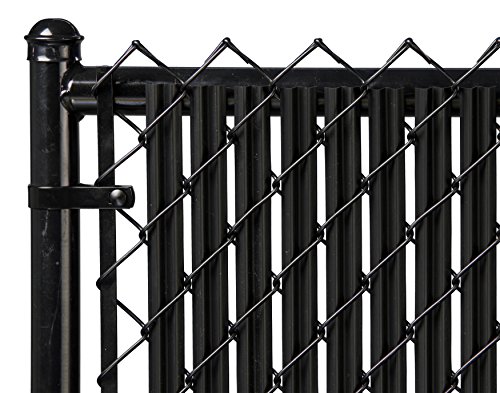
Black Ridged Slats for 4ft chain link are deliberately cut to about 44.5in long. These fence inserts are designed primarily for 4ft 11 or 9 gauge chain link with a two inch diamond. Also works in economy chain link with a larger diamond pattern, but privacy will be less. Slats must be installed correctly and be fully inserted inside the wire mesh of your fence to achieve the desired results. Cannot be used to extend the fence height. Not suitable for fences on a steep slope.
3. Semi-Private Vinyl Fence
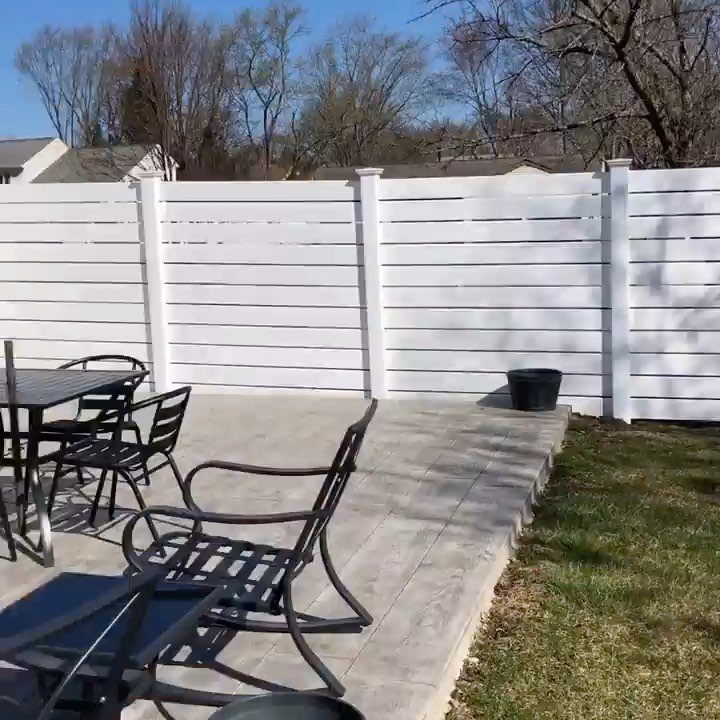
White vinyl laid flat instead of in the usual picket formation reads as more deliberate than the suburban default, and the hose-down maintenance is hard to argue with. No sealing, no splintering, no boards to replace after a wet winter.
The problem is structural honesty. Vinyl in long horizontal runs can bow between posts in heat, so the frame underneath matters more than the face you see.
Ask about steel or aluminum reinforcement inside the rails before you buy, and check that the color runs through the material, not just across the surface cap.
Best for the reader who wants the look finished on Saturday and forgotten by Sunday, in a climate that does not spend August above 90 degrees.

Rail Kit: you will receive 6 white vinyl rails and 6 matching caps that enhance your home's exterior appearance and extend outdoor performance; They add visual interest and a modern touch while blending smoothly with any white architectural scheme

Outdoor Privacy Screens: Our horizontal slat vinyl fence panel set includes 1 panel measuring 5ft x 4ft, ideal for concealing outdoor items like trash bins, pool equipment, and air conditioners, keeping your backyard neat and attractive while meeting HOA guidelines.

Gray Fence Slat - Designed for a 6' high fence, slats are approximately 68.5" in length to accommodate the bottom locking channel and to prevent the slats from being above the top of the fence. (Available Colors: Beige, Black, Brown, Gray, Green, Redwood, Royal Blue, Sky Blue, White)
4. Evenly Spaced Slats in Neutral Colors
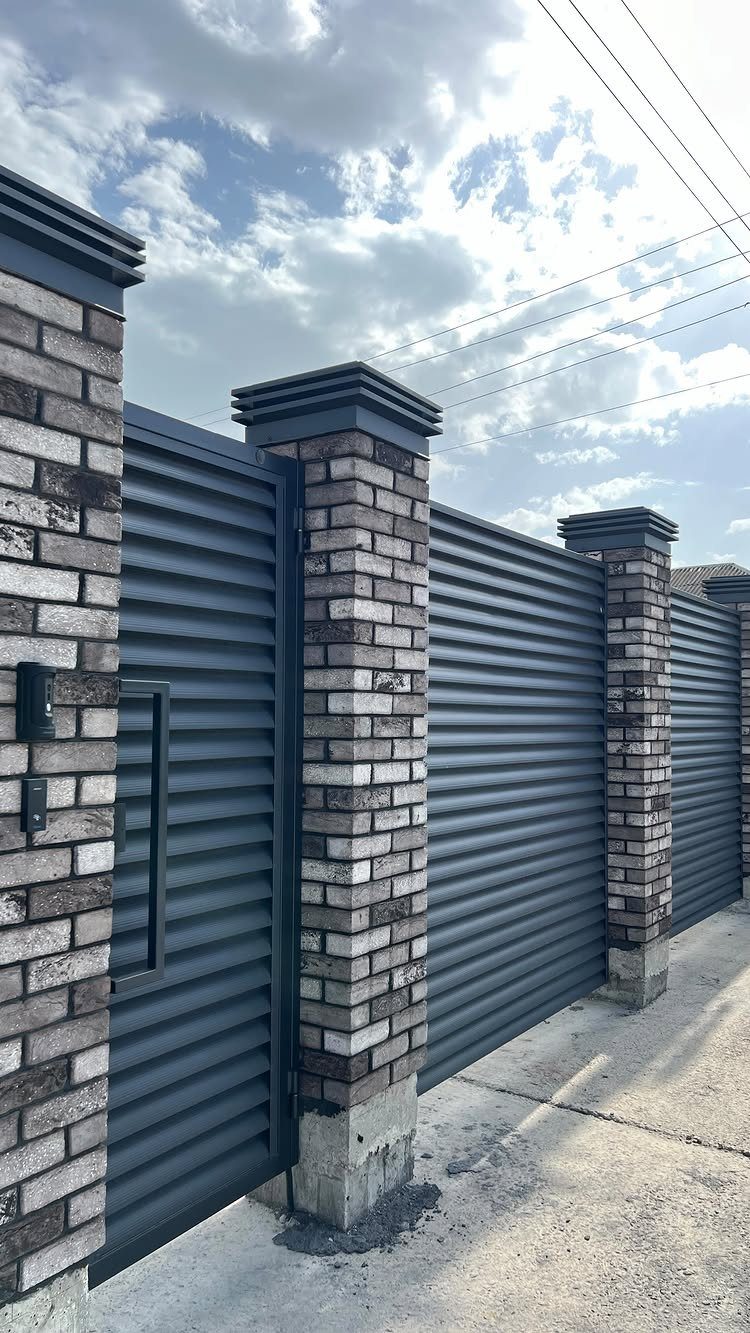
Dark grey slats with even gaps, set between brick pillars, let the masonry do the visual work while the fence itself stays quiet.
The neutral color does not compete with landscaping or house paint, and the regular spacing reads as intentional rather than cheap.
The brick columns are doing more than looking traditional. They carry the lateral load that long horizontal spans create, especially in climates where frost heave moves posts.
If you are skipping the pillars, plan on steel or concrete posts set deeper than usual.
This approach suits urban lots where the fence sits close to the sidewalk and the goal is to belong to the block, not announce itself.
The downside is warmth: grey and brick read cool until vines or planting soften the line.

【Aluminum Alloy Material, Sturdy & Durable】The entire frame is constructed with high-strength aluminum alloy, offering exceptional weather resistance to withstand long-term outdoor exposure to sun, rain, and harsh conditions. The matte black finish resists fading while enhancing rust-proof performance, reducing maintenance needs.

TRUE ALL-ALUMINUM — BUILT FOR LONG-TERM VALUE: Ordinary steel or mixed-metal products can be progressing from surface corrosion to rust-through—often reported online within 0.5–2 years. So this is not simply about cosmetic maintenance—removing rust and repainting the surface. Once corrosion progresses to rust-through, the metal itself has deteriorated, potentially compromising the structural integrity and eventually requiring replacement of the affected component or structure. LukLoy post is built with a true all-aluminum structure for lasting outdoor over 30 years. it resists weathering, fading, and everyday exposure with less maintenance — a smarter long-term investment for your home.

TRUE ALL-ALUMINUM — BUILT FOR LONG-TERM VALUE: Ordinary steel or mixed-metal products can be progressing from surface corrosion to rust-through—often reported online within 0.5–2 years. So this is not simply about cosmetic maintenance—removing rust and repainting the surface. Once corrosion progresses to rust-through, the metal itself has deteriorated, potentially compromising the structural integrity and eventually requiring replacement of the affected component or structure. LukLoy post is built with a true all-aluminum structure for lasting outdoor over 30 years. it resists weathering, fading, and everyday exposure with less maintenance — a smarter long-term investment for your home.
5. Aluminum Horizontal Slat Fence
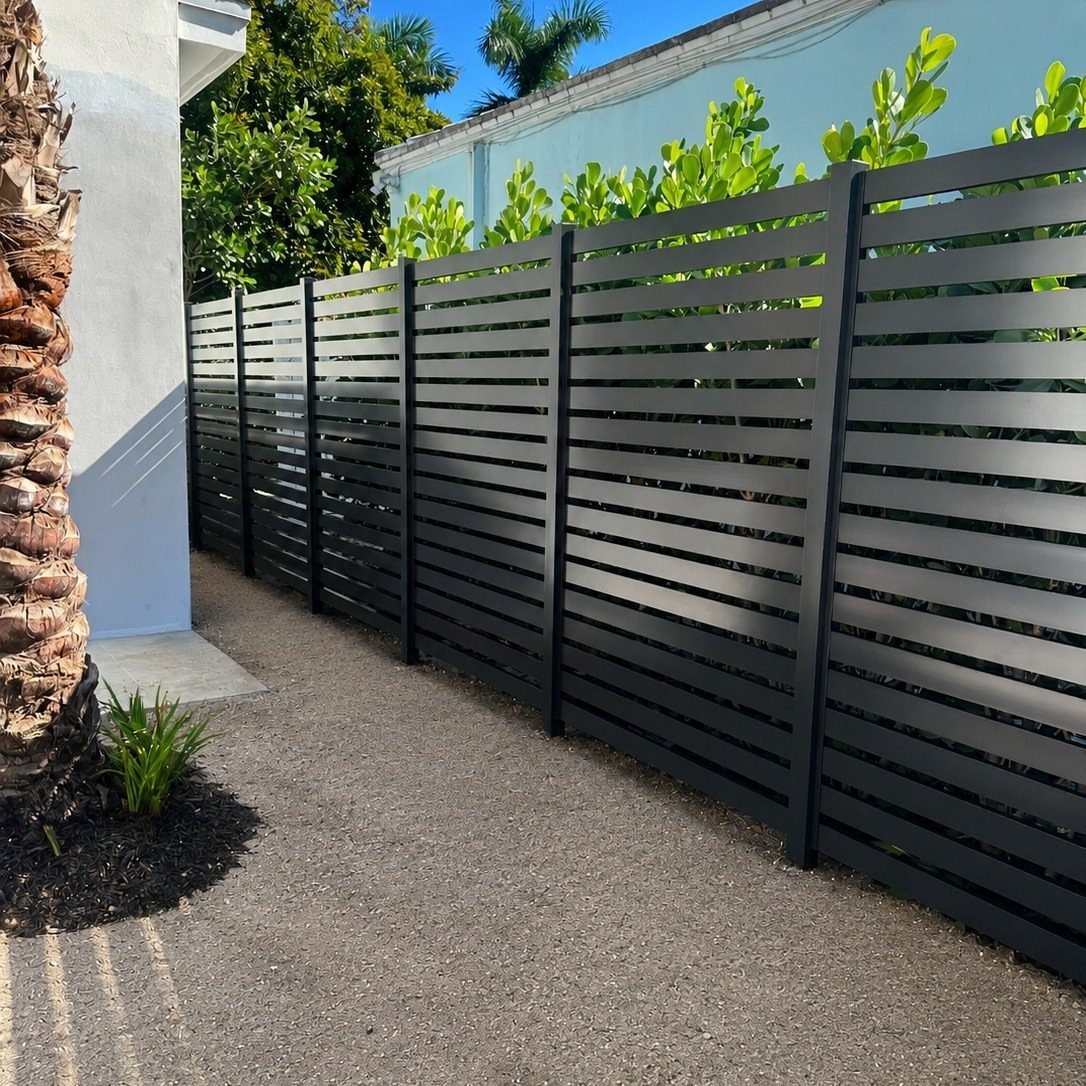
Black aluminum slats snap into channels between posts, which means no visible fasteners and no wood movement to account for.
Heights run from 2 feet for a garden boundary to 8 feet for full screening, and the powder coat holds color without the chalking that painted steel develops.
Installation is modular: slats drop into pre-spaced rails, with plastic or metal spacers setting the gap. A single person can manage a panel once the posts are plumb and set.
For the reader counting weekends more than dollars, the time saved on install and the zero maintenance after are the return. Pool enclosures and utility screens are where this material earns its keep.

DIMENSIONS: Each panel measures 32” H x 48” W

Order is for a 4-Pack of fencing, giving a total of 32 feet of fencing in length

Modular Design: Exclusively for use with the Backyard Discovery Privacy Wall, add-on panels create longer walls or corners for added seclusion, while withstanding winds up to 75 mph when properly anchored
6. Wooden Slats with a Metal Frame
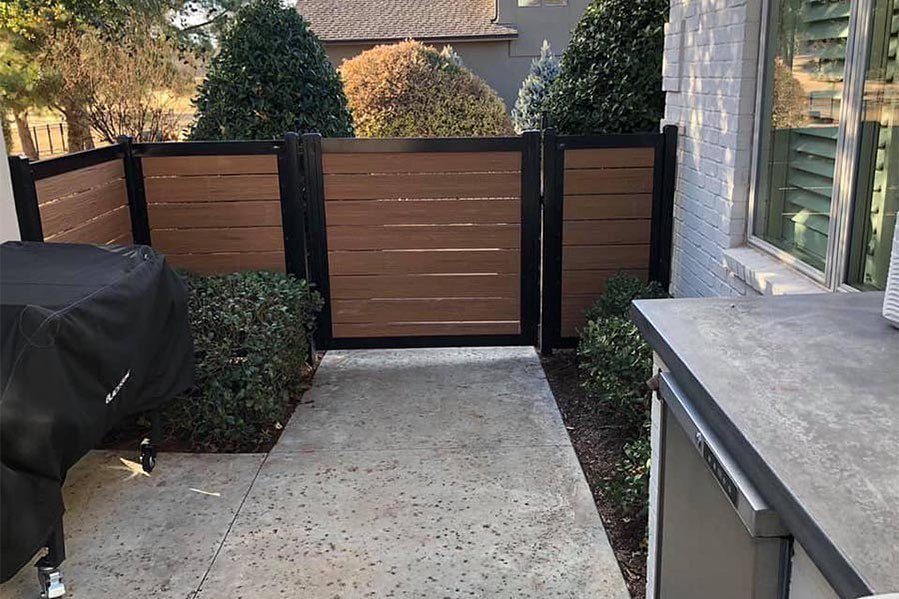
Warm horizontal boards inside a black metal frame give the eye two textures to read: the organic grain of wood against the machined straight edge of steel.
The metal carries the structure, so the wood can be thinner and more varied than it would need to be in a self-supporting fence.
The pairing works in both directions. A wood-heavy version, with metal only at posts and top rail, softens toward residential.
More metal channel and less visible board shifts commercial, toward restaurant patios or office courtyards.
For the home install, the move is to buy the frame as a kit and source your own slats, which lets you control wood species and finish. Cedar holds stain; ipe weathers silver without it.
The metal will outlast the first generation of wood, so plan on slat replacement down the road as a feature, not a failure.

Premium Material🌱 The panels are crafted from wood-plastic composite (WPC) with realistic wood grain texture, while the posts are made of high-strength aluminum alloy. The WPC material resists cracking and requires no maintenance, completely overcoming the drawbacks of natural wood. The aluminum alloy posts offer excellent weather resistance. Together, they create a more durable and premium outdoor solution compared to traditional products.

Premium Material🌱 The panels are crafted from wood-plastic composite (WPC) with realistic wood grain texture, while the posts are made of high-strength aluminum alloy. The WPC material resists cracking and requires no maintenance, completely overcoming the drawbacks of natural wood. The aluminum alloy posts offer excellent weather resistance. Together, they create a more durable and premium outdoor solution compared to traditional products.

PET & CHILD SAFE: Create a safe outdoor play area for fur babies and children. Rest assured that this fence will create a sturdy barrier to protect your family.
7. Natural Wood Horizontal Slat Fence
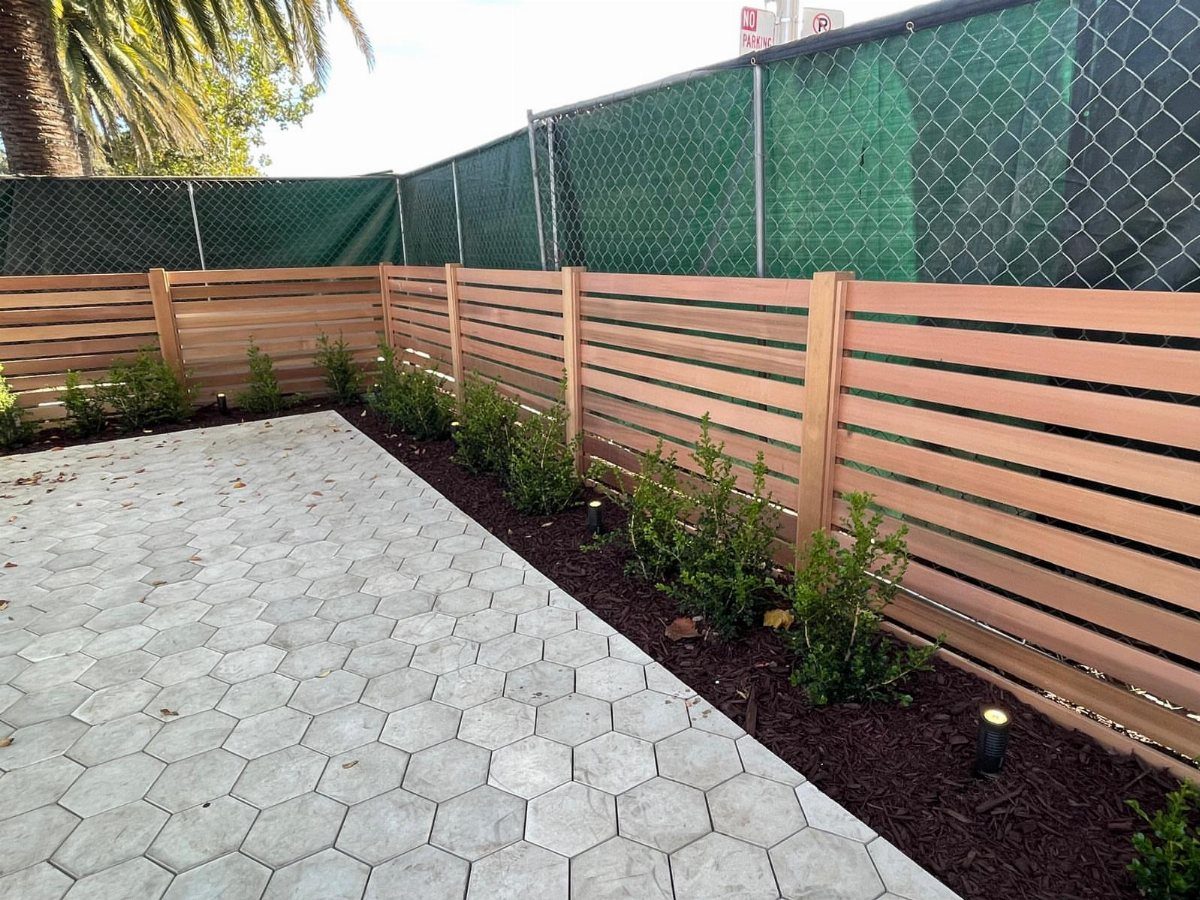
Cedar or redwood laid flat gives a warmth that composite or metal never quite matches, and the grain only looks better as it silvers.
A low fence can still mark a patio as its own space without blocking conversation across it.
Treat it before installation, not after: end cuts soak up water fastest, and a brush-on sealant there adds years. Reapply finish on a schedule that matches your local rainfall, and expect some boards to cup or check regardless.
That movement is part of the look, though it annoys some homeowners.
Best for someone who values character over perfection and does not mind a little maintenance in exchange for a fence that looks like it grew there.

1.Dimensions: Length: 246 feet; Includes: 246 feet of fence privacy strip, 210PCS buttons, a hole punch.

Neighbor Privacy, Not Blackout: Blocks direct line-of-sight while allowing airflow — designed for comfortable backyard privacy, not a solid wall or tarp.
Black Ridged Slats for 6ft chain link are deliberately cut to about 68.5 inches long. These fence inserts are designed primarily for 6ft 11 or 9 gauge chain link with a two inch diamond. Also works in economy chain link with a larger diamond pattern, but privacy will be less. Slats must be installed correctly and be fully inserted inside the wire mesh of your fence to achieve the desired results. Cannot be used to extend the fence height. Not suitable for fences on a steep slope.
8. Integrated Post Lighting
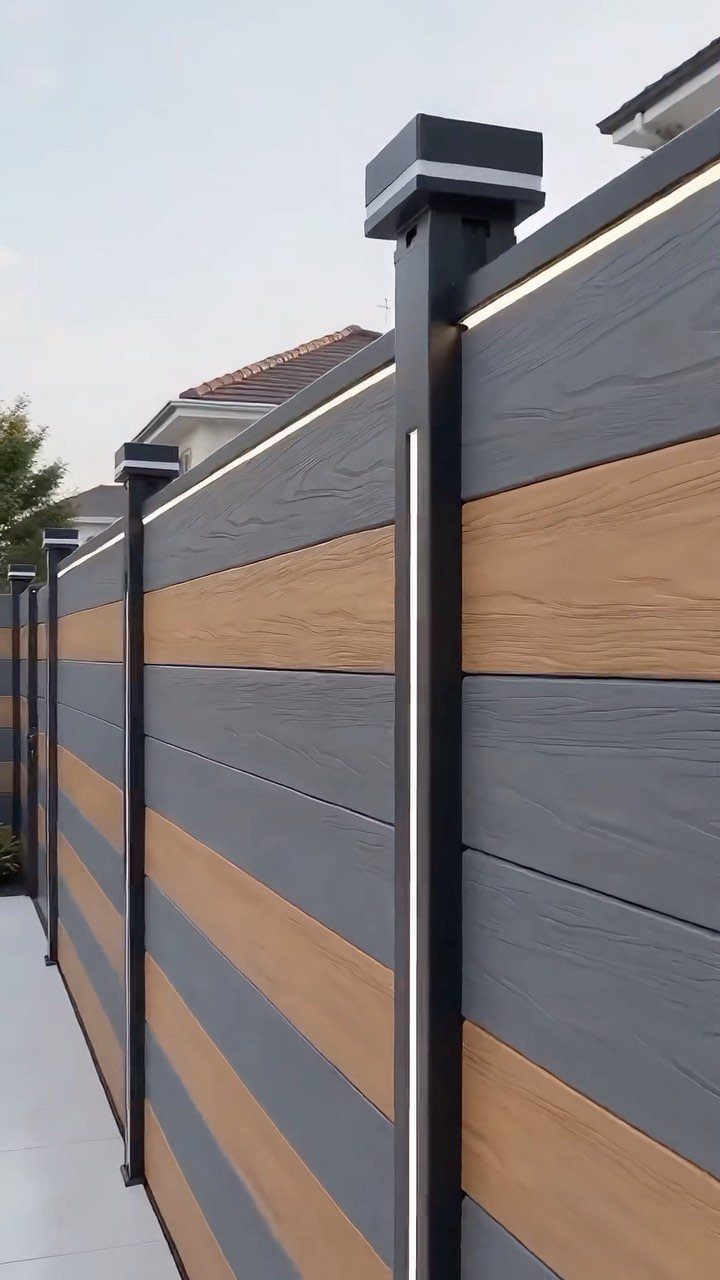
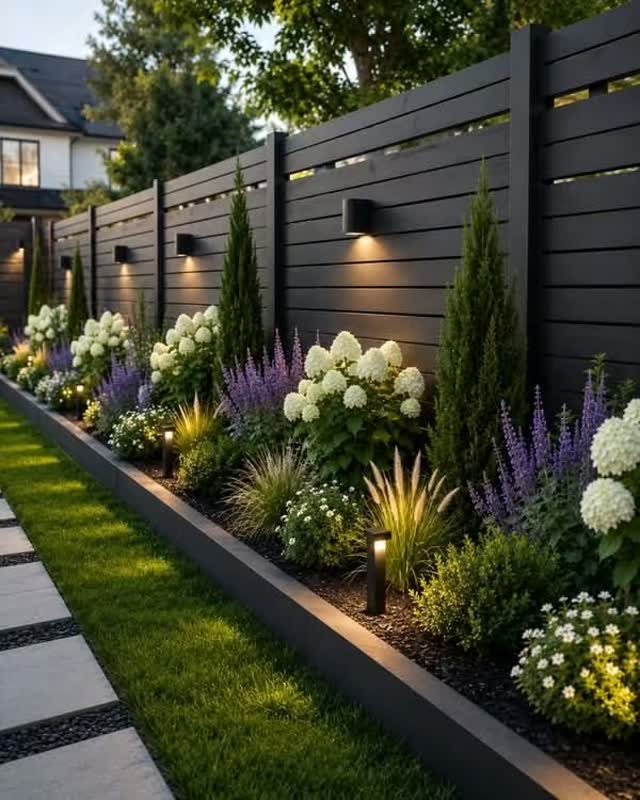
The LED strips running up those dark posts turn a boundary into a light fixture, which matters when your outdoor space doubles as evening living space.
Solar caps are simpler to add later but dimmer and less reliable; low-voltage wiring run during construction gives steady output and lets you put the switch where you actually use it.
Plan the transformer location before you dig post holes. It needs a weatherproof outlet and some math: LED strips list watts per foot, and running too long a line from one transformer browns out the far end.
Split the run if your fence stretches too far between posts.
Worth the upfront labor for anyone who entertains after dark or comes home to a dark yard. Skip it if your fence sits far from the house and running cable means trenching through established plantings.

Green Fence Slat - Designed for a 4' high fence, slats are approximately 44.5" in length to accommodate the bottom locking channel and to prevent the slats from being above the top of the fence. (Available Colors: Beige, Black, Brown, Gray, Green, Redwood, Royal Blue, Sky Blue, White)

MATCHING TONGUE AND GROOVE REPAIR: Swap out a warped, damaged, or missing picket without replacing your entire privacy panel. These tongue and groove pickets interlock with your existing white vinyl fence panels, so repaired sections blend in rather than standing out.

Sufficient Quantity: our product package includes 4 x Vinyl pocket rails; These are precision-crafted and come in an aesthetic white color adding value and elegance to your property; Trust our quality and design to provide your property with an attractive, durable and secure construction
Material Options
Wood, aluminum, composite, and vinyl each carry a different logic for a horizontal fence.
Cedar and redwood show off their grain and warm up a yard fast, though you’ll need to reseal them on a rhythm that matches how much rain you get.
I’d pick aluminum for a pool enclosure or utility screen where zero maintenance after install matters most. For a residential yard where character counts, wood inside a metal frame lets you replace slats later without rebuilding the whole fence.

【Aluminum Alloy Material, Sturdy & Durable】The entire frame is constructed with high-strength aluminum alloy, offering exceptional weather resistance to withstand long-term outdoor exposure to sun, rain, and harsh conditions. The matte black finish resists fading while enhancing rust-proof performance, reducing maintenance needs.

【Aluminum Alloy Material, Sturdy & Durable】The entire frame is constructed with high-strength aluminum alloy, offering exceptional weather resistance to withstand long-term outdoor exposure to sun, rain, and harsh conditions. The matte black finish resists fading while enhancing rust-proof performance, reducing maintenance needs.

TRUE ALL-ALUMINUM — BUILT FOR LONG-TERM VALUE: Ordinary steel or mixed-metal products can be progressing from surface corrosion to rust-through—often reported online within 0.5–2 years. So this is not simply about cosmetic maintenance—removing rust and repainting the surface. Once corrosion progresses to rust-through, the metal itself has deteriorated, potentially compromising the structural integrity and eventually requiring replacement of the affected component or structure. LukLoy post is built with a true all-aluminum structure for lasting outdoor over 30 years. it resists weathering, fading, and everyday exposure with less maintenance — a smarter long-term investment for your home.
Installation Tips
Measure the run before you buy anything, and check local zoning laws and permit requirements before you dig.
Post spacing depends on the material. Composite flexes over distance, so shorter runs hold shape better than long ones.
Aluminum systems come with pre-spaced rails and plastic or metal spacers that fix the gap between slats, and once your posts are plumb and set, one person can handle a panel alone.
Surface mount posts come in 6 foot lengths; bury them in the ground and you’ll want the 8 foot option.

1,Outdoor Privacy Screen with Planters: Create a private oasis with our premium cedar privacy screen featuring built-in planters. The elegant design blocks unwanted views while allowing you to grow lush greenery. Made from natural cedar wood that enhances any outdoor space. Perfect for creating a peaceful retreat on your patio, deck, or backyard. Enjoy both privacy and natural beauty with this stylish and functional solution.

White Ridged Slats for 4ft chain link are deliberately cut to about 44.5 inches long. These fence inserts are designed primarily for 4ft 11 or 9 gauge chain link with a two inch diamond. Also works in economy chain link with a larger diamond pattern, but privacy will be less. Slats must be installed correctly and be fully inserted inside the wire mesh of your fence to achieve the desired results. Cannot be used to extend the fence height. Not suitable for fences on a steep slope.
Order is for a 4-Pack of fencing, giving a total of 32 feet of fencing in length
Design Versatility
Horizontal slats read as more deliberate than vertical pickets, and the orientation creates flow that makes a space feel larger.
Spacing is the main variable.
Color runs from warm cedar and redwood through neutral greys to black powder coat.
The pairing of wood inside a black metal frame shifts between residential and commercial depending on the ratio: more wood softens, more metal channel hardens.
Cost Considerations
Aluminum sits at the higher end of upfront material cost but pays back in time saved on install and zero maintenance after.
Composite runs higher than basic wood upfront. The return is a decade of quiet without annual sanding and resealing.
Vinyl cleans up with a hose, which is hard to beat for upkeep, though surface-cap color wears through faster than color that runs the full depth of the material.
Wood is the cheapest entry point but carries the highest lifetime cost in resealing, staining, and eventual slat replacement. Plan on that replacement as a feature of a metal-framed design, not a failure.
Integrated low-voltage lighting adds upfront labor and the cost of a weatherproof outlet, plus transformer math.
Frequently Asked Questions
What is a fence with horizontal slats called?
A horizontal fence. The slats run side to side instead of up and down, which gives the yard a wider, more modern look than traditional vertical pickets.
Most styles use evenly spaced boards, though some alternate widths or mix materials for variation.
What is the cheapest way to build a horizontal fence?
Pressure-treated pine costs less upfront than cedar, composite, or metal, though it needs more maintenance over time. Wider gaps between slats mean fewer boards to buy and less resistance when the wind picks up.
A shorter fence also saves: 4 feet of pine runs far less than 6 or 8 feet of the same board.