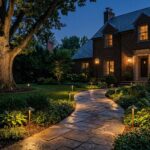
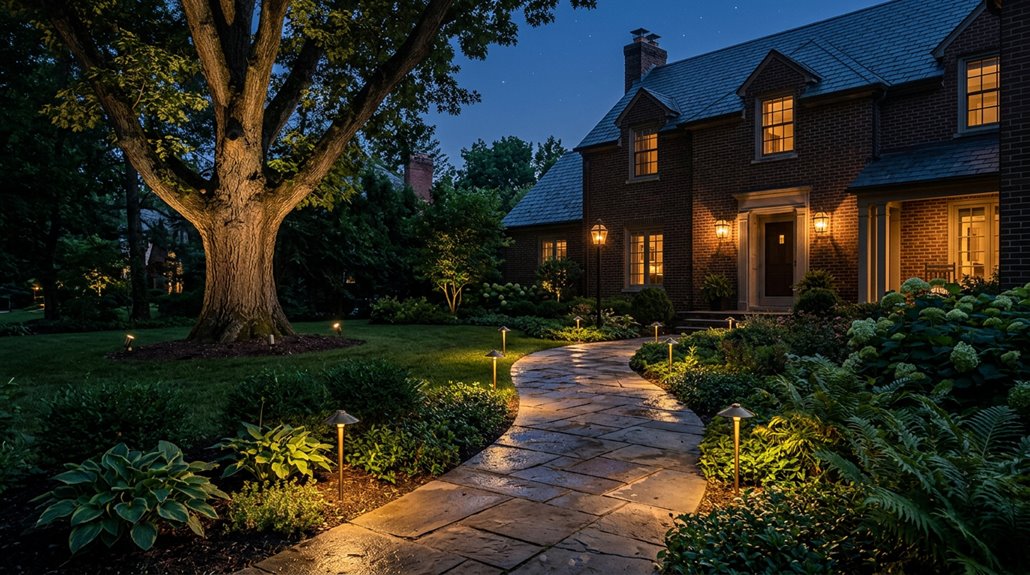
You’ll typically pay $2,000–$6,000 for a complete professional outdoor lighting setup, with most homeowners landing around $3,500–$5,000. Expect $100–$200 per fixture installed, though solar options run $50–$200 without trenching costs. Labor eats 40–60% of your budget, so a 10-light low-voltage system might cost $1,000–$2,000 while line-voltage work jumps 30–50% higher. DIY can slash costs under $200 per fixture if you’re handy, but you’ll still need a licensed electrician for 120V systems in most areas. Hidden expenses like trenching ($5–$13 per foot), transformers ($150–$300), and retrofitting around existing landscaping add significant costs to projects.
Size matters: small yards need 8–12 fixtures ($1,200–$2,500), medium spaces run 15–25 ($2,500–$5,000), and full-property installs hit $5,000–$15,000+.
These factors directly impact your final cost. Trenching adds substantial per-foot expenses, transformers require significant upfront investment, and working around established landscaping requires additional labor. Understanding these components helps you create an accurate budget before work begins.
Average Cost to Install Outdoor Lighting in 2026
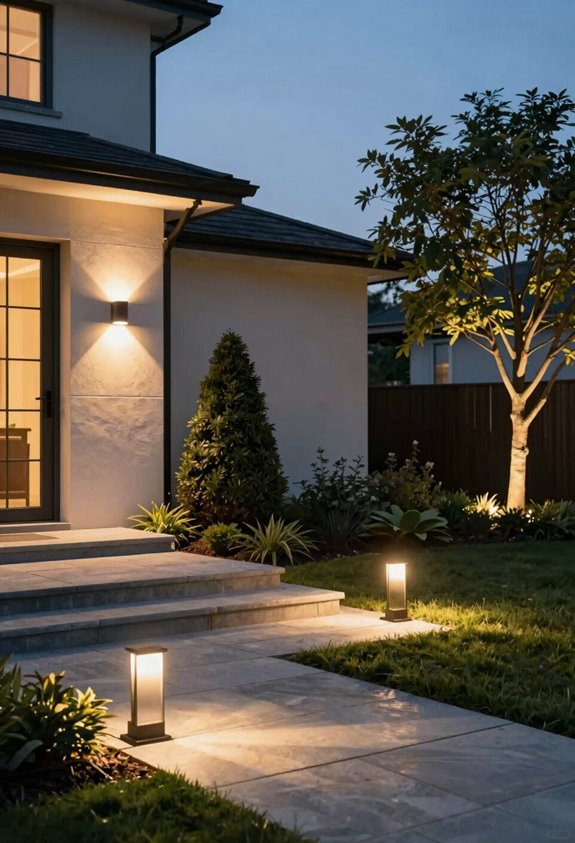
How much should you expect to pay for outdoor lighting in 2026?
The national average runs $2,000–$6,000, with most folks landing around $3,500–$5,000 for a complete setup. Your per-fixture cost typically hits $100–$200 installed, though DIY options are available under $200 each.
Where your money goes:
- Labor costs account for 40–60% of professional installation costs
- Hardwired systems require licensed electricians
- Low-voltage systems need a transformer, which adds modest labor costs
A simple 60-foot walkway costs $400–$1,500. Decks, pools, or multi-zone setups push past $5,000 quickly. Solar fixtures run $50–$200, but low-voltage systems provide greater reliability than solar options, which frequently require replacement.
What Determines Your Outdoor Lighting Installation Costs
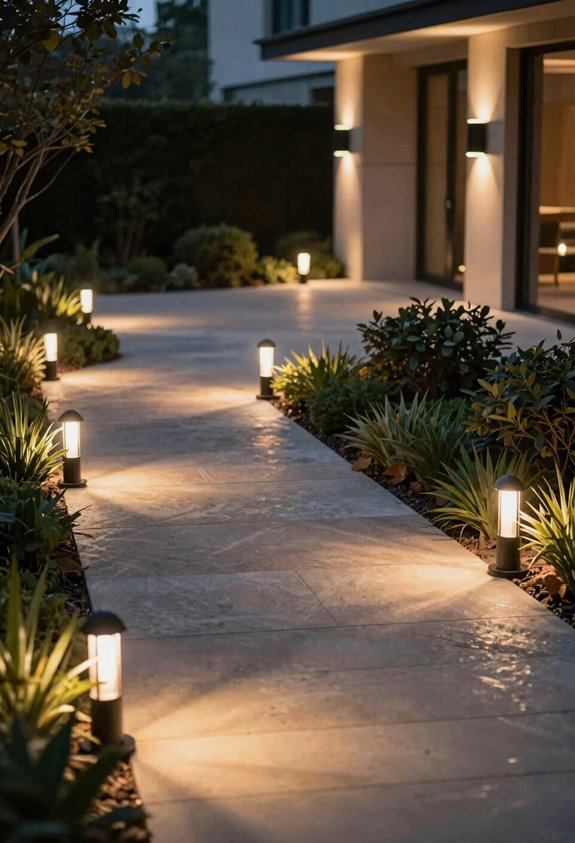
I want to break down what actually drives your outdoor lighting bill, because I’ve seen too many homeowners get surprised by costs they didn’t anticipate. The two biggest factors you’ll face are how many fixtures you’re installing and what power source you’re choosing. These decisions will significantly impact your budget before you even pick up a shovel. Let me walk you through both so you can plan smarter and avoid unexpected expenses.
Fixture Count Impact
The number of fixtures you choose can make or break your budget. I learned this the hard way when I installed twelve pathway lights instead of six, and understanding this impact before you start shopping will save you money.
Each fixture adds purchase price, wiring, and installation labor. Labor cost gets allocated per fixture, so your fixture count directly drives total costs. I’ve done this several times and underestimated how quickly six lights become twenty.
| Fixture Count | Typical Total Range | Per Fixture Average |
|---|---|---|
| 6 fixtures | $600–$1,200 | $100–$200 |
| 10 fixtures | $1,000–$2,000 | $100–$200 |
| 20+ fixtures | $2,000–$4,000+ | $100–$200 |
| 40+ fixtures | $5,000+ | $125–$250 |
The per fixture price stays fairly steady, but coordination gets trickier as your count increases. Plan your layout carefully. Staying within budget becomes straightforward when you determine your fixture count and total needs upfront.
Power Source Options
What you choose to power your lights might matter more than the fixtures themselves. This decision significantly affects your overall system performance and costs.
Your power options break down like this:
- Solar-powered ($50–$200 per light): No wiring required, but output is dimmer and shade reduces performance. Poor placement diminishes effectiveness.
- Low-voltage hardwired (12V): About $100–$200 per light plus trenching costs. You’ll need a transformer, and installation is straightforward.
- Line-voltage (120V): The most labor-intensive route. Expect 30–50% higher labor costs and mandatory licensed electricians.
Solar minimizes labor costs but raises fixture prices. Hardwired and line-voltage systems increase both labor and wiring expenses. Your choice depends on your yard’s sun exposure, budget constraints, and willingness to handle trenching work.
Power Source Costs: Solar, Hardwired, and Battery Compared
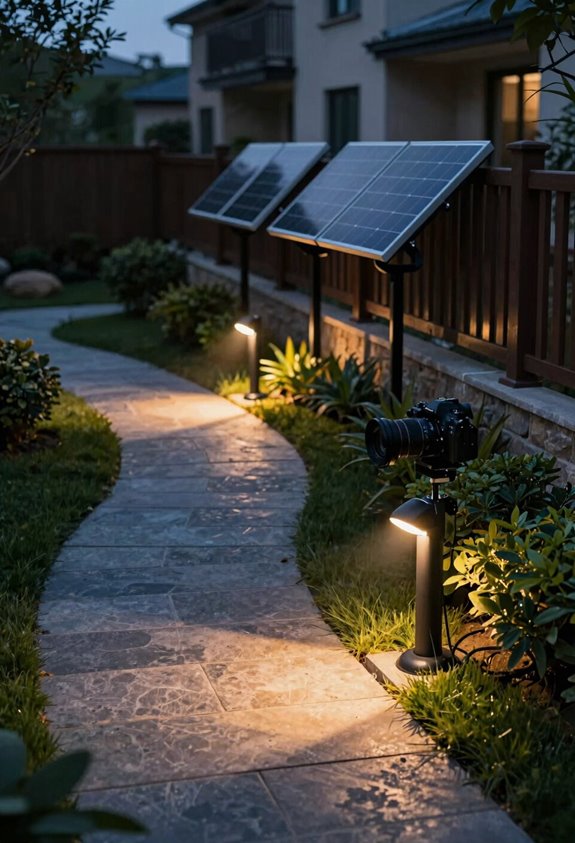
I’m breaking down exactly what you’ll pay for each power source, because I’ve made the mistake of assuming they’re all roughly equal. They’re not. Solar fixtures run $50–$200 each with no trenching, hardwired lights hit $100–$200 plus electrician fees, and battery-powered options fall at $50–$150 but need regular upkeep. This comparison helps you match your budget to your actual needs, not just the sticker price.
Solar Fixture Pricing
Choosing a power source for your outdoor lights isn’t as complicated as it initially appears. Solar fixtures typically run $50 to $200 per light, making the installation cost surprisingly manageable compared to other options. You’ll skip the transformer entirely, which low-voltage systems require, and avoid the trenching labor that drives up expenses. Solar works well for paths, gardens, and accent lighting where you want simplicity.
What makes solar lighting appealing for beginners:
- No electrical wiring or professional help needed, so you control the timeline
- Zero ongoing electricity costs
- Flexible placement anywhere sun reaches, unlike hardwired or battery-powered alternatives
Shaded yards or cloudy climates can limit brightness and reliability, which are important factors to consider before installation.
Hardwired Installation Costs
How does hardwired lighting stack up when you’re ready to move beyond solar. Hardwired installation runs $100 to $200 per fixture. Labor constitutes a significant portion of that budget. You’re not just buying lights; you’re hiring licensed electricians, burying wire, and installing junction boxes to meet code. This approach delivers measurable benefits. Unlike solar, your voltage stays steady through storms and winter gloom. The transformer you choose matters significantly; it must handle your total fixture load, or you’ll face dim spots and callbacks. Factor in trenching length, wire runs, and fixture count when budgeting. LED hardwired fixtures last years longer than solar, and you won’t experience performance drops on cloudy days.
Battery-Powered Options
What happens when you want reliable light without tearing up your yard? Battery-powered fixtures offer a practical middle ground worth considering.
The installation cost stays low, roughly $100–$300 for a small DIY setup, since you’re skipping trenching entirely. Each light runs $50–$150, depending on features you actually need.
Maintenance costs, however, add up significantly. I’ve forgotten to recharge batteries before gatherings multiple times, which taught me valuable lessons about planning ahead.
- You’ll need a charging station or replace batteries constantly, like accumulating dead AAs in a kitchen drawer
- Battery wear pushes long-term costs above solar or hardwired options
- DIY setup takes hours, not days
Battery-powered lights deploy fastest, but the ongoing expense of battery replacement and charging maintenance should factor into your budget calculations.
How Fixture Count Affects Your Installation Price
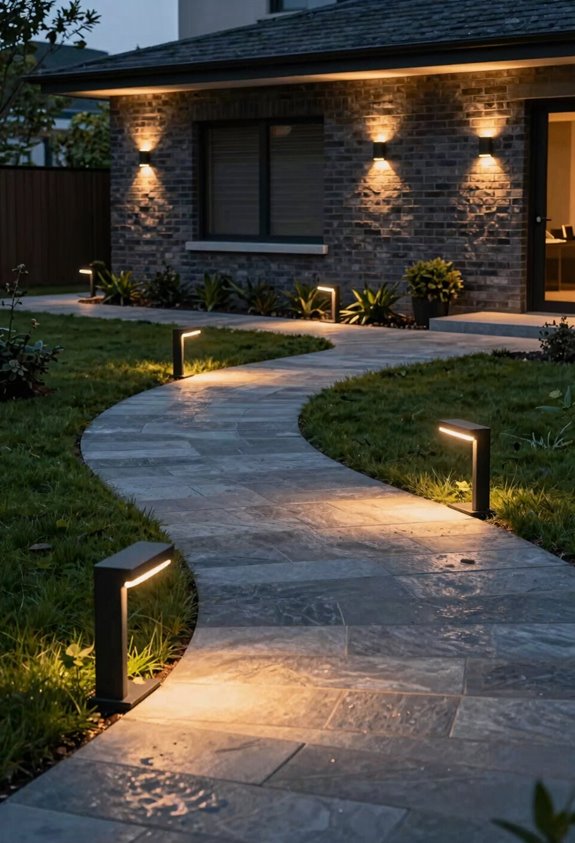
Why does adding just a few more lights sometimes blow your budget wide open? Fixture count drives everything in your installation costs.
Your installation cost climbs because each light needs wiring, trenching, and time. Adding six fixtures costs significantly more than four, not just slightly more as many assume.
Here’s how the math breaks down:
- Per-fixture cost runs $50–$150 for basic units
- Total project cost per fixture lands at $103–$207 once labor costs add up
Small projects (8–12 fixtures): roughly $1,200–$2,500
Mid-size (15–25 fixtures): around $2,500–$5,000
Labor costs scale quickly. Each added fixture means more cable, more digging, and more hours. Planning your fixture count carefully balances your budget with the cohesive, professional look you want to achieve.
Yard Size and Layout: How Installation Area Changes Costs
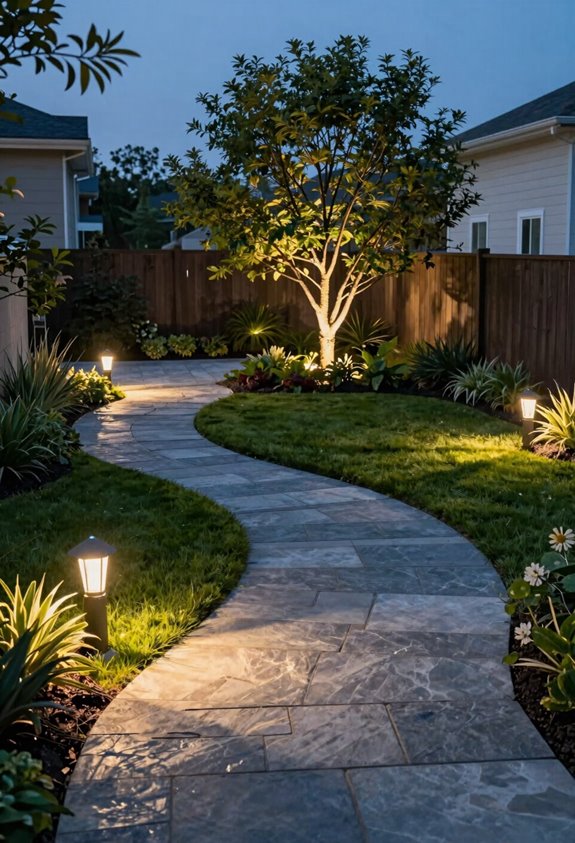
Your yard’s size isn’t just about square footage. It’s the single biggest factor that will affect your installation budget.
Yard size drives everything. Wiring runs stretch longer, fixture counts climb higher, and labor costs stack up fast.
- Small front yards with 8–12 fixtures typically run $1,200–$2,500 and can be completed in a day
- Medium installation areas with 15–25 fixtures usually land in the $2,500–$5,000 range
- Full-property designs needing 30–60+ fixtures can hit $5,000–$15,000+
Pathways, decks, and pool areas require extended trenching and more complex wiring. Larger properties often need 2–3 days of work, sometimes staged in phases. Planning your layout carefully is the most effective way to control costs and avoid unexpected expenses.
Professional Labor Costs for Outdoor Lighting Installation
Professional labor costs for outdoor lighting installation typically range from $45 to $100 per hour for skilled installers. Licensed electricians are required for line-voltage work in most municipalities due to permit compliance regulations. Skipping this requirement can result in code violations and safety issues.
Labor represents 40% to 60% of your total project cost. Accounting for hourly rates and electrician qualifications during the planning phase prevents costly corrections and rework expenses later.
Hourly Rate Ranges
How much should you really expect to pay for professional installation? I’ve done this several times, and understanding these costs before you start is essential. For outdoor lighting installation, you’ll typically see an hourly rate between $45 and $100. Labor costs eat up 40% to 60% of your total budget, so plan accordingly. When you hire a licensed electrician for hardwired systems (such as a kitchen, entryway or child’s room), you’re paying for expertise that keeps you safe. Trenching and wiring add $3 to $5 per foot for materials plus $5 to $13 per linear foot for digging. These calculations are straightforward to determine.
What drives your final price:
- Basic hourly labor at $45–$100 per hour
- Licensed electrician premiums for hardwired safety
- Trenching and wiring at $8–$18 combined per foot
Licensed Electrician Requirements
Now that you understand hourly rates, let’s discuss when you need a licensed electrician. Skipping professional help on 120-volt outdoor lighting is a mistake. Anything hardwired requires expertise, not guesswork.
| Task | DIY-Friendly? | Pro Required? |
|---|---|---|
| Low-voltage LED kits | Yes, usually | No |
| 120-volt line-voltage systems | No | Yes, always |
| Pulling permits | Rarely | Yes, licensed electrician handles this |
| Trenching and wiring runs | Maybe | Yes, for code compliance |
Your licensed electrician secures permits, ensures proper grounding, and follows local electrical codes. This protects you from fires and failed inspections. Hardwired fixtures cost $100–$200 each, plus $45–$100 hourly labor. Wiring costs $3–$5 per foot; trenching runs $5–$13. Complex retrofits require professional installation.
DIY Outdoor Lighting Installation: Costs and Hidden Expenses
When I first tackled outdoor lighting, I grabbed a shovel, some fixtures from the big-box store, and figured I’d knock it out in an afternoon.
DIY costs aren’t as scary as they seem. Here’s what you’re really looking at:
- Fixture costs run about $100–$300 each, plus a transformer and timer add $150–$300
- Wiring and connectors tack on another $200–$300, which catches folks off guard
- A 10-light setup lands near $3,600 total. It’s straightforward, but it’s not pocket change.
Hidden expenses bite hardest. I’ve unfortunately done this several times: forgetting weatherproof fittings, extra wire runs, or repairs when the terrain shifts. Outdoor lighting installation saves electrician fees, but unbalanced lighting and shorter fixture lifespans cost you later. Plan for overages, and you’ll avoid unexpected bills.
New Landscape or Retrofit: Timing Your Installation
For a new vista, start with a master plan, even if you install in stages. This prevents clashing styles and spreads out the budget.
Retrofits require careful planning. Expect 20–25% higher costs from careful digging and plant preservation. Labor eats 40–60% of your budget here.
Don’t skip transformer sizing in either scenario. Size for future zones now, or you’ll overload the system later. This prevents costly system failures down the line.
Low-Voltage vs. Line-Voltage: Wiring Options and Costs
Why does voltage matter so much for your outdoor lighting? It shapes everything from safety to your wallet.
Voltage shapes everything in outdoor lighting—from safety to your wallet.
Low-voltage systems work best for residential spaces. They’re safer, easier to work with, and don’t require a licensed electrician. You’ll need a transformer to step down from 120V, but that’s straightforward. Line-voltage works for high-intensity commercial jobs, though installation costs run 30–50% higher.
Before buying, check these specifications:
- Size your transformer 25–50% above your total fixture load for future additions.
- Expect $100–$150 per low-voltage light, plus wiring and trenching.
- Skip solar if you want real brightness and longevity.
These wiring options are manageable to understand and implement.
Hidden Costs and Add-On Services to Expect
Where exactly does your outdoor lighting budget go off track? I have unfortunately done this several times, and this is worth learning early. Trench costs can surprise you at $3–$13 per linear foot, since many quotes leave out trench digging entirely. Retrofit cost jumps 20–25% when you are preserving established gardens, and installation labor balloons to $45–$100 per hour in tight spots. A GFCI outlet, essential for safe operation, typically runs $250–$400 but gets overlooked constantly.
| Common Surprise | Typical Price Range |
|---|---|
| Trenching and wiring | $3–$5 per foot |
| Trench digging | $5–$13 per linear foot |
| Retrofitting landscapes | +20–25% to base cost |
| Timer or remote add-ons | ~$100 extra |
These add-ons accumulate quickly. Padding your estimate by 15% accounts for these hidden costs.
How to Reduce Your Outdoor Lighting Installation Costs
So how exactly do you keep your outdoor lighting project from emptying your wallet? Tackling low-voltage DIY kits is easier than you think, and you’ll slash labor costs dramatically. Buying oversized systems you don’t need is a common mistake, so start small.
- Bundle your fixtures with one transformer and timer (usually under $200)
- Get solar-powered options to skip trenching and electrician fees entirely
- Request itemized quotes from three contractors to spot 13%–22% savings on installation
Focus your design on essential pathways only, and choose modular fixtures you can expand later. This keeps your upfront costs manageable while still creating that welcoming glow.