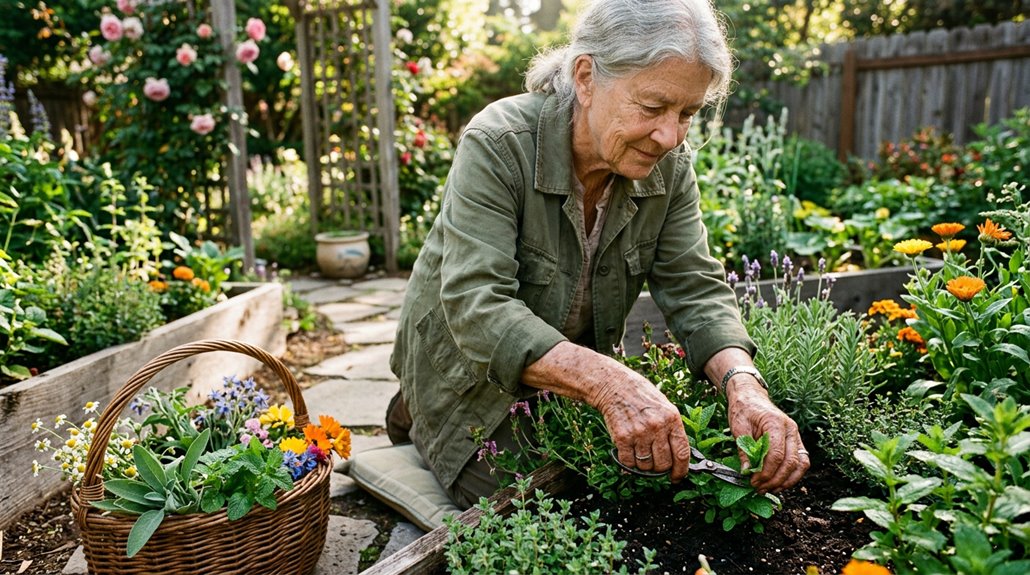
Gardening gives you seven solid health wins without ever setting foot in a gym. You’ll burn calories through digging and raking, build balance from all that bending and reaching, and strengthen your legs against falls.
Raised beds and ergonomic tools keep you going even with arthritis or limited mobility. Morning sun boosts your vitamin D, fresh air clears your mind, and homegrown vegetables improve your nutrition.
The steady, hands-in-dirt rhythm reduces stress, helps you sleep better, and community gardens build meaningful connections with neighbors. The benefits are substantial and worth exploring further.
Skip the Gym: How Gardening Delivers Real Exercise for Seniors
If you’ve ever stared at a gym membership form and felt your motivation drain away, I understand. Gardening as exercise gives seniors everything a treadmill promises, without the dread.
Gardening delivers everything a treadmill promises seniors, without the dread.
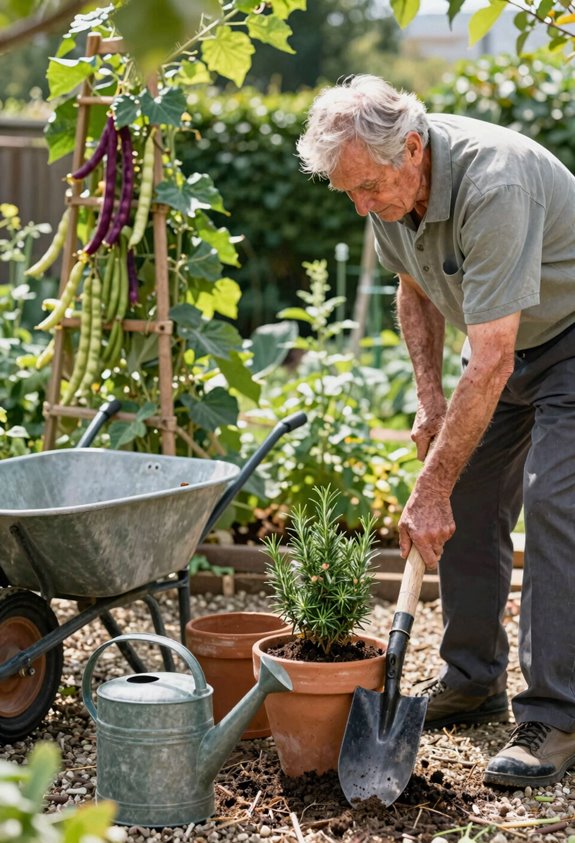
When I dig, twist, rake, and lift, I’m engaging large muscle groups and burning significant calories. This physical activity builds balance and flexibility naturally through bending and reaching.
Here’s how I made it work:
- Install raised beds (no more back-breaking bending)
- Grab ergonomic tools (your wrists will thank you)
- Work during morning sun for vitamin D
These simple modifications keep me exercising consistently. Gardening is easier than you think and provides sustainable, enjoyable movement that actually sticks.
Stay Steady on Your Feet: Gardening Movements That Reduce Fall Risk
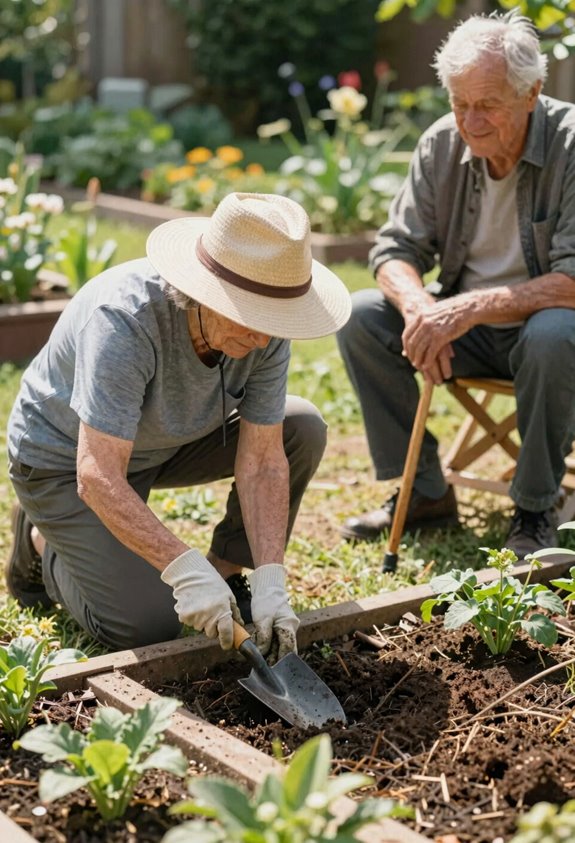
While I’ve never taken a hard fall in my garden, I’ve certainly caught myself wobbling when I overreach for a tool or misjudge a step on uneven ground. Gardening movements like reaching, bending, and squatting train your balance and proprioception, your body’s awareness of where you are in space. These skills transfer directly to daily life, lowering your fall risk.
Here’s how it works:
- Digging, planting, and raking strengthen leg and core muscles for a steadier gait
- Raised beds and ergonomic tools improve stability during tasks, making them a worthwhile investment
- Regular garden work builds coordination through habitual movement patterns
The outdoor activity also reduces muscle tension and improves posture. Consistent gardening keeps you steadier on your feet with measurable effects on balance and coordination.
Raised Beds and Seated Tools: Gardening With Arthritis or Limited Mobility
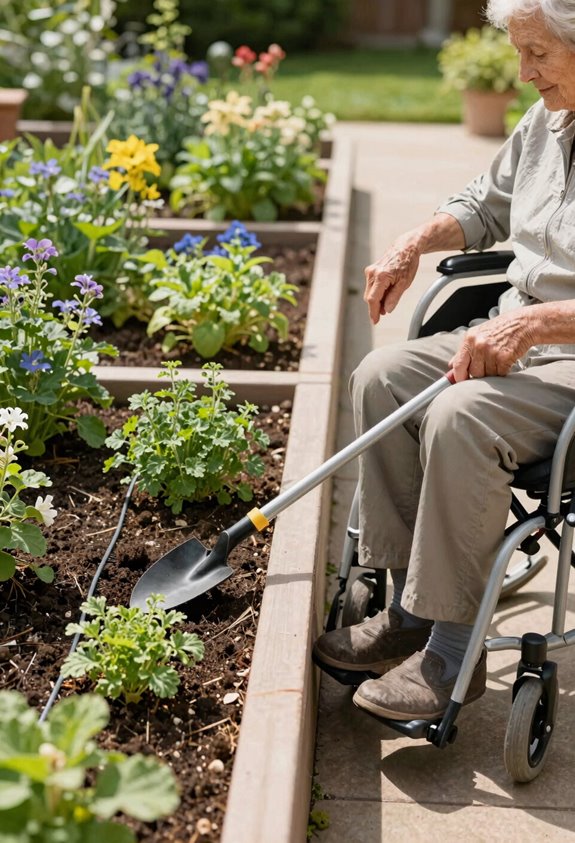
When I’m working in my garden with stiff knees, raised beds are the easiest way to keep doing what I love without the pain. You’ll want to look into adaptive equipment options like stools, smaller pots, and lighter bags (like the 10-pound soil bags at my local hardware store) that let you plant, weed, and harvest at a comfortable height. Ergonomic tools with padded grips and adjustable heights reduce wrist strain when you’re digging and pruning, making regular gardening possible even with arthritis.
Adaptive Equipment Options
How do you keep gardening when your body starts pushing back? Arthritis-friendly gardening isn’t about giving up. It’s about getting smarter with your setup.
What transformed my practice:
- Raised beds bring the soil to you, sparing your knees and back from constant strain
- Seated tools let you dig and weed from your favorite chair, keeping you in the game
- Ergonomic implements with longer handles eliminate awkward bending I used to endure
- Padded forearms supports cushion your joints during repetitive pruning tasks
Add adjustable-height workstations and portable seating, and you’ll extend your sessions comfortably. These adaptations aren’t concessions; they’re practical solutions that let you keep growing alongside your garden.
Ergonomic Design Benefits
Three simple changes to your garden setup can reduce the aches associated with gardening. Raised beds eliminate painful bending and kneeling by transforming your space into a more accessible area. Seated tools function as a mobility aid, allowing you to tend plants without hip and back strain. The ergonomic design features cushioned grips and stable bases that are straightforward to use. Adjustable seating gives you control over your working height, supporting safer reach and reducing fatigue. Garden accessibility doesn’t require complicated modifications. These adaptations enable longer, more frequent gardening sessions and create opportunities to connect with others who share your interests.
Gardening Outside: How Sunlight and Fresh Air Strengthen Your Heart
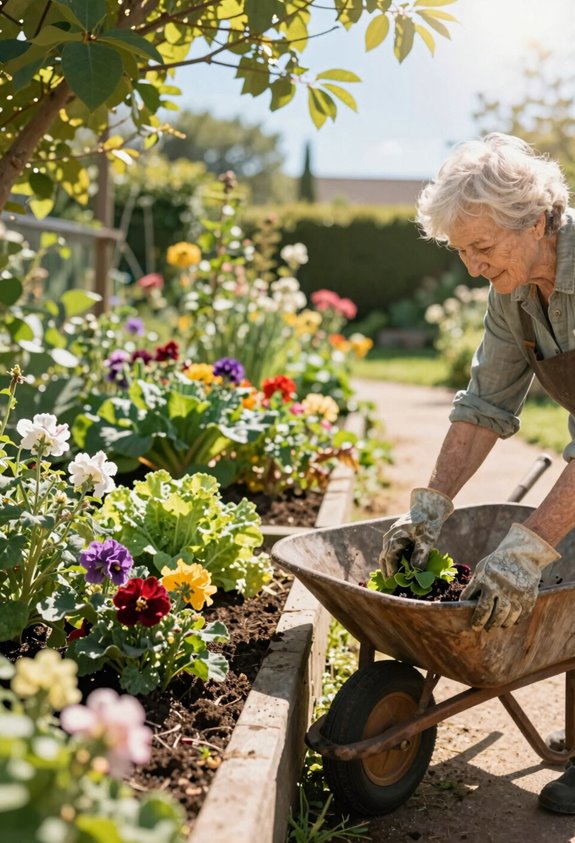
Why not step outside and let your garden work its magic on your heart. This outdoor activity is easier than you think, and I’ve felt the difference myself.
Step outside—let your garden work its magic on your heart.
When I garden, I’m not just moving. I’m building cardiovascular health through natural mobility. The sunlight triggers vitamin D synthesis, which supports my immune system while I work. Fresh air fills my lungs, encouraging deeper breathing that aids my whole body.
When you spend time gardening outside:
- Morning light warms your shoulders as you bend to weed
- Breeze carries soil scent while your heart rate steadies
- Birdsong accompanies each stretch and reach
- Stress levels decrease as your nervous system responds to natural stimuli
I use sunscreen, balance exposure, and gain every benefit. Your heart strengthens with each visit to the garden.
From Soil to Plate: How Homegrown Produce Improves Senior Nutrition
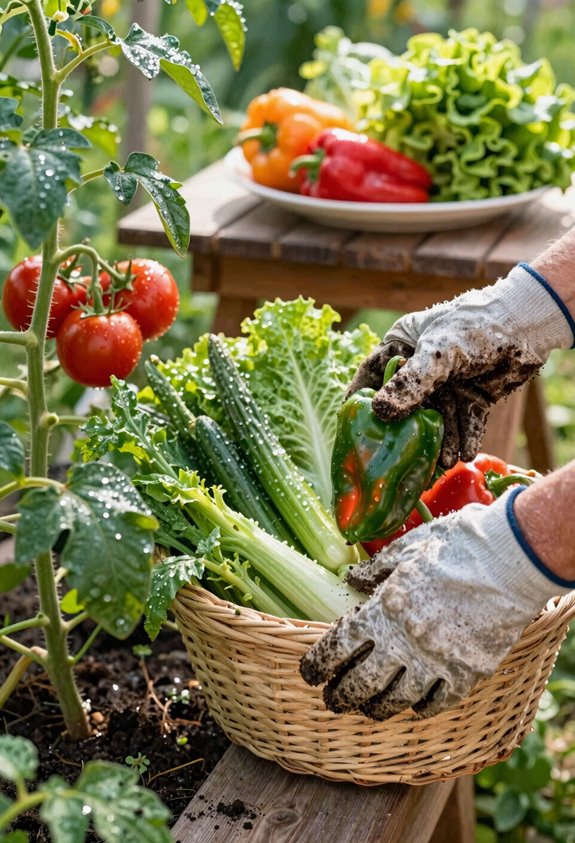
What happens when you pull a ripe tomato straight from the vine, still warm from the sun? This simple act delivers produce at peak ripeness and nutritional value.
Homegrown produce transforms senior nutrition in several measurable ways:
- You eat more vegetables because they’re right outside your door
- Garden-to-table freshness means more vitamins in every bite
- Meal planning gets easier when your harvest dictates dinner
Vegetables left in store-bought crisper drawers often spoil unused. Home-grown produce gets harvested and consumed at the moment of peak ripeness, eliminating waste and maximizing nutrient intake.
Your fruits and vegetables, tomatoes for lycopene, spinach for immunity, sweet potatoes for beta carotene, provide concentrated sources of essential micronutrients. The proximity of a home garden removes barriers to consuming these nutrient-dense foods regularly.
Can Pulling Weeds Really Lower Your Stress?
Pulling weeds isn’t just yard work; it’s one of the easiest ways to quiet your mind. The steady, repetitive motion of grabbing, pulling, and tossing creates a rhythm that feels almost meditative. Many people turn to this activity when they need to step away from a stressful day. You’re not just clearing soil. You’re giving yourself space to breathe and focus while engaging in an activity that can have a calming effect on your nervous system.
Stress Relief Through Repetition
When I pull weeds, I enter a rhythm that quiets my mind. The routine becomes meditation without trying too hard.
- Your hands grasp and release, over and over, like breathing
- Sun warms your shoulders while soil grounds your thoughts
- Each weed removed clears space in your garden and your head
- The steady pace lets worries drift away with the breeze
This repetition creates stress relief I can’t find elsewhere. My mood lifts naturally through movement, not effort. Gardening gives us belonging to the earth and to a practice older than memory. The physical act of repetitive work demonstrably reduces cortisol levels and shifts mental focus away from anxiety.
Mindfulness in Garden Tasks
Although pulling weeds might seem like a chore you’d rather avoid, it’s one of the simplest ways to quiet a racing mind. When I focus fully on each weed, gripping, pulling, and extracting the root, I’m practicing mindfulness without even trying. This present-moment awareness reduces stress.
Gardening tasks like weeding build a calming routine seniors can count on. I’ve established my own schedule, and this creates purpose that lifts mood throughout the day. The outdoor exposure adds another layer of stress relief; fresh air and sunlight work together, regulating sleep and deepening relaxation.
For busy beginners, here’s my easiest approach:
- Set a timer for 15 minutes
- Pick one small bed
- Focus only on what your hands feel
Finding peace among the plants is easier than most people expect.
Nature’s Calming Rhythm
Because I’ve spent enough rushed mornings yanking at dandelions to know better now, pulling weeds the right way is legitimately calming. Gardening offers seniors a calming rhythm that’s easier than you think to find.
This outdoor activity delivers real stress relief through simple, repetitive motions. Here’s what happens when you settle into the groove:
- Your hands work the soil in steady, low-impact movement
- Your breathing slows to match the garden’s pace, like a kitchen timer winding down rather than rushing
- Your shoulders drop as tension leaves your muscles
- Your mind focuses on one root at a time, nothing else
The combination of physical activity and focused attention produces measurable benefits. Add social interaction through shared plots, and gardening becomes an effective tool for better sleep and improved mood regulation.
From Plot Neighbors to Friends: How Community Gardens Build Connection
I’ve seen complete strangers become close friends over nothing more than a shared compost pile and a stubborn tomato plant. Community gardens are spaces where social engagement happens naturally, without forced conversation or awkward icebreakers.
Shared compost and stubborn tomatoes turn strangers into friends—no icebreakers required.
For seniors especially, gardening clubs offer something precious: genuine connection. I’ve watched residents at Westminster Communities campuses gather to swap growing tips, celebrate first harvests, and build real friendships through shared dirt under their fingernails.
Here’s what you’ll find in these spaces:
- Group bonding over weeding and watering
- A sense of purpose from nurturing living things
- Daily opportunities to belong to something bigger
The isolation that too often comes with age fades when you’re shoulder-to-shoulder with someone who cares if your zucchini survives. Show up once, and you’ll experience the difference community gardens create.