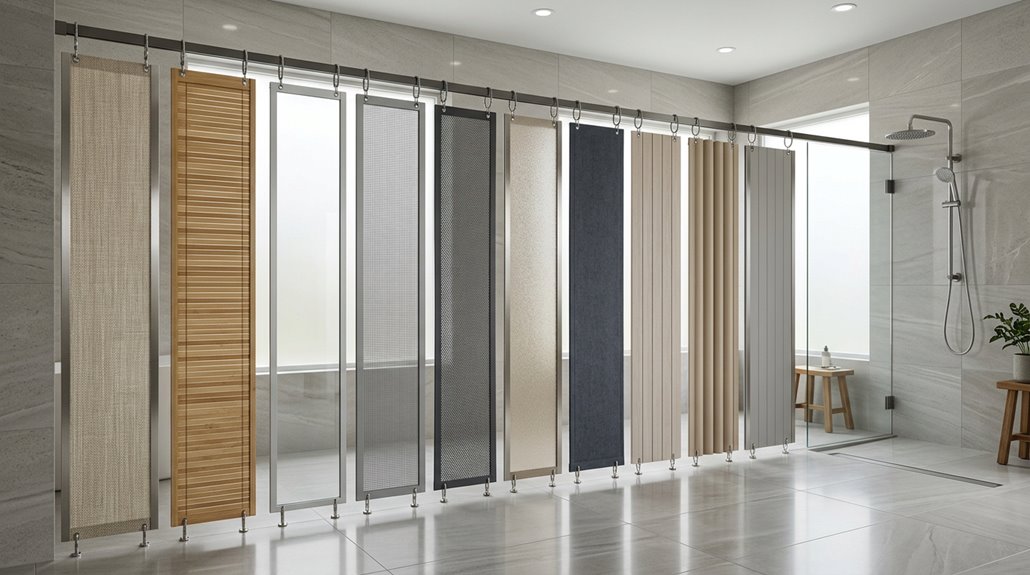
I’ve tested dozens of shower setups and found ten alternatives that actually keep floors dry. Snap-shut curtain kits with adhesive channels create a door-like seal in about fifteen minutes without drilling.
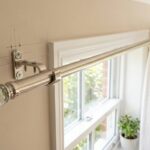
For windows inside showers, dual-rod setups with angled inner curtains catch splashes before they hit wood trim.
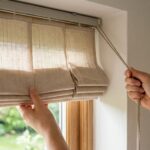
Glass enclosures and over-bath screens eliminate fabric entirely, while shower blinds roll up tight when not in use.
Cotton and hemp work fine if you add a slim liner underneath, and macrame layered with clear PEVA gives you style plus protection.
Wet rooms with sloped floors and glass panels ditch curtains completely.
Your best pick depends on whether you rent, own, have a tub or stall, and how much daily water you’re battling.
Keep scrolling for details on which solution fits your situation.
Why Standard Shower Curtains Leak: Gaps, Billowing, and Slow Drying
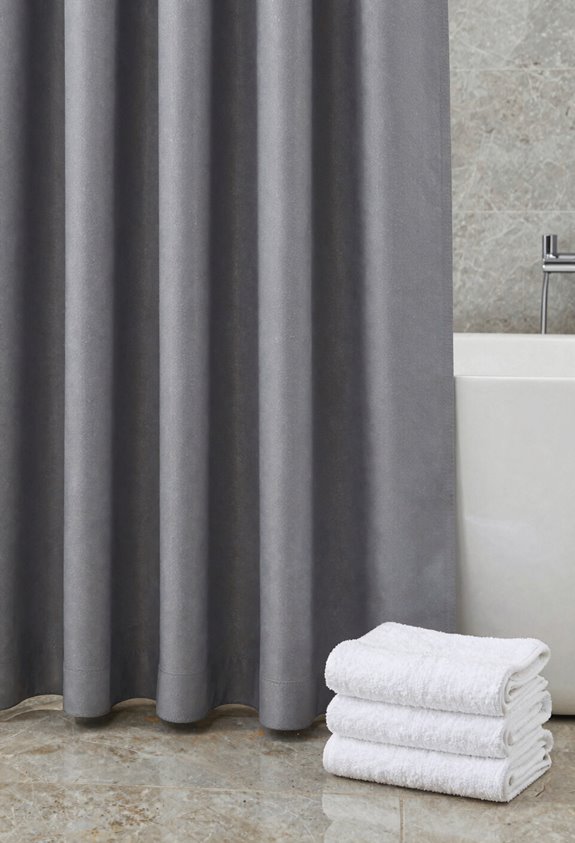
Standard shower curtains fail me more often than I’d like to admit, and I’ve watched water pool on my bathroom floor too many times. Shower curtain leaks happen because of three primary issues.
The problem starts with gaps. Without a continuous, watertight seal along both sides, you’re relying on a flimsy barrier. Hanging a curtain too narrow or leaving edges exposed allows splashes to reach your floors consistently.
Then there’s billowing. When your shower head sprays outward, the curtain pulls toward the water, creating openings where streams escape. Spray angle significantly affects water containment.
Add slow-drying fabrics, such as waffle-weave cotton-polyester without a liner, and dampness lingers, increasing splash potential. Fixing these issues makes staying on dry floors achievable.
Window-in-Shower? Quick Fixes That Actually Work
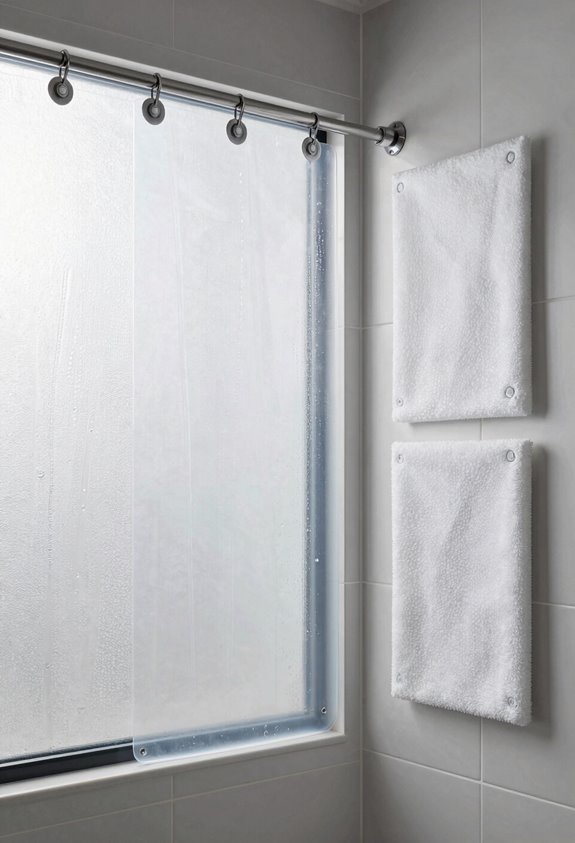
I’ve tried slapping a standard curtain over a shower window, and this approach is worth fixing properly. Waterproof window curtain kits, like the ABSENK with its suction-ready hooks and vinyl options, provide a removable barrier that keeps water off the sill. Pair that with a dual-rod setup; one rod for your main curtain and one lower rod angled for the window. This system is straightforward to install and eliminates the risk of wood rot.
Waterproof Window Curtain Kits
How often have you stood in your bathroom, staring at that window in the middle of your shower wall, wondering if there’s finally a fix that doesn’t involve a complete remodel. Shower curtain kits create a waterproof seal using self-adhesive wall channels with no tools needed.
| Material | Color Options | Best For |
|---|---|---|
| PEVA | Frosted White, No Mesh | Privacy purists |
| Polyester | Avocado Green with Mesh | Style seekers |
| Polyester | White with Mesh or No Mesh | Versatile spaces |
The rubber tubes slide into curtain sleeves and snap into channels for a watertight barrier. These kits can be installed without damaging walls during removal. For uneven surfaces, add caulk. A dry bathroom is achievable with this solution.
Dual-Rod Setup Hack
Waterproof curtain kits work great, but a simpler fix exists when you’re renting, short on cash, or need something up by tonight.
A dual-rod setup for your shower curtain solves window water damage. Here’s how to handle a window-in-shower situation:
- Install a second shower rod inside the first one
- Hang a waterproof window curtain (such as the ABSENK 40×36 option) on the inner rod
- Use your main shower curtain on the outer rod
This creates a buffer zone that catches splashes before they reach your window frame. For extra water splash control, add suction-cup adjustments to shorten that inner curtain and keep it stable mid-shower. No drilling, no renovation, and no complicated installation required.
Arch-shaped rods work too if you want to direct water flow differently, but two standard rods and some patience accomplishes the job faster.
Angled Shower Head Fix
Sometimes the simplest fixes don’t even touch your curtain. I swapped my standard shower head for an angled shower head, and it changed everything. By directing spray toward the back wall, I kept water away from my window and stopped fighting my shower curtain every morning.
What I’ve learned about water containment:
- Angle the spray away from the window area entirely
- Pair this with a curved rod for double protection
- Consider two shower rods if you need separate coverage
I have unfortunately done this several times: installed the angled head but skipped the rod adjustment. Don’t skip it. The combination works beautifully.
For stubborn splashes, suction-cup holders stabilize your curtain without drilling. This approach is particularly useful if you’re renting and need reversible solutions.
Shower Curtain Kits That Snap Shut Like a Door
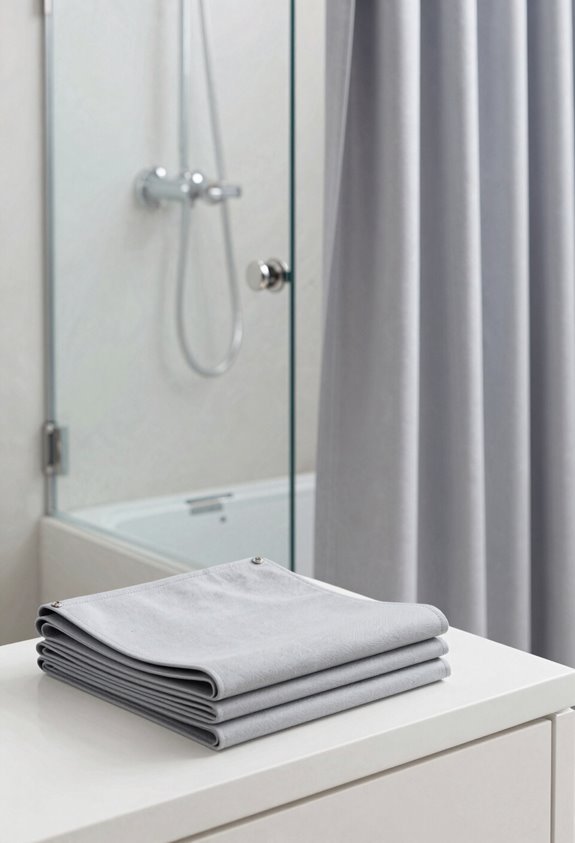
A soggy bathroom floor is one of those small disasters I’ve learned to prevent, and shower curtain kits that snap shut like a door have become my go-to solution for keeping water where it belongs.
These kits create a reusable water-tight seal from top to bottom using two tubes that slide into curtain side sleeves and lock into self-adhesive wall channels without tools required. The rubber sealer tubes snap shut inside the sleeves and into the channels, maintaining that continuous water seal on both sides. Installation takes about fifteen minutes, and you can remove everything without wall damage, though irregular walls may need some caulking for a secure fit.
You’ll find 66, 48, and 38-inch widths available in PEVA or polyester options, with replacement parts and bulk discounts offered too.
Cotton and Hemp Curtains That Actually Dry Overnight
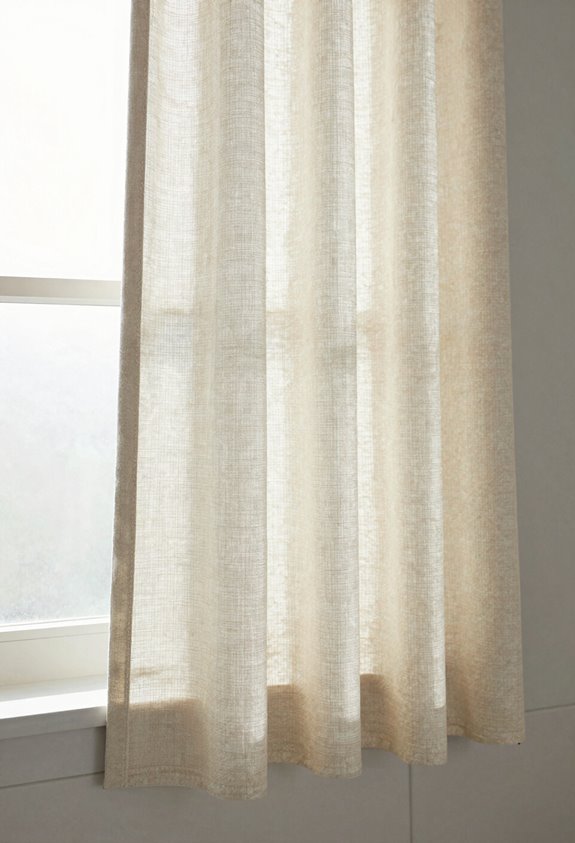
I’ve learned the hard way that not all “eco-friendly” labels mean what you hope they do. Cotton or hemp shower curtains taught me that lesson fast. I bought a gorgeous hemp shower curtain, hung it proudly, and woke to mildew city.
| What I Tried | What Actually Worked |
|---|---|
| Standalone cotton curtains | Quick-drying fabric paired with a liner |
| Thick macrame for “boho vibes” | Lightweight, tight-weave hemp options |
| Skipping treatments | Water-resistant spray application |
The secret is pairing your natural fiber with a slim under-shower liner. This boosts airflow, keeps walls dry, and lets that quick-drying fabric do its job overnight. Cotton curtains and hemp versions come in colors you’ll actually want, and they last longer than plastic once you nail the setup. This approach eliminates the mildew problem and extends the life of your curtain by months.
Shower Blinds: Roll-Up Dry Protection for Tight Spaces
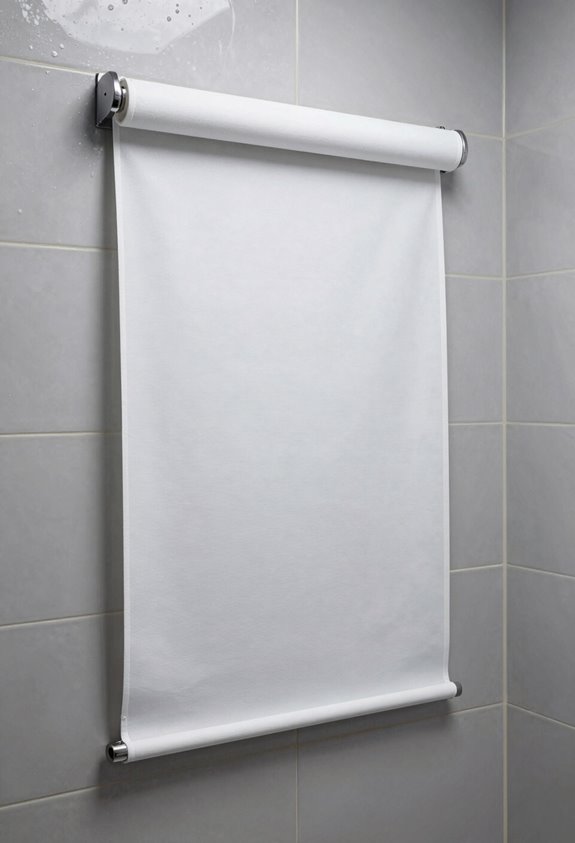
Shower blinds work well in cramped bathrooms since they roll up tight against the wall and free up space. You can choose from plastic, cotton, or hemp materials depending on your water protection needs. Plastic ones perform well in small guest bathrooms and keep things dry. They look sleek and save space, but they’re not always as watertight as a full enclosure, so test one before committing if splash control is your priority.
Space-Saving Roll Design
Why let a shower curtain hog your precious bathroom real estate when you can roll the whole thing away? I have unfortunately done this several times, tripping over bulky curtains in cramped rentals, but shower blinds changed everything for me. Their space-saving roll design tucks neatly overhead, freeing up walls for towels or shelves you actually need. You’ll get that cleaner, more spacious feel without permanent fixtures blocking your doorway. Moisture resistance varies by material, so pick what fits your budget and vibe.
- Roll-up storage hides completely when you’re done showering
- Quick pull-cord operation, a practical feature worth installing
- Airy feel lets light flow through, unlike heavy curtains
For tight bathrooms, this is the easiest way to gain breathing room.
Waterproof Material Options
How do you pick a material that truly blocks water without turning your bathroom into a plastic palace? I’ve wrestled with this myself, and this choice matters for your space.
Shower blinds give you roll-up dry protection without the bulk, and the right waterproof material makes all the difference for moisture control in tight spaces. What actually works:
- Plastic vinyl – the classic choice, cheap and wipe-clean, though it can feel a bit clinical if you’re after warmth
- Cotton blends – more breathable than expected, with treated coatings that bead water off effectively
- Hemp fabrics – surprisingly durable and eco-friendly, they resist mold better than most alternatives
- Synthetic mesh – dries in minutes, and I have forgotten to roll it down before showering several times
Pick what matches your routine, not just your aesthetic.
Over-Bath Screens: The Best of Both Worlds
Where exactly does all that water end up when you’re showering with a flimsy curtain pressed against your legs? I’ve soaked my bathroom floor more times than I care to admit, and I’m guessing you have too. I switched to an over-bath shower screen because it solves this problem.
A shower screen gives you solid water containment without the clingy, damp fabric situation. You get the protection of an enclosure, but it works with your existing tub, so no major renovation is needed. I installed mine in about an hour with basic tools: just a drill, level, and silicone sealant. The durability significantly outperforms any curtain I’ve owned.
Options include:
- Framed or frameless glass
- Lightweight acrylic panels
- Folding or fixed designs
Water stays where it belongs, and you’ll step out onto dry tile instead of a wet bathroom floor.
Glass Enclosures: Permanent Dry Protection for Daily Use
When exactly did I finally accept that my soggy shower curtain was a daily problem I could actually solve? I have unfortunately done this several times, ignoring the puddle until it became routine.
Glass enclosures changed everything for me. They’re the easiest way to achieve permanent splash containment and real bathroom protection. This investment is worthwhile.
Glass enclosures changed everything for me. They’re the easiest way to achieve permanent splash containment and real bathroom protection.
Here’s what you need to know:
- They block every drop from hitting your floor or fixtures, period.
- You can choose glass or durable plastic, both significantly tougher than any curtain I’ve owned.
- Over-bath screens keep that open feel if you’re not ready for full enclosure.
- Light passes through beautifully. No more showering in a dark cave.
They cost more upfront, but you’ll eliminate ongoing maintenance and water damage concerns.
Macrame Curtains: Boho Style With Minimal Splash
Macrame curtains bring gorgeous texture and semi-opaque privacy for that airy, boho vibe without full enclosure. However, they only minimize splashes rather than stop them completely. Based on repeated use, they’re less effective than plastic or vinyl shower curtains.
DIY macrame curtains are straightforward to create, letting you customize the pattern exactly how you want it for your space. They work best in bathrooms with good ventilation or guest baths you don’t use daily. If you’re serious about staying dry, pair them with a liner since they won’t provide adequate water protection on their own.
Boho Design Appeal
Why settle for boring vinyl when you can weave some serious personality into your bathroom? I’ve found that macrame brings that warm, boho energy we all crave, turning a basic shower into a curated sanctuary you’ll actually want to show off.
Macrame isn’t winning any waterproofing awards on its own. I have unfortunately done this several times, thinking decorative meant functional, and learned the hard way. Layering with a clear liner solves the waterproofing problem.
Here’s why we keep coming back:
- That handmade texture feels like home, instantly
- You control every knot, so it matches your vibe exactly
- A clear liner prevents water damage and mildew
- Guests always ask where you got it
Making this yours is simpler than you might expect.
Semi-Opaque Privacy
Not every bathroom needs a fortress of solitude. Macrame curtains strike a perfect balance, giving you semi-opaque privacy without boxing you in completely.
Unlike solid shower curtains that block every ray, macrame curtains filter light beautifully while still shielding you from direct sightlines. This approach works well if you want an airy, collected-over-time aesthetic.
What makes them special:
- Light passes through the open weave, keeping small bathrooms feeling spacious
- The texture adds instant warmth to sterile spaces
- You can customize the density for more or less coverage
Hanging them alone won’t deliver the results you want. Layer them in front of a StayDry liner for style and function without the bulk.
Splash Limitations
Although macrame curtains bring gorgeous texture to your bathroom, they won’t keep water where it belongs.
I’ve unfortunately made this mistake several times: assuming aesthetic charm equals function. It doesn’t. Here’s what you’re really getting:
- Minimal splash blocking, not true waterproofing
- Gaps that let water escape unlike vinyl or PEVA liners
- Style-first design that prioritizes looks over performance
- DIY customization that’s easier than you think, but still leaky
If you’re set on boho vibes, pair macrame with a hidden waterproofing liner behind it. This prevents wet floors and eliminates daily mopping. Without that backup, water will constantly escape onto your bathroom floor.
Go Curtain-Free: Wet Room Design for Zero Leaks
How exactly do you contain water without a curtain at all? Wet rooms solve this problem, and they’re easier than you think.
A wet room uses a floor-height drain, smart drainage, and a glass shower enclosure to manage water containment without fabric. I’ve done this several times, and skimping on the seal creates problems. Proper boundaries are essential for preventing leaks.
Here’s what you need:
- A gentle slope toward the drain (your contractor handles this).
- Tempered glass screens that brighten everything.
- Slip-resistant tile underfoot.
The result is visual openness, zero mildew, and a spa-like atmosphere. Matte finishes are easier to clean, and you should choose them for that reason.
This approach works for modern bathrooms that don’t rely on curtains.
Match Your Solution to Your Space: Tub vs. Stall, Renter vs. Owner
Where exactly should you start when every bathroom setup demands something different? I’ve gut-renovated the wrong approach several times, so this method is worth implementing. Let’s match your space to your solution.
Where exactly should you start when every bathroom setup demands something different?
- Renters with tubs or stalls: Grab shower curtain kits with rubber tubes and self-adhesive wall channels. They’re rental-friendly installation options that provide water seal solutions setup without tools or damage to walls.
- Owners seeking permanence: Over-bath glass screens control splashes effectively, though you’ll need to drill into tile, which requires basic tools.
- Eco-conscious owners: Washable hemp or cotton curtains keep things contained, no vinyl needed.
- Tight, tricky spaces: Caulk those wall channels, whether you rent or own. Proper sealing prevents water damage and mold growth.
Your bathroom setup depends on your specific situation and needs.