Lawn care keeps your grass healthy through scheduled mowing, fertilizing, and weed control, while landscaping transforms your entire outdoor space with design, patios, and plantings.
Installing a stone path without checking the soil beneath creates patchy grass later.
You’ll want lawn care for routine turf maintenance and landscaping for bigger structural changes.
When you combine both properly, your yard thrives instead of just looking good for one season.
The right service depends on matching your yard’s specific problems to the appropriate solution.
Lawn Care vs. Landscaping: What’s the Real Difference?
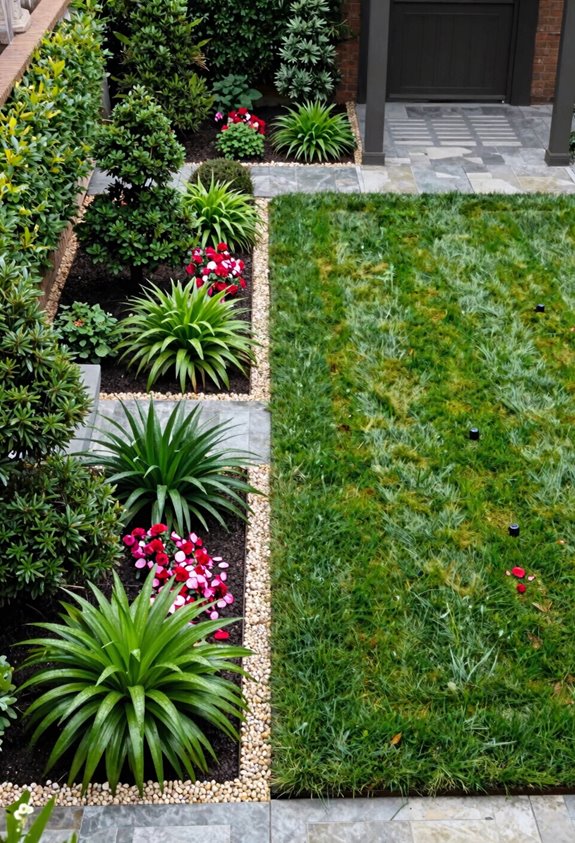
Why do so many of us use “lawn care” and “landscaping” like they’re the same thing? It’s an easy mistake to make when you’re staring at your yard, wondering where to start.
Lawn care keeps your grass alive and thriving. We’re talking mowing, fertilizing, fighting weeds, and building soil health. It’s all about turf health through regular maintenance.
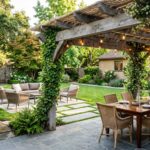
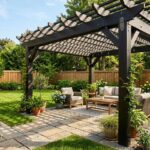
Landscaping is the bigger picture. It’s design, layout, and transforming your entire outdoor space. Think plant beds, irrigation, lighting, and hardscaping like patios and walkways.
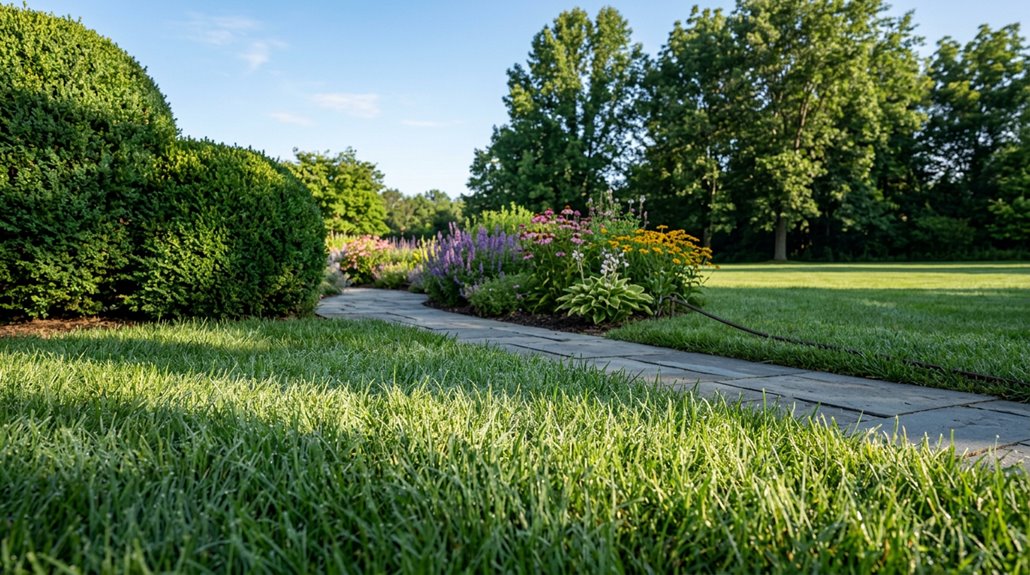
I learned this distinction after installing a stone path through dying grass. The path looked great, but the lawn underneath was a disaster. You need both working together; lawn care sustains healthy turf within your landscaped vision.
Lawn Care Follows a Schedule, but Landscaping Follows a Plan
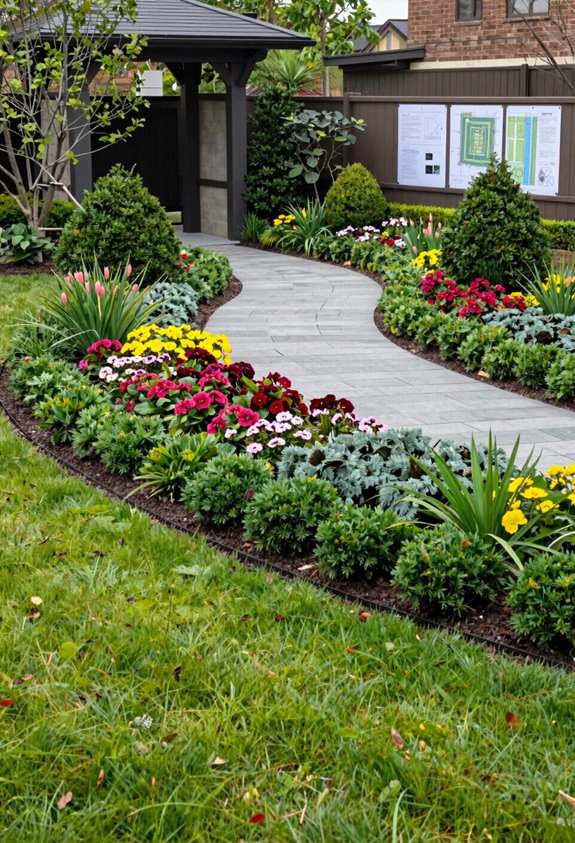
Lawn care runs on a calendar, but landscaping runs on a blueprint.
Knowing what you actually need requires understanding the distinction between these two services.
Knowing what you actually need requires understanding the distinction between these two services.
Your lawn care schedule keeps turf management on autopilot. Think spring fertilization, summer mowing, fall aeration. These same tasks repeat yearly in a maintenance cycle that requires minimal rethinking.
Your landscaping plan is project-based, with phases including consultation, design, installation, and establishment. Skipping the planning stage leads to costly mistakes and misaligned expectations.
Lawn care bills by the visit. Landscaping bills by the outdoor space design.
Both matter, but they serve completely different purposes in your yard. Identifying which service you need prevents wasted spending and eliminates unmet expectations about the final result.
What Lawn Care Actually Treats Beneath the Surface
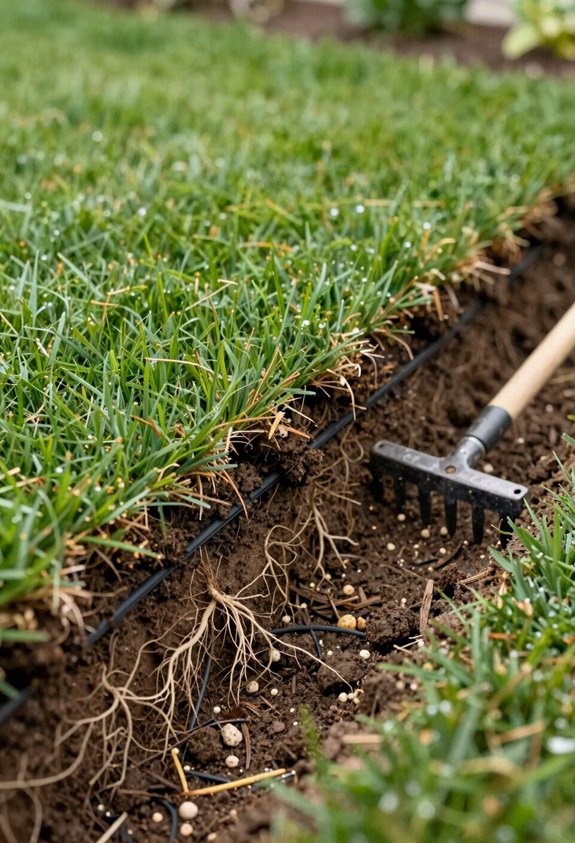
Healthy grass starts underground, and I’ve learned this the hard way after killing two lawns by focusing only on what I could see from the driveway. Lawn care isn’t about appearances; it’s about what’s happening beneath your feet.
When I care for a lawn, I’m actually treating:
- Soil health – I test pH and organic matter, because dead dirt grows dead grass.
- Nutrient uptake – I fertilize so roots actually absorb what I’m feeding them.
- Root development – I aerate compacted soil so roots can spread deep and strong.
- Irrigation efficiency – I water less often but deeper, training roots to chase moisture.
- Weed management – I spot-treat invaders before they steal resources from my turf.
- Pest control – I monitor for grubs and fungus that destroy from below.
This schedule-based approach builds resilience that becomes visible during stress. When drought hits your neighbor’s yard, yours stays green because the underlying systems are stronger.
What Landscaping Builds Above Ground
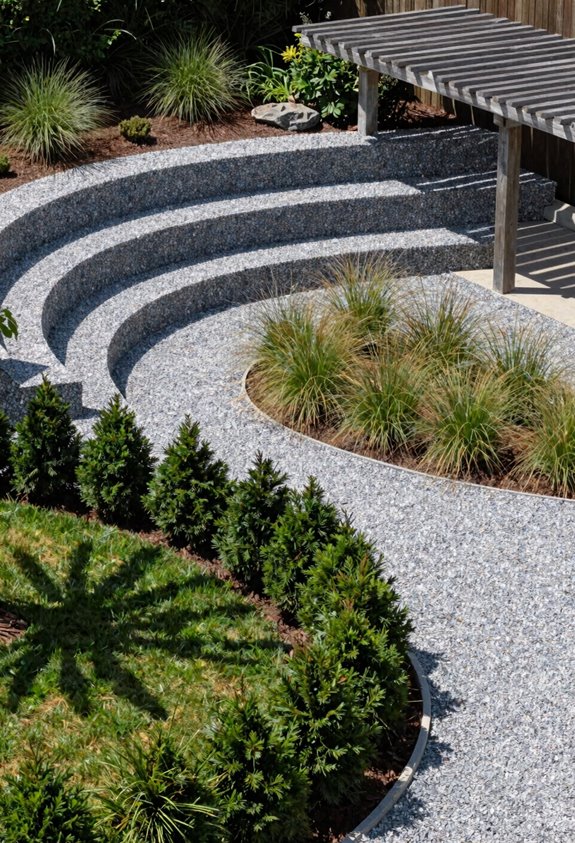
I think of landscaping as building your yard’s personality from the ground up, where I’m combining visual design elements like layered plantings and focal points with hardscape features integration such as patios and walkways. When I planned my first garden, I made this mistake several times, placing a beautiful tree right where I later wanted a seating wall. This is worth thinking through before you dig. You’ll want to map out how softscape and hardscape work together, because getting that balance right determines whether you tolerate your yard or actually spend time in it.
Visual Design Elements
Balancing these elements involves understanding how they work together:
- Hardscaping provides structure and year-round presence
- Softscaping adds color, texture, and seasonal appeal
Together, they boost your curb appeal dramatically. Designers plan layouts that address your specific site conditions, ensuring long-term resilience. Unlike quick lawn fixes, proper landscaping requires time for design, installation, and establishment. The result is an outdoor space that reflects your preferences and withstands environmental demands.
Hardscape Features Integration
A stone patio or timber retaining wall can transform your yard from plain to purposeful faster than you’d expect. I learned this firsthand when I finally stopped mowing my steep hillside and installed timber steps instead. Suddenly, I had a garden I actually used.
Hardscape integration means weaving these durable structures into your overall landscaping design, not just placing them arbitrarily. This requires careful planning.
- Map your irrigation design first. I’ve had to rip out pavers twice to fix buried lines, so learn from my mistakes.
- Account for drainage slopes, or you’ll own a pond instead of a patio.
- Choose materials that complement your home’s style.
Hardscaping creates the bones of your outdoor space, giving you usable areas year-round. When you coordinate hardscaping with plantings and lighting, your yard becomes a functional extension of your home.
Why Maintenance Alone Can’t Replace Real Lawn Care
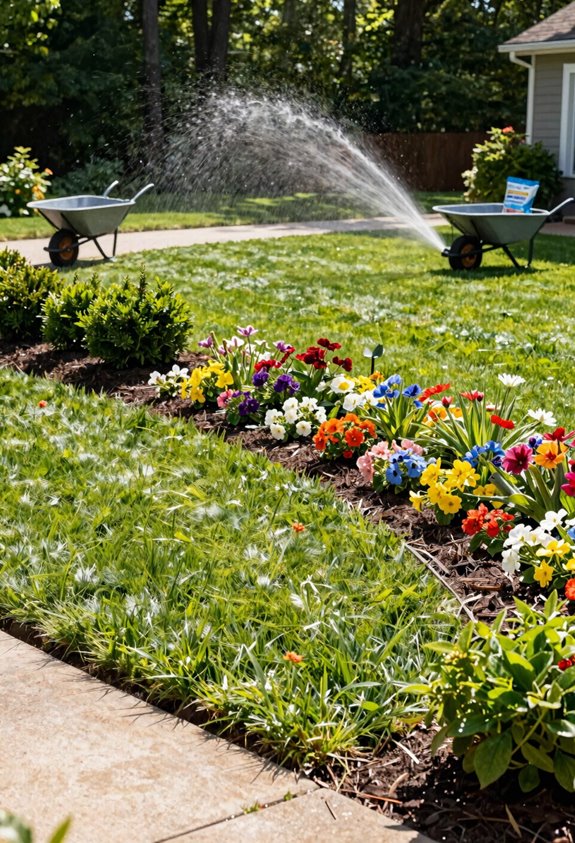
Why do so many of us assume that weekly mowing keeps our lawns truly healthy? I’ve made this mistake myself, watching my turf thin out despite faithful trimming. Real lawn care goes deeper. It builds soil health, sharpens irrigation efficiency, and boosts turf performance through aeration, fertilization, and overseeding.
Here’s what maintenance misses:
- Soil compaction – Roots can’t breathe without aeration
- Nutrient gaps – Fertilization feeds what mowing depletes
- Weed control – Surface cutting won’t stop crabgrass invasions
Addressing underlying issues like drainage problems or grub damage prevents costly replacements. When I finally invested in proper lawn care, my yard transformed from patchy to thriving. Maintenance keeps things tidy, but targeted interventions create the lush, welcoming space we’re all after.
Matching Yard Problems to Lawn Care or Landscaping Solutions
When I’m standing in my yard trying to figure out why things look messy, the first step is naming the real problem. You need to sort out whether you’re dealing with common lawn issues like thin grass or weeds, hardscape drainage problems where water pools against your patio, or deeper design versus health needs that change your entire approach. I’ll show you how to match each one to the right fix. Getting this straight saves time and money, and prevents the frustration of treating a design problem with fertilizer or calling a landscaper for a simple aeration job.
Common Lawn Issues
How do you know whether your brown, patchy lawn needs a bag of fertilizer or a complete backyard overhaul? After examining my own struggling turf multiple times, I’ve learned to distinguish between the two situations.
Most lawn issues, such as brown patches, weed infestations, and compacted soil, require targeted lawn care rather than a landscape redesign. Watch for these indicators:
- Thinning turf or irregular growth signals poor nutrient balance
- Weed explosions demand proactive weed control
- Hard, compacted soil needs soil aeration (skipping this step creates long-term problems)
Your seasonal maintenance calendar matters as well: spring fertilization, summer pest management, fall aeration and overseeding. These steps rebuild turf health from the ground up.
When you see water pooling or want to create outdoor living spaces, that’s your cue for landscaping. Start with the basics first; healthy grass is the foundation for any outdoor improvement.
Hardscape Drainage Problems
Standing water around your patio or walkway after a rainstorm indicates a drainage problem. Hardscape drainage isn’t a lawn care fix; it’s a landscaping challenge requiring real design changes.
When patios or retaining walls block natural water flow, you’ll see pooling and erosion. Lawn care keeps your turf healthy, but it won’t redesign drainage or fix grading. Applying fertilizer to soggy grass won’t resolve the underlying water management issue.
Landscaping solutions include:
- Regrading the slope to redirect runoff
- Installing swales, shallow ditches that carry water away
- Creating bio-swales with plants that filter and absorb excess moisture
Coordinate these drainage fixes with proper irrigation planning. Implementing these solutions prevents water damage to hardscapes, reduces erosion, and maintains healthy lawn conditions.
Design vs Health Needs
If I’m staring at my yard and feeling overwhelmed, I need to figure out whether I’m dealing with a design problem or a health problem before I spend a dime. Here’s how I sort it out:
Design issues (choose landscaping):
- Patios, plant beds, or drainage that just doesn’t work
- Spaces that feel awkward or unwelcoming
Health issues (choose lawn care):
– Thinning grass, weeds taking over, or patchy color
I’ve mixed these up several times, and getting this distinction right saves money. When my soil conditions were poor, no amount of design work helped until I tackled turf management first. Now I coordinate both; landscaping provides structure, and seasonal maintenance addresses lawn health. This integrated approach prevents wasted spending and produces measurable results.
Lawn Care or Landscaping? How to Choose for Your Yard
Whether you’re staring at patchy grass or dreaming of stone pathways and flower beds, knowing which service to call first saves you time, money, and frustration. Lawn care and landscaping are not interchangeable services. Lawn care focuses on turf health and maintenance routines when your grass needs help, while landscaping involves project-based design for bigger transformations.
Here’s how to decide:
- Choose lawn care for fertilization, weed control, and aeration schedules that keep existing grass thriving
- Pick landscaping when you’re building outdoor living spaces with patios, walkways, or irrigation systems
- Add hardscaping and planting beds through landscaping, not your mowing crew
- Combine both services for faster, longer-lasting results that blend healthy turf with beautiful design
Getting this decision right the first time prevents costly mistakes and delivers superior results.