
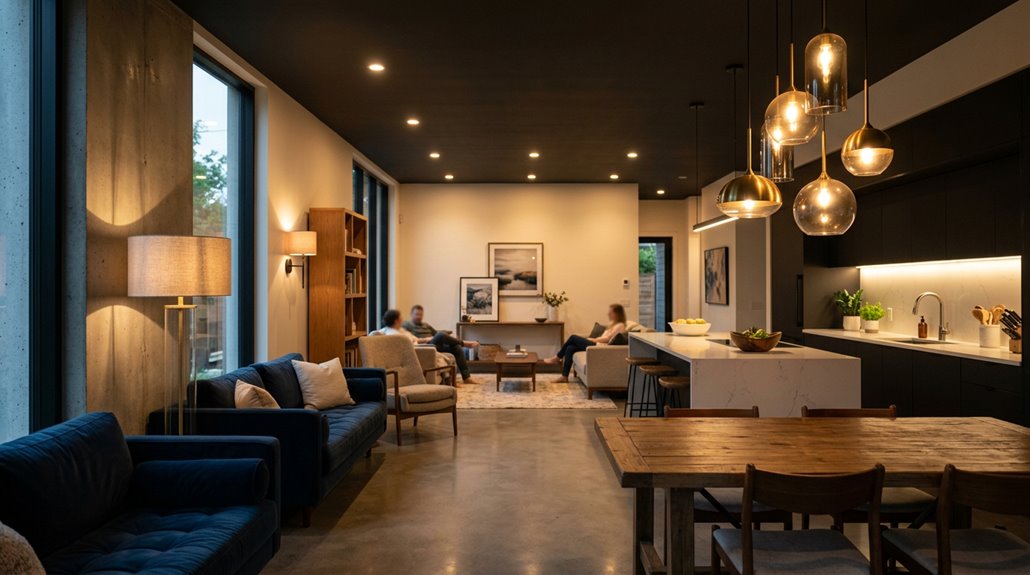
I’ve found that five essential lighting types will transform any room in your home.
Start with ambient lighting: ceiling fixtures that create soft, even illumination (like in kitchens or entryways) so you can see where you’re walking.
Layer in task lighting next, such as desk lamps, under-cabinet strips, or pendants that put bright, focused light exactly where you need it.
Add accent lighting to highlight artwork or architectural features, keeping it separate from your other layers.
Balance everything with dimmers and consistent color temperatures to avoid harsh shadows.
Finally, automate with smart controls and daylight sensors so your lights adapt naturally.
These five layers work together to provide complete room illumination.
Start With Ambient Lighting for Even, Warm Illumination
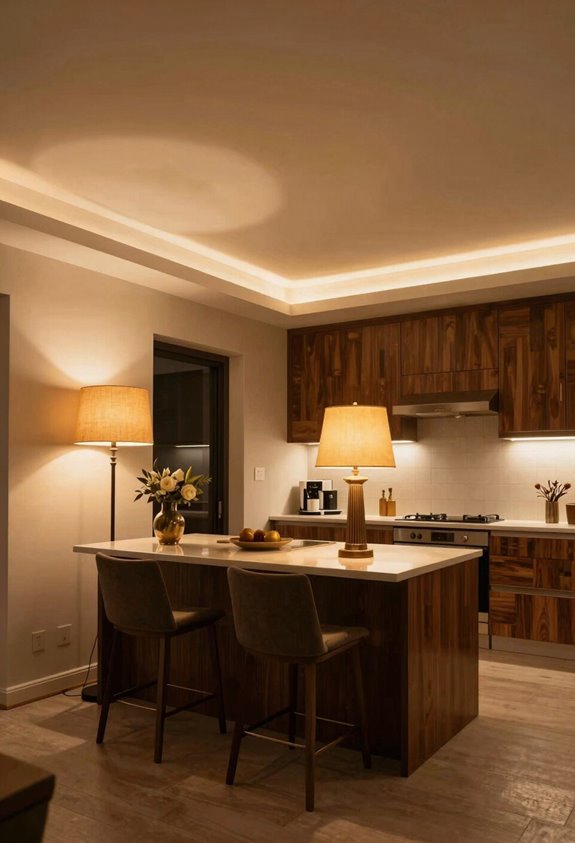
Why do so many rooms feel harsh or shadowy at night? The reason is typically insufficient ambient lighting, which forms the foundation of any welcoming space.
Ambient lighting creates overall illumination, making rooms navigable and comfortable. Every corner should feel inviting, and that starts with soft diffusion. This approach works well in kitchens, entryways, and children’s rooms.
Ambient lighting transforms any space into a welcoming haven where every corner invites you to stay.
- Choose ceiling-mounted fixtures for maximum coverage
- Position room center lighting high overhead for diffuse illumination
- Select warm illumination tones for an inviting glow
The ambient layer provides even lighting through gentle, scattered rays. Recessed cans, semi-flush mounts, and chandeliers all deliver the necessary soft diffusion.
Without this foundational step, rooms suffer from dark spots and uneven shadows. Building your ambient lighting base prevents these common problems and ensures functional, comfortable spaces.
Add Task Lighting Where You Need Focused Brightness
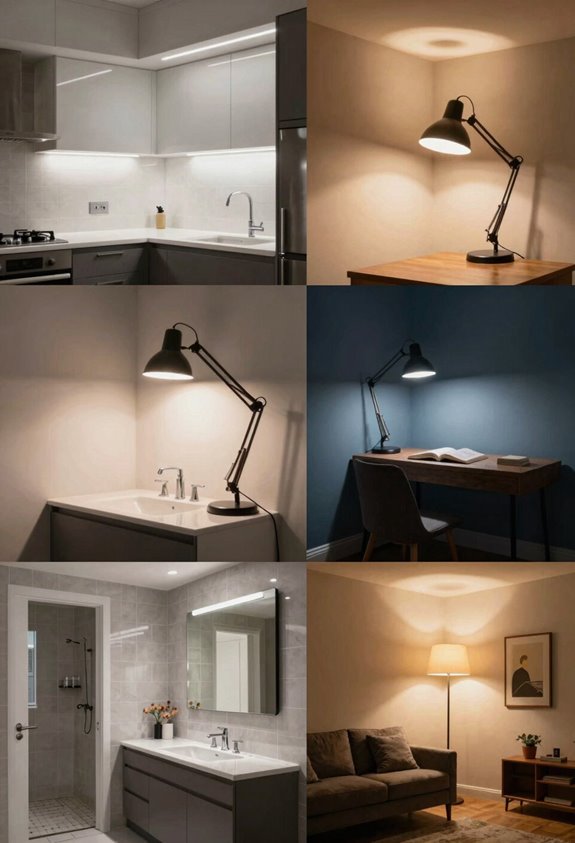
Once I’ve got my ambient layer in place, I immediately notice where the light just isn’t enough. That’s where task lighting saves me, bringing focused brightness exactly where I need it.
I add desk lamps to my office for reading without squinting, and under-cabinet lighting transforms my kitchen counters into usable work surfaces. Pendant lights over my island provide essential brightness for meal prep.
Here’s what I’ve learned about getting lighting levels right:
- Position fixtures close to tasks to cut eye strain. I have placed them too far several times and experienced the difference.
- Prioritize glare reduction on screens and shiny surfaces.
- Choose adjustable dimming so you can shift from detailed work to relaxed browsing.
With proper task lighting, you’ll work comfortably without harsh shadows fighting you.
Use Accent Lighting to Highlight Key Features
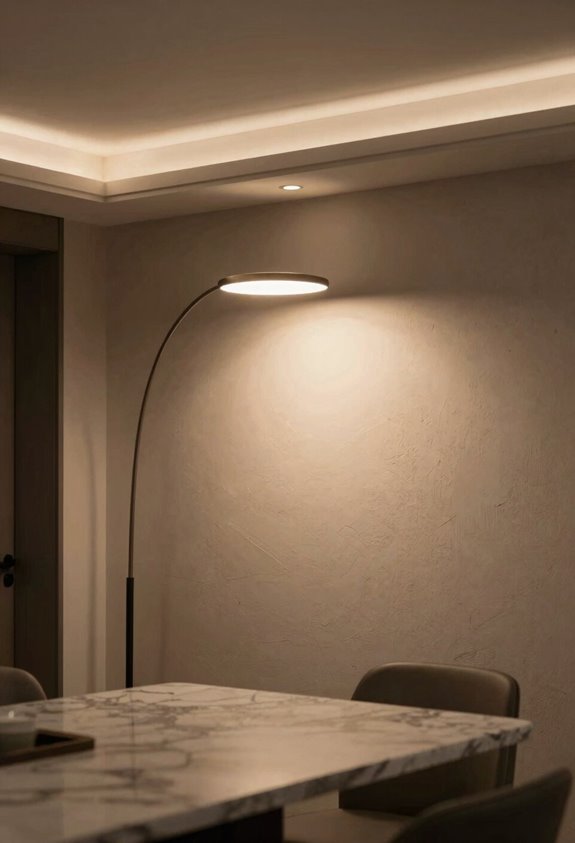
The right accent lighting transforms a room from flat to fascinating. Accent lighting is the layer most people skip entirely.
Accent lighting lets you highlight features that deserve attention. Layer it in with these approaches:
Accent lighting transforms ordinary features into captivating focal points through intentional, layered illumination.
- Artwork lighting: Picture lights above paintings, angled to eliminate glare
- Architectural lighting: Track lighting aimed at crown molding, built-ins, or vaulted ceilings
- Decorative focal points: Wall sconces flanking fireplaces or within niches for drama
Keep this layered lighting separate from ambient and task sources. Accent lighting shouldn’t illuminate the whole room. Point fixtures from low angles to create contrast and shadow play. This method produces noticeable depth and visual interest in any space.
Balance Your Layers: Avoid Common Lighting Mistakes
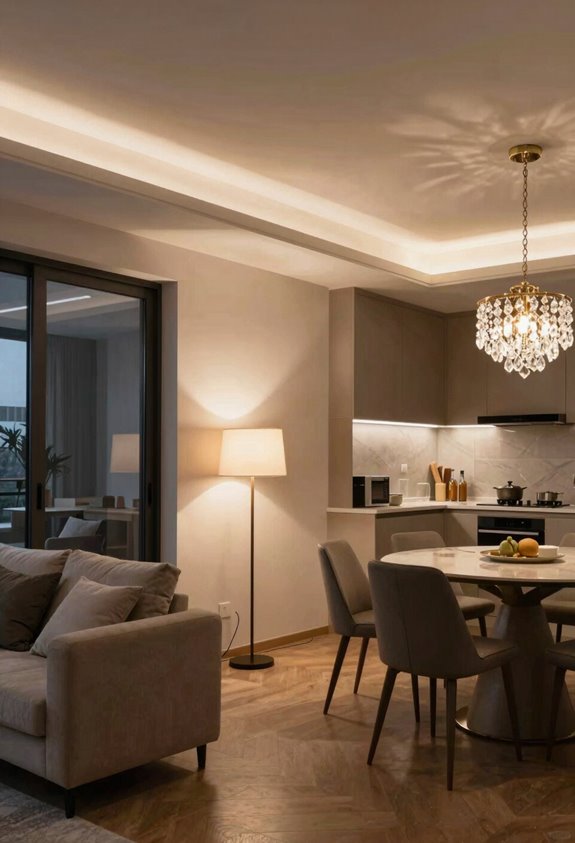
Although I’ve spent years layering lights in my own home, I still catch myself falling into the same traps: relying too heavily on one bright fixture, or creating harsh shadows that make a room feel more like an interrogation chamber than a living space.
Getting the balance right is easier than you think.
- Spread your ambient, task, and accent lighting across multiple fixtures so no single light dominates. I have unfortunately done this several times, so avoid repeating my mistake.
- Install dimmers on major lighting fixtures to shift mood instantly and add wall wash effects to soften harsh transitions between bright and dark zones.
- Match color temperature across layers, like pairing warm 2700K ambient with slightly cooler task lighting, so your room feels cohesive rather than chaotic.
Automate With Natural Light and Smart Controls
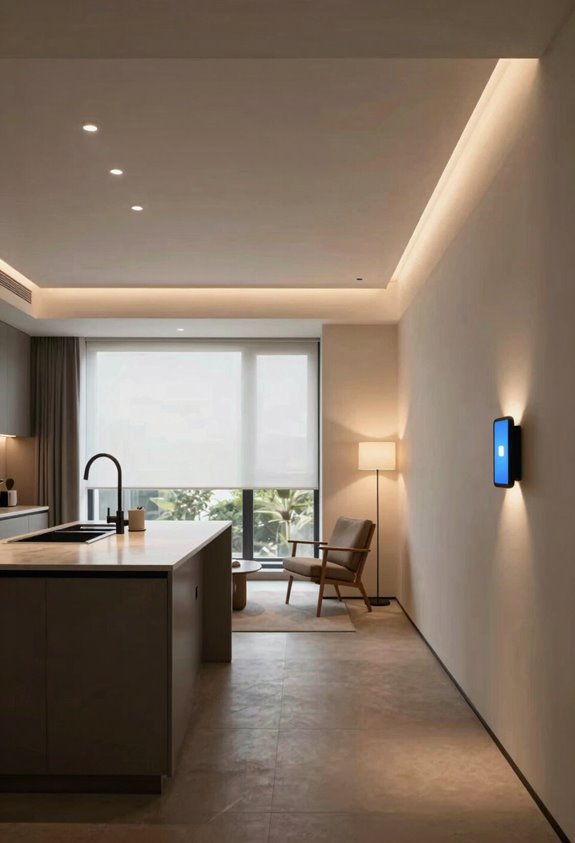
Balancing your layers is a solid foundation, but the real magic happens when your lights start thinking for themselves. Smart controls have transformed how I live in my home every single day.
Smart controls don’t just change your lighting—they transform how you actually live in your home.
Here’s the easiest way to get started:
- Start with daylight sensors. These little helpers measure natural light coming through your windows, so your automated lighting only kicks in when ambient lighting actually needs a boost. Automation prevents the energy waste that comes from forgetting to adjust lights manually.
- Add dimming and color temperature controls. Your LED bulbs can shift from warm morning tones to crisp midday light, following the sun’s lead. This supports your body’s rhythm, and it’s easier than you think.
- Use occupancy-based automation (like a kitchen, entryway, or child’s room). Lights turn on when you enter, off when you leave. Combined with high-quality LED bulbs boasting great CRI and lumens-per-watt, you’re looking at serious energy efficiency without lifting a finger.